Sergeant Halloran's patrol passed a desert checkpoint command said wasn't there. Then he found the phantom soldier's comms clip tucked into his Stryker.
The last light was fading as Sergeant Edmund Halloran’s lead Stryker rolled back from route clearance, dust caking the armored hull.
Three hours from their Forward Operating Base, a coalition checkpoint materialized out of the desert haze: HESCO barriers, a lifted arm, and a lone soldier in familiar kit, ID badge obscured, who logged their bumper number with a silent nod and waved them through.
Halloran checked his vehicle’s own graphics – nothing but open road between their last waypoint and the wire. “Battle Captain, this is Halloran,” he radioed, once they were clear. “We just passed an unlisted checkpoint on Route Anaconda.
Whose is it?” Captain Frances Merritt’s voice crackled back, sharp and immediate. “Negative, Halloran. There is no checkpoint on Anaconda. Never has been. Get your vehicles home.” The desert wind, dry and hot, seemed to whisper the denial again.
Back at the FOB, the impossible denial gnawed at Halloran. He’d seen the checkpoint, his crew – Private Thomas Ellison and Specialist Claire Sinclair – had seen it too. He tried to rationalize: a temporary, unannounced placement?
A miscommunication in a theater notorious for them? But Merritt's certainty, the absolute blankness of the maps, was unwavering. He spent an hour meticulously inspecting his Stryker, a habit born of years of combat, looking for anything out of place.
He checked the undercarriage, the wheels, the armor plates, running his gloved hand over bolts and welds, the metallic tang of oil and dust filling his nostrils.
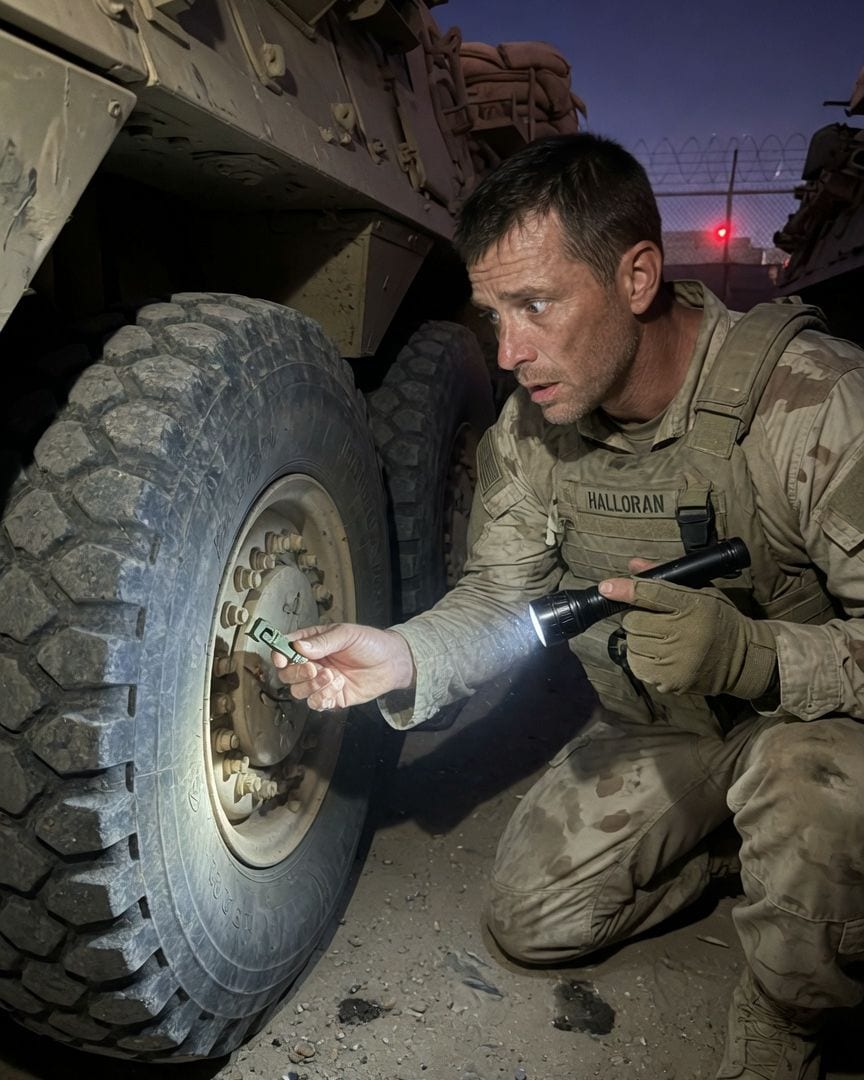
Then, deep in the crevice of the front left wheel well, where road grit usually accumulated, his fingers brushed against something hard and smooth. He pulled it free: a comms wire clip.
It was standard-issue, but unmarked, and of a specific, slightly older model he hadn't seen in general circulation for years.
He remembered the phantom soldier’s kit, the way a similar clip had been fastened to a strap on his vest, just below the shoulder. He’d noticed it because it was an odd, almost obsolete detail on otherwise modern gear.
He stared at the clip in his palm. It couldn't have fallen off his own gear, or any of his crew’s; they used newer models.
It couldn't have been kicked up from the road; it was too clean, too purposefully tucked away, almost nestled.
The rational explanation almost formed – a random piece of debris – then dissolved, leaving only the cold certainty that this small, metal object was a physical piece of the impossible checkpoint.
Halloran kneels by the tire, flashlight beam cutting through the grime, and plucks the small, unmarked comms wire clip from where it’s wedged.
It’s exactly the specific, peculiar model he’d noted on the phantom soldier’s vest, a detail too precise to be coincidence, too impossible to be real. His breath catches, a cold knot tightening in his chest.
Command’s denial rings in his ears, but the evidence in his hand is solid, undeniable.
He turns the clip over and over, the metal cool against his palm, the desert night suddenly feeling vast and empty around him, the silence amplifying the impossible truth.
The comms clip became Halloran’s silent burden. He showed it to Ellison and Sinclair, who exchanged uneasy glances, the shared knowledge tightening the air between them. “That’s it,” Sinclair whispered, recognizing the detail. “That’s what he had.”
Halloran tried to pull official strings, subtly at first. He checked patrol manifests for any last-minute additions to Anaconda. Nothing. He reviewed the radio logs for unusual activity or unauthorized broadcasts. Silence.
He even tried to access satellite imagery for the patrol’s return route, but the section was inexplicably corrupted or simply showed empty desert, like a digital erasure.
Captain Merritt, sensing his persistence, called him into her office, her face tight, the fluorescent hum of the lights suddenly oppressive. “Sergeant, I told you, there was nothing out there. Focus on your mission.”
Her gaze was too steady, too insistent, almost an unspoken plea. Halloran pushed back gently. “Captain, my crew and I saw it. And I found something.” He didn’t show her the clip, just implied physical evidence.
Merritt leaned forward, her voice dropping, as if sharing a confidence. “Sergeant, in this theater, things happen. Fatigue, stress, dust. We classify unverified reports as such to prevent panic. It’s standard procedure. Don’t make it more than it is.”
The warning was clear. But Halloran knew it was more. He started looking for unofficial channels. He bought a local burner phone and began making quiet inquiries to veteran NCOs from previous rotations, asking about ‘unusual sightings’ on Anaconda.
Most laughed it off, attributing it to heatstroke or ghosts. But one, a retired Master Sergeant named Wayne Prescott, paused during their brief, crackly call. “Anaconda, huh? Yeah, we used to call that stretch ‘The Ghost Mile.’ Always something… off.”
Prescott’s cryptic comment solidified Halloran’s resolve. He arranged a secure video call with the retired Master Sergeant, feigning a ‘historical survey’ for a unit project.
Prescott, a man whose eyes held the weary wisdom of too many deployments, spoke of 'discrepancies' and 'unaccounted for' events along Anaconda, whispers that never made it into official reports.
“Nothing you could put a finger on,” Prescott said, “but enough to make a man look twice at his own shadow.”
Later that day, Halloran noticed a Specialist he didn’t recognize loitering near his vehicle in the motor pool, ostensibly cleaning, but his gaze kept flicking towards Halloran’s locker, where he kept his personal gear.
When Halloran approached, the Specialist quickly moved off, avoiding eye contact, his movements just a little too hurried. Then, an anonymous, encrypted message landed on his burner phone: 'Some things are better left buried, Sergeant. For your family’s sake.'
The message had no sender, no trace, just the raw text burning itself into his vision. Halloran felt a prickle of cold dread, not just for himself, but for a line that had been crossed.
His quiet digging was no longer quiet. Someone knew. Someone was watching. The threat, once abstract, was now personal, extending beyond the wire, implying knowledge of his life back home, a line that should never have been crossed.
He deleted the message, but the words echoed in the quiet hum of the FOB: For your family’s sake.
Halloran confronted Merritt again, this time with a cold fury in his voice, ignoring the burner phone message for now, its chill still lingering. “Captain, I know about the ‘unverified reports’ on Anaconda. I know about ‘The Ghost Mile.’
What exactly are we covering up?” Merritt’s composure finally fractured. Her shoulders slumped slightly, a subtle give in her usually rigid posture. “It’s not a cover-up, Sergeant. It’s… management.”
She gestured for him to sit, the cheap plastic chair scraping across the concrete floor. “Years ago, reports started coming in. Small things. A supply truck that wasn’t on the manifest.
A patrol that swore they saw an extra man on watch, then he was gone. Always just one. Always dismissed. But they kept happening. On Anaconda, mostly, sometimes near the old fuel depot.
Command decided it was bad for morale, destabilizing. So, a protocol was put in place. Anything ‘unverified’ that couldn't be explained by human error or equipment malfunction was logged and then… archived. Deeply. Marked as psychological stress, or unconfirmed.
The aim was to prevent panic, maintain operational integrity. We can’t have soldiers questioning every shadow, can we?” Halloran’s mind raced, connecting the dots. The comms clip. The checkpoint. Merritt’s initial denial.
It wasn't a lie; it was a practiced response to a known, recurring anomaly, a script she knew by heart. “So, these things… they’re real?”
he asked, his voice barely a whisper, the hum of the air conditioning unit in the room suddenly sounding like a low growl. Merritt looked away, her gaze distant, fixed on a spot on the wall behind Halloran’s head.
“They’re… consistent. They appear, they integrate, they’re gone. Always one too many. Always perfectly mimicking what’s already there. Like the system itself is… creating an echo.”
The weight of her words settled, making the desert outside feel vast and menacing, a place where reality itself was porous. The impossible checkpoint wasn't a glitch; it was a feature, carefully managed into non-existence.
Merritt’s admission, while shocking, only deepened the mystery. Halloran, now armed with the knowledge of the ‘archived’ reports, used a secure terminal to try and access the deep archives Merritt mentioned.
It took him two days, bypassing multiple layers of security, navigating through outdated interfaces and encrypted folders, the screen’s glow the only light in the quiet intelligence office.
But he finally found it: a hidden subdirectory, labeled 'Project Chimera,' containing hundreds of files. He opened one at random, then another, then another. Each file detailed an 'unverified incident' from a different year, a different unit rotation.
A phantom convoy in 2018, an extra medic in 2019, an unlisted watch tower in 2021. The descriptions were chillingly familiar, mirroring his own experience. But then, he saw it.
A series of older files, dating back to the initial deployment to this sector in 2010. These weren't just reports; they were observational logs, cross-referenced with geological surveys. They documented not just 'sightings,' but patterns. Specific coordinates.
Cyclical occurrences, tied to dates of major operational shifts or unit rotations. The anomaly wasn’t random. It was growing.
He scrolled down, past the dry, clinical language, and found a schematic – a crude, hand-drawn map of the Anaconda route, with faint, red circles marking recurrent points.
One of those circles was exactly where his patrol had encountered the unlisted checkpoint. Another was near the old fuel depot Prescott had mentioned.
The horror wasn't just that it happened, but that it happened again and again, following a terrible, predictable logic, and that his own incident was just one more data point in a grim, expanding pattern.
Halloran spent the next sleepless night dissecting the 'Project Chimera' files. The geological surveys linked the anomaly's hotspots to an ancient, subterranean aquifer system, rich in specific mineral deposits, running directly beneath Anaconda.
An early, suppressed intelligence brief from 2012, titled 'Accretion Hypothesis,' theorized that the sheer volume of military activity – the constant vibrations of heavy vehicles, the electromagnetic signatures of comms, the sheer human presence, the collective consciousness of constant vigilance – was somehow 'charging' or 'activating' this geological feature, causing it to manifest physical echoes.
Not ghosts, but perfect, silent copies, drawn from the collective unconsciousness of the deployed units, always appearing as 'one extra,' slowly adding to the system.
The checkpoint, the soldier, the comms clip – they were all perfect, physical replicas, devoid of life, yet indistinguishable until their lack of official record betrayed them.
The 'soldiers' were not evil; they were just… there, performing their roles, an impossible accretion of military presence.
The pattern across rotations wasn't just about sightings; it was about the anomaly learning, replicating, and expanding its reach, always mimicking the most effective forms of military integration.
It wasn't just a ghost in the machine; it was the machine itself, quietly growing a redundant, phantom limb, a perfectly integrated, unnoticed addition.
The 'Accretion Hypothesis' report proposed a radical countermeasure: not destruction, but disruption. The anomaly, it suggested, was sensitive to specific, localized electromagnetic frequencies, especially those used in older, analog communication systems.
The key was a precise, high-power burst at a specific frequency, directed at one of the primary manifestation points, to 'overload' its replication signature.
Halloran identified the old fuel depot, near his base, as a secondary hotspot from the maps, less frequently active than Anaconda but closer and with existing infrastructure.
He formulated a plan, sharing only fragments with a trusted Ellison and Sinclair, framing it as a 'specialized comms test.'
Under the cover of a routine maintenance run, they drove an old, repurposed humvee, fitted with a jury-rigged comms array, to the depot.
The sun dipped, casting long, stark shadows across the dusty ground, painting the scene in hues of orange and purple. Halloran set the frequency, double-checked the power output on the crude dials.
He saw the faint shimmer, the almost imperceptible distortion in the air near the depot's perimeter fence, exactly where the reports indicated 'unlisted equipment' often appeared. This was it. He engaged the system.
A low hum filled the air, escalating to a high-pitched whine that vibrated through the Humvee's frame, rattling a loose panel. The distortion intensified, swirling like heat haze on a summer road, then solidified.
For a fleeting moment, a perfect, silent replica of a fuel truck, complete with an 'extra' soldier standing guard, shimmered into existence near the fence.
It was utterly convincing, every detail precise, yet utterly wrong, a silent tableau of an impossible presence. Halloran held the switch, his knuckles white, the whine growing unbearable, echoing in his teeth.
The phantom truck and soldier flickered, their forms wavering, stretching thin like an image on a dying screen. Then slowly, silently, they dissolved, like smoke in a strong wind, leaving only the empty desert and the ringing in their ears.
The humvee’s system sputtered, then died, a plume of acrid smoke rising from the jury-rigged comms array. Halloran cut the power. The silence that followed was absolute, heavy with the absence of something that had never truly been there.
The 'specialized comms test' went into the logs as a minor equipment malfunction, quickly forgotten in the daily churn of deployment.
Halloran, Ellison, and Sinclair were quietly reassigned to different units for the remainder of their deployment, a swift, almost silent dispersal. Merritt, her face unreadable, simply nodded when Halloran handed her a final, encrypted report, detailing his findings and actions.
No official inquiry was ever launched into Project Chimera, at least not that Halloran ever heard. The anomaly, at least in that sector, seemed to cease its manifestations. The count, for a time, reconciled.
Two years later, Halloran sat on his porch, watching his kids play catch in the evening light. The desert was a distant, fading memory, replaced by the familiar green of his suburban lawn.
He was out of the Army, out of the life, finding peace in the quiet rhythms of home. He still kept the old comms clip, tucked away in his desk drawer, a silent reminder.
He’d survived, but the knowledge marked him, a permanent, cold certainty beneath the surface of his everyday life. He scrolled through a veteran’s forum on his phone, a casual habit.
A new post caught his eye, from a Marine deployed to a remote outpost in the Pacific. The title read: 'Anyone else seeing extra guys on watch?' His breath hitched, a familiar knot tightening in his chest.
He closed the app, but the words were already there, echoing the old, familiar dread, now thousands of miles away.
The count, it seemed, would always find a way to be one too many, somewhere.
If this one got to you
Sergeant Halloran found civilian boot prints leading into his garrison, then they simply vanished near a silent tower.
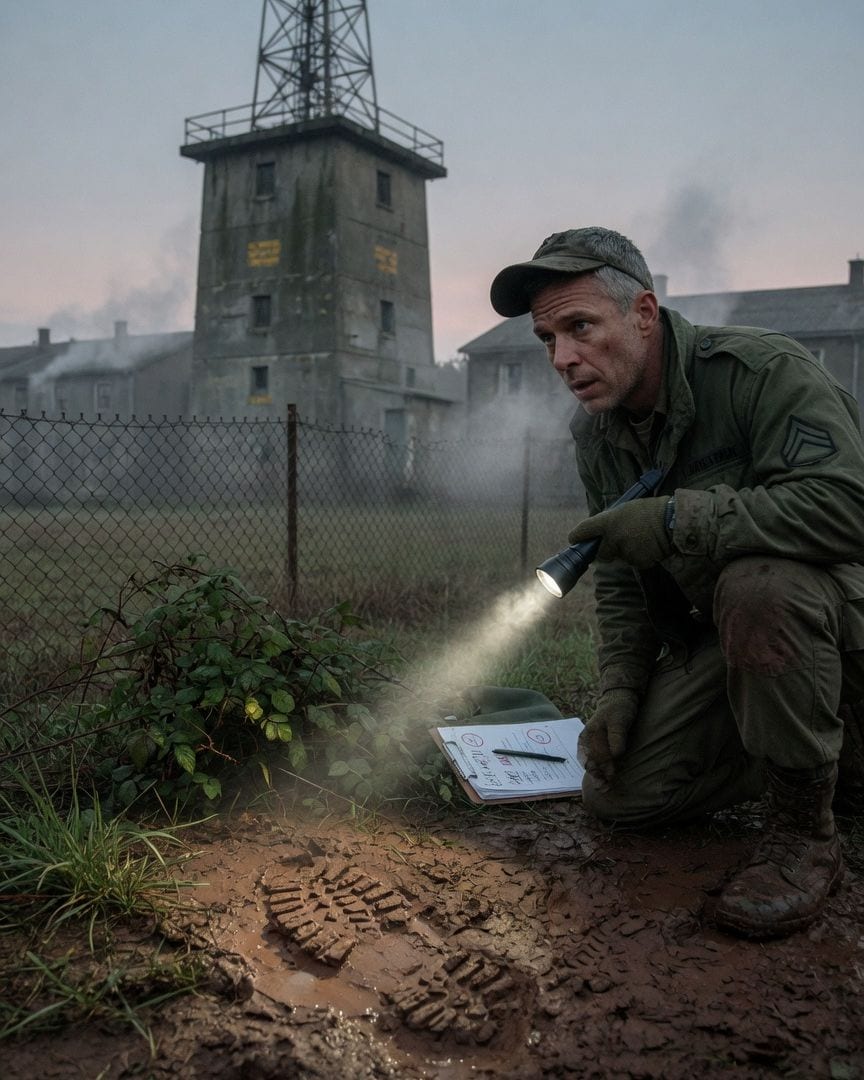
Sergeant First Class Eugene Halloran shivered in the pre-dawn chill of his West German garrison, facing a persistent, impossible problem: for a week, his company's morning report was always one man over. Every head count, every roll call confirmed each soldier present, yet the official manifest always showed an extra, unidentified man defying all logic and procedure. Dismissing a green recruit's unease, Halloran inspected a rarely patrolled perimeter section himself, where he discovered a civilian combat boot print leading from a cleverly re-spliced wire. The print led directly into the garrison's unsecured area, then abruptly vanished a few yards from the base of the old, silent relay tower, leaving an impossible question hanging in the foggy air.
A DMZ specialist finds a 1968 Cold War logbook entry, signed by a lost soldier, its ink shimmering faintly.
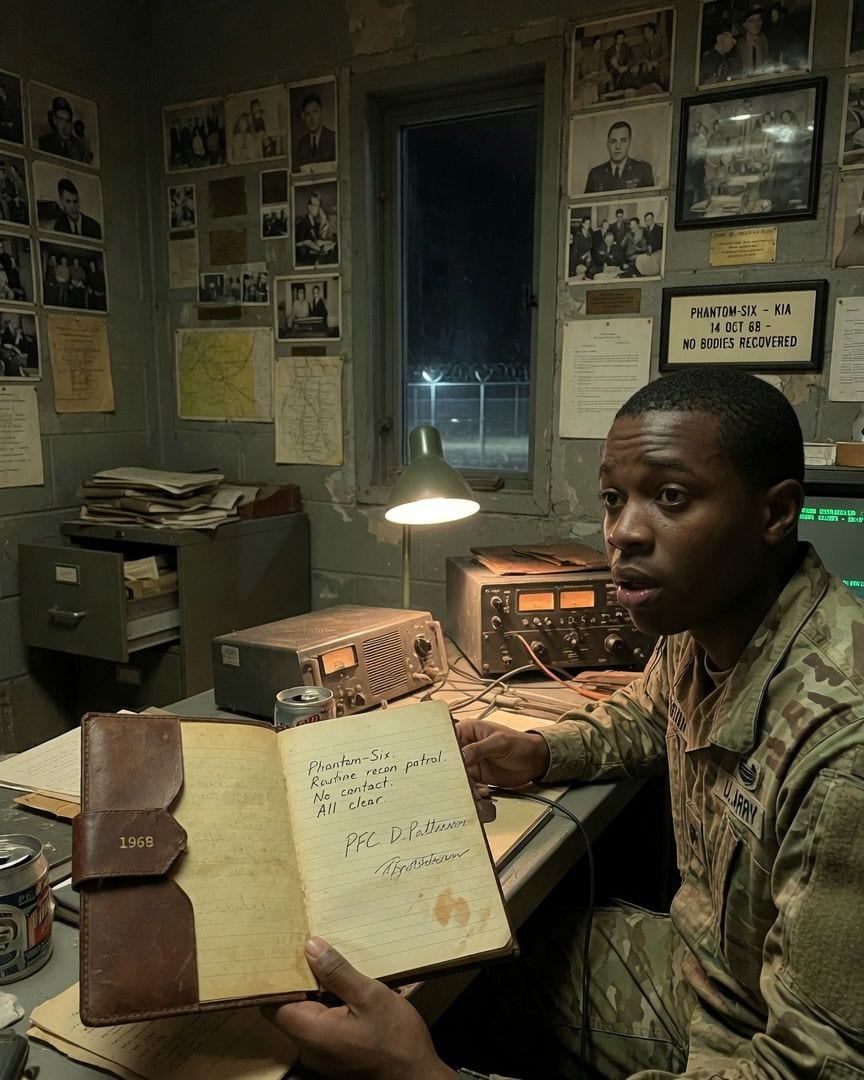
Specialist James Farr, on a long night shift at a desolate Korean DMZ outpost, meticulously monitored his console, a squared-away soldier accustomed to the quiet hum of equipment. His focus shattered when a faint, static-laced whisper ghosted from a dead channel, calling out 'Phantom-Six' — a unit lost near this wire in 1968. The urgent voice then specifically mentioned his tower window light, asking him to turn it off before it drew fire. Later, an old logbook from 1968 revealed an entry dated three days *after* Phantom-Six was officially lost, signed by one of the vanished soldiers, its ink subtly shimmering with an unnatural gleam.
A military specialist watched her lead truck vanish and reappear closer. The convoy log said 'no stops,' but her secret cargo felt warm with a 1978 Cold War project stencil.
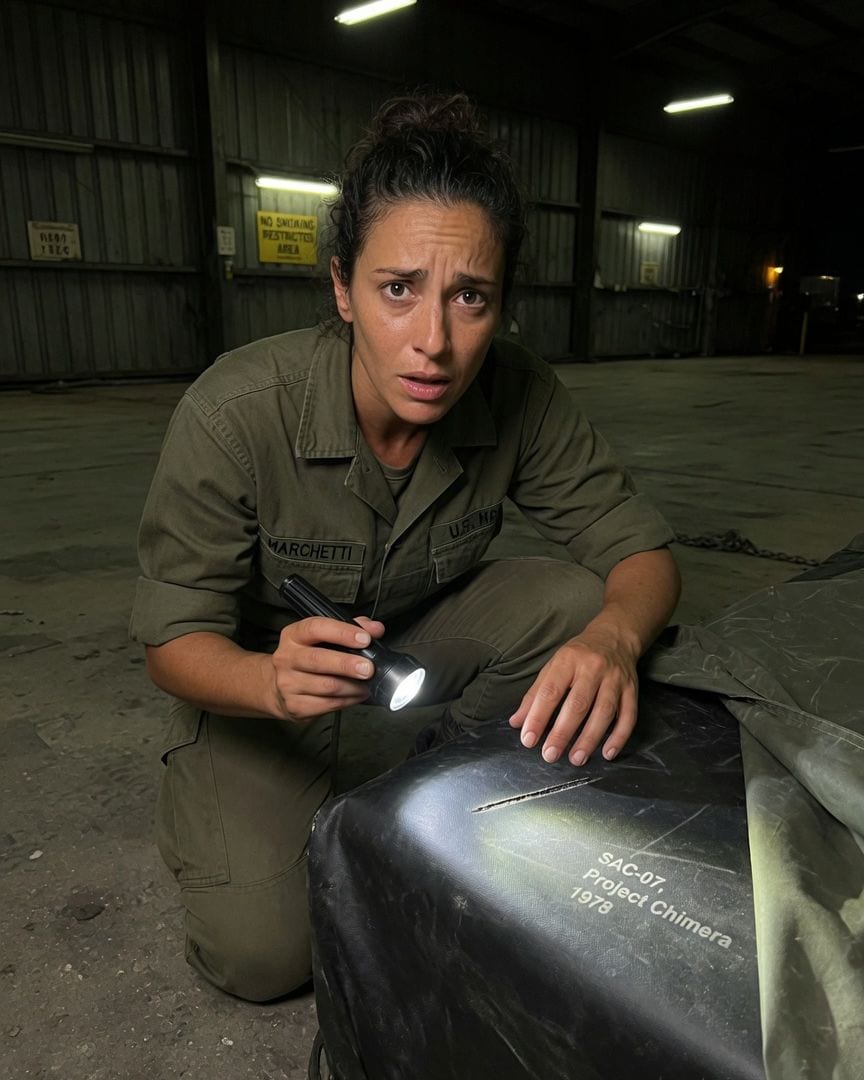
Specialist Cleo Marchetti knew her job was simple: keep the lead truck's taillights in sight across the empty Nevada desert. But at 0200, Sergeant Caldwell's truck simply blinked out, only to reappear three hundred yards closer moments later. Despite Cleo's shock, the official convoy log recorded a perfectly routine, non-stop journey, denying her very perception of reality. Her professional integrity demanded answers, leading her to the sleek, tarped craft she'd transported. There, she found a fresh scratch, and beneath it, an impossibly warm, faded stencil revealing a classified 1978 project name on a supposedly modern asset.
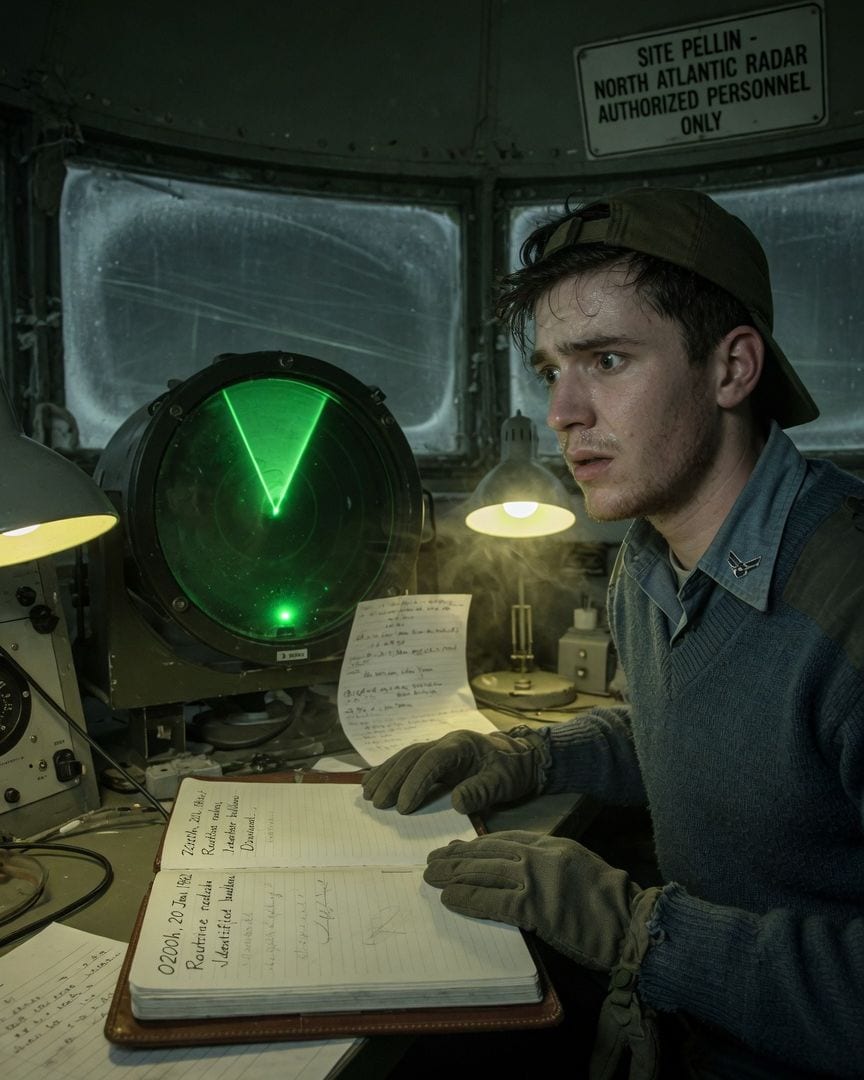
Nine days from closing, Cold War Site Pellin's Airman Vance watched his radar track a solid blip moving closer, dead in open sea where nothing could exist.
In the dimly lit dome of Site Pellin, Airman Ordway Vance, just days from discharge, ran his final radar sweeps before the base closed for good. Outside, the North Atlantic wind howled, but inside, only the hum of his console broke the silence. His last calibration had been clean, yet a single, unwavering green blip appeared on the scope, forty miles out, in open water where no vessel should be. The impossible return moved closer with each sweep, defying all logic and other sensors, until it sat static just beyond the coast fence line. What unseen presence did the radar truly hold in its unwavering green grip, contradicting the official record?
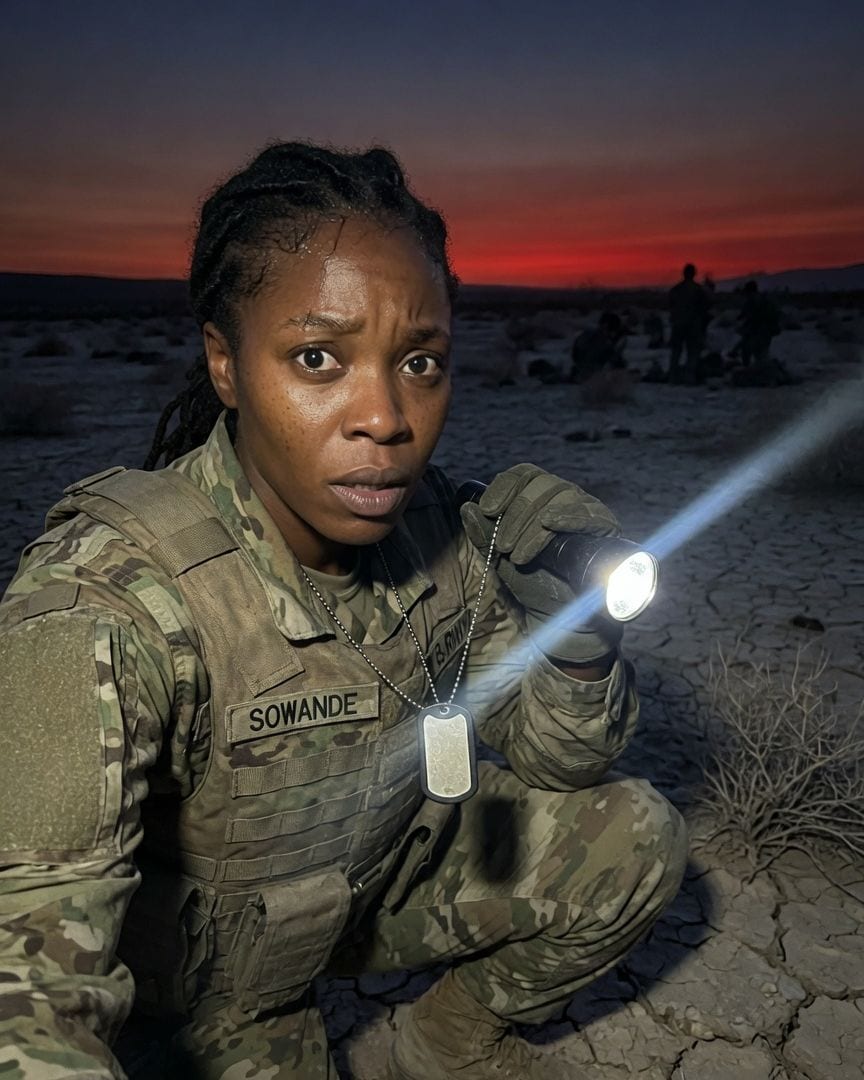
An hour from roll-out, Lieutenant Sowande's thirty-eight soldiers became thirty-nine. Then, where the extra man stood, she found a blank, warm dog tag.
Lieutenant Sowande stood on a cracked Mojave lakebed, her platoon's battle problem done, ready for routine accountability. But the count came back wrong: her thirty-eight soldiers were now thirty-nine. She knew every face and name, yet an extra man stood silent and solid in the ranks, defying all logic. With an hour until roll-out, she led a meticulous search, only for her specialist to unearth a tarnished dog tag where the phantom soldier had stood. It was strangely warm, smooth and blank, bearing no name or number, only an impossible heat.
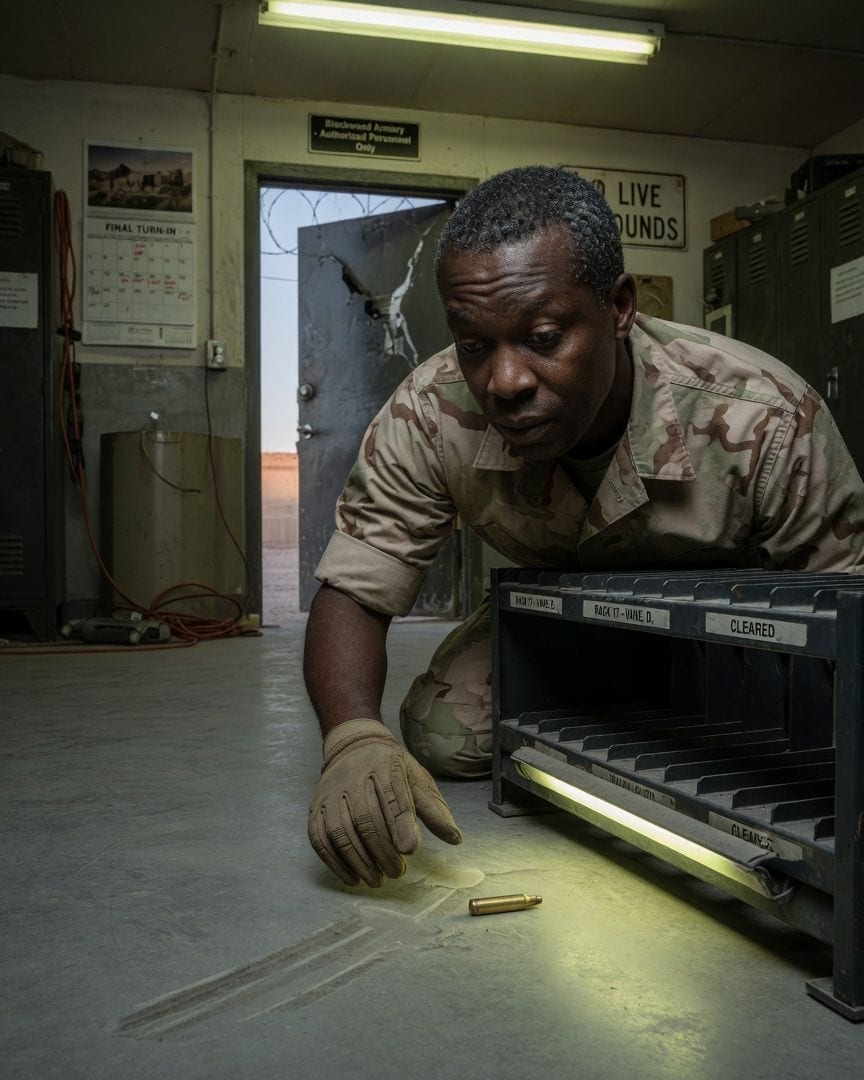
On his last weapon turn-in, Corporal Vane heard a rifle chambering rounds all night from inside the locked, empty armory. Then he found a spent casing.
Corporal Desmond Vane, a soldier known for his rigid adherence to procedure, meticulously cleared his M4 carbine for its final turn-in at the soon-to-be-decommissioned FOB Blackwood. Defying the armorer's odd rule, he ensured his weapon was absolutely empty, double-checking every component. Yet, hours later, from the locked and supposedly empty armory, Vane heard the unmistakable metallic click of a rifle round chambering itself, over and over, through the night. The next morning, a full inspection revealed no sign of intrusion, but beneath where Vane's carbine had been racked, a single spent brass casing lay on the pristine concrete, accompanied by a faint, impossible boot print. Who or what had violated the secure armory, and how?