My snowplow driver always flashes his beacons in thanks ahead of me on County 9. Dispatch says that plow was scrapped two winters ago.
The roar of the engine was a familiar comfort. I gripped the wheel of my snowplow, its powerful blades carving a path through the fresh powder on County 9.
It was 2 AM, my usual start, and the cold air outside felt like a clean slate.
Up ahead, through the swirling curtain of flakes, I saw it: the familiar orange glow of Plow 17, an older model, already clearing my lane. Its yellow beacons flashed a quick, friendly thank-you, a silent wave from the driver.
I flashed my own high beams in return, a common courtesy, a nod to the guy who always seemed to get a head start.
Just then, Gary Fletcher’s voice crackled over the radio, flat and tired. "Isabella, you’re the only unit on County 9 tonight, just confirming."
I frowned, glancing at the orange plow as it disappeared around the bend, its lights fading into the white. "Copy that, Gary. Just saw the other unit up ahead, Plow 17, I think. He’s already cleared a good stretch."
A pause, longer than usual, then a sigh from Gary. "Negative, Isabella. Plow 17 was decommissioned and scrapped two winters ago. You’re alone out there."
The contradiction hung in the cold cab, as heavy as the snow. My first thought was a mistake, maybe Gary was just tired. I tried to rationalize it.
Maybe an old timer, not on the official roster, just taking it for a spin? Or a new guy, test-driving a replacement, and Gary hadn't updated the system yet. My mind scrambled for a logical explanation.
There had to be one.
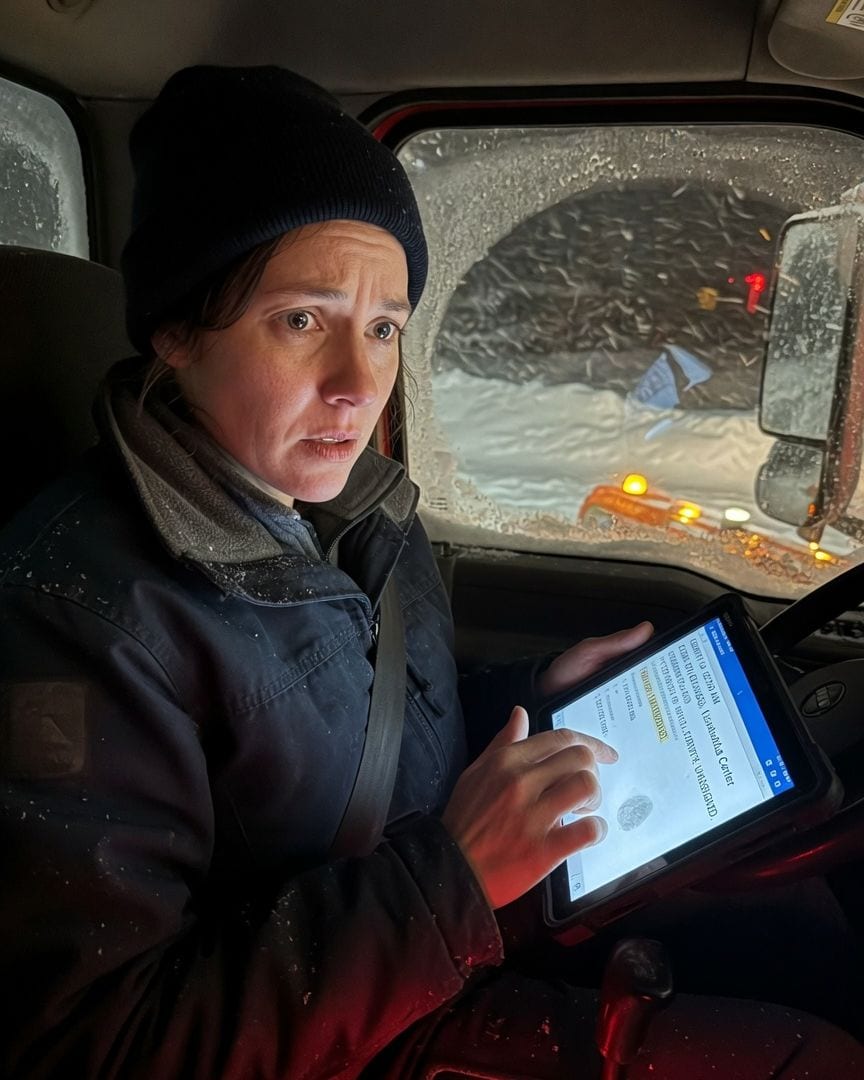
I pulled out my dispatch tablet, its screen a stark blue glow in the darkness, cutting through the red of my dash lights. I navigated to the shift log, tapping through the entries for County 9.
My own entry was there, 02:00 AM, Isabella Carter. I scrolled up, then down, looking for any other vehicle assigned to my stretch. Nothing. Just my truck, my route. This wasn't making sense.
I typed 'Plow 17' into the search bar, half expecting an error message, a confirmation that the ID was no longer valid. Instead, a single line appeared, stark and impossible: 'PLOW 17 (ORANGE), COUNTY 9, 02:45 AM. DRIVER: UNASSIGNED.'
My breath hitched. The timestamp was precise. Exactly when I’d seen it. Not a minute before or after.
I radioed Gary again, my voice tighter than I meant it to be. "Gary, my tablet shows Plow 17, unassigned, 02:45 AM. Is that a system error? It just popped up."
Another pause, longer this time. "Must be, Isabella. Happens sometimes with old vehicle IDs. Glitches. Just ignore it. Get back to your route."
But Gary's voice lacked its usual certainty. It sounded… dismissive. Like he wasn't just tired, but that he simply didn’t want to talk about it.
I couldn't ignore it. I pulled my plow to the side of the road, engine idling, the only sound the soft hiss of falling snow and the low rumble of the diesel.
The road ahead was empty, the orange plow long gone. I stared at the entry on my tablet. 'PLOW 17 (ORANGE), COUNTY 9, 02:45 AM. DRIVER: UNASSIGNED.'
The system confirmed the vehicle ID, the timestamp was precise, exactly when I saw the plow ahead of me. It wasn't just a random error. It was real.
I zoomed in on the screen, my finger tracing the line. In the empty field next to 'UNASSIGNED,' a faint, almost imperceptible smudge was visible, like a thumbprint pressed against the glass, just barely visible in the tablet's glow.
It wasn't a system error. It was an entry.
The smudge on the screen haunted me through the rest of my shift. It wasn't a glitch, not a system error. Someone, or something, had logged that plow.
The next day, after a few hours of uneasy sleep, I drove back to the depot. The morning light felt harsh and too revealing after the unsettling darkness of the night.
I found Walter Hughes, the retired mechanic, tinkering with an old salt spreader in the back lot. Walter, 68, had seen everything in his forty years here. His hands were gnarled, but his movements were still precise.
"Walter," I began, trying to sound casual, "you ever hear about a ghost shift? An orange plow, Plow 17, still running County 9?"
Walter straightened up slowly, his eyes, usually kind, now wary, fixed on something just past my shoulder. The wrench in his hand gave a soft clink against the metal spreader. "Some things," he said, his voice raspy, "they run themselves.
Always have. Best not to go looking for what ain't there, Isabella."
His words, not a denial, but a warning, solidified my unease. I pressed him. He just mumbled about 'old records' and 'things getting filed away.' It wasn't like Walter to be evasive. I remembered Gary saying Plow 17 was 'scrapped.'
I asked Walter where the old Plow 17 might have been stored before it was scrapped. He pointed vaguely towards a fenced-off, overgrown section of the depot's back lot, a graveyard of rusted, forgotten machinery.
Later that afternoon, bundled in my heaviest coat, I climbed the fence. The barbed wire snagged my sleeve, but I barely noticed.
Buried under a tarp, half-rotted and covered in a thick layer of grime, was the unmistakable shape of Plow 17. Its orange paint was faded to a dull peach, rust blooming across its chassis like an ugly disease.
The tires were flat. The blades were seized. But the beacons, though grimy, were intact.
I ran my hand over the driver’s side door, wiping away a century of dirt, and there it was: a faint, almost invisible scratch, running vertical along the orange paint.
Just like the mark I’d seen on the 'live' orange plow in the snow, that phantom vehicle I’d followed. It was the same plow. But it was dead. It had to be.
Walter’s vague hints had led me back to the depot’s administrative office, a small, dusty room filled with filing cabinets that smelled of old paper and stale coffee. He’d mentioned 'old paper logbooks.'
I found a stack, heavy with age, covering decades. The latest ones were digital printouts, but further back, they were handwritten, the ink often faded.
I was poring over a logbook from the late 90s, my finger tracing rows of names and vehicle IDs, searching for any mention of Plow 17, when the office door creaked open.
Gary Fletcher stood there, his face tight, framed by the dim light of the hallway. "Isabella, what are you doing in here? These are archived records. You're wasting time, and frankly, it's not your concern."
His tone was sharper than usual, a subtle threat in his voice. The air in the room suddenly felt cold. "Just checking something for Walter," I lied, my pulse quickening.
Gary just stared at me for a long moment, his eyes narrowed, then shook his head. "Some things are best left alone, Isabella. You’re a good driver. Don't go looking for trouble."
He left, pulling the door almost shut behind him, but his presence lingered, a cold draft in the room. I felt watched, the hairs on my arms prickling.
Later that night, alone in my apartment, the silence felt heavy. My phone buzzed on the coffee table. An unknown number. I hesitated, then opened the message. The text was short, chillingly precise: 'SOME ROUTES AREN'T FOR YOU.'
The anonymous text solidified Isabella’s fear. It wasn’t just a glitch, not just an old timer. Someone was trying to warn me, or scare me.
I drove straight to Walter Hughes’s small house on the edge of town, the message still burning on my screen. His porch light was a weak yellow against the dark, snow-dusted woods.
I showed him the text, then spread the old logbooks across his kitchen table, open to the pages I’d found with the 'unassigned Plow 17' entries. Walter's face crumpled, the lines around his eyes deepening.
"They're watching you now," he whispered, his voice thin, almost a wheeze. "I told you to leave it alone."
I pressed him, demanding answers. "Who are 'they'? What is this plow?"
Walter finally broke. He sat down heavily, wiping his hands on his overalls. "It's not a 'who,' Isabella. It's… the shift. It's always run. Every 13th of the month, always 2 AM, always County 9. For decades."
He pointed to the logbooks, his gnarled finger moving from entry to identical entry, showing me a consistent, impossible pattern stretching back to the 70s. The same vehicle ID, the same route, the same time, the same 'UNASSIGNED' driver.
"People noticed, of course. Tried to ask questions. Some left. Others… their routes changed. Or they had 'accidents.' Robert Hughes, a dispatcher back in '72, he dug too deep. Disappeared without a trace.
They just put 'unassigned' on his shift log, same as the plow. It’s not a person driving it, Isabella. It’s the routine. It’s the route itself, running.
And once you see it, once you acknowledge it, you become part of it. Like that text. They want you to acknowledge it."
I was numb with dread, staring at the pattern Walter had shown me. The specific dates, the unassigned Plow 17 entries, the chillingly consistent 2 AM start. Robert Hughes's name, scrawled in an old logbook from 1972, stood out.
Walter had mentioned his disappearance.
My fingers, cold despite the warmth of Walter's kitchen, fumbled through the brittle pages. Tucked between the entries for November and December 1972, Isabella found it: a faded, yellowed newspaper clipping.
The headline, stark and starker in the dim light of Walter’s living room, read: 'Local Dispatcher Robert Hughes Disappears.'
The article detailed his last known shift, the night of December 13th, 1972—a date that perfectly aligned with one of the 'unassigned' Plow 17 entries Walter had pointed out. He hadn't just disappeared; he had vanished on that night.
As I stared at the clipping, the implications tightening like a knot in my stomach, my phone vibrated in my hand. A dispatch alert, glowing on the screen.
The automated voice was flat, devoid of Gary’s usual gruffness: "Plow 17, County 9. Driver: Isabella Carter. Acknowledge." It wasn't a question. It was a command.
Fear warred with a cold, desperate resolve. I knew I was now marked, drawn into the pattern that had consumed Robert Hughes. I couldn't acknowledge that dispatch.
I couldn't become another 'unassigned driver,' another blank entry in a ledger spanning decades.
Drawing on Walter’s old connections and his hushed advice about 'the real archives,' I spent the next day at the town’s public works department. The basement was a labyrinth of dusty shelves and forgotten files.
I navigated through stacks of blueprints, decommissioned equipment manifests, and half-eaten boxes of old donuts. Finally, buried deep within an unmarked cabinet, I found it: the original 'County 9 Snow Removal Protocol,' dated 1968.
It was a thick, bureaucratic document, full of mundane details about salt calibration and blade maintenance. But buried deep within an addendum, a single section, chillingly precise, outlined 'Contingency Route 7.'
It described a specific route on County 9 for 'Plow 17,' to be run 'regardless of personnel assignment or operational status.'
It stated, in stark, unfeeling language, that any 'anomalous log entries' for this route were to be 'filed as system errors and disregarded.'
The town, the institution itself, hadn't just known; they had codified it. This wasn't a haunting; it was a policy.
A routine that had achieved autonomy, a shift that had to be run, a plow that had to be seen, whether a driver existed or not.
The flashing beacons, the cleared lane, the 'driver's wave'—all manifestations of a decades-old, self-perpetuating system. Robert Hughes, and now Isabella, were simply anomalies to be absorbed or excised.
That night, I was back on County 9, the snow falling heavier than ever. My plow idled, the engine a low thrum against the vast silence.
The automated dispatch message for Plow 17 still glowed on my tablet, waiting for acknowledgment, a digital ghost demanding compliance.
I knew if I tapped 'Acknowledge,' I would be irrevocably bound, another name in the long, silent ledger of the ghost shift.
The radio crackled again, cutting through the hiss of the falling snow. The flat, automated voice repeated: "Plow 17, County 9. Driver: Isabella Carter. Acknowledge."
Ahead, through the swirling snow, I saw it: the orange plow, its beacons flashing, a silent, unwavering pulse in the whiteout.
It was waiting for me to fall in line, to follow its cleared path, to become part of its endless routine. It wasn't an antagonist I could fight, but a system I could either obey or break.
I made my choice.
With a sudden, decisive jerk, I spun the wheel of my plow, pulling hard off the road. The massive vehicle lurched, its tires grinding, sinking deep into a massive snowdrift on the shoulder.
The engine sputtered, coughed once, then died, plunging the cab into an abrupt, terrifying silence, broken only by the hiss of the falling snow against the windshield.
I ripped the key from the ignition, leaving my dispatch tablet, the radio still crackling faintly with the automated command, behind on the passenger seat.
I pushed open the heavy door, the cold wind biting at my face, instantly numbing my cheeks.
Stumbling through the deep, unbroken snow, my boots sinking with every step, I turned my back on the disabled plow, on County 9, on the flashing orange beacons ahead that continued their silent vigil, their rhythm never broken.
I walked away, into the blinding white, choosing to become an absence rather than an assigned presence, a break in the pattern, a ghost of my own choosing.
Isabella Carter vanished from the small town. Her abandoned plow was eventually recovered, deemed a 'mechanical failure due to extreme weather.' Gary Fletcher was reassigned to day shifts, citing 'stress' and 'unexplained personnel issues.'
Walter Hughes, seeing the pattern repeat, quietly retired for good, moving in with family upstate.
The snowplow depot, after a brief search, hired a new night dispatcher, a young man named Eric Ashford, fresh out of vocational school, eager for the work.
Months later, long after the snow had melted and the county roads were clear under a summer sky, a new post appeared on a local town forum, titled 'Strange thing on County 9.'
It described seeing an old orange plow, its beacons flashing, on a clear night with no snow, its driver waving to the bewildered poster.
A single comment appeared beneath the post, two hours after it was posted, reading:
Is that so?
If this one got to you
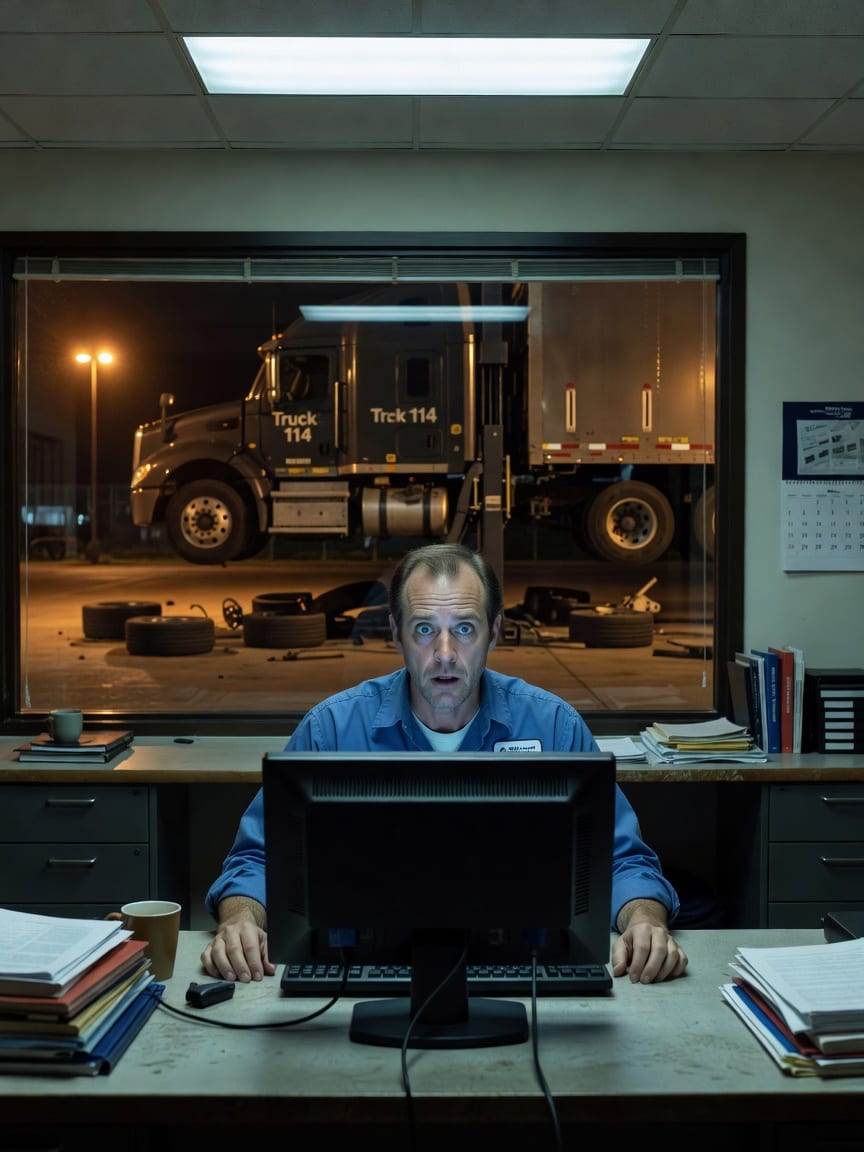
Truck 114 left the yard last night, CAD says. It burned forty miles of fuel. But my truck 114 was up on the lift, no wheels, all shift.
It was another quiet Wednesday overnight in the dispatch office until the CAD system pinged. My screen blared, showing Truck 114 logged outbound for forty miles and back, burning forty gallons of fuel. But I knew that very truck was immobile, suspended on a lift in Bay 4 with its drive wheels removed.
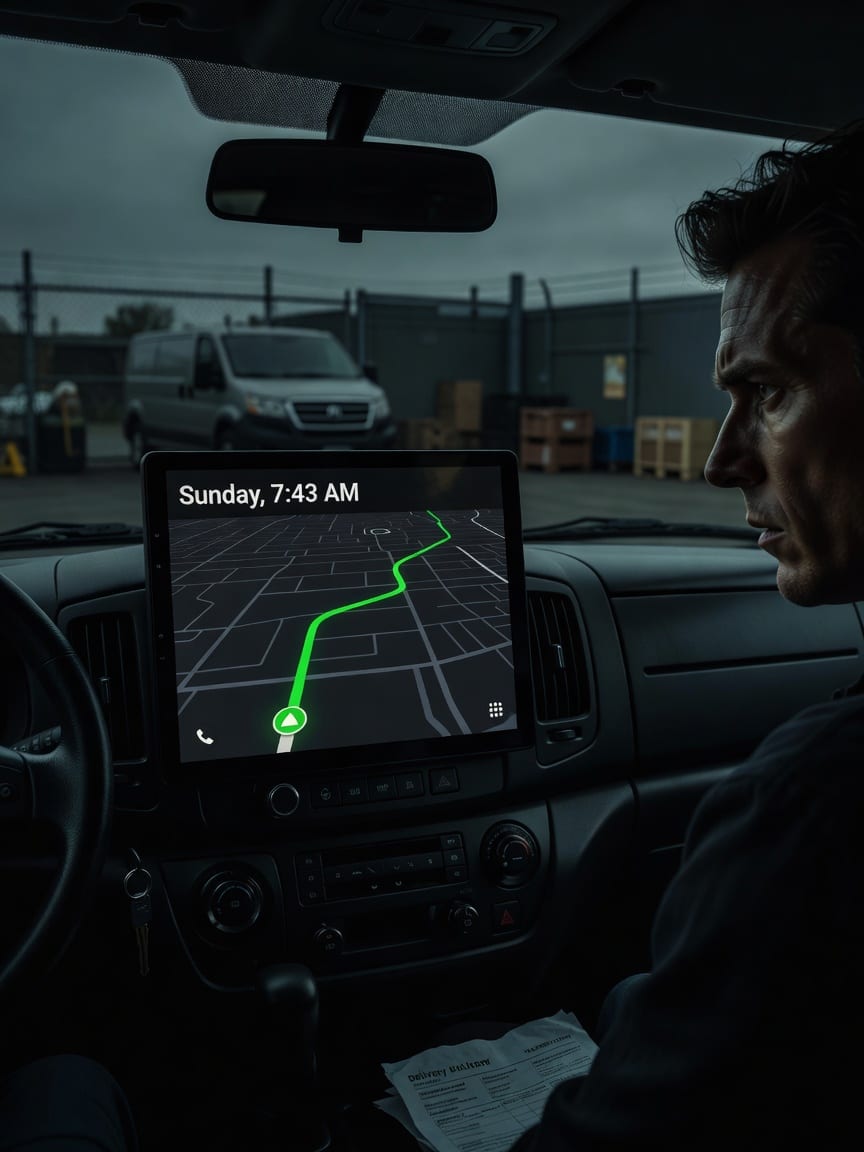
My delivery van drove 130 miles last Sunday, stopping for four hours in another state. It never left our locked yard. The GPS log drew the whole trip, timestamped to the minute.
I was just doing my job, sitting in the dispatch office with my manager Joel, when he pulled up the GPS log for my delivery van, Unit 74. It showed a 130-mile round trip to Delaware, engine on for four hours, with a distinct stop, all while my van was locked in the yard and I was home. The camera footage confirmed it hadn't moved an inch, yet the system insisted it had traveled hundreds of miles.
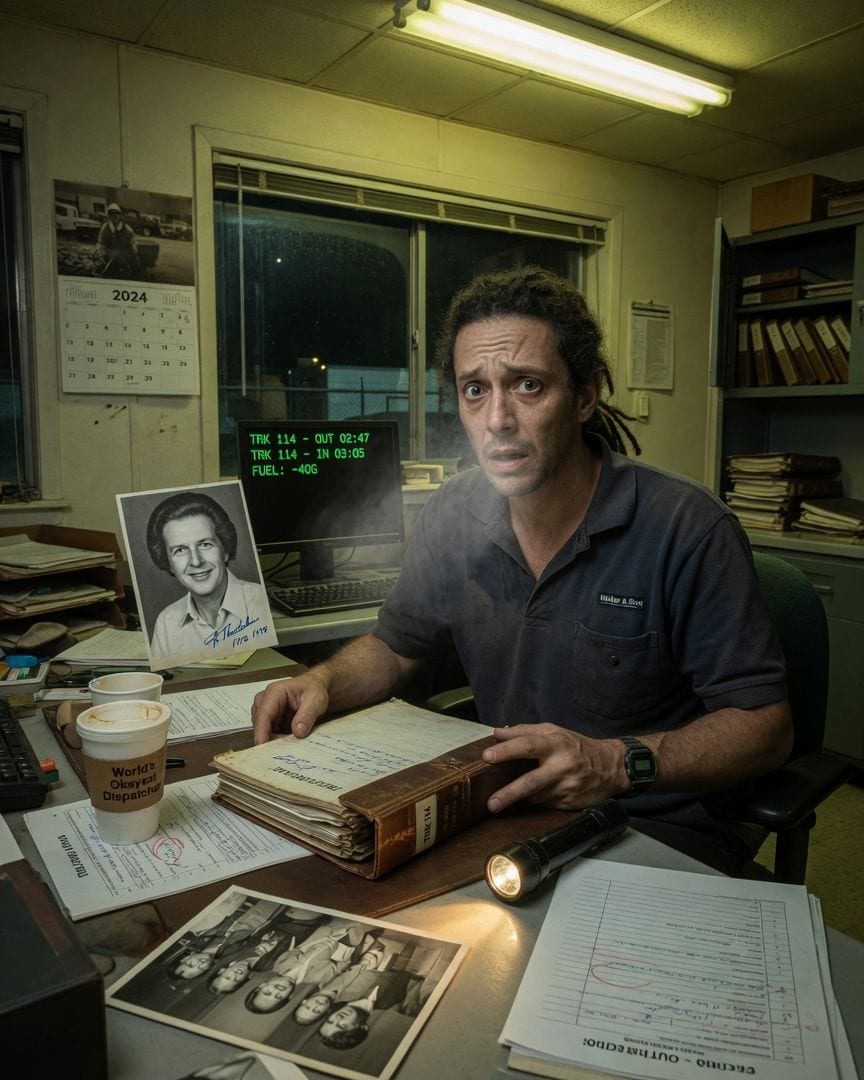
Truck 114 logged forty miles gone last night. It was on the lift, no wheels, and I was the only dispatcher.
My shift in the freight yard dispatch office was quiet, just routine monitoring. But then the CAD system logged Truck 114 moving out for a forty-mile run. That truck was impossible; it had no wheels and was on blocks in maintenance all week.
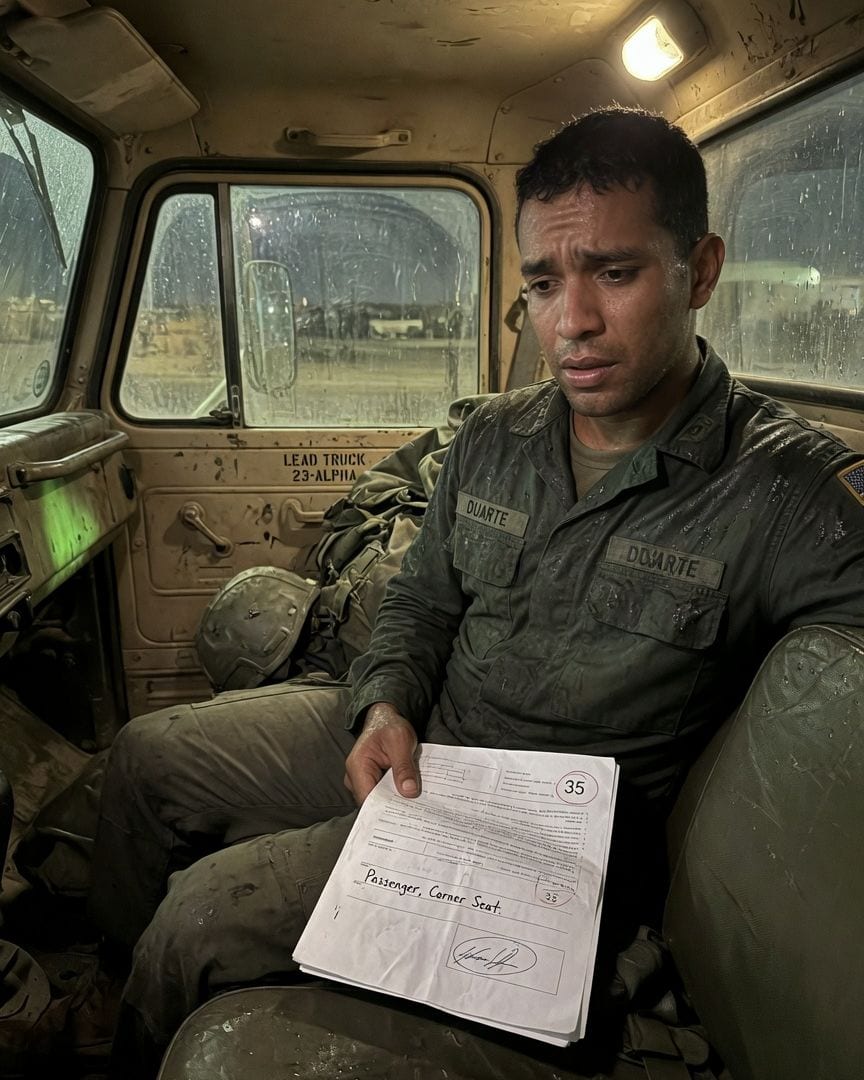
Specialist Duarte, two weeks from going home, found his empty truck seat warm and dented — then his service record showed a ghost deployment he never made.
Specialist Felix Duarte was just two weeks from going home, but a final convoy mission held an unsettling mystery. Soaked and running late, he squeezed into the lead truck's forbidden corner seat, a place every soldier knew to leave empty. Hours later, stepping out into the desert, he found the seat was strangely warm and distinctly dented, as if two unseen bodies had pressed in beside him. The official manifest then listed an extra soul for his truck, simply 'Passenger, Corner Seat,' signed by his own hand. What impossible presence had shared Specialist Duarte's ride, and what other records might it have altered?
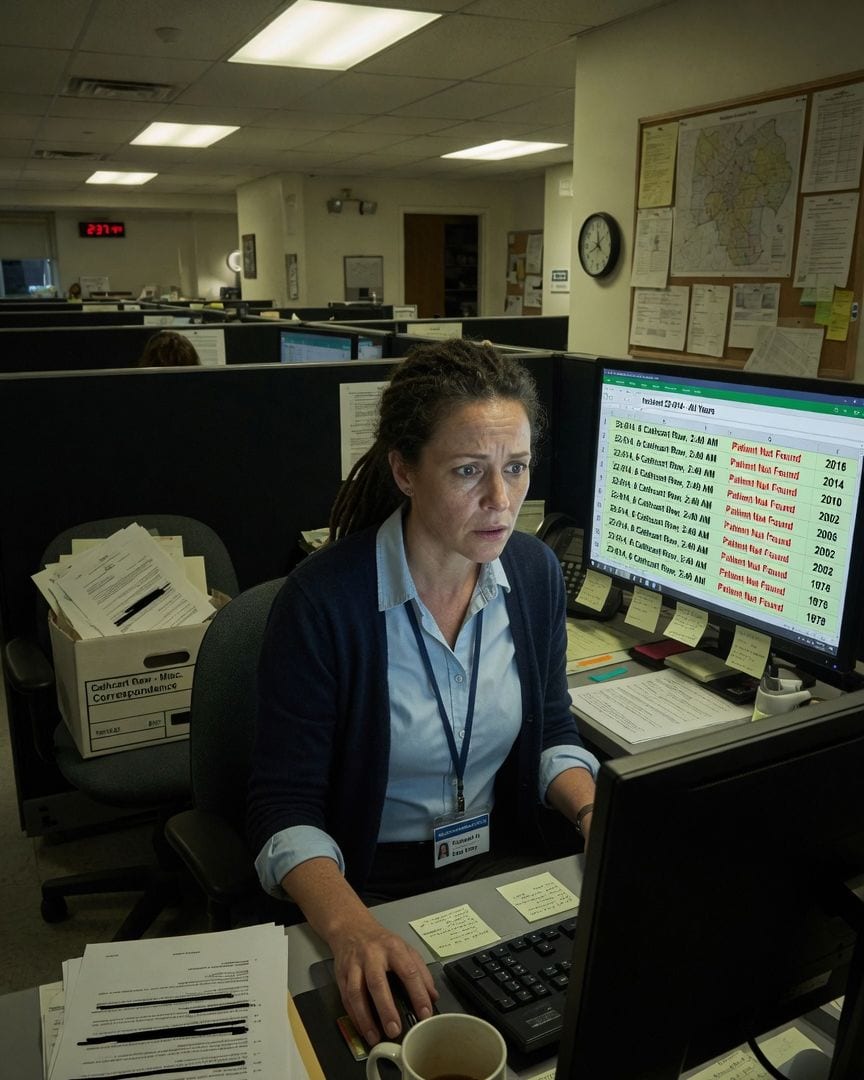
My computer log shows the same 2:40 AM call to Cathcart Row, every four years since 1978, always closed 'patient not found'.
Working data entry for the County Ambulance Trust, I found a routine incident logged as 'Patient Not Found.' But digging deeper, I discovered the exact same phantom call had repeated every four years for over forty years, always at the same address, always at 2:40 AM. Then I found a heavily redacted memo linking it to my own street.
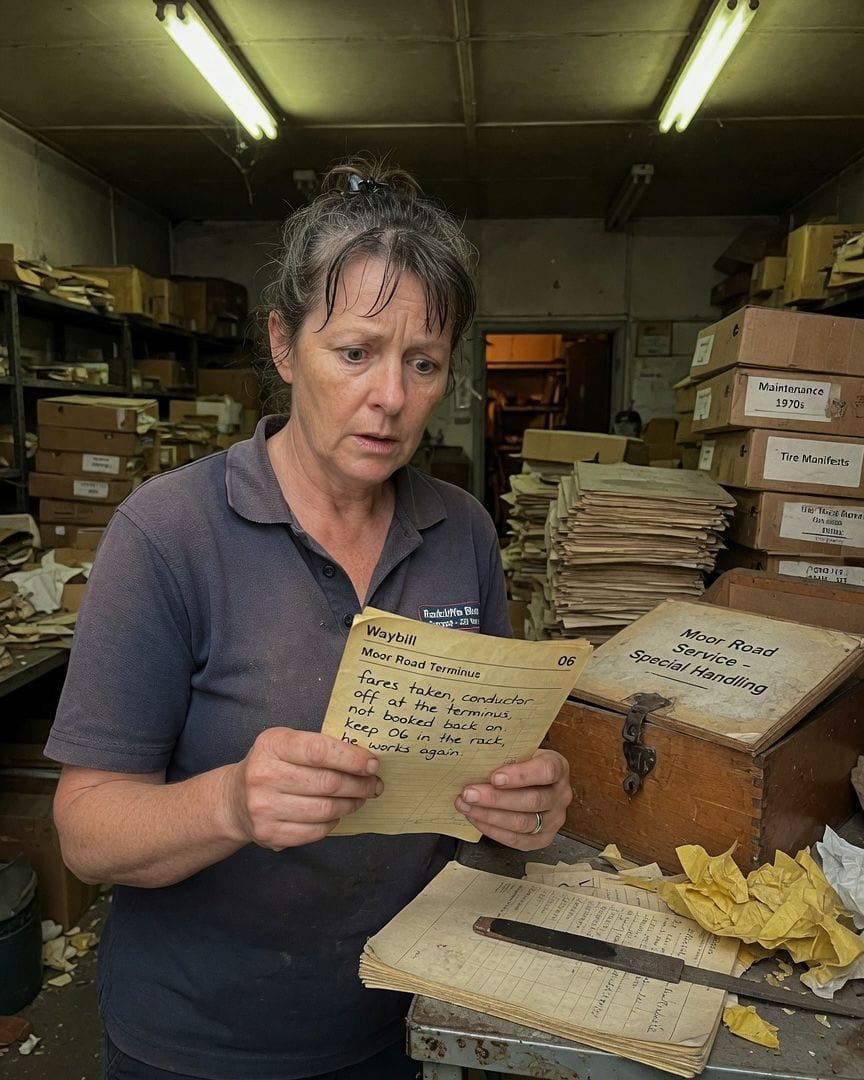
Our depot's Waybill 06 filed a moor road service we stopped running years ago. Every eight years since 1956, it closes: 'keep 06 in the rack, he works again.'
Sorting waybills in the depot, I stumbled across a form for the Moor Road Terminus. That route was decommissioned decades ago, but this waybill had a chilling handwritten instruction: 'keep 06 in the rack, he works again.'