My tunnel control log shows dead fans ran at 2:55 AM, stamped with my user. The whole ventilation bank was tagged out for service, but airflow sensors recorded the surge anyway.
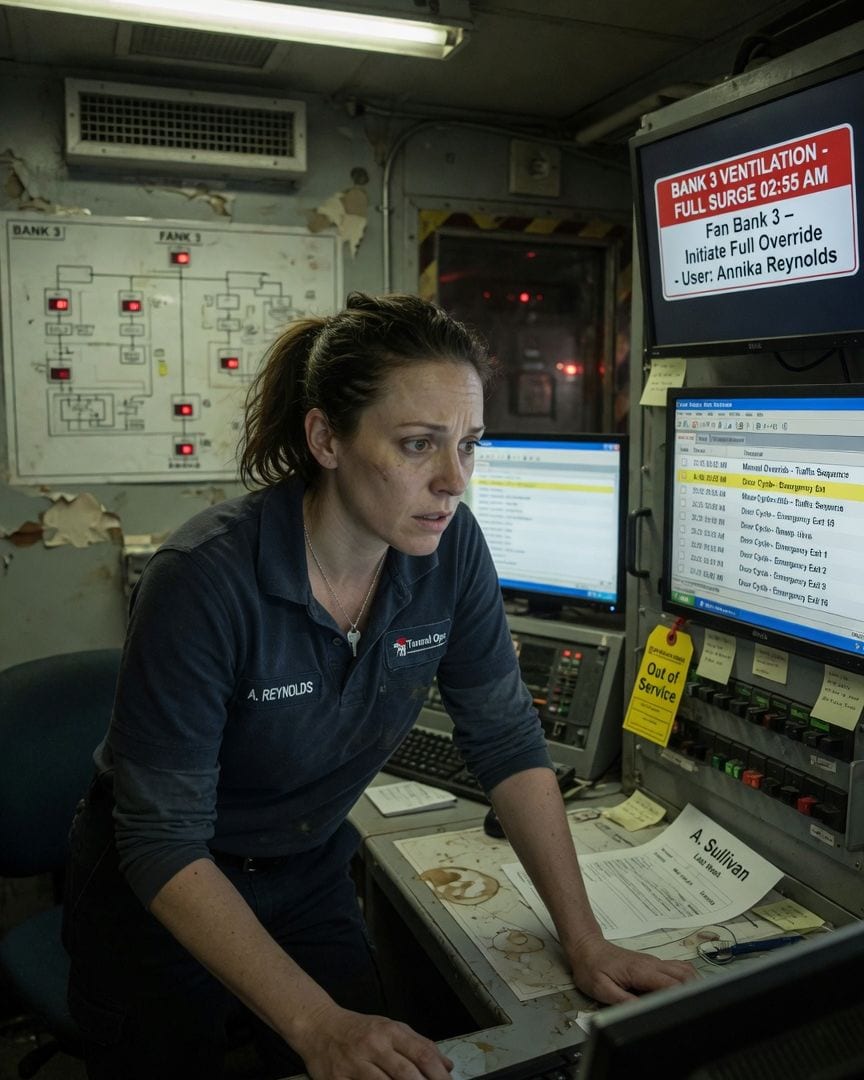
The low hum of distant traffic was the only sound in the tunnel control room, a steady pulse against the deeper thrum of the ventilation system. My eyes, however, were fixed on a blinking alert on the main console.
It wasn't just blinking; it was screaming in digital silence. The northbound bore's main ventilation bank, Bank 3, registered a full-capacity surge at 2:55 AM. I stared at the time, then at the corresponding command log: Fan Bank 3 – Initiate Full Override – User: Annika Reynolds.
A cold knot tightened in my stomach. Bank 3, as far as every system schematic and physical lockout tag was concerned, was offline.
Its breakers were open, red 'FAULT' indicators glowing steadily on the schematic, and the physical 'Out of Service' tags were hanging right there on the panel in the adjacent utility room, bright yellow plastic against the dull grey metal.
I got up, walked to the utility room, and checked them myself. The yellow tags were precisely where I’d left them, cable-tied to the handles of the open breakers. Nothing had moved.
Back at the console, the live schematic still showed Bank 3 as offline, a dead system. Yet, the airflow sensors, calibrated to the inch, had recorded the surge. A massive, inexplicable rush of air, precisely at 2:55 AM.
My user ID. The physical tags. The schematic. The log. None of it matched.
I tried the obvious explanations first. A system ghost in the machine, a cross-wired sensor, some obscure IT error that only manifested in the dead of night. I called Charles Thornton, my supervisor, but only got his voicemail.
Not that I expected him to pick up at three in the morning. So I pulled up the system’s audit trail, filtering for any command to Bank 3 in the last 24 hours.
The 2:55 AM entry under my name was the only one. Isolated. Impossible.
Curious, and with a growing sense of unease, I broadened my search. I looked for any ‘unauthorized’ or ‘anomalous’ commands across the entire tunnel system for the past month.
A few minor, inexplicable events popped up: a light bank toggled in a disused access shaft, a fire suppression test initiated in a closed-off section that hadn't seen a crew in years. Each was logged with a user ID.
And then I saw it. One name, appearing more than once, always tied to these minor, inexplicable events: ‘A. Sullivan.’ I didn’t recognize it. I checked the current shift roster. Nothing.
I checked the general employee directory, filtering for active personnel. No ‘A. Sullivan’ worked here, and hadn't for years, according to the digital records I could access. Just a blank.
But the name kept appearing in the anomalous logs, sometimes even preceding my own user ID on minor, inexplicable events. A door cycle in an emergency exit, then a ventilation shift in an adjacent sector.
Both marked by ‘A. Sullivan,’ then by Annika Reynolds. I tried to cross-reference the name in the central employee database again, searching for active or recently departed personnel.
The system whirred, the hard drive chattering quietly in the rack beside me, then returned a flat ‘User Not Found’ message. I tried variations, even just ‘Sullivan.’ Nothing.
The screen glowed, empty of ‘Sullivan,’ a digital void where a name should be.
Yet, I held a printout in my hand, a piece of plain white paper from the industrial printer, showing ‘A. Sullivan’ issuing a manual override to a traffic light sequence just last week, an override that had briefly stalled southbound traffic for no apparent reason.
It was undeniably real.
The next morning, the first thing I did was corner Charles Thornton in the break room, a cold knot still in my stomach.
He was leaning against the counter, sipping lukewarm coffee, looking like he’d slept about as much as I had.
“Charles,” I started, holding up the printout with ‘A. Sullivan’s’ name. “I need to know who this is. And what happened with Bank 3 last night.”
He barely glanced at the paper, waving a dismissive hand. “Oh, that’s just an old system bug, Annika. Happens sometimes. Nothing to worry about.” His tone was too casual, too practiced.
It was the kind of tone someone uses when they’ve said the same thing a hundred times before. I didn’t buy it. Not for a second.
That night, on my next shift, I dug deeper. The ‘A. Sullivan’ logs haunted me. Charles’s dismissal just made it worse. I found an obscure ‘historical logs’ archive, buried on an older, less-used server.
Accessing it was a puzzle, requiring an old, deprecated system key I remembered seeing mentioned in some dusty manual. After half an hour of wrestling with terminal commands, I was in.
I broadened my search, not just for a month, but for 'A. Sullivan' across decades. The name wasn't just a recent anomaly. It was a pattern.
'A. Sullivan' appeared in logs from twenty, thirty, even forty years ago, always associated with minor, unexplainable system glitches, always on the night shift. The pattern was unnervingly consistent, almost like a routine.
A faint, metallic smell, like old copper and ozone, seemed to rise from the keyboard as I scrolled.
As I scrolled through the ancient logs, a cold draft brushed the back of my neck. All the doors and windows in the control room were sealed. The building was a concrete bunker.
I glanced up, scanning the empty room, my heart suddenly thumping against my ribs. Nothing. Just the whir of the servers and the distant thrum of the tunnel.
A moment later, the main console's screen flickered, a sudden brief jump in the display.
Then, a single, unbidden line of text appeared in the command prompt, as if someone had typed it in from an invisible keyboard: 'SYSTEM CHECK: VENTILATION BANK N-BORE.'
It was the exact phrase 'A. Sullivan' had used in a log entry from 1987 I’d just scrolled past, identical right down to the capitalization. My breath hitched.
I closed the archive with a frantic click, feeling a distinct, undeniable sense of being watched, as if something in the room had just reacted.
Later that shift, my personal phone, which I'd left on the desk, vibrated. The screen showed a single, unknown number. My fingers trembled as I answered.
A crackle of static filled my ear, then a low, distorted whisper that sounded like it was coming from a great distance, echoing in the tunnel itself: “Don't… look… for… him.” The line went dead.
I checked the caller ID again. Blocked number. The message felt like a direct response, a warning, not from Charles, not from a coworker, but from something else entirely.
Shaken, I returned to the archive, but this time I searched not for commands, but for 'A. Sullivan' in old personnel files. After another painstaking search through archaic directories, I found it: Arthur Sullivan. Night shift operator.
Listed as 'Missing, presumed deceased' after a 'tunnel incident' in 1993. The report was thin, vague, heavily redacted in places, but it was real. An actual person. I cross-referenced the incident date with the system logs.
On that night, there was a flurry of 'A. Sullivan' commands, erratic and desperate, a chaotic sequence of fan overrides, light toggles, and access door cycles, before they abruptly ceased.
Then, a week later, they resumed, calmer, more routine, exactly as I’d seen in the decades-old logs. It was as if Arthur Sullivan had disappeared, but his operational presence, his ghost, continued.
I found a faded, pixelated photo attached to his file: a man with kind, tired eyes, looking eerily familiar, like someone I might have passed in the hallway, someone who belonged.
The 'system bug' Charles mentioned now clicked into place, not as a glitch, but as a decades-long cover-up, a convenient excuse. The cold draft, the whisper, the targeted system check – it wasn't a warning to stop looking.
It was a warning from Arthur himself, or perhaps from the entity that took him, that I was getting too close to understanding how he continued to operate.
I dove deeper into the archived incident reports, searching for patterns beyond Arthur Sullivan.
I started finding other 'missing operator' reports, stretching back even further, each correlating with a sudden surge in peculiar system commands around the time of their disappearance.
The language in these older files was carefully neutral, full of bureaucratic euphemisms, but the implication was clear: this wasn't an isolated event.
There were faint, handwritten annotations in the margins of some files, notes about 'the night shift problem' and 'staffing instability.' One note, dated just after Arthur Sullivan's disappearance, read: 'Another one, like Sullivan, just when we thought it had settled.'
As I scrolled, a more recent print date caught my eye on a file, from just last week.
It was an internal security memo, heavily redacted, but my eyes caught a single, unredacted line near the bottom, chilling me to the bone: '...recommending increased monitoring of user 'Annika Reynolds' for unusual system access patterns.' My own name.
In a file about the missing. The pattern wasn't just continuing; I was now part of it.
I slammed the file shut, the sound echoing in the silent control room. The tunnel itself, I realized, wasn't just a place, a vast concrete artery under the city.
It was a kind of trap, a consciousness that drew in and imprinted its night operators. It ‘needed’ them to run, to maintain its routine, even after they were gone. Arthur Sullivan was just the latest.
The tunnel, or whatever presence resided within its systems, had absorbed him, and now it was reaching for me.
The commands logged under my name, the 'system check' from Arthur, the phone call – it was all designed to engage me, to pull me deeper into the tunnel's pervasive ‘operations.’
I saw the pattern of light toggles, fan surges, and traffic redirects not as glitches, but as the tunnel's ongoing ‘work,’ a ghost shift, a digital echo of human hands trying to keep the vast concrete beast running.
Charles Thornton knew. He was part of the institutional knowledge, the quiet acceptance, the ‘known bug’ that was actually a hungry routine.
I made a decision. I couldn't fight the tunnel directly, but I could cut off Arthur Sullivan's connection, or at least the digital tether that kept his operational ghost active.
I identified the specific, outdated server that housed the historical logs and, more importantly, the residual programming hooks that Arthur's digital presence seemed to be using.
It was a delicate, dangerous operation, requiring me to physically access a secure maintenance room deep beneath the control center. I grabbed a flashlight and a heavy-duty wrench.
The air down there was thick with the smell of ozone and damp concrete, a chill permeating everything, a heavy stillness that pressed in on my ears.
As I worked, trying to unseat the power conduit to the old server, the tunnel fought back. The dim maintenance lights above flickered wildly, threatening to plunge the room into darkness.
Emergency sirens began to wail faintly from distant sections, a low, mournful sound, like a cry for help. I could almost feel the vibrations through the concrete floor.
From the control room monitors above, I heard the faint, frantic beeping as they flashed with a torrent of ‘A. Sullivan’ commands, more desperate than any I’d seen.
A cold, invisible hand pressed against my shoulder, a distinct weight, and a whisper, just barely audible over the wailing: “Don’t go.” With a final, desperate wrench, my hands shaking, I pulled the main power conduit for the old server.
The room plunged into near silence, save for the distant hum of the tunnel. The frantic commands on the monitors above, I knew, had ceased. Arthur Sullivan’s digital ghost, at least this manifestation of it, was silenced.
The next morning, Charles Thornton was furious about the 'unauthorized system shutdown,' his face a mask of barely controlled anger. But I stood my ground, producing the documented pattern of anomalies and disappearances, the faded photos, the cryptic annotations.
The official report filed that week stated 'critical system malfunction' and 'legacy hardware decommissioned,' burying the true reasons under layers of technical jargon. I submitted my resignation that day, my notice period a blur of numb routine.
I never set foot in the tunnel control room again. The tunnel operates, as it always has. A few weeks later, a new night operator was hired, a young man named Benjamin Norwood, eager for the quiet shifts.
I still take the long way home, avoiding the tunnel entirely. The silence of my new apartment is a comfort, but the memory of the cold hand and the whisper never truly fades.
I hear the news sometimes, brief reports of 'unexplained traffic delays' or 'minor system glitches' in the old tunnel. Nothing major. Nothing that makes the papers.
But sometimes, late at night, I swear I hear a familiar voice calling for a system check, just barely audible over the highway drone, and I wonder if Benjamin Norwood has noticed anything strange yet on his shift.
If this one got to you
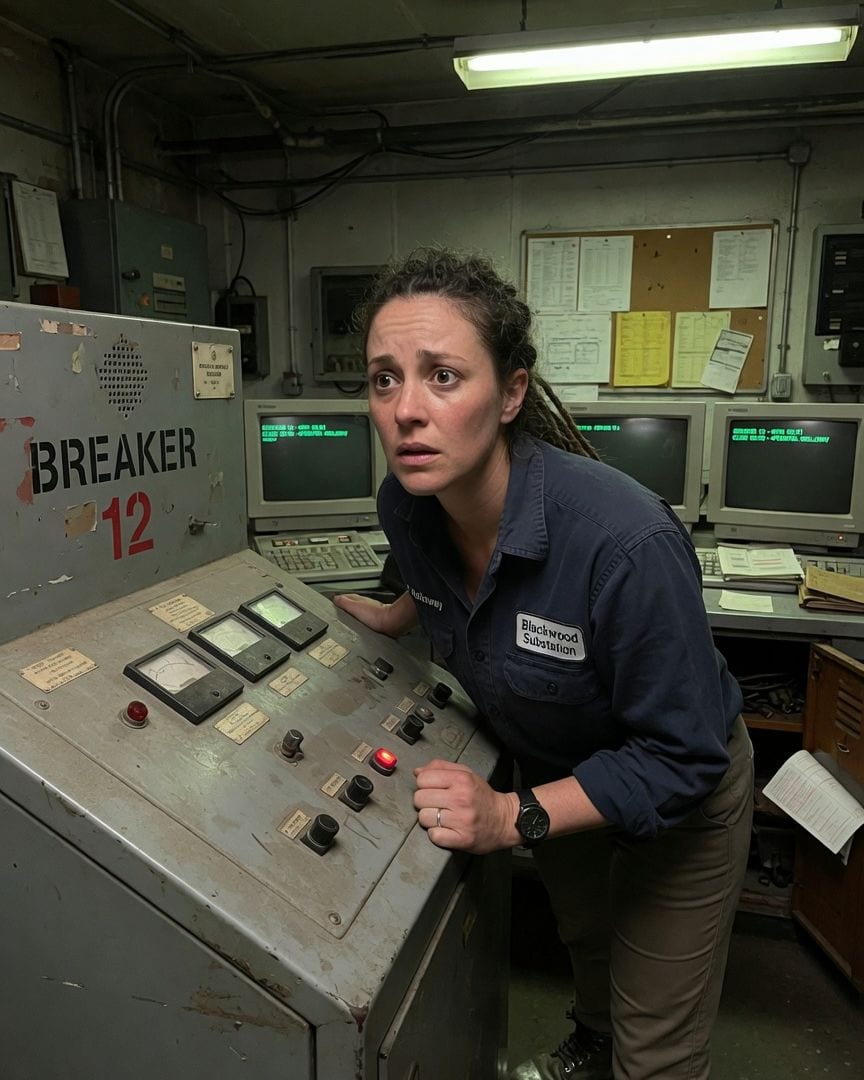
My power station's computer logs a breaker I never touched, opened and closed under my name, while the lights stayed on.
Night shifts at Blackwood Substation used to be a comforting hum, but an impossible event logged under my name shattered the peace. I'd never touched Breaker 12, yet the system claimed I opened and closed it. Now, from that same panel, a low, insistent hum resonates, and a whispered voice asks, 'Are you going to fix it this time?'
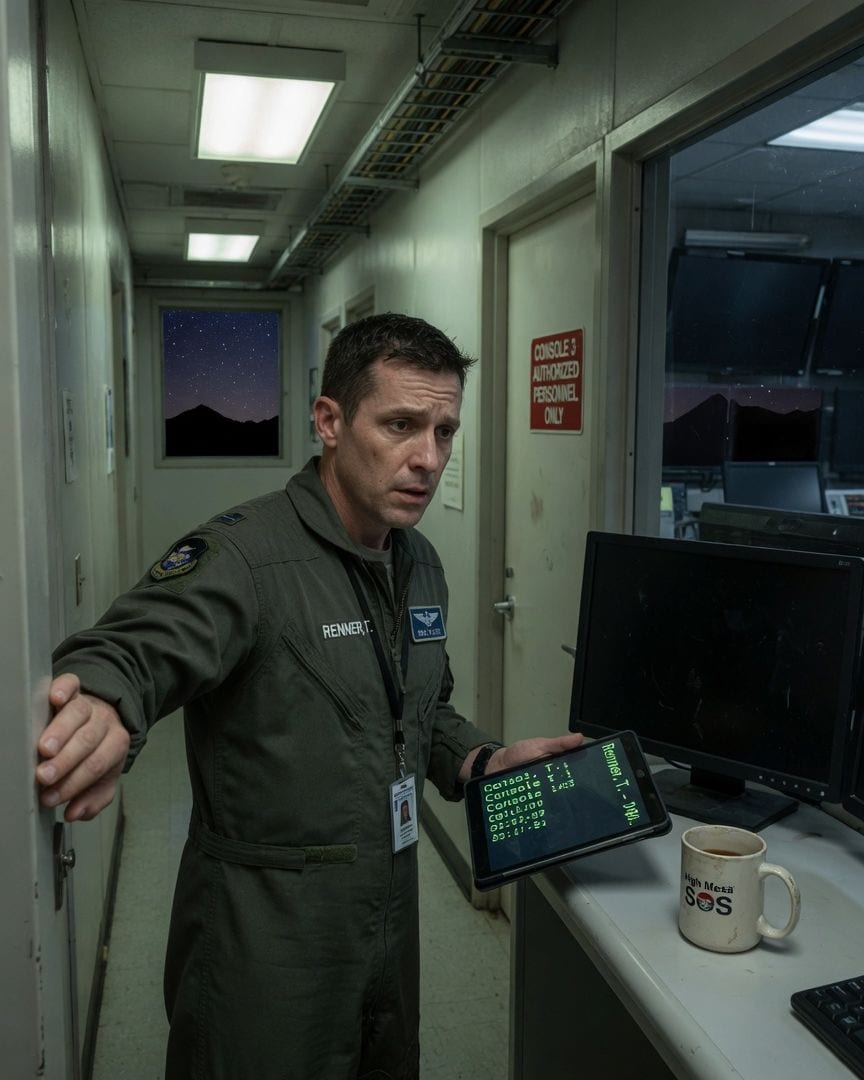
Space operator Theodore Renner left his coffee mug on his console. He found it two rooms away, on a console logged under his name for the exact same hour.
Operator Theodore Renner was ending his midnight shift at High Mesa Space Operations, his relief waiting as the control room hummed. But the electronic watch log revealed an impossibility: his own name, 'Renner, T.', active at a second console, two rooms away, for the exact same hour he’d just worked. He found that remote console dark, yet his distinctive, chipped coffee mug, left on his own station, sat waiting there. His primary console was now mysteriously bare. The system reported routine operations and a maintenance request from the impossible location, all under his name. Theodore knew it wasn't him; what impossible truth was the data screaming?
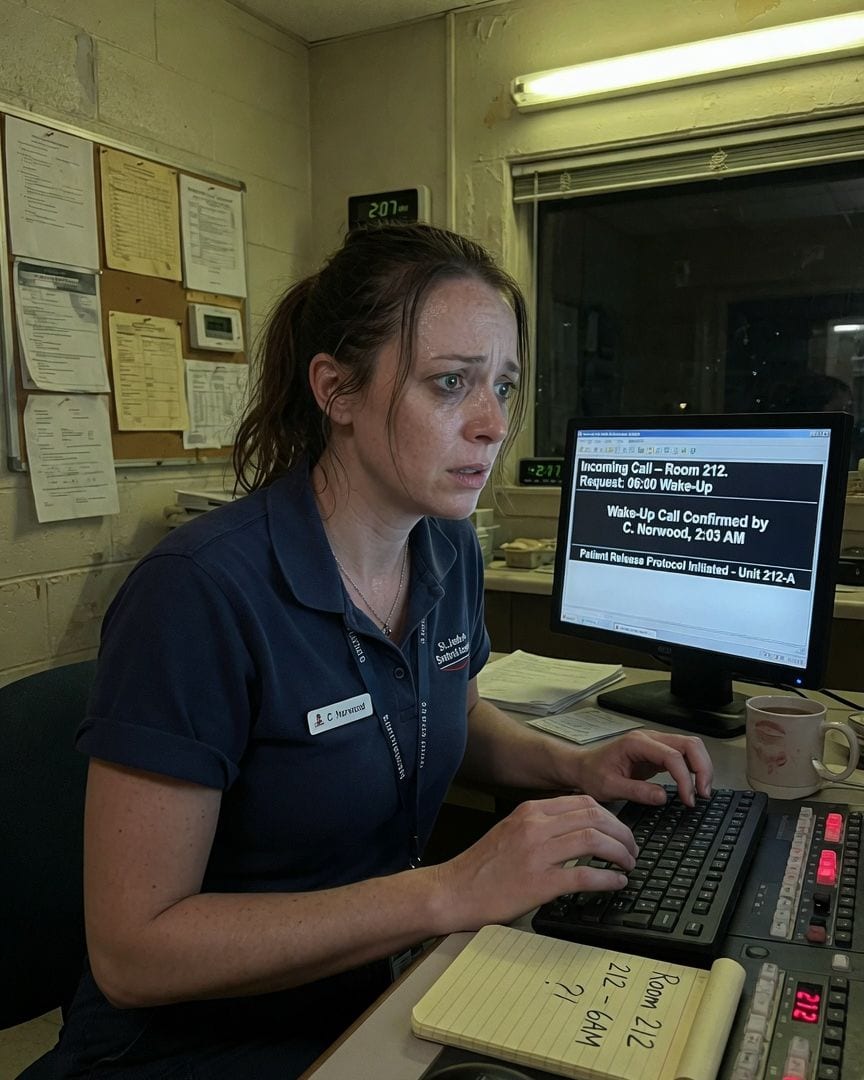
My login started a 'Patient Release Protocol' I'd never heard of for Unit 212-A.
Working the quiet night shift switchboard at St. Jude's, I took a routine wake-up call from Room 212. But the system showed Room 212 had been stripped bare and its phone line disconnected for months. Then, my own login showed I had confirmed the impossible call.
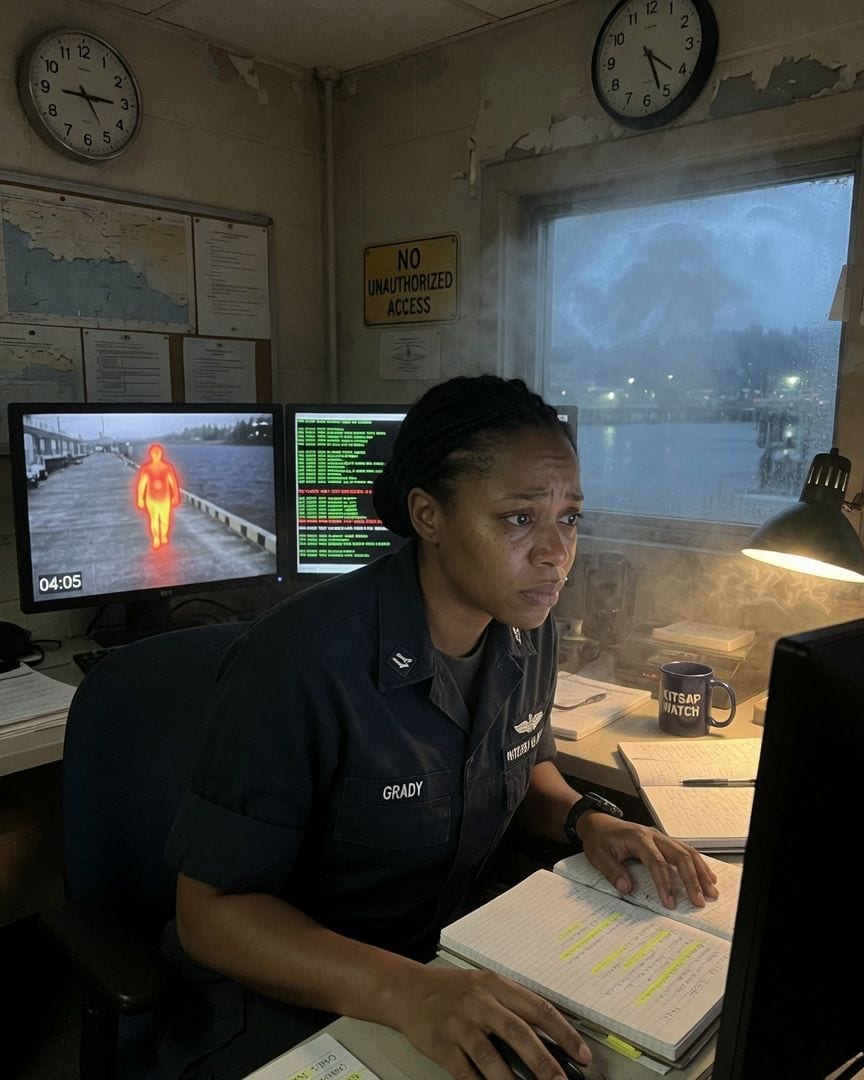
Petty Officer Olivia Grady found the base system logging impossible access at 0405. Every night for years, a blank ID walks Pier 7.
Petty Officer Olivia Grady stood her predawn watch on Pier 7, the cold mist of Puget Sound a familiar companion. Her routine scan of monitors at 0405 was shattered when an IR sensor flared with a man-sized heat bloom moving along the pier. Yet the camera feed showed only empty concrete and swirling mist. When historical logs confirmed the invisible presence had walked that exact path every night for years, Olivia dug deeper. She found a ghost "access log" entry with a unique ID but no name attached, meticulously aligned with the 0405 bloom. What impossible entity was the base system logging, night after night?
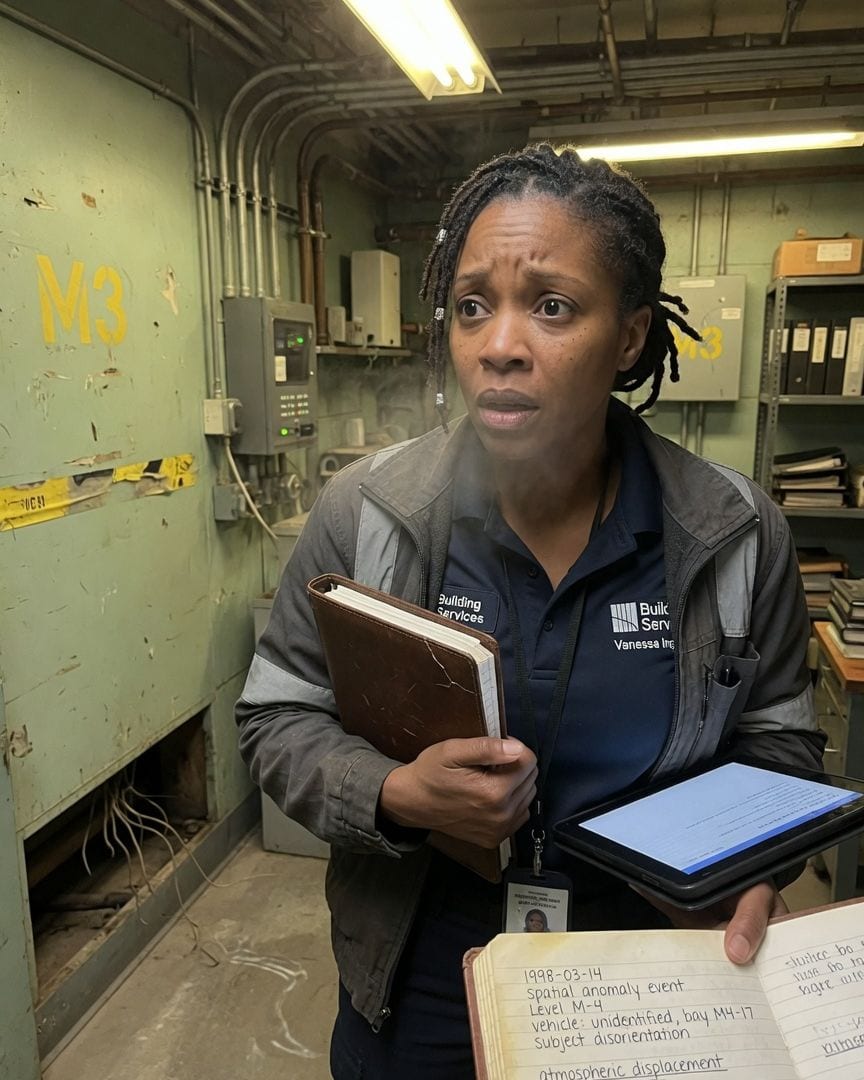
The lift offered a level below the lowest one, so I took the stairs down a flight that has never existed — into cold, empty bays where a single car sat, its engine still ticking like it had just been driven.
My routine as a Building Services Technician is usually solid, but today, the building offered a fourth basement level, M-4, that shouldn't exist. Descending into its frigid gloom, I found an old car tucked away in a bay, its engine ticking softly as if it had just arrived.
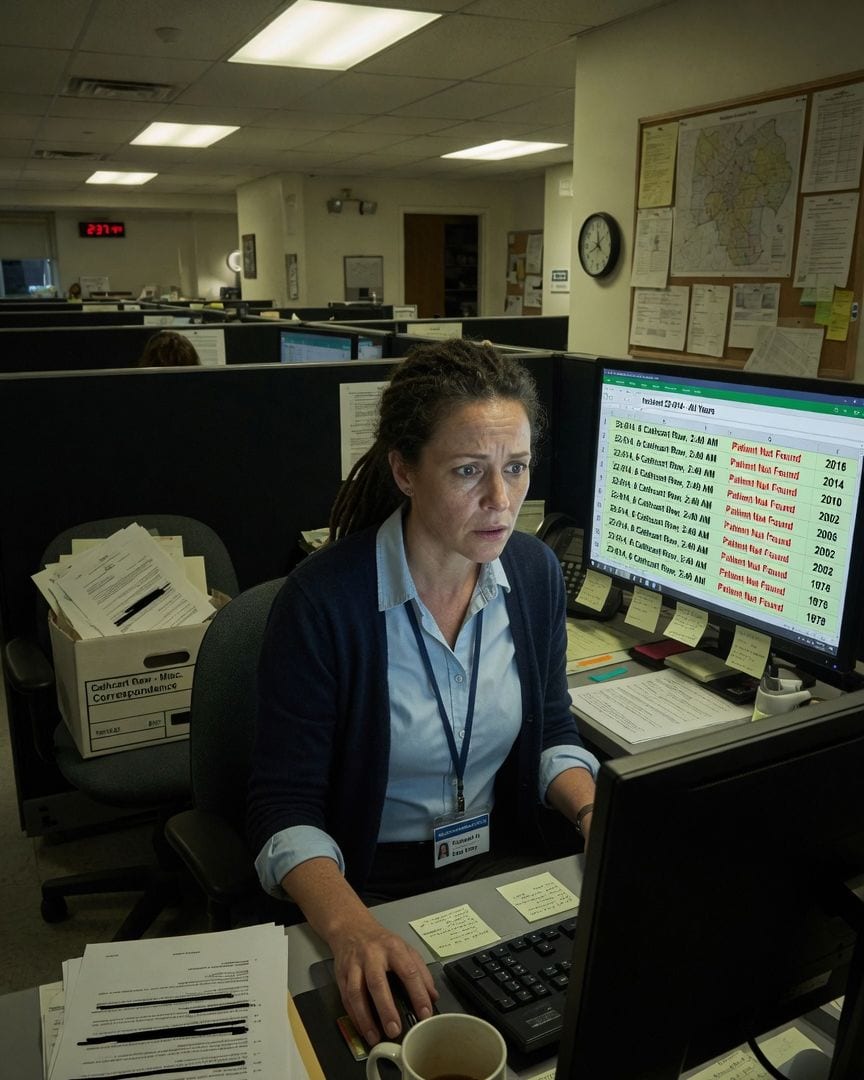
My computer log shows the same 2:40 AM call to Cathcart Row, every four years since 1978, always closed 'patient not found'.
Working data entry for the County Ambulance Trust, I found a routine incident logged as 'Patient Not Found.' But digging deeper, I discovered the exact same phantom call had repeated every four years for over forty years, always at the same address, always at 2:40 AM. Then I found a heavily redacted memo linking it to my own street.