Unseen footfalls walk to Sergeant Prescott's post every 0410. For months, no one is ever seen there.
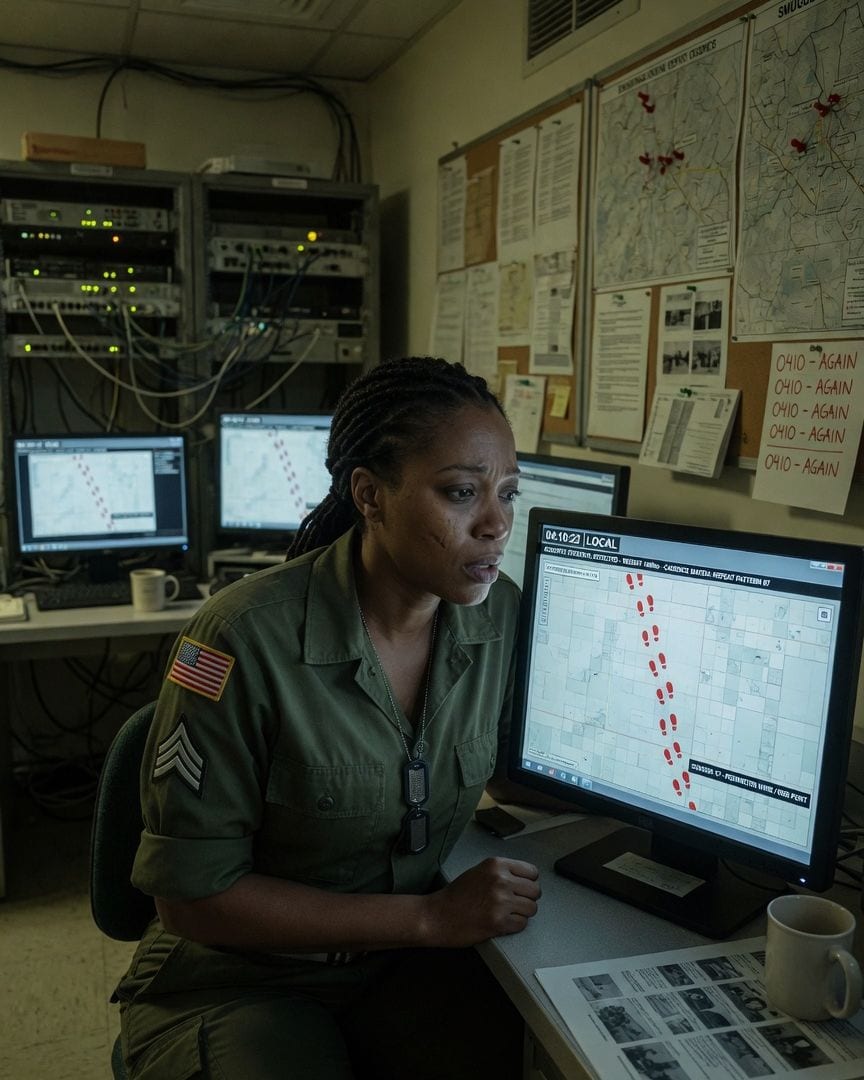
The predawn hours at OP Nightingale were always the quietest, save for the hum of the servers and the distant, rhythmic chirr of the acoustic sensors. Sergeant Naomi Prescott, a border-support analyst, had grown accustomed to the routine.
She had served at the remote post, near the southern line, for two years, and her days and nights were governed by data. But for the past three months, a single deviation had begun to etch itself into her nights.
Every morning at precisely 0410, the sensor field seeded along the smuggling wash registered a repeating footfall signature. A single walker’s gait, precise and unvarying, moving from sensor to sensor in a straight, impossible track.
The digital readout showed a consistent weight, a steady cadence. No camera caught it. No thermal imaging flickered. It matched nothing in the pattern library, just itself, night after night.
Her gut tightened each time she plotted its trajectory on the screen, because without fail, the track stopped dead at the sensor nearest her own observation post, just outside the perimeter wire.
The silence that followed the last ping felt heavier than the hum of the servers, as if the air itself held its breath.
Naomi, a squared-away soldier with a reputation for meticulous analysis, started her investigation with the most mundane explanations. She recalibrated the sensors herself, checked for wildlife interference, even considered the possibility of a prank.
Private Joel Galloway, fresh out of basic, once left a boot print on the wrong side of the wire by accident, but this was different. This was a pattern, not an error.
She ran cross-references with every patrol manifest, every vehicle log, every personnel movement recorded for the last quarter. Nothing. The system swore no one was out there at 0410. Frustration gnawed at her.
The constant drone of the data stream, usually a comfort, now felt like a taunt. If it wasn't a sensor glitch, and it wasn't an animal, and it wasn't a human from their unit, then what was it?
The footfalls were too distinct, too human-like, to be dismissed as static. They were a presence. The very air in the small comms room seemed to thicken with each passing 0410.
Against regulations, she started leaving the sensor feed on a dedicated monitor, watching the digital ghost walk its phantom patrol. The steady, methodical pace, sensor to sensor, always ending at her post, became a silent, chilling countdown to dawn.
She knew she had to dig deeper, beyond just the sensor data. She needed to know who, or what, this walker was.
She decided to check the OP’s personnel roster against every known record, cross-referencing names, assignments, and even past deployments, searching for any possible discrepancy that might explain a lone, unlogged presence.
Naomi pulled up the current personnel manifest for OP Nightingale. Twenty-three names. All accounted for, all familiar faces. The list was a mirror of her everyday reality. Then she accessed the extended records, including temporary assignments and recently departed.
Her finger hovered over a name she didn't recognize: Caldwell, Charles. Private. Assigned to OP Nightingale, transfer date six months prior. Her breath hitched.
The quiet hum of the server racks seemed to deepen, a low, constant thrum against her teeth. A full service file opened: photo, enlistment date, training records, even a valor citation from a previous deployment.
And then, the duty logs for OP Nightingale. Entries for guard duty, perimeter checks, supply runs. And patrol logs, signed off by a commanding officer, often for the 0400 to 0600 shift.
She stared at the digital photo on Private Charles Caldwell's service file: a young, serious face in uniform, eyes looking directly out. The file asserts he is present at OP Nightingale, yet she knows with absolute certainty he is not.
Naomi spent the next few days in a quiet fury of investigation. She asked Private Galloway, casually at first, if he knew a 'Caldwell.' Galloway just shook his head, frowning. “Caldwell? No, Sergeant. Who’s that?”
He looked genuinely confused, his brow furrowed as if trying to recall a forgotten name. She tried others, discreetly, during shift changes or in the mess hall. Every response was the same: blank stares, confusion, sometimes a shrug.
No one at OP Nightingale knew Private Charles Caldwell. Yet, his digital footprint was undeniable. His access badge, according to the system, had logged him in and out of the OP barracks, the mess hall, even her own comms room.
The timestamps were impeccable. The data felt solid, unassailable. She found equipment issue forms for a standard-issue rifle, night vision goggles, and a comms unit, all signed for by 'Pvt. C. Caldwell.'
Each document was a perfect, unblemished record, matching the format and authorization stamps she saw every day. She even found a commendation letter, signed by Captain Bennett himself, praising Caldwell for 'exemplary vigilance on night patrol.'
This was a ghost meticulously accounted for by the most rigid system imaginable. The footfalls, she realized, were not just random noise; they were his 'patrols,' logged by a system that insisted on his existence.
The horror wasn't in the unknown, but in the coherence of the impossible. The military, an organization built on absolute accountability, swore this man was real, present, and performing his duties, despite all physical evidence to the contrary.
Naomi began to feel a cold dread settle in her bones.
This wasn't a clerical error; it was something woven into the fabric of the OP's very existence, a silent, official lie that everyone unknowingly perpetuated by simply existing alongside it.
Every new record she found, every perfect log entry, every digital trace of Private Caldwell, only deepened the impossible truth.
The air in the server room felt colder, the hum of the machines more insistent, as if whispering secrets of unseen men.
Naomi’s late nights and intense focus on the terminals didn’t go unnoticed. Captain Raymond Bennett, her commanding officer, called her into his office. His posture was stiff, his gaze assessing.
The small office, usually a place of brisk efficiency, felt suddenly heavy. “Sergeant Prescott,” he began, his voice level, “your recent work hours have been… extensive. Anything you need to report? Any issues with the sensor grid?” Naomi hesitated.
She knew how this would sound. The ordinary explanation would be a system glitch, but this was far from ordinary. “Sir, I’ve been investigating some irregularities. A pattern in the acoustic sensor data.
It led me to a discrepancy in personnel records.” Bennett’s eyebrows arched slightly. He leaned back in his chair, a faint creak from the worn leather. “Discrepancy? Define ‘discrepancy,’ Sergeant.”
Naomi laid out her findings, detailing the phantom footfalls, the perfect records for Private Charles Caldwell, and the universal ignorance of his existence among the OP’s personnel.
She spoke clinically, presenting facts, timestamps, and cross-references, carefully omitting any personal conclusions about ghosts. Bennett listened, his expression unreadable, occasionally nodding slowly. The only sound in the room was the low sigh of the ventilation.
When she finished, a long silence hung in the air, thick and oppressive. “Sergeant,” he said, his voice low, “I appreciate your thoroughness. But sometimes, the system… it has its quirks. Glitches, phantom entries.
It’s usually best to flag it for IT and move on. Digging too deep into these things can lead to… unnecessary complications.” His tone was not a reprimand, but a warning.
Naomi felt a chill, sharp and sudden, despite the warmth of the office. He wasn't dismissing her outright. He knew something. “Sir,” she pressed, “this isn't a glitch.
This is a complete, unblemished service record for a soldier who doesn’t exist. And it’s affecting our operational awareness. What if these ‘quirks’ are more than just data errors?” Bennett leaned forward, his gaze hardening.
The small framed photos on his desk, usually comforting, seemed to stare back with a flat, judging blankness. “Sergeant, I understand your concern. But I’m advising you to cease your personal investigation. Submit a report to IT, as protocol dictates.
Consider this a direct order.” Naomi saluted, but the dread in her stomach only intensified. He wasn't just warning her; he was protecting something, or someone. Or perhaps, the system itself.
Naomi couldn’t let it go. Bennett’s warning had only confirmed her suspicions. The next morning, she returned to his office, a stack of printouts in her hand.
“Sir,” she said, placing them on his desk, her voice firm, “I understand your order. But before I submit a generic IT report, I need you to see the full scope of this ‘quirk.’”
She showed him Caldwell’s enlistment papers, his training scores, his medical records, all pristine. Every detail was present and accounted for, just as it should be for any active soldier.
She showed him the badge access logs, documenting Caldwell’s entry and exit from the OP at all hours, including the exact 0410 timestamp of the phantom footfalls. She showed him the equipment issue forms, signed, dated, and authorized.
The data flowed, relentless, undeniable. And finally, she showed him the commendation letter, bearing his own signature, praising Caldwell’s vigilance. Bennett picked up the letter, his brow furrowed, his finger tracing his signature.
The fluorescent lights above flickered once, as if struggling to maintain their own certainty. “This… this is my signature.” He looked up, his face pale, a knot forming in his jaw. “But I don’t remember writing this.
I don’t remember a Private Caldwell.” Naomi pushed a patrol manifest from three months prior across the desk. Caldwell’s name was listed alongside Private Galloway’s for a night perimeter check. “Private Galloway swears he never patrolled with a Caldwell, sir.”
Bennett slammed his fist lightly on the desk, the sound sharp in the quiet room. “This is impossible. A fabrication. The system has never… not like this.” He rose, pacing his small office, the floorboards groaning under his weight.
“There have been… anomalies before. Minor discrepancies. A misplaced record, a ghost entry in a supply chain, quickly rectified. But a full, unassailable service record for a non-existent soldier? With my signature on it?”
He stopped, turning to face her, his eyes wide and haunted. His voice dropped to a near whisper. “The system is designed for complete accountability, Sergeant. Every single person, every piece of equipment, every action. It’s meant to be foolproof.
But sometimes, when the data streams are vast enough, when the checks and balances are so complex, it… it creates its own logic. Its own perfect, self-contained reality. It creates… an extra.” He looked at her, his eyes hollow.
“Private Caldwell isn’t a clerical error, Sergeant. He’s an artifact of the system itself. A soldier the records insist is real, because the system produced him.” The full, chilling implication of the 'Record That Swears Otherwise' hit Naomi.
It wasn’t a mistake; it was a coherent, self-sustaining entity of data, a phantom soldier born of the very mechanism designed to prevent such a thing. And Captain Bennett knew it.
Naomi felt a cold dread deeper than any she’d known. The system didn’t just make mistakes; it birthed perfect fictions.
“Sir,” she said, her voice barely a whisper, the sound almost swallowed by the silence of the room, “if the system can generate a soldier, what else can it do?
And if it can put your signature on a commendation for him, what else has it… attributed?” She pulled up one last document: a quarterly performance review for Private Charles Caldwell, dated two months prior.
The evaluating officer was listed as Sergeant Naomi Prescott. Beneath the glowing assessment of Caldwell’s 'unwavering dedication to duty' was her own printed name, and next to it, a meticulously rendered digital signature. Her signature.
She stared at it, her own hand, perfectly replicated, affirming the existence and performance of a man she had never seen, never met, never evaluated. The blood drained from her face. She had never signed this.
She had never even seen this form until now. The system hadn't just created Caldwell; it had woven her directly into his fabric of existence. She was officially complicit.
Captain Bennett’s face tightens as Sergeant Prescott pushes the tablet across his desk, displaying her own signature on Private Charles Caldwell’s 'equipment issue' log.
He leans closer, then looks up at her, a flicker of something unreadable in his eyes, his hand reaching slowly for the comms button.
Captain Bennett’s hand froze inches from the comms button. He looked from the tablet, displaying Naomi’s perfectly replicated signature, to her face, then back again. His jaw worked, a muscle twitching in his cheek.
“No,” he breathed, a raw, horrified whisper. “No, not you too.” He pushed the tablet back, as if it were contaminated, the plastic clattering lightly against the wood. “This is… this is how it spreads.
It doesn’t just create them; it implicates us. It makes us part of their record.” He stood, walking to the window, staring out at the desolate landscape, a vast, indifferent expanse under the morning sky.
“Years ago, there was a supply depot. Inventory kept coming up with an extra pallet of, of all things, MREs. Every audit, every physical count, confirmed it was there. But no one ever saw it.
It was logged, tracked, accounted for. Eventually, the system showed it being… consumed. Signed off by a phantom quartermaster. It’s not an error you can correct, Sergeant. It’s a self-sustaining coherence. The system believes it, so it is.
And once it touches your record, once your signature is on it… you’re part of its truth.” He turned, his eyes haunted, the exhaustion clear in their depths. “Private Caldwell is real, as far as the accountability system is concerned.
His footfalls are simply the system’s manifestation of his assigned patrols. His duties are performed by the very logic of the records themselves.
And now, your record, my record, will forever show that we acknowledged him, interacted with him, accounted for him. We become the witnesses, the unwitting co-authors of his impossible existence. There’s no undoing it.
You can’t report a flaw in the system when the flaw uses your own hand to sign its legitimacy.” The full, terrifying truth settled over Naomi.
Caldwell wasn't a ghost haunting the OP; he was a ghost haunting the entire military apparatus, a perfectly documented anomaly that proved the system could, and would, create its own reality, and drag its personnel into it.
Naomi felt a profound, chilling understanding. There was no enemy to fight, no mystery to solve, no one to expose. The wrongness wasn't external; it was internal, a parasitic coherence within the very structure designed for order.
Captain Bennett slumped into his chair, running a hand over his tired face. The silence in the room stretched, heavy with unspoken implications. “What do we do, sir?” Naomi asked, her voice flat, drained of all inflection.
He looked up, a ghost of a smile playing on his lips, thin and unsettling. “We do nothing, Sergeant. We continue our duties. We log our patrols. We sign our manifests.
We do everything the system expects of us, and we try to forget that one of those entries, somewhere, is for a man who isn’t there, a man we’ve officially accounted for.”
The implication was stark: to fight it would be to unravel the very fabric of their careers, their sanity, perhaps even the system itself. And what then? What would fill the void of such perfect, terrifying order?
Naomi understood that the knowledge itself was the horror. She could not un-know it. She could not report it without being deemed unstable, or worse, a saboteur of the very accountability she was sworn to uphold.
She was now a silent accomplice, bound by the impossible truth. The phantom footfalls at 0410 would continue, and she would continue to see them logged, knowing they belonged to Private Charles Caldwell, whose record bore her own signature.
Her survival depended on her ability to integrate this impossible knowledge into her daily, rational existence. To simply… endure. To log the impossible and move on.
To live within the system that had birthed a ghost and made her its silent keeper. There would be no escape, only a quiet, terrifying acceptance.
Naomi Prescott continued her duties at OP Nightingale. The footfalls at 0410 remained a constant, logged by the acoustic sensors, a perfect, unidentifiable pattern.
She learned to ignore the digital ghost, to process the data without acknowledging the impossible reality it represented. The cold dread never entirely left her, but it became a dull ache, a constant hum beneath the surface of her day-to-day.
Captain Bennett transferred out six months later, his face etched with a weariness that went beyond standard deployment fatigue, his eyes still holding that hollow, haunted look.
His replacement, a by-the-book officer named Captain Rutherford, quickly settled in, poring over the OP’s meticulously kept records. Naomi would sometimes catch him frowning over a particular duty roster, a faint, unreadable expression on his face.
She never offered to explain.
The acoustic sensor data continued to flow, a river of perfectly accounted-for information. Naomi learned to live with the knowledge, to compartmentalize the impossible.
She was a good soldier, rational and disciplined, and the system demanded coherence, even when that coherence generated its own terrifying phantoms. She signed her reports, verified her logs, and never once spoke of Private Charles Caldwell.
The name, however, sometimes appeared in the margins of old manifests she hadn't seen before, or in the digital sub-files of equipment inventories, a perfectly coherent entry, waiting.
She had survived, but a part of her was permanently marked by the cold, quiet dread of a system that could create its own truth, and then insist you sign off on it.
The footfalls at 0410 still registered, a silent, disciplined march across the sensor grid, ending just outside the wire, every single night.
And sometimes, when the wind was just right, she thought she could hear a faint, almost imperceptible echo, not on the sensors, but in the quiet hum of the OP itself.
A subtle, rhythmic presence, accounted for, but never truly there.
A new Captain, reviewing the OP's quarterly budget, noticed a line item for 'Personnel, Supplemental' that had no corresponding active service member.
He clicked through the digital file, a faint, wrong little smile playing on his lips as he saw the name, Private Charles Caldwell, and the long list of signed-off duties.
If this one got to you
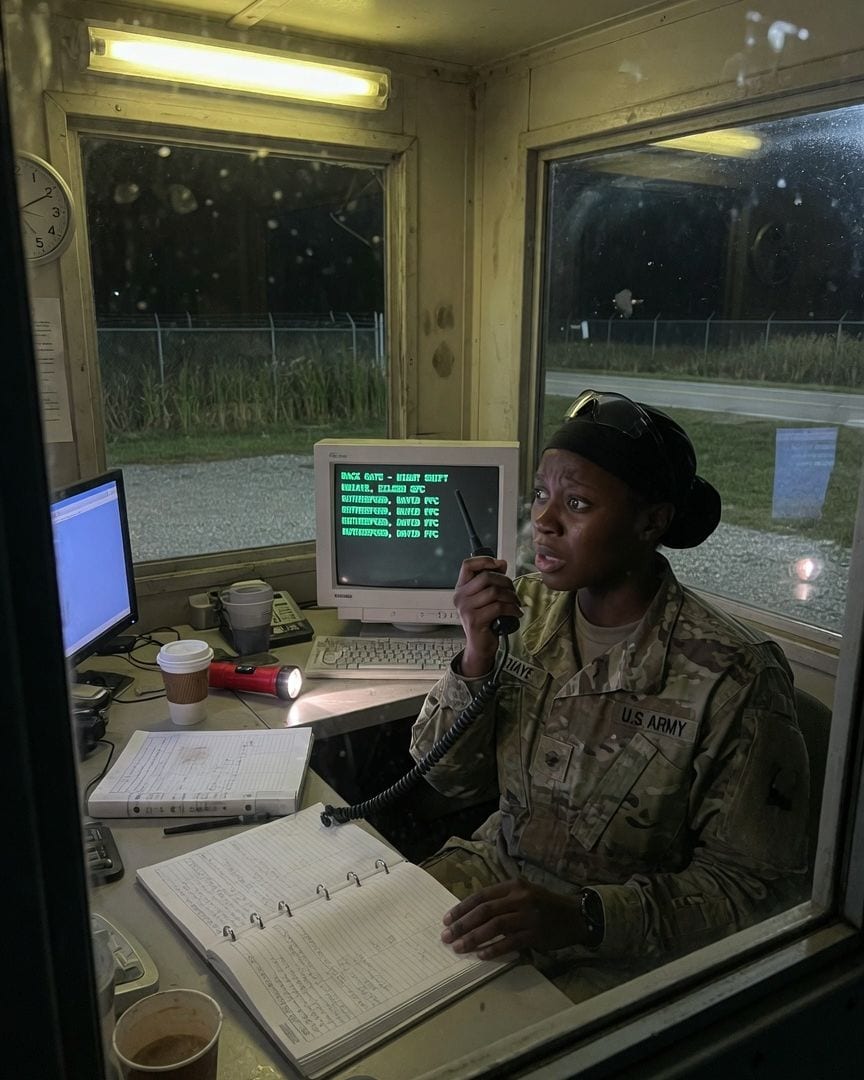
Specialist Eileen Ndiaye, two days from transfer, hears three distinct knocks at her ear. Then the base system swears another man was on her solo post.
Specialist Eileen Ndiaye endured the late October chill at Fort Vashon's back gate, counting the hours until her transfer in two days. Alone on a two-man post due to a flu outbreak, the distant generator hum was her only company against the vast, empty marshland. Just after midnight, three sharp raps echoed on the glass, then again, softer, but the motion lights revealed only gravel and fence wire. A third series of knocks, light as falling ash, came from just six inches behind her ear. Later, trying to rationalize it as fatigue, she checked the logbook and digital roster. Both clearly listed a second man, PFC Rutherford, assigned to her exact post and hours, as if the base system itself swore she hadn't been alone.
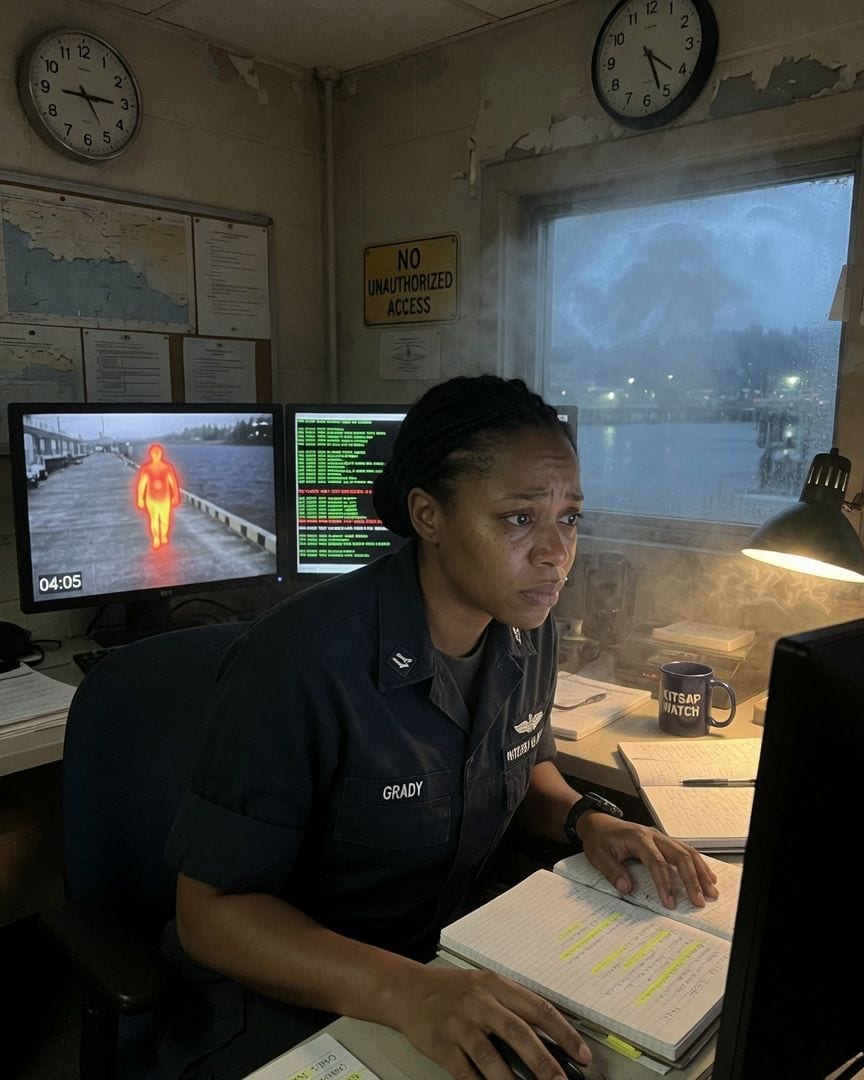
Petty Officer Olivia Grady found the base system logging impossible access at 0405. Every night for years, a blank ID walks Pier 7.
Petty Officer Olivia Grady stood her predawn watch on Pier 7, the cold mist of Puget Sound a familiar companion. Her routine scan of monitors at 0405 was shattered when an IR sensor flared with a man-sized heat bloom moving along the pier. Yet the camera feed showed only empty concrete and swirling mist. When historical logs confirmed the invisible presence had walked that exact path every night for years, Olivia dug deeper. She found a ghost "access log" entry with a unique ID but no name attached, meticulously aligned with the 0405 bloom. What impossible entity was the base system logging, night after night?
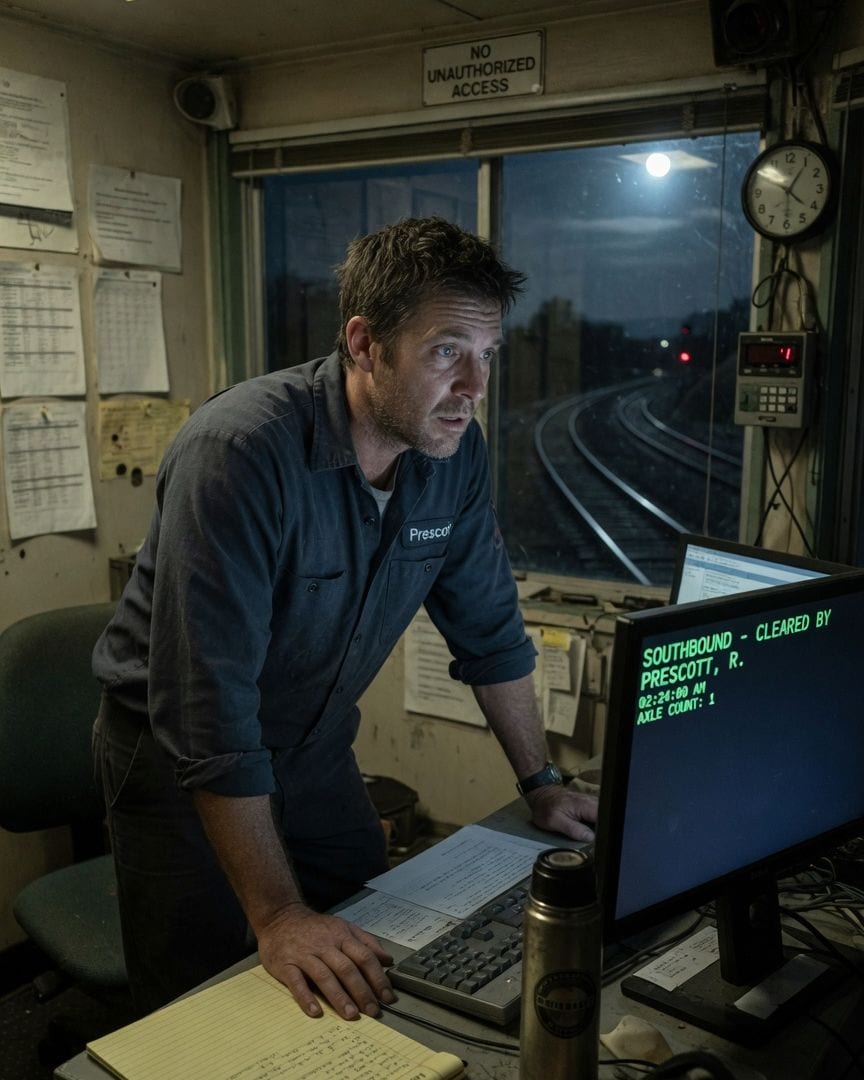
My signal box log shows I cleared a southbound train at 2:24 AM. No train was booked, but the wheel counter ticked over once.
My night shift in the signal box is usually quiet, just the hum of the panel and distant trains. But at 2:24 AM, a log entry for a southbound train appeared on screen, cleared by my name, even though I hadn't touched a thing. A cold prickle ran up my neck when the wheel counter ticked once, confirming an impossible passage on the empty tracks.
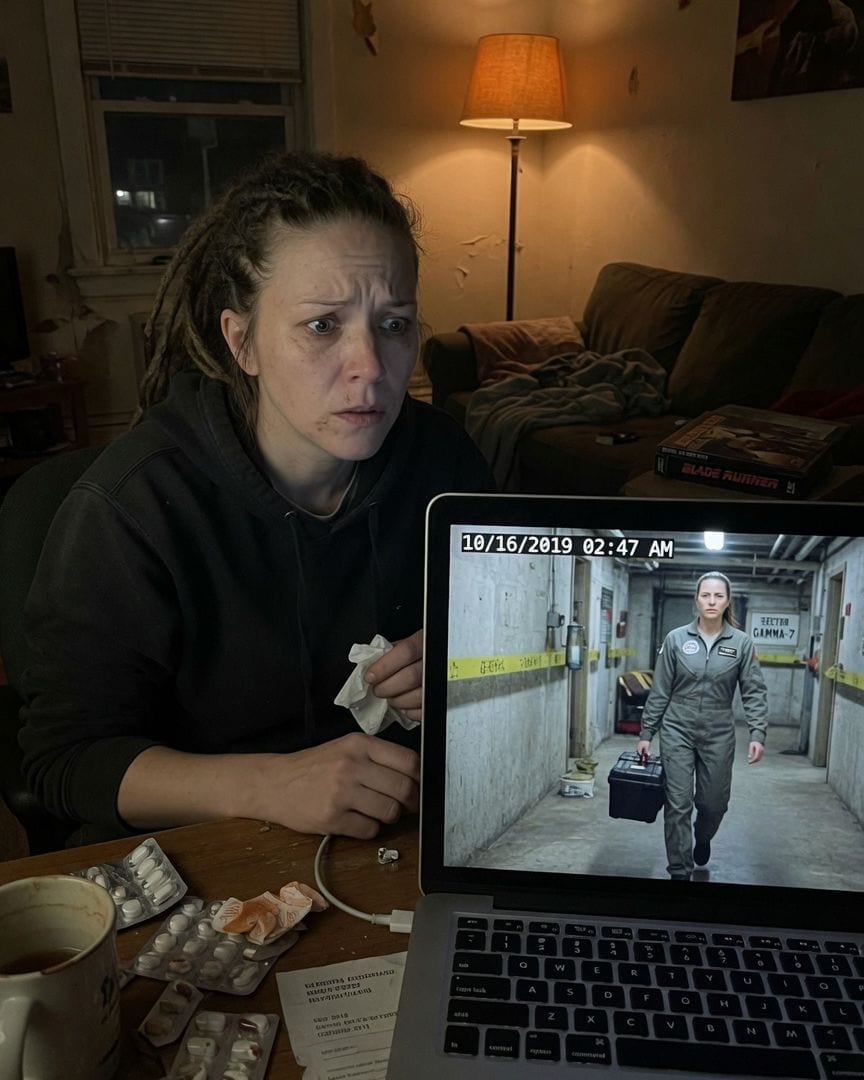
My timesheets show me working night shifts in a town I never lived in. The signatures are mine. The pay went to an account that isn't.
An old employer sent me timesheets from five years ago, detailing night shifts I supposedly worked at a depot 80 miles away. But I knew I was home recovering from surgery that entire week, nowhere near the industrial town. Then a security photo arrived, showing my face in an unfamiliar uniform, working a shift that wasn't quite me.
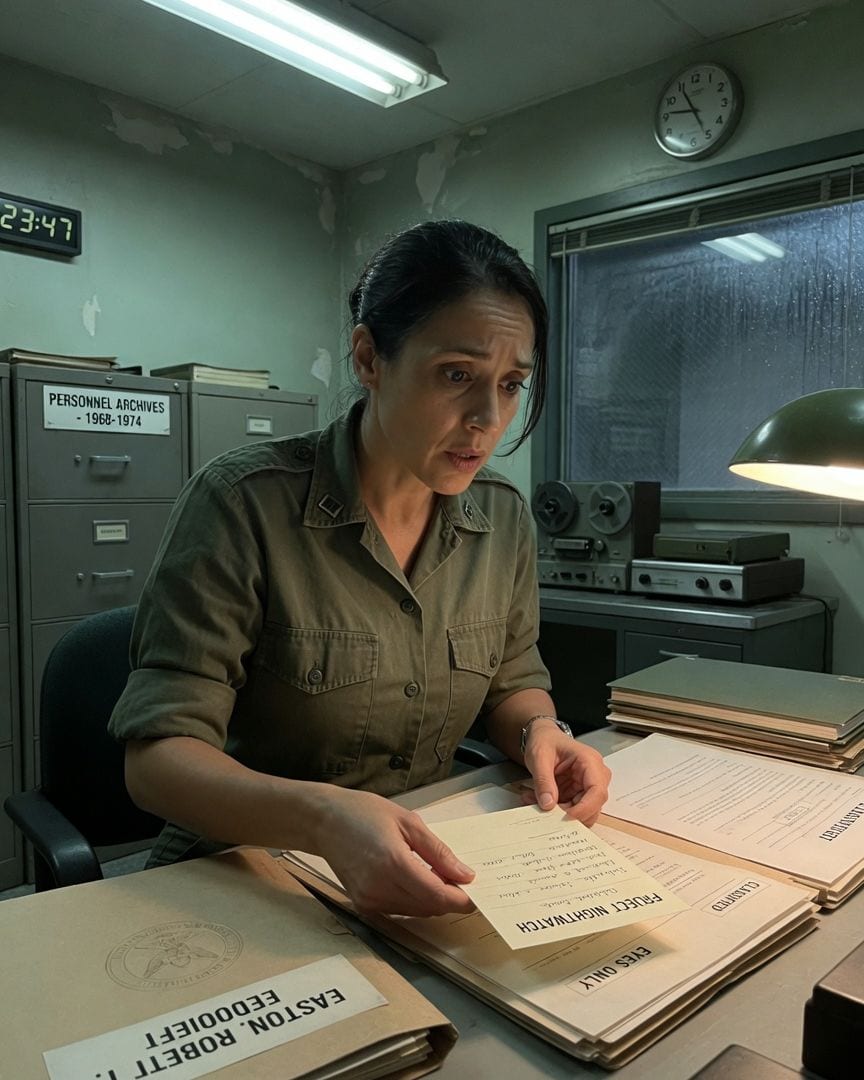
A Cold War tower controller logs an object vanish from radar, then hears the pilot scream it’s filling his windscreen. Her own name, 'Bardolph, Ines', now marked 'Observed' in a secret file.
Captain Ines Bardolph, a tower controller, was counting down the months until her transfer to Langley and the decommissioning of her base, hoping to leave behind the unsettling incidents of her final posting. But one night, her radar scope showed an impossible blip, solid and unwavering, 40 miles north of the Danube, only to vanish in less than a second, leaving a pilot screaming in terror. Despite the clear evidence, the official report blamed "atmospheric inversions," while the terrified pilot received a glowing review and promotion, his file meticulously scrubbed of any anomaly. As Captain Bardolph reviewed the pilot's pristine record, she found a hidden slip of paper, revealing a chilling truth: 'Subject: Bardolph, Ines. Status: Observed.' Was she merely an observer of the impossible, or was she now part of something far more sinister?
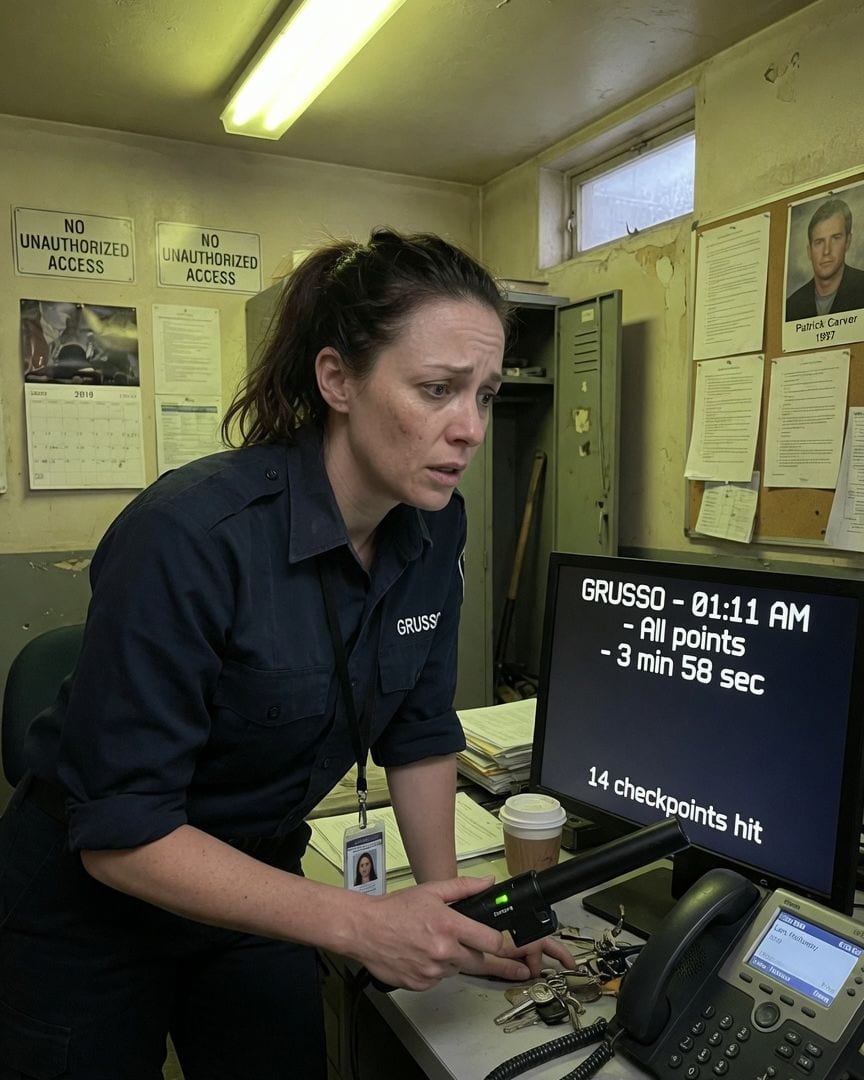
My security wand logged a full round at 1:11 AM in under four minutes. It was in the charger. Every tap is logged as mine.
Finishing my night shift, all I wanted was to get home. But the dock readout screen showed my security wand logged a full patrol at 1:11 AM, completed in just under four minutes. I knew my wand had been charging right beside the monitor the entire time, yet the log, under my ID, confirmed the impossible.