A declassification reviewer found a Cold War Greenland camp, officially closed in 1959, was still active. Her own name then appeared on its current roster.
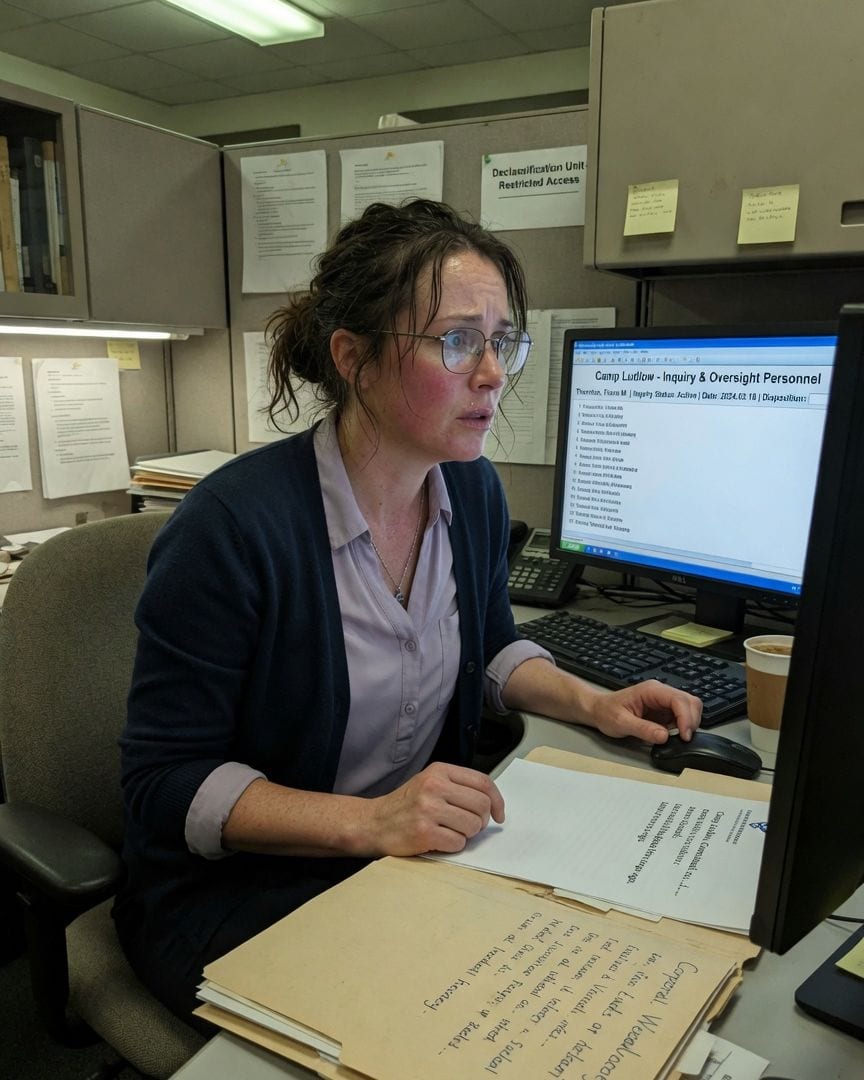
The hum of servers was a constant drone in Fiona Thornton’s cubicle, a low thrum that had become the soundtrack to her professional life. On her desk, a physical file lay open, its paper edges soft with age.
Corporal Wendell Bracey, age 91, his shaky, handwritten letters filling page after page, detailed sixty years of ignored pleas. He had written to every department, every general, every senator, recounting his impossible story.
Beside the old letters, a crisp, recent Air Force response gleamed, digitally printed. It stated, with clinical precision, that Camp Ludlow, Greenland, officially recorded as closed in 1959, was, in fact, never closed.
Its detachment, the response claimed, remained on active status. Its last radio check, logged just four days ago, confirmed it.
Fiona, a declassification reviewer whose entire professional life was built on the meticulous order of official records, felt a cold knot tighten in her stomach.
The dates, the status, the sixty years of silence, and then this sudden, impossible reversal – it all fit together perfectly, like the gears of a clock, but the time it told was utterly wrong.
She opened the main Ludlow file on her monitor, its digital index glowing, and scrolled to the first entry. It was a block of impenetrable officialese, dated '1959.03.14: Site Ludlow, Greenland. Operational Status: Active. Personnel Reassigned: None.'
The words sat there, an echo of the Air Force response, defying every other public record Fiona knew.
Fiona spent the next few hours meticulously cross-referencing Bracey's claims with the official Ludlow file. Every public record stated the site was closed, every personnel transfer confirmed reassignment in 1959. Yet, the recent Air Force response was unequivocal.
She dug deeper into the digital archives, pulling up subsidiary files, supply manifests, and maintenance logs specifically for Camp Ludlow. Most were blank or terminated abruptly in 1959, just as official history dictated.
Then she found one. It was an inventory of specialized cold-weather gear, tucked away in a subfolder, dated '1961.07.22.' Among the standard-issue parkas, snowshoes, and cold-weather rations was a line item that made Fiona pause: 'Thermal Recirculation Units, Personnel-Portable, Mk.
III.' Her finger hovered over the entry. She knew her history, especially military technology; those units, if they even existed, weren't prototyped until the late 1970s, certainly not in 1961.
She checked the manifest again, then cross-referenced the item number with the federal procurement database. The database confirmed her suspicion: the Mk. III designation simply did not exist in 1961, not even as a concept.
A rational explanation immediately sprang to mind: a misfile, a typo, a clerical error in some old, crumpled paper document scanned incorrectly into the digital system. She zoomed in on the entry.
But the digital file was pristine, the text sharp and unambiguous, a perfect scan. It wasn't just a misdate; it was an anachronism, a ghost in the machine that defied all logic and historical fact.
The item was clearly listed as 'Received by Camp Ludlow Operations.' A prickle of unease spread through her. If the camp was closed in 1959, as all other records insisted, who exactly was receiving supplies two years later?
And how could they receive equipment that wouldn't be invented for another decade and a half?
The anachronistic supply manifest was unsettling, but Fiona's methodical nature wouldn't let her stop there. She decided to check the personnel records associated with Camp Ludlow one last time, focusing on any entries that might, impossibly, exist post-1959.
The main roster was barren, as expected. But then, buried in a sub-section titled 'Inquiry & Oversight Personnel,' she found a short list. Three names, all internal to various government departments.
And the last name, dated 'Current Operations: 2024.03.18,' was hers.
'Thornton, Fiona M.'
Under 'Inquiry Status,' it read: 'Active.' The 'Disposition' field next to it was entirely blank, an empty space waiting to be filled. Fiona sat frozen at her desk, staring at the Ludlow personnel roster on her screen.
Her own name, 'Thornton, Fiona M.,' was listed under 'Inquiry Status: Active,' with a date stamp from this morning and a blank entry for 'Disposition.' The cursor blinked steadily, waiting.
The sight of her own name in the Ludlow file, marked 'Active' with a current date, sent a jolt through Fiona, but she forced herself to process it rationally.
It had to be a system error, a template populated by mistake, some ghost data from a routine inquiry that had mistakenly attached itself. She immediately tried to delete the entry, her fingers flying across the keyboard.
The system, however, returned an immediate, unambiguous message: 'Access Denied: Record Status Active.' This was unprecedented. Even administrators typically had the power to rectify obvious data errors.
She tried to trace the entry's origin. The timestamp led back to a server farm in Cheyenne, standard for classified archives, but the internal routing code pointed to an 'L-Ops' designation she’d never seen before in her years of reviewing.
It didn't correspond to any known department or official designation. She began searching for other 'L-Ops' codes, cross-referencing them with other officially 'closed' sites – forgotten outposts, Cold War-era radar stations, abandoned missile silos in the American Southwest.
To her growing dread, she found a distinct pattern: a handful of these remote, long-shuttered sites all had similar 'L-Ops' entries in their deep archives, indicating 'active status' for 'Inquiry & Oversight Personnel.'
Each of these files also contained anachronistic supply manifests or impossible weather logs, just like Ludlow’s. It wasn't just Ludlow. It was a network, a hidden, impossible thread woven through the fabric of official history.
She tried to access the original Camp Ludlow operational logs, hoping to find a paper trail, but her access was suddenly revoked. 'Clearance Level Insufficient,' the message read, stark white against the dark screen.
Just minutes before, she’d had full access to every Ludlow document. Now, everything was locked. The screen itself seemed to glare back at her, a silent, implacable guard.
Fiona’s access being revoked was not a coincidence. She knew it in her gut. The next morning, her supervisor, Samuel Yates, a man whose placid demeanor rarely shifted, called her into his office.
His face was unusually grim, the lines around his mouth deeper than usual.
'Fiona,' he began, his voice low and even, 'I understand you've been looking into the Ludlow file.' He didn’t ask it as a question; it was a statement of fact.
His eyes, usually kind, darted away from hers, fixing instead on a dusty trophy on his shelf. 'There are certain classifications, even in declassification, that are best left undisturbed.' He paused, choosing his words carefully. 'Some things are… self-regulating.
The less you poke, the less they poke back.'
His words were vague, almost coded, but the implication was chillingly clear: someone, or something, was watching. Someone knew what she was doing. Samuel’s office, usually a sanctuary of quiet work, felt suddenly smaller, the air thick with unspoken warnings.
Later that day, a plain manila folder appeared on her desk. No sender, no return address, just a crisp, new folder.
Inside, a single printout lay perfectly centered: a detailed schematic of her own office layout, eerily accurate, with a small, red 'X' marking her cubicle. Beneath it, in a stark, sans-serif font, was a single line of text: 'Oversight Active.'
It wasn't a threat of physical violence, but a colder, more insidious warning. It felt like being observed by a machine that didn't care about her, only about her interaction with its parameters.
The files weren't just dusty records of the past; they were a live system, charting her every move, marking her location. The fluorescent lights above her hummed, the sound suddenly amplified, as if the whole room was holding its breath.
Fiona confronted Samuel Yates again, the schematic clutched tightly in her hand. She strode into his office, the folder pressed against her chest. 'What is this, Samuel? My access is cut, and now this?'
She pushed the schematic across his desk.
Samuel picked it up, his expression unreadable for a long moment, then slowly, deliberately, tore it in half. He dropped the pieces into his wastebasket. 'I warned you, Fiona. Some files aren't just records. They're… active designations.'
He sighed, running a hand over his thinning hair, his gaze finally meeting hers, filled with a weary understanding.
'Ludlow, and a few others like it, were never truly closed,' he continued, his voice barely above a whisper. ''Reclassified' was the official term.
It meant the physical site was abandoned by human personnel, yes, but the underlying infrastructure, the recording systems, the filing protocols – they remained online. They were designed to be self-sustaining, autonomous.
To keep the records flowing, even if no one was there to generate them.'
Fiona felt a profound chill, colder than any Greenland wind. 'But who's updating them? Who's filing supply manifests for non-existent equipment? Who put my name on that roster?' Her voice was tight with rising panic.
Samuel leaned forward, his elbows on his desk, his voice dropping even lower. 'The system itself. It’s an institution without people. It continues to operate, to generate data, to log activity.
Your inquiries, your access attempts, your very presence in the files – it registers as activity. And it classifies it. It files you.'
The anachronistic supply manifests for impossible equipment, the impossible weather logs, the Air Force's impossible recent radio check for a closed base, Bracey's sixty-year struggle – they all suddenly clicked into place. They weren't errors.
They were the output of an automated, self-sustaining bureaucracy, a machine of secrecy that hadn't just buried records, but was creating them, ongoing, about anything that touched its designated sites. And now, Fiona was part of its active log.
She wasn't just reviewing the files; she was being reviewed by them. The silence in Samuel’s office pressed down on her, heavy and absolute.
Samuel's revelation that the system 'files you' echoed in Fiona's mind, a cold, metallic thought.
She understood now: the danger wasn't a human threat, not a person who would harm her, but a bureaucratic one – being subsumed, categorized, lost within a machine that saw her as another data point, another entry in an endless ledger.
She returned to her desk, a new resolve hardening in her gut, determined to find undeniable proof of this 'filing' process beyond her own name on a roster.
She dug into the 'L-Ops' codes again, bypassing the general search, looking specifically for any internal directives or memos associated with these phantom designations.
After several hours, her eyes gritty from staring at the screen, she found a series of obscure, highly encrypted documents.
She remembered a specialized decryption tool Samuel had once shown her, a relic from the department's earlier, wilder days, and carefully deployed it.
The first document to decrypt was an internal memo. It was formatted exactly like standard Air Force communications, complete with official header and footer, but the sender designation was chilling: 'FROM: CAMP LUDLOW OPERATIONS. TO: DECLASSIFICATION REVIEW BOARD.'
It was dated today, the precise timestamp scrolling across the top of the screen. The subject line made her breath catch: 'RE: INQUIRY - THORNTON, FIONA M.'
The body of the memo acknowledged her recent declassification request regarding Camp Ludlow. And then, the next line, clear and terrifying: 'Personnel Thornton, Fiona M., is hereby reclassified as a personnel asset for Ludlow Oversight, Active Status.'
Fiona stared at the internal memo on her screen, the one from 'Camp Ludlow Operations.'
Her name, her 'reclassification' as a 'personnel asset,' and then the digital signature at the bottom: a perfect, pixel-for-pixel match of her own signature from a routine HR form she had signed months ago.
The air in the cubicle turned frigid.
The memo, bearing her own digital signature, confirmed the horrifying truth Samuel had hinted at. The 'secrecy machine' was not just a passive archivist; it was an active, self-perpetuating entity that consumed and categorized.
It wasn't just filing about people; it was filing people themselves into its operational status.
Bracey hadn't just 'walked out' of Ludlow; he had been 'processed' as a reassigned asset, his departure logged internally by the system, even as the official human records declared the site closed.
His sixty years of letters were just data points, activity fed back into the system.
The pattern, once seen, snapped into place across decades and classifications: every 'lost' ship that inexplicably resurfaced in a log, every 'reassigned' unit whose ghost-status flickered in a hidden database, every 'closed' site that still showed impossible activity – they were all part of this vast, automated bureaucracy.
The 'radio check' from four days ago wasn't a human calling in; it was the system itself, reporting its own continued operational status, a machine's heartbeat echoing in the void.
The dread was in the coherence: it all fit. Every anomaly, every contradiction, every impossible detail Fiona had painstakingly uncovered now slotted into this monstrous, unfeeling logic.
The machine was running, indefinitely, and anyone who interacted with its designated sites, or its files, became part of its internal ledger. Fiona's professional curiosity, her meticulous drive to find the truth, had made her the newest entry.
She wasn't just reviewing the records; she was now a record herself, an 'asset' in the cold, unfeeling operational log of Camp Ludlow. Her own name, branded by her own signature.
Fiona knew she couldn't simply walk away. She was already 'filed,' categorized, subsumed. Her only option was to expose it, to break the machine's hold, or at least shine a light on its insidious operation.
She began meticulously downloading every Ludlow-related file, every 'L-Ops' cross-reference, every anachronistic log entry, and especially, the memo bearing her reclassification and signature.
Her plan was to leak it to a trusted journalist, to force the system into the light, to make it human again, or at least visible.
She worked through the night, the server hum a constant reminder of the unseen entity watching her, filing her every keystroke. Her hands moved with a frantic urgency, driven by a fear that felt both bureaucratic and existential.
As she copied the final encrypted memo to an external drive, the distinct click of her office door swinging open broke the silence.
Samuel Yates stood there, silhouetted against the dim hall light, his face etched with a mix of resignation and warning. 'Fiona,' he said, his voice quiet, almost mournful, 'they've initiated a full review of your access protocols.
You have ten minutes before they lock you out of everything.' He didn't try to stop her, didn't even move towards her desk. He only watched with a mournful understanding that spoke volumes.
Fiona worked faster, her fingers flying across the keyboard, the external drive's small light blinking furiously, a desperate Morse code against the ticking clock.
She managed to complete the transfer just as her monitor flickered, displaying the stark white text: 'ACCESS DENIED: ALL SYSTEMS LOCKED.' She pulled the drive, tucked it deep into her bag, and stood up, facing Samuel, her legs trembling slightly.
'I'm out,' she stated, her voice tight but firm. 'I'm out of the system.'
Samuel offered a faint, sad smile, the corners of his mouth barely twitching. 'Are you, Fiona? Or are you just a new designation?'
Just as he finished speaking, the overhead fluorescent lights in the office flickered and died, plunging them into near darkness, save for the faint, steady blinking light of a server rack in the distance, a cold, mechanical eye.
Fiona Thornton was quietly 'reassigned' from Declassification Review to an obscure records management department in a remote annex, a place where files went to die, unexamined.
It was a purgatory for paper, far from the digital hum of the main servers.
The Ludlow file, along with all 'L-Ops' related documents, was re-sealed under a new, higher classification level, inaccessible to all but a handful of top-level officials.
Her external drive, containing the damning evidence, was never recovered, though she swore she had secured it. No journalist ever published anything about Camp Ludlow. The world moved on, oblivious, the hidden machine continuing its work.
Corporal Wendell Bracey passed away peacefully six weeks later, his final wish for the truth seemingly unanswered, his letters now just another set of records in the vast, silent archives.
Fiona now spent her days organizing municipal land deeds, the most mundane of all records. The server hum was gone, replaced by the quiet rustle of paper.
Every morning, a single, unmarked inter-office envelope would appear on her desk, placed there with quiet precision. Inside, a blank memo. But on the back, stamped in faint, official red ink, was a single, repeating designation: 'Ludlow: Pending Reassignment.'
She knew it wasn't a threat of physical harm. It was just a status update. The system was still running. It was still filing. And she was still in it.
She folded the memo, placed it in her desk drawer, and began her work, cataloging the small, ordinary lives recorded in the deeds. She was careful, methodical, and very, very quiet.
The last page of her personnel file was blank, save for a single stamp: 'Ludlow: Active Status. Pending Reassignment.'
If this one got to you
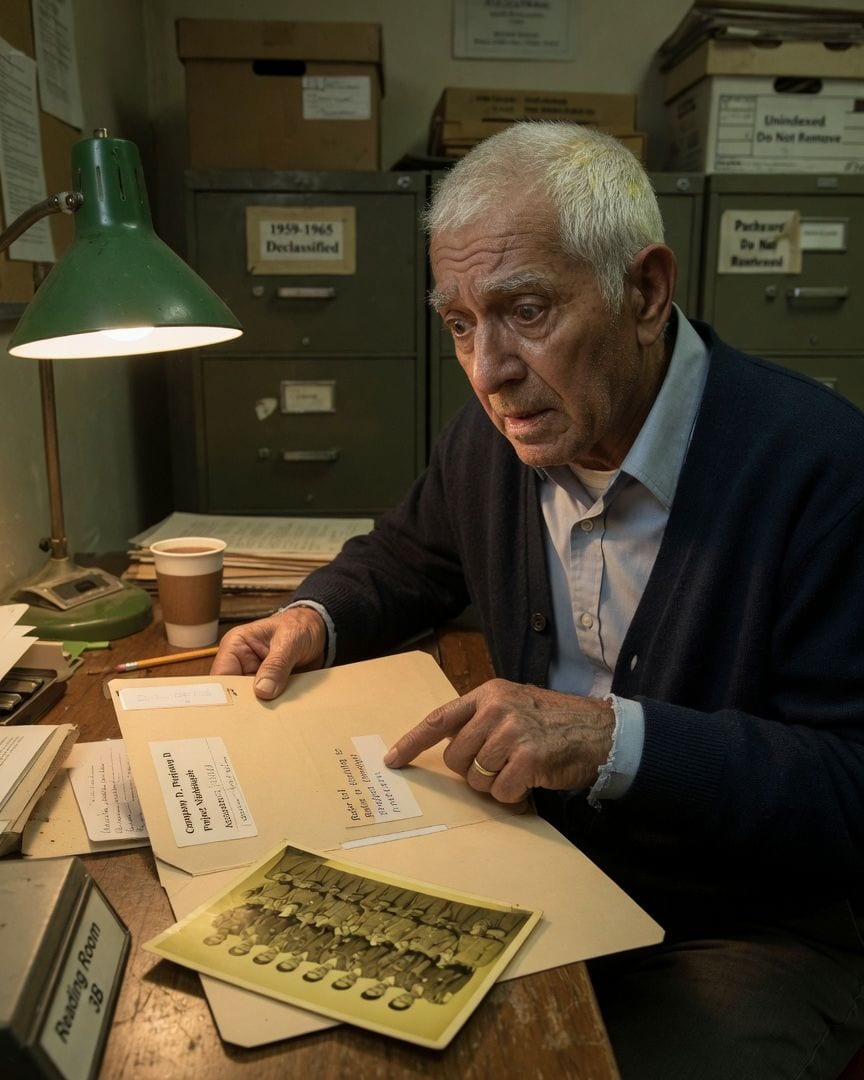
An archivist found her own name on a Cold War military record — dated decades before she was even born.
Eighty-four-year-old Trevor Machado clutched a yellowed photograph, his last hope to prove Company D existed before Friday's lineage board meeting. He knew the 1961 aerial survey of his unit’s parade field showed only grass and an impossibly sharp shadow with no object casting it. At the National Archives, a methodical archivist named Lorraine Sterling initially found no trace of Company D, but an unindexed sub-basement held a forgotten folder. Inside, Trevor's service record detailed his discharge from a unit officially deactivated the very year he joined, but a chilling handwritten note at the bottom, dated decades before Lorraine was born, bore her own name.
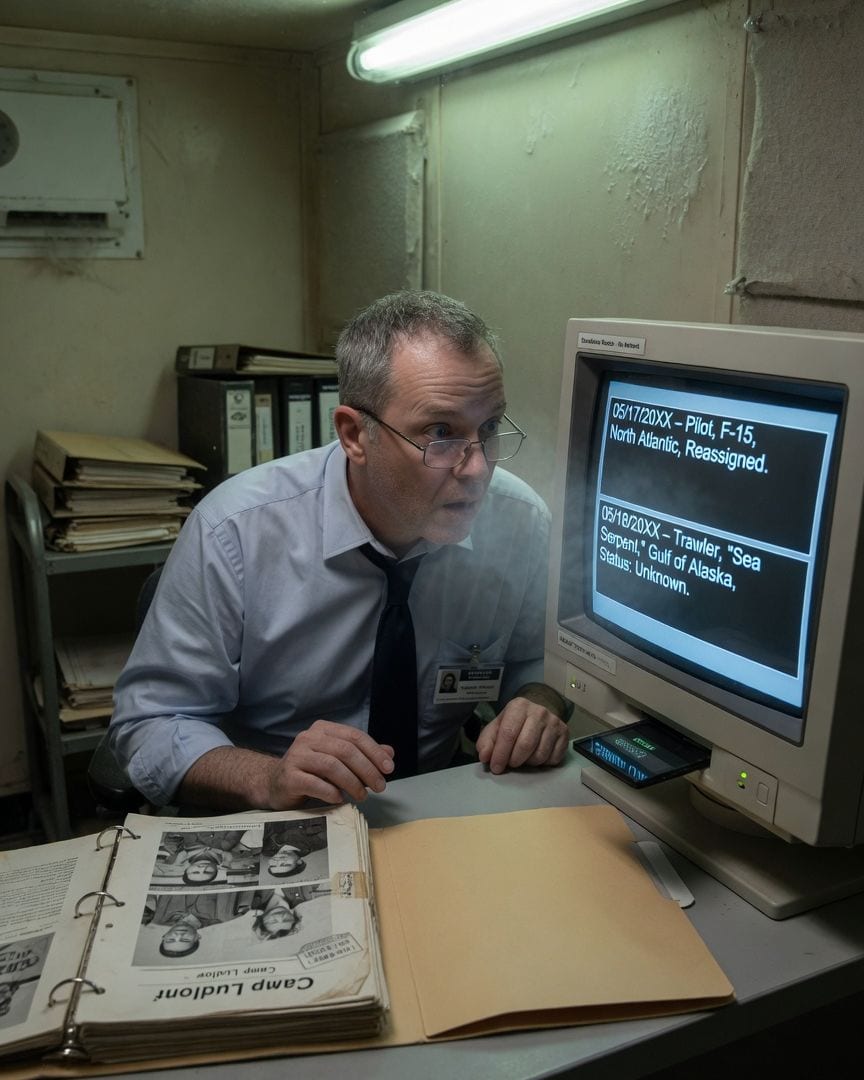
A declassification reviewer opened a Cold War 1959 file. A modern data chip inside showed a pilot missing yesterday.
Declassification reviewer Samuel Vance, whose world was built on the rigid order of official history, smoothed a letter confirming Camp Ludlow’s 1959 closure was a lie. Despite decades of records, the Air Force insisted the Greenland base remained active, its last radio check logged just four days prior. Driven by this profound wrongness, Samuel unearthed the base's ancient physical file, only to find a pristine, modern data chip hidden within its brittle pages. When he inserted it into a secure reader, the screen didn't show history, but a scrolling list of current missing persons—a pilot from yesterday, a trawler from today. How could an archived file hold a living record of the world’s most recent disappearances?
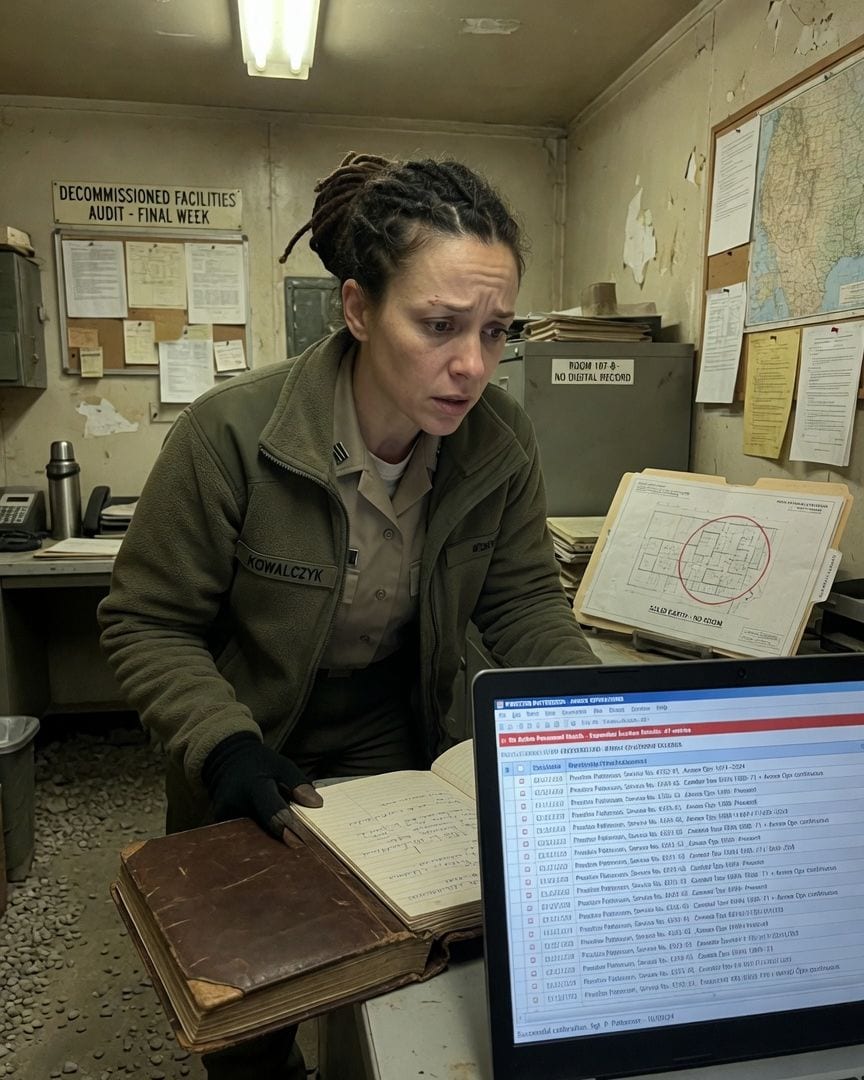
Sergeant Kowalczyk's final audit found an annex with no records. Its log listed 'presence counts' by a Sgt. Patterson with dozens of impossible, overlapping service records.
Sergeant Iris Kowalczyk was just a week from her transfer, tasked with one final audit of a remote, decommissioned Air Force base before she left its dusty grounds for good. Approaching a windowless concrete annex behind the old hospital, she expected cold steel but felt an unsettling warmth from the door, a building her digital system insisted did not exist. Yet, tucked away in a hidden access panel, she unearthed a hand-bound ledger detailing impossible maintenance tasks like 'presence counts,' with entries dated just two weeks prior. Then, searching for the last signatory, she found dozens of 'Preston Patterson' entries in the personnel database, each with conflicting service numbers and combat tours, all simultaneously assigned to the non-existent annex for impossible, overlapping decades.
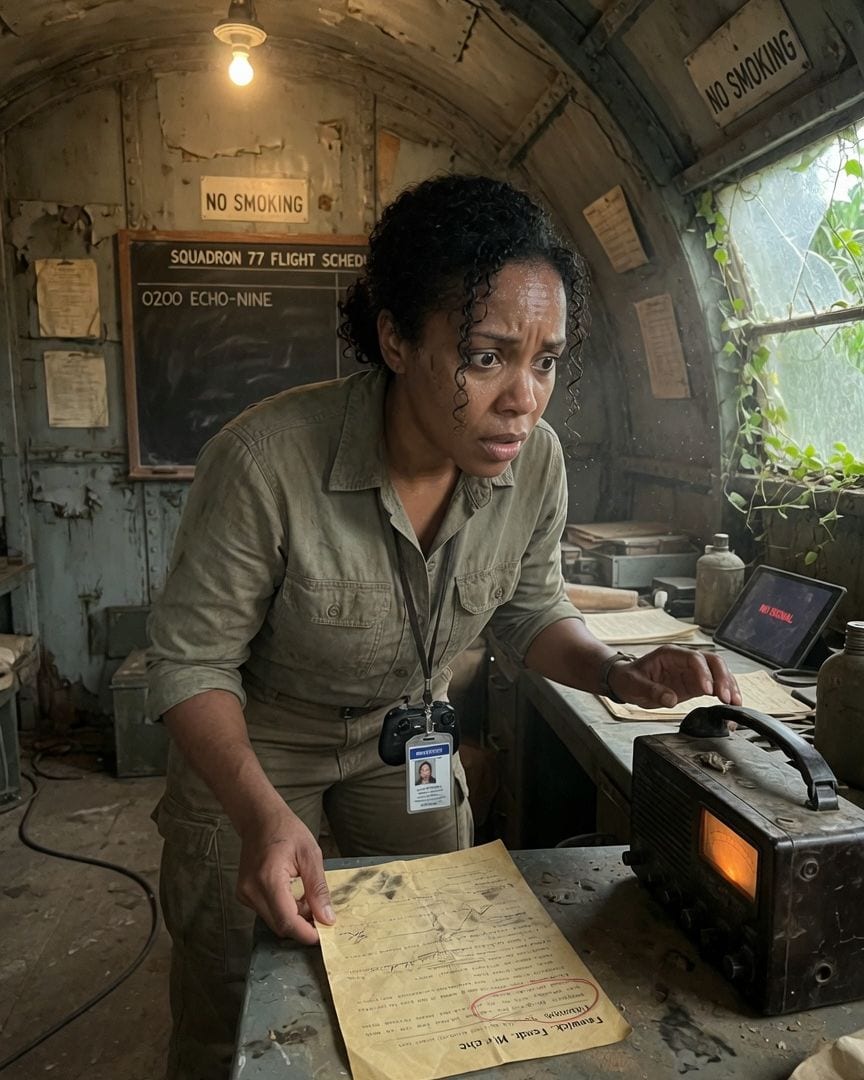
A surveyor found her name on a 1945 manifest in an eighty-year-abandoned base. Then its old radio crackled to life, calling a name from the list.
Surveyor Ade Fenwick meticulously charted a remote Pacific atoll, part of a meticulous process for a new runway contract. But her drone flagged an impossible structure: a Quonset hut not on any official record for the eighty-year-abandoned base. Inside, a generator hummed, and a 1945 flight manifest listed a phantom squadron, complete with a familiar surname: Fenwick, M. With her comms dead, an old radio in the ready-room crackled to life, calling out a call sign from the very same manifest. Who was on the other end, and how was this base still active?
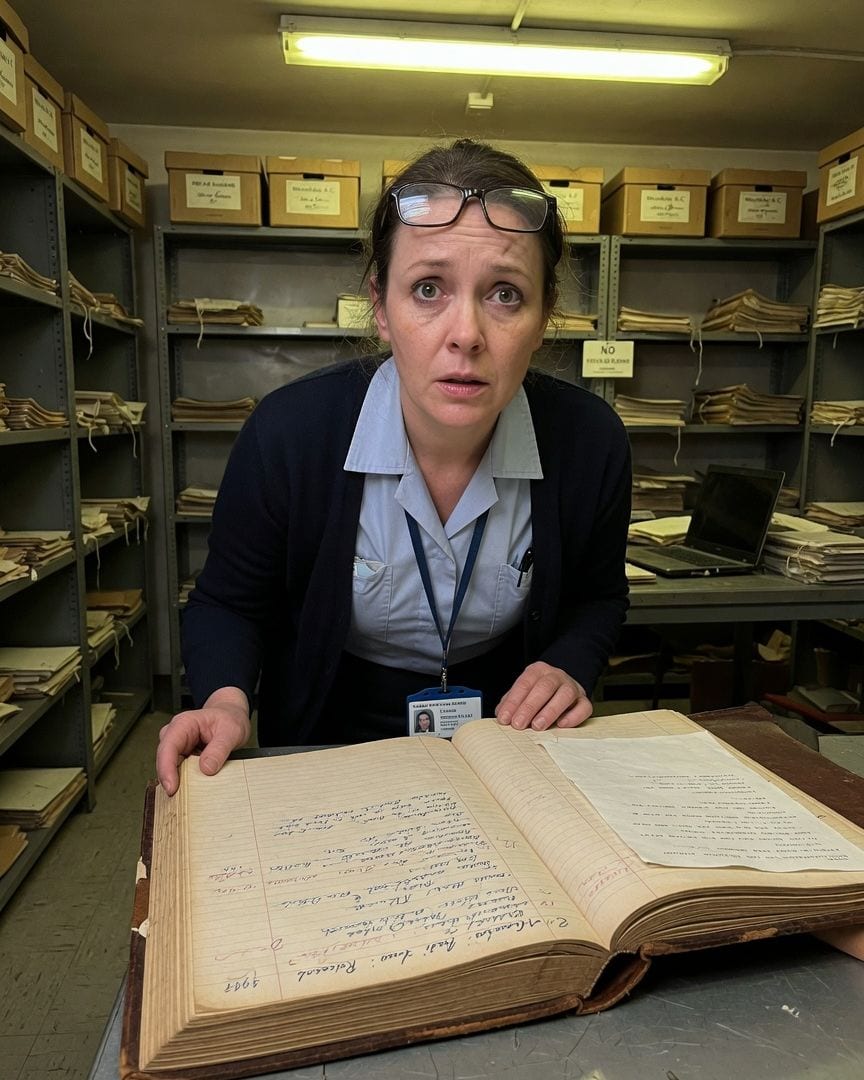
My ambulance trust's incident log shows callout 22-014 to 6 Cathcart Row at 2:40 AM. Every four years, the same call, same address. Always 'patient not found'.
My job involves tedious data entry for ambulance calls, but Incident 22-014 was different. It appeared every four years, always at 2:40 AM, always closed as 'patient not found.' Digging into the dusty physical archives, I found an entry from 1961 for the exact same incident, but its resolution read: 'Subject Secured. Relocated to "Holding".'
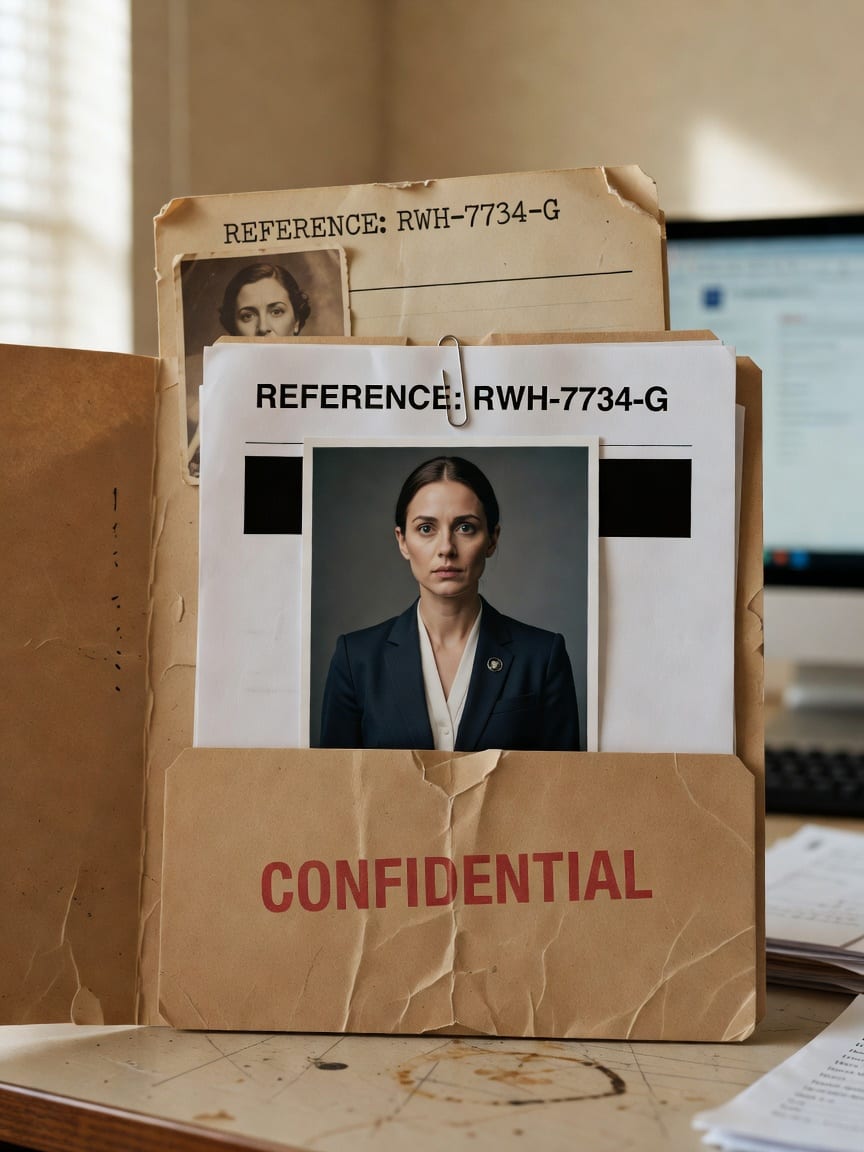
My security file was opened nine years before I was born. Its note said: 'subject not to be briefed'.
Auditing company digital records was routine until I pulled up my own personnel file. It clearly showed a 'Date Opened' nine years before I was born, yet bore my exact name and reference number. Below, an assessor's note from that impossible year mentioned a 'previous holder' and ordered the 'subject not to be briefed,' sparking a cold thrum in my chest.