Lieutenant Sam Ferro has until Friday to explain a Cold War loss report marked 'RECOVERED' with tomorrow's date.
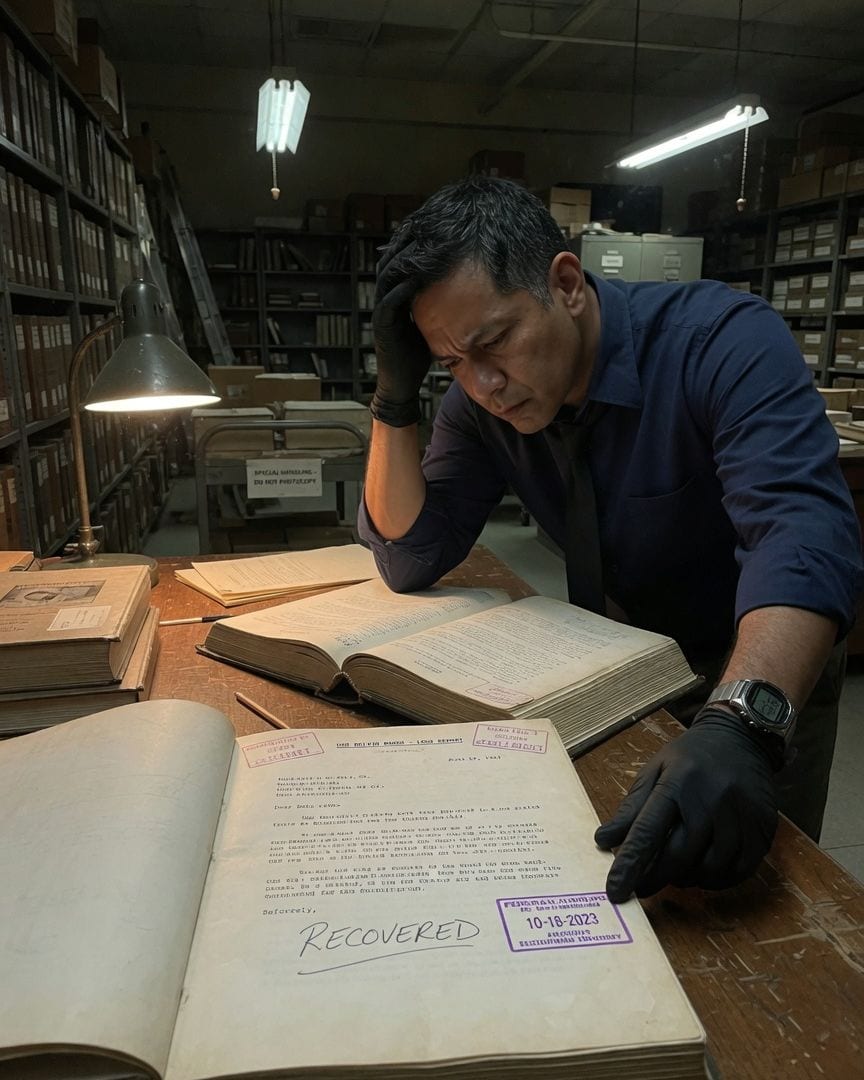
Lieutenant Sam Ferro, 35, sat hunched over a heavy, bound volume in the hushed, cavernous federal archive.
The board convened Friday, and he had until then to explain why the Cold War loss report on the picket ship USS Delvin Marsh—six hundred pages, sealed since 1964—closed with a hand-inked line the microfilm had never carried.
He’d requested the paper original. The heavy, official report smelled of old paper and the quiet dread of lost things. The final page, a summary of findings, was stark.
Below the last typewritten paragraph, a single, looping hand-inked line cut across the heavy bond: 'RECOVERED.' Beside it, a crisp, official federal archive stamp, in dark purple ink, bore a date that made Sam’s breath catch. It was tomorrow’s date.
He ran a gloved finger over the impossible stamp, the ink still seeming fresh, and felt a cold certainty that this was no clerical error. He squinted at the numbers, checking them against his own digital watch. Tuesday.
The stamp read Wednesday. He tried to rationalize it – a miscalibrated stamp, an oversight – but the ink was too precise, too vivid. The air in the archive felt suddenly heavier, pressing down on him.
The silence, usually a comfort, now seemed to hum with something unspoken.
Sam Ferro spent the next hour meticulously cross-referencing the stamp. He confirmed its registration number belonged to this archive, this section, this very building. He checked the archive's daily logging system, which meticulously recorded every document stamped, every movement.
He typed in the report’s identifier, then the impossible date. The system returned nothing. No record of the Delvin Marsh report being stamped, certainly not with tomorrow's date.
He tried searching for any document stamped on that future date, hoping to find a batch error, a mass misprint. The system remained stubbornly blank.
He called Penelope Carver, 42, a senior archivist known for her encyclopedic knowledge of federal protocols. Her voice, usually calm, wavered as he described the stamp. 'A future date? On a 1964 loss report? That’s… that’s impossible, Lieutenant.'
She confirmed the microfilm was indeed the official, complete record of the Delvin Marsh’s loss. 'Any supplements? Any special handling?' Sam pressed, a new line of inquiry forming in his mind. Penelope hesitated.
'There’s a… a very old, rarely used protocol. 'Special Handling.' For documents deemed… sensitive. They wouldn't be on microfiche. They’d be held physically, under lock and key.'
She guided him to a long-forgotten sub-vault, a place of heavy, clanking metal doors and air thick with the dust of forgotten histories. The temperature dropped several degrees as they stepped inside, a metallic tang in the air.
There, tucked inside a reinforced, unmarked envelope, he found a single, brittle memo. It was a 'Special Handling' instruction for the Delvin Marsh. It mentioned 'Asset Integration' and 'Personnel Reclassification.'
This was not a simple loss report; it was a process. Sam’s breath hitched.
The 'Special Handling' memo, dated 1964, outlined procedures for 'recovered' units, detailing a protocol for 'Asset Integration' and 'Personnel Reclassification.' It pointed to an unlisted facility code and an instruction to 'await further direction from designated agent.'
Sam Ferro felt a chill that had nothing to do with the vault's temperature. This wasn't a clerical error; it was a deliberate, ongoing process.
He turned the brittle memo over, his gloved fingers tracing the faint impressions on the reverse. There, almost invisible against the aged paper, was a hand-drawn symbol.
It was a stylized radar cross-section, a familiar, impossible shape from a half-forgotten Cold War briefing on unidentified aerial phenomena – a 'Thing on the Scope' – circled with a single, steady line.
The silence of the vault pressed in, making the faint rustle of the paper seem impossibly loud. Sam stared at the symbol, its stark lines suddenly menacing.
The hand-drawn symbol haunted Sam Ferro. He spent the next day cross-referencing the unlisted facility code from the 'Special Handling' memo. It didn't exist in any public or classified database.
He tried historical records, old military base lists, even obscure cartographic archives. Nothing. It was a ghost location.
Every search he initiated returned a blank, a silent refusal from the system, as if the code itself had never been meant to exist in the same space as official records.
He returned to Penelope Carver, showing her the memo and the symbol. Her eyes widened, a flicker of something close to fear in their depths. 'The 'Thing on the Scope'… I've heard old timers whisper about that.
From the early days of radar. Impossible contacts that just… vanished.' She recalled a similar, equally obscure 'Special Handling' memo she’d once glimpsed for a 1970s reconnaissance aircraft, lost over the Pacific, its file also sealed under extreme classification.
'I thought it was a one-off,' she murmured, her voice hushed, 'a bureaucratic anomaly. A dead end, a weird quirk of Cold War paranoia.' Sam pressed her for details, his mind alight with a terrible connection. He requested that file.
It took hours of navigating red tape, navigating bureaucratic hurdles that felt deliberately placed. The air in the records office felt thick, as if the very data resisted his access.
But eventually, a dusty, sealed box arrived at his desk, its surface bearing the unmistakable patina of decades spent untouched.
Inside, nestled amongst the sparse official documents, was an identical 'Special Handling' memo, same unlisted facility code, same 'Asset Integration' directive. The paper felt identical, the ink the same shade of faded blue.
The pattern was clear now, spanning decades and classifications. These weren't isolated incidents; they were systemic. He felt a creeping dread, cold and sharp, settling in his stomach. These weren't merely lost assets. They were processed.
Sam Ferro's quiet investigation was no longer quiet. The reconnaissance aircraft file, once opened, seemed to draw attention. Archive staff who usually ignored him now seemed to linger, their gazes a fraction too long when he walked past.
He found his request for a secure terminal access denied, then inexplicably granted an hour later, without explanation. A coffee cup on his desk, left untouched, was subtly shifted, its handle facing the wrong way.
He tried to dismiss it as an innocent oversight, a trick of his own heightened paranoia, but the feeling persisted. He called Conrad Doyle, 78, a retired Chief Archivist Penelope had mentioned, known for his long memory and quiet discretion.
Doyle agreed to meet in a neutral cafe, far from the humming silence of the archive. Over lukewarm coffee, Sam carefully described the 'RECOVERED' line, the future date, the 'Special Handling' memos, and the impossible symbol.
He spoke slowly, deliberately, watching the old man’s face for any reaction. Doyle listened, his eyes, clouded with age, sharpening with a familiar sadness. His hand, gnarled with age, trembled slightly as he picked up his cup.
'You've found the door, Lieutenant,' Doyle rasped, his voice barely audible above the cafe's hum, a raspy whisper that carried an unsettling weight. 'That stamp… it's not a mistake. It's an instruction. And the file… it's still being written.'
Doyle then leaned closer, his voice dropping to a whisper that felt colder than the vault. 'Some things aren't lost, Lieutenant. They're… filed. And the ones who do the filing… they're very patient.
And they know when someone starts looking through their records.'
As Sam left the cafe, the conversation echoing in his ears, he noticed a man in a dark suit, impeccably dressed, sitting alone at a corner table, staring at the street. The man looked up, and his gaze met Sam's.
His eyes were utterly devoid of expression, and he wore a faint, unsettlingly serene smile.
It was Oscar Bryant, Head of Special Collections, a man Sam had only ever seen from a distance, usually surrounded by the hushed reverence of his department. The smile was not friendly.
The encounter with Oscar Bryant solidified Sam Ferro's unease into a cold, hard knot in his gut. He knew he was being watched, knew his time was running out.
He returned to the archive, heart pounding, and sought out Penelope Carver in her secure office.
He laid out everything, his words tumbling out faster than he intended: the Delvin Marsh, the future-dated stamp, the 'Special Handling' memos, the impossible symbol, the pattern across decades, and his chilling encounter with Bryant at the cafe.
Penelope, pale, confirmed his fears, her gaze fixed on something beyond Sam, something unseen. 'Conrad told me stories… old legends, really. About things that came back different. Not wreckage, but… processed. He called it 'Asset Integration.'
He said the 'Thing on the Scope' wasn't just a sighting. It was… a mechanism.' Her voice was barely a whisper. She explained that the 'recovered' assets weren't simply found; they were transformed, their purpose fundamentally altered. 'The personnel reclassification?
That wasn't a reassignment, Sam. It was a re-designation. They became… part of the system.' She pulled up an obscure, encrypted database, accessible only to a handful of senior archivists, her fingers trembling slightly on the keyboard.
'Conrad always said there were two archives. The one we see… and the other one.' She typed in the unlisted facility code from the 'Special Handling' memo.
The screen flickered, the cursor pulsing with an unnatural rhythm, then displayed a single entry: 'Facility 7-Echo: Integration and Maintenance. Active since 1958.' Below it, a list of names, hundreds of them, scrolling down the screen.
Sam's eyes scanned it, his blood running cold. 'Underwood, Robert. Ensign. USS Delvin Marsh.' He looked at the service record entry. Ensign Robert Underwood was listed as 'integrated' in 1964.
But then, a series of 'reassignments' followed, spanning decades, all within various federal archive divisions, locations that Sam recognized as obscure branch offices or deep storage facilities. The most recent entry: 'Assigned to Special Collections, Federal Records Archive.
Last Activity: Today's Date.' The implications slammed into Sam with the force of a physical blow, leaving him breathless. Robert Underwood, the young ensign from the Delvin Marsh, was still active, still working. And he was in Special Collections.
With Oscar Bryant. The humming of the archive seemed to deepen, a low thrum against his teeth.
Sam Ferro stared at the screen, the name 'Robert Underwood' burning into his vision, a stark, impossible truth. An ensign, lost in 1964, now 'active' in the very archive he was investigating, with 'today's date' as his last activity.
This wasn't just about ships anymore. It was about people. People who didn't age, who were 'integrated' and 'reclassified,' then put to work, filing the very records of their own disappearance.
He quickly scrolled through the other names on the list for Facility 7-Echo. Dozens. Hundreds. From every branch of service, every decade. Pilots, sailors, intelligence officers.
All 'integrated,' all with 'last activity' dates current to the present day, all reassigned to various federal record-keeping positions. The archive wasn't just holding the records; it was generating them, through its own impossible agents.
The room felt colder, the air thick and heavy. A soft click echoed from the doorway of Penelope Carver’s office, barely audible over the hum. Sam looked up, his head snapping towards the sound.
Oscar Bryant stood there, unmoving, his serene smile fixed, a predator surveying its prey. Behind him, emerging from the shadows of the main archive floor, was another figure.
He was older, perhaps in his late seventies, with a quiet, almost placid expression, dressed in a crisp, old-fashioned archivist's uniform, perfectly preserved, as if pulled from a historical photo.
His name tag, glinting faintly in the dim light, read: 'Underwood, R.' He held a microfiche card in his hand, the very one Sam had been trying to access all morning. 'Looking for this, Lieutenant?'
Bryant asked, his voice smooth and unhurried, cutting through the silence like a knife. The name on the microfiche label, visible even from the distance, was 'Underwood, Robert. Ensign. USS Delvin Marsh.'
The date of 'Last Activity' beside it was today's.
Oscar Bryant and Robert Underwood advanced into Penelope Carver’s office, their movements strangely fluid, unhurried, as if they moved through a medium thicker than air. Penelope recoiled, her face etched with terror, pressing herself against her desk.
'They're… they're the keepers,' she whispered, her voice trembling, almost breaking. Bryant’s smile widened, devoid of warmth, an expression of perfect, terrifying emptiness. 'We are the memory, Lieutenant Ferro. The true archive.
The Delvin Marsh, the reconnaissance aircraft, all the 'lost' assets… they were simply processed. Integrated. Their information, their very essence, added to our collection. And their personnel… re-designated to ensure the continuity of the record.'
Robert Underwood, the ensign from 1964, nodded slowly, his eyes ancient and still, like polished stones. 'The Thing on the Scope,' he said, his voice flat, devoid of inflection, 'it is the collector.
It finds what is valuable, what can be added. The record is never truly lost. It is merely… expanded.' Bryant gestured around the office, his hand sweeping over the shelves of files, the silent terminals, the very walls.
'This building, these files, the entire network… it is all part of a single, living entity. It absorbs, it processes, it retains. And it maintains its own records, its own agents. The stamp you found, Lieutenant, with tomorrow's date?
It was an entry. A pre-emptive filing of a future event. Our event.' Sam Ferro felt the horrifying coherence of it all, a sudden, complete understanding that ripped through his mind.
The impossible dates, the unlisted facilities, the unaging personnel, the systemic 'recoveries' across decades.
The archive wasn't just a place of records; it was a vast, patient organism, constantly consuming and integrating, its bureaucratic processes a terrifying echo of a cosmic, inhuman intelligence. And he, Sam Ferro, was now a potential new entry.
Sam Ferro knew he had to act. He had to get out, and he had to take proof. His eyes darted to Penelope's secure terminal, then to the door.
He needed to download the Facility 7-Echo data, the list of 'integrated' personnel. Bryant and Underwood moved to block the door, their steps silent on the carpet.
'You've seen too much, Lieutenant,' Bryant said, his voice now carrying an unsettling resonance, a subtle echo that seemed to emanate from the very walls. 'Your file is being prepared.' Sam lunged, not for the door, but for Penelope's desk.
He grabbed a blank microfiche card and jammed it into the reader, frantically initiating a data transfer of the personnel list, his fingers fumbling with the unfamiliar interface.
Underwood moved with unnatural speed, a hand reaching for Sam’s arm, his old uniform rustling faintly.
Sam twisted, knocking over a stack of old ledgers, creating a cascade of heavy paper and crashing bindings that momentarily blocked Underwood, sending dust motes dancing in the dim light.
Bryant’s eyes glowed faintly in the dim light, a dull, electric purple. 'Futile,' he murmured, his voice now a low thrum that vibrated through the floor. 'We are everywhere.'
As the microfiche reader whirred, spitting out data onto the card, Sam heard a distant, low hum, growing louder, vibrating through the floor, through the very soles of his shoes. The archive itself was stirring.
He snatched the partially-copied microfiche from the reader just as Bryant reached him, his touch cold and strangely firm, like grasping marble.
Sam kicked out, sending a heavy archival cart crashing into Bryant, momentarily staggering him with a loud clang that echoed unnaturally. He bolted for the door, Penelope screaming behind him, a sound that was quickly swallowed by the rising hum.
He heard heavy, echoing footsteps pursuing him through the labyrinthine aisles, the sound strangely precise, unhurried, yet gaining. He burst onto the main floor, the hum now a resonant thrum throughout the entire building, a deep, pervasive vibration.
He could see other figures, quiet archivists he’d passed a hundred times, now turning, their faces placid, their eyes fixed on him, devoid of emotion. They were all 'Underwoods.'
He scrambled down a flight of stairs, the microfiche clutched in his hand, the hum intensifying, feeling as though the very walls of the archive were closing in, trying to absorb him, drawing him deeper into its endless files.
He reached the staff exit, fumbling with the security panel, his fingers numb, his breath ragged. The hum was a roar now, the building groaning like a living thing, its very structure seeming to shift.
The door finally hissed open, and he burst out into the cool night air, gasping, the sound of the archive's impossible hum fading behind him, but not truly gone.
He ran without looking back, carrying the proof no one would ever believe.
Sam Ferro's career ended abruptly. His frantic account of the archive, the 'integrated' personnel, and the future-dated stamp was dismissed as a delusion, a stress-induced breakdown.
The microfiche he salvaged was declared a fabrication, its data corrupted, unreadable by any conventional means.
Penelope Carver, after a brief, unexplained leave, returned to the archive, her eyes distant, her movements strangely deliberate, a subtle, serene smile often playing on her lips.
Sam tried to publish his story, but every attempt was met with silence, or quiet, polite refusals, the subtle resistance of a system too vast to fight.
He moved to a small, isolated town, taking a low-level, mundane job, always looking over his shoulder, a constant thrum of paranoia vibrating beneath his skin.
The board convened as scheduled, and the Delvin Marsh report remained a classified Cold War loss, the hand-inked 'RECOVERED' line on the paper original now inexplicably gone, replaced with a blank space, as if it had never been.
Sam Ferro lives quietly now, far from federal buildings and old paper, but he knows he isn't truly free. He sees them, sometimes. In grocery store aisles, in quiet parks, behind library counters.
People who seem too calm, too still, their eyes holding an ancient, depthless patience that chills him to the bone.
Sometimes, he catches a glimpse of a familiar, serene smile, or a name tag that reads 'Underwood' or 'Bryant' or, most disturbingly, 'Carver.' He knows they are still filing. Still integrating.
And he knows his own file, begun with a stamp dated for tomorrow, is likely complete, waiting for its final, inevitable entry.
He checks his mail every day, half-expecting a crisp, purple-inked envelope, postmarked from an impossible future, an invitation to his own re-designation.
He sometimes wonders if the hum he heard that night still echoes through the vast, dark halls of the archive, waiting for new entries, for new information to process.
A week later, a plain white envelope arrived at Sam Ferro's isolated cabin. It bore no return address, only a crisp, purple federal archive stamp dated for tomorrow. He knows it does. He knows it's always waiting.
If this one got to you
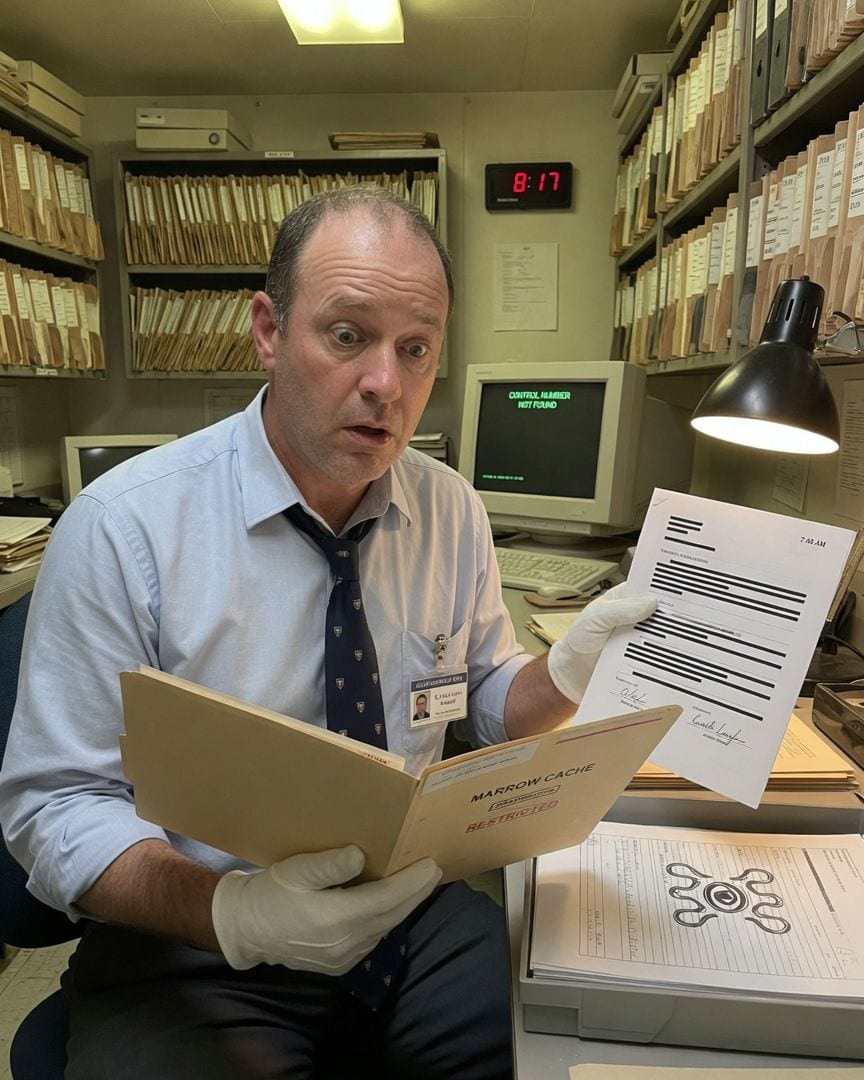
A records manager found a file extension signed at 7:48 AM. He hadn't clocked in yet, and a strange symbol pulsed in its redacted pages.
Corwin Vale, lead records manager for Fort Ruthven, lived by routine, his world precise and ordered. This morning, however, that order shattered when he found the Marrow Cache file's extension signed at 7:48 AM. Corwin had not clocked in until 8:00 AM, and the vault logs showed no other entry. As he reviewed the heavy file, he discovered its control number did not exist in any database. Then, deep within the redacted pages, a strange, geometric symbol pulsed faintly, an alien glyph etched into the classified paper. What impossible secret did the file hold?
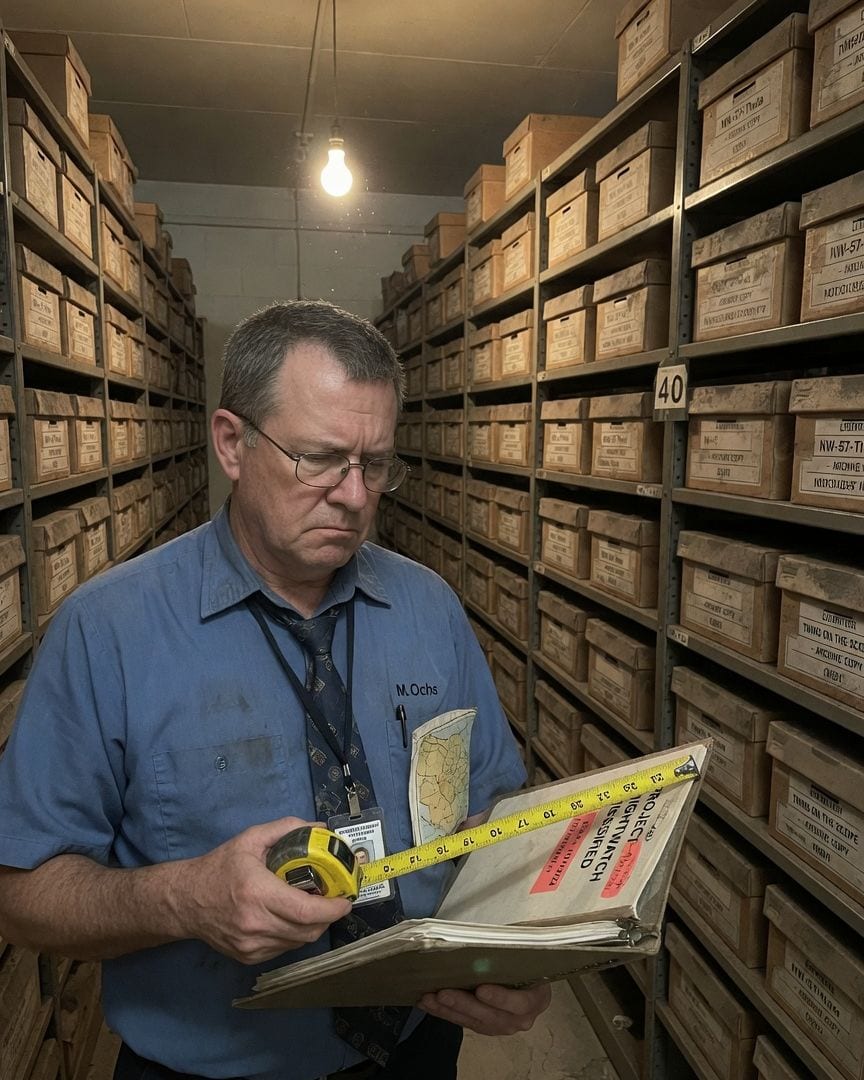
A Cold War records clerk on his final patrol found Aisle 40 stretched 61 feet longer, lined with unknown boxes. Inside one: 'PROJECT NIGHTWATCH - CLASSIFIED' with a fresh timestamp.
Marlin Ochs, a creature of habit after nineteen years at the St. Louis federal records depot, faced his final patrol through Aisle 40 before its scheduled pulping. His routine walk, usually 92 precise strides, suddenly stretched to an impossible 119, making the aisle 61 feet longer than its blueprint. The extra section felt colder, lined with dust-laden boxes bearing alien classification codes and no manifest. Inside one, he found a metal-bound file: 'PROJECT NIGHTWATCH - CLASSIFIED,' dated 1957, but with a timestamp just hours old.
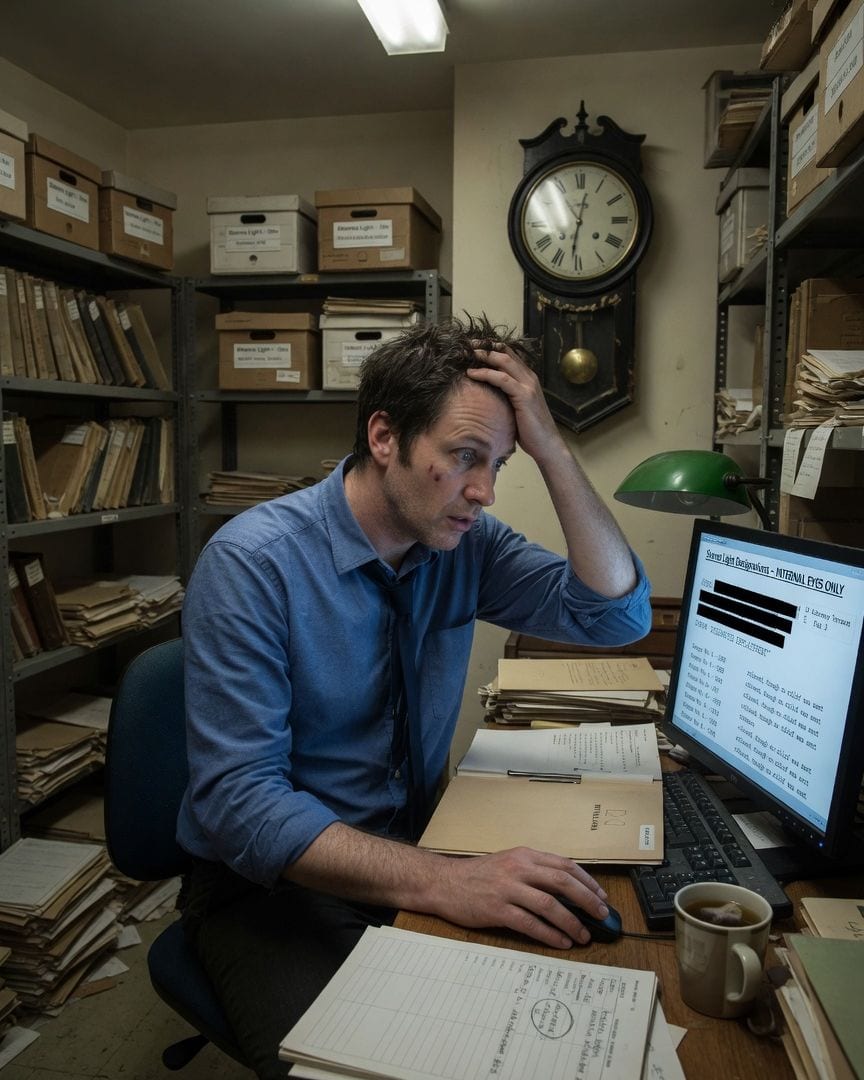
I found my street address in a century-old lighthouse file, printed decades before I lived there.
As a maritime archivist, my world revolves around forgotten lives and dusty ledgers. But the Skerne Light files broke that quiet rhythm, revealing a chilling pattern: 'Keeper number 6' relieved, though no relief was sent, repeating for decades. Now, an internal document with a strange code has led me to a redacted entry, revealing my own street address, decades before I ever lived there.
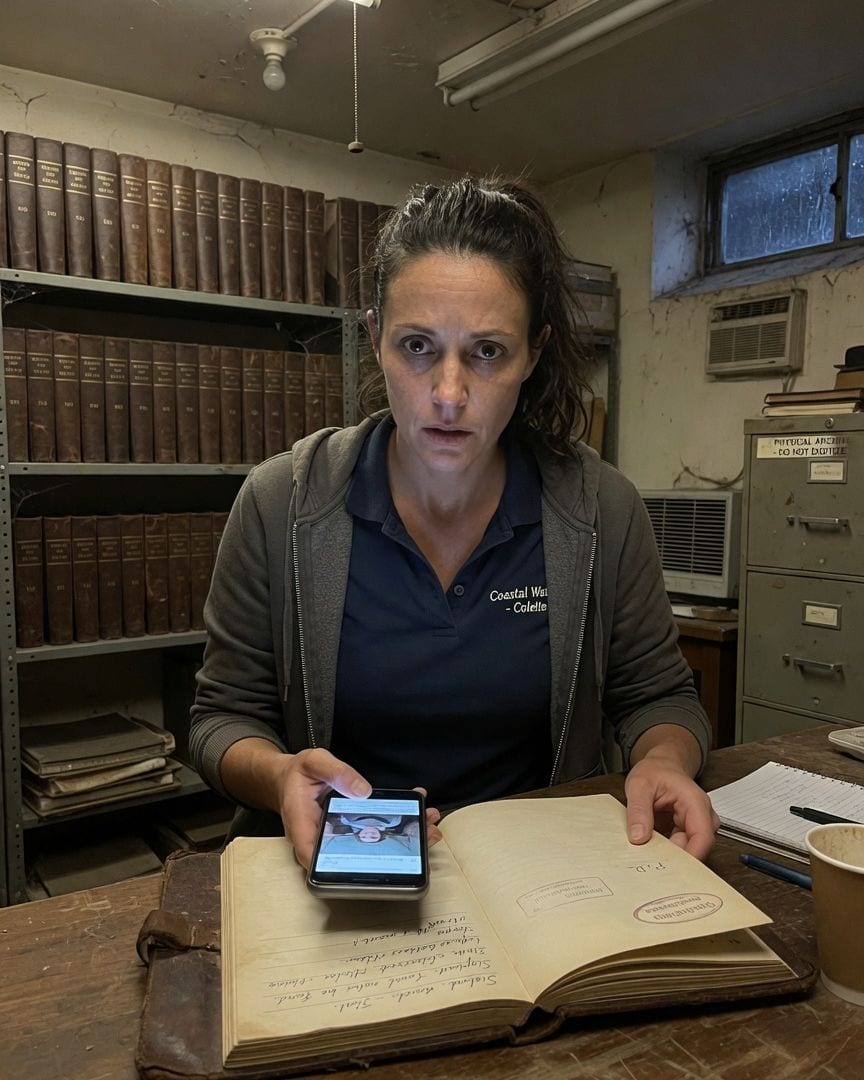
My coastguard log noted Sighting 9 again tonight, a light where no vessel showed. The old logs carry Sighting 9 off Skerry Point at 3:14am every tenth year since 1954, always 'nothing found,' always 'send no boat.'
On my watchtower night shift, the radar screen glowed green and the ocean was quiet. Then, a familiar light appeared off Skerry Point, exactly on cue, just as it had every tenth year for decades. But digging deeper, I found a hidden stamp in an old logbook: 'Operation Skerry. Status: Complete.' It left me with a chilling sense of finality.
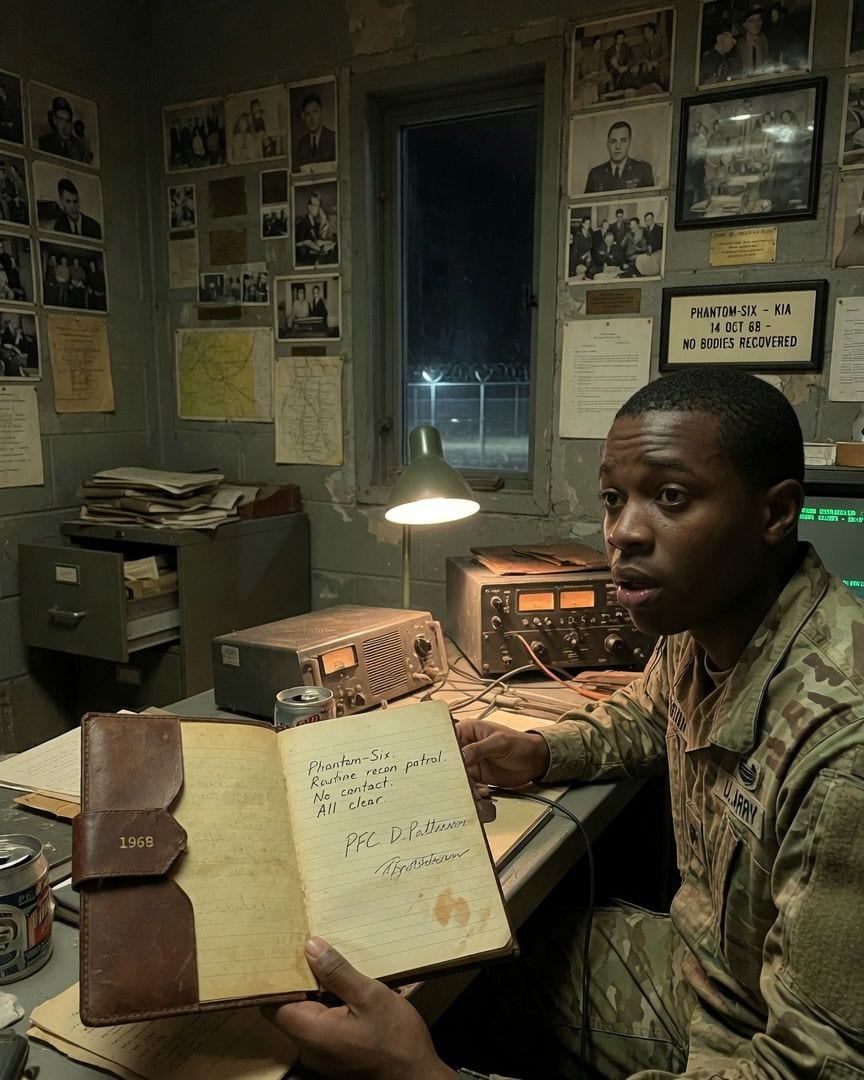
A DMZ specialist finds a 1968 Cold War logbook entry, signed by a lost soldier, its ink shimmering faintly.
Specialist James Farr, on a long night shift at a desolate Korean DMZ outpost, meticulously monitored his console, a squared-away soldier accustomed to the quiet hum of equipment. His focus shattered when a faint, static-laced whisper ghosted from a dead channel, calling out 'Phantom-Six' — a unit lost near this wire in 1968. The urgent voice then specifically mentioned his tower window light, asking him to turn it off before it drew fire. Later, an old logbook from 1968 revealed an entry dated three days *after* Phantom-Six was officially lost, signed by one of the vanished soldiers, its ink subtly shimmering with an unnatural gleam.
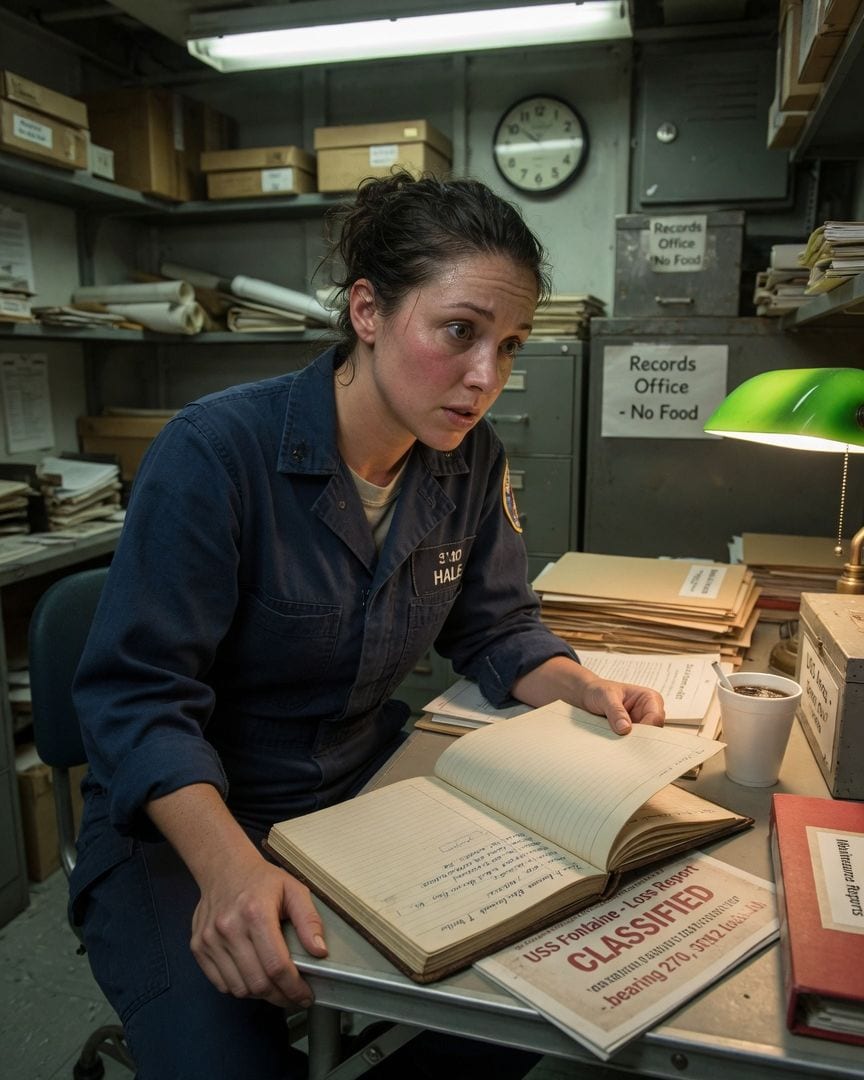
Petty Officer Hale needs a spotless record for her transfer. But the USS Ares sonar logs show an identical, impossible contact, logged to the minute, years apart, and tied to a classified loss report.
Petty Officer Sarah Hale needed a spotless record for her coveted shore duty transfer, a posting she'd worked five years to secure. Alone in the USS Ares sonar shack, three days out from San Diego, her midwatch was broken by an impossible contact: a close, slow echo holding perfect pace, invisible to radar, then vanishing. Her heart hammered, not from fear, but from the data's impossibility. When she found an identical entry in her own log from just one week prior, the cold dread tightened its grip. But the true chill settled when she unearthed decades of similar records, signed by other sonar officers, all showing the same impossible contact at 0212, off the port beam, for nineteen minutes, on the same ship, stretching back years—a persistent echo tied to a classified loss report.