A records clerk's uncle's 1966 loss file described wreckage from 2011, with a repair log signed by a man who died in 1965.
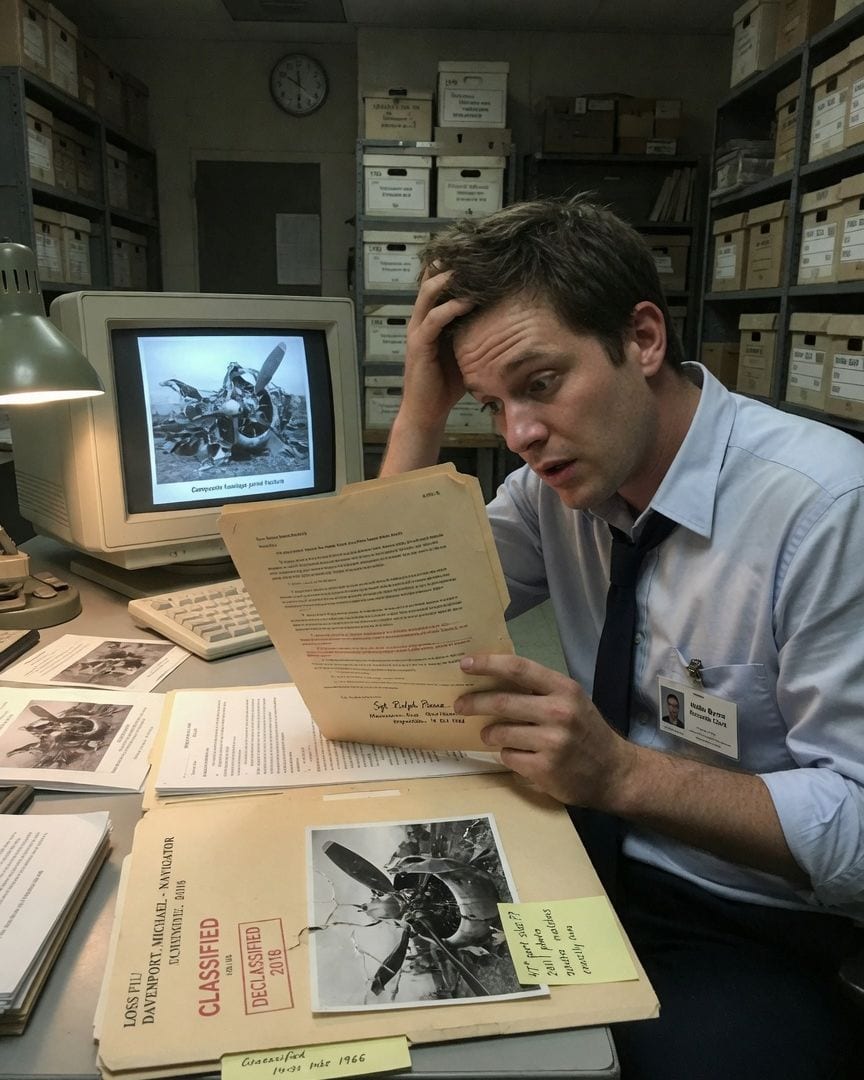
Records clerk Hollis Byrne sat in the cool, hushed declassification chamber, the scent of old paper and ozone thick in the air.
He had one afternoon with the 1966 Vietnam-era loss file before the boxes went back to the archive proper, a rare chance he’d pulled strings for. The file was thick, surprisingly so for a simple loss, and meticulously tidy.
His uncle, Michael Davenport, was the missing navigator from that ’66 incident. Hollis ran a finger over the official seals.
The board findings, the aircraft accident report, and the recovery narrative all agreed to the letter, all signed within four days of the reported loss. That was the trouble. The wreck had not been located until 2011.
Yet every detail in the 1966 report matched the site, right down to the specific angle of the bent propeller blade on the recovered wreckage, a detail Hollis had seen in a grainy photo from the 2011 recovery logs.
It was impossible. The ink on the last signature, a faded but firm 'Donald Pennington,' seemed to hum with an unsettling freshness.
Hollis pulled up the digital recovery logs from 2011 on his terminal, cross-referencing them with the physical 1966 report. He told himself it was a misfile, a later insertion, a clerical error that somehow slipped past decades of scrutiny.
But the dates, the file numbers, the official stamps – they were all consistent. He focused on the propeller blade. The 1966 report described it as ‘bent at a 47-degree angle, port side, near the hub.’
The 2011 recovery photo, taken by a salvage team, showed precisely that. He zoomed in, trying to find a discrepancy, a shadow, anything. His eyes ached from the effort, but the image remained stubbornly clear.
Then he found it. The 1966 report mentioned a 'minor fracture in the forward fuselage panel, composite material.'
Hollis knew, intellectually, that composite materials of that specific type weren't widely used in aircraft construction until the late 1970s, let alone in a 1966-era military craft.
He checked his references, then re-checked, calling up decades-old technical specifications for the aircraft model. No, it wasn't a common material then. This wasn't a general description; it was too precise, too anachronistic.
He tried to rationalize it as a hypothetical, a speculative note, but the language was definitive, a factual observation. The ordinary explanation was failing, leaving a cold, hollow space in his gut.
Driven by an escalating unease, Hollis began to meticulously pore over every page, every attachment in the 1966 file. The paper felt drier, almost brittle, beneath his fingertips.
He found an unassuming, stapled packet tucked deep within, labelled 'Maintenance Log – Post Recovery Inspection.' His heart pounded, a frantic beat against his ribs. Post recovery. Dated 1966. He flipped it open.
The log detailed repairs for the bent propeller blade and the fractured composite fuselage panel – the very damage he knew from the 2011 recovery. Below the entries, a signature: 'Sgt. Ralph Pierce.'
Hollis had a printout of Pierce’s service record on his desk, already pulled for cross-reference.
Sergeant Ralph Pierce, crew chief for the 37th Tactical Fighter Wing, died in a training accident in 1965, a full year before the 1966 file was supposedly created, and decades before the recovery it detailed.
The revelation of Sgt. Pierce's impossible signature left Hollis numb, the declassification chamber suddenly feeling colder, the scent of ozone now sharp and acrid. He couldn't dismiss it as a fluke, a single, egregious error.
He began a systematic search of the archive's internal database, his fingers flying over the keyboard. He used keywords like 'anomalous recovery date,' 'discrepant material,' or even 'pre-dated documentation.'
The system, ancient and sprawling, coughed up a trickle of results at first, then a slow, steady stream.
He worked through lunch, then past the usual closing time, ignoring the low hum of the servers and the distant clatter of the evening cleaning crew.
The archive building settled around him, groaning faintly as if adjusting to the weight of its own impossible contents.
He found a handful of similar cases, scattered across different decades and classifications: a submarine lost in the 80s whose recovery log, dated 1979, mentioned a specific deep-sea trench only charted in 2005; an experimental aircraft from the 50s, its crash report from 1952 detailing damage consistent with a landing gear malfunction that was only retroactively identified and fixed across the fleet in 1998.
Each file, regardless of its original classification, bore a faint, almost invisible, circular stamp in the lower right corner of the cover sheet: 'P.F.R.' – Pre-Filed Record.
The letters were tiny, easily overlooked unless one was specifically looking for an anomaly. He printed out the covers, a growing stack of impossible documents that seemed to radiate a silent, terrifying truth.
The next morning, Hollis found Christine Maddox, the head archivist, standing by his desk, her usually placid expression subtly altered, a hint of something unreadable in her eyes.
She was a woman of precise habits, rarely deviating from her morning rounds. 'Hollis,' she said, her voice quiet, almost too quiet for the cavernous archive, 'you were here very late last night.
And you've accessed a rather unusual cross-section of files.'
He felt a prickle of unease, like static electricity on his skin. He tried to feign ignorance, mumbling something about a personal research project, a genealogical rabbit hole. Christine's gaze sharpened, cutting through his pretense. 'We have protocols, Hollis.
Certain lines are not meant to be crossed, especially when dealing with… sensitive materials.' She leaned closer, lowering her voice, though no one else was within earshot. The air in the archive suddenly felt heavy, charged, pressing down on him.
'There were other clerks, before you. Curious ones. They started asking questions about things that didn't quite add up. They found patterns.' She paused, her eyes holding his, calm and unnerving. 'They’re not here anymore. Transferred. Or just… gone.
It's a very quiet system, Hollis, but it notices when someone starts pulling threads. You’re looking for the 'P.F.R.' stamp, aren't you?' He was no longer just an investigator; he was being watched, and he was known.
Hollis looked at Christine, the stack of 'P.F.R.' covers still clutched in his hand, the paper feeling oddly warm now. 'What is it?' he asked, his voice barely a whisper, a thread of fear woven through it.
'What does 'Pre-Filed Record' mean?'
Christine sighed, a sound of profound, weary resignation that echoed faintly in the silent archive. 'It means exactly what it says, Hollis. These aren't records of what was. They're records of what will be.'
She gestured vaguely around the vast, silent archive, the gesture encompassing rows upon rows of steel shelves, millions of documents. 'This isn't just a repository of the past. It’s… a different kind of machine.
It doesn't just hide information; it generates it. It writes the future.'
She explained that certain events, certain losses, certain discoveries, are 'pre-filed.' The files are created, stamped, and sealed, sometimes decades before the events they describe actually occur.
'Your uncle's plane,' she said, her voice matter-of-fact, 'it wasn't found in 2011 because it was lost in 1966. It was lost in 1966 because the file already said it would be found in 2011.
The universe, or whatever force governs these things, simply… catches up to the paperwork.'
The anachronistic composite material, the impossible maintenance log signed by a dead man, the bent propeller blade matching a future photo – it all clicked into a horrifying, coherent pattern. Every wrong detail suddenly made perfect, terrible sense.
The dread wasn't in a clerical error; it was in the terrifying, patient logic of a system that dictated reality from a dusty shelf.
Hollis felt a dizzying inversion of time and causality, his rational mind scrambling to process a truth that defied everything he understood.
Hollis felt a cold sweat prickle his skin, his hands clammy. 'So, these files… they're not just recording history,' he stammered, his voice hoarse. 'They're making it.' Christine nodded slowly, her gaze unwavering. 'Precisely.
And once an event is filed, it's immutable. It will happen.' She turned, her movements fluid and practiced, walking to a secured cabinet behind her desk. The heavy steel door slid open with a soft, mechanical hiss.
She retrieved a slim, standard-issue folder and placed it before Hollis on his own desk. 'This is the last thing I can show you.'
He looked down. It was his own service record. Current, up to date, meticulously maintained, with all his transfers, training, and classifications. He scanned it, seeing nothing out of place, then looked up at Christine, confused.
She pushed the file closer, her finger coming to rest on an entry under 'Status/Disposition,' dated precisely three weeks from today: 'Byrne, Hollis. Records Clerk. Classified loss. Details to follow.'
The ink on the entry was still faintly wet, glistening under the archive lights, as if it had only just been written.
The words on his service record burned into Hollis’s mind. 'Classified loss.' Three weeks. He felt a sickening lurch, a profound sense of unreality that threatened to swallow him whole.
'This… this isn't real,' he whispered, trying to rub the entry away with his thumb, as if it were a smudge. The ink remained, pristine and wet.
Christine watched him, her face etched with a weary sympathy that offered no comfort. 'It is, Hollis. More real than anything else in this building. Once it’s written, it’s done.
Your uncle’s file wasn’t just a pre-filed recovery; it contained his pre-filed loss. The dates, the details – they weren’t foreknowledge. They were instructions. And the universe follows them, eventually.'
She explained that the 'secrecy machine' wasn't a physical computer or a single person, but an ancient, self-sustaining bureaucratic entity, a metaphysical filing system that existed outside conventional time. It didn’t predict; it decreed.
She showed him other similar entries in other P.F.R. files, pulling up digital scans on her terminal, careful not to touch the physical documents.
Names of people who had vanished, or died under mysterious circumstances, their 'classified loss' entries pre-dating the events by weeks, months, sometimes years. The pattern was horrifyingly clear. Every clue, every impossible detail, every anachronism now made perfect, terrifying sense.
Hollis Byrne was not just a records clerk; he was now a record, his own future meticulously filed.
Hollis sprang from his chair, a desperate energy coursing through him, the stillness of the archive suddenly unbearable. 'There has to be a way to stop it! To change it!'
He grabbed his file, clutching it like a lifeline, the cool paper surprisingly stiff in his trembling hands. 'Can I delete this entry? Shred it? Warn someone?'
Christine shook her head slowly, a grim finality in her expression. 'The files aren't digital, Hollis. They're not on any network you can access or alter. They are physical, unique, and immutable.
This isn't a system that can be hacked or reasoned with. It simply… is.' She explained that attempts to interfere with a pre-filed record had always resulted in the event still occurring, often with more severe, unforeseen consequences.
The 'classified loss' would still happen, perhaps just in a different manner, or at an even greater cost. He thought of calling the police, or a newspaper, but what would he say?
'An old file says I'm going to disappear in three weeks'? He pictured the blank stares, the dismissive smiles, the inevitable psychiatric evaluation. No one would believe him.
The sheer, patient, bureaucratic horror of it was that there was no external force to fight, no button to press, no person to confront. The 'secrecy machine' was the quiet, inexorable truth of existence in these archives.
He was trapped, not by bars, but by ink on paper, his fate already sealed in a folder on a shelf.
Hollis continued his work as a records clerk. But he was a ghost moving through the archives, his movements slow, deliberate, as if each step might trigger the inevitable.
Every file he touched, every document he cataloged, seemed to hum with a hidden, terrible power, the weight of predestination. He no longer saw just the past; he saw the pre-written future, lurking in the meticulous details, waiting to manifest.
He looked at the other clerks, at their mundane routines, their easy laughter, wondering if their own files contained similar entries, if they too were already marked, unwitting participants in the grand, silent bureaucracy of fate.
He moved through the days with a quiet dread, counting down, waiting for the 'details to follow' for his own classified loss.
Hollis sat at his desk, the fluorescent lights humming their endless, indifferent song. He glanced at the date on his computer screen: two weeks and six days until the date on his pre-filed loss entry.
He looked at his hands, then back at the unfiled documents on his desk. He picked up a pen.
Three weeks later, Christine Maddox found Hollis Byrne's desk empty, a stack of meticulously organized files beside his keyboard. On top, neatly handwritten, was a single, blank form for a 'Classified Loss.'
The world kept turning, the archives kept their secrets, and the files kept being signed.
If this one got to you
A Chief Petty Officer's salvage career ends when a Cold War fighter jet surfaces at sixty tons, perfectly intact.
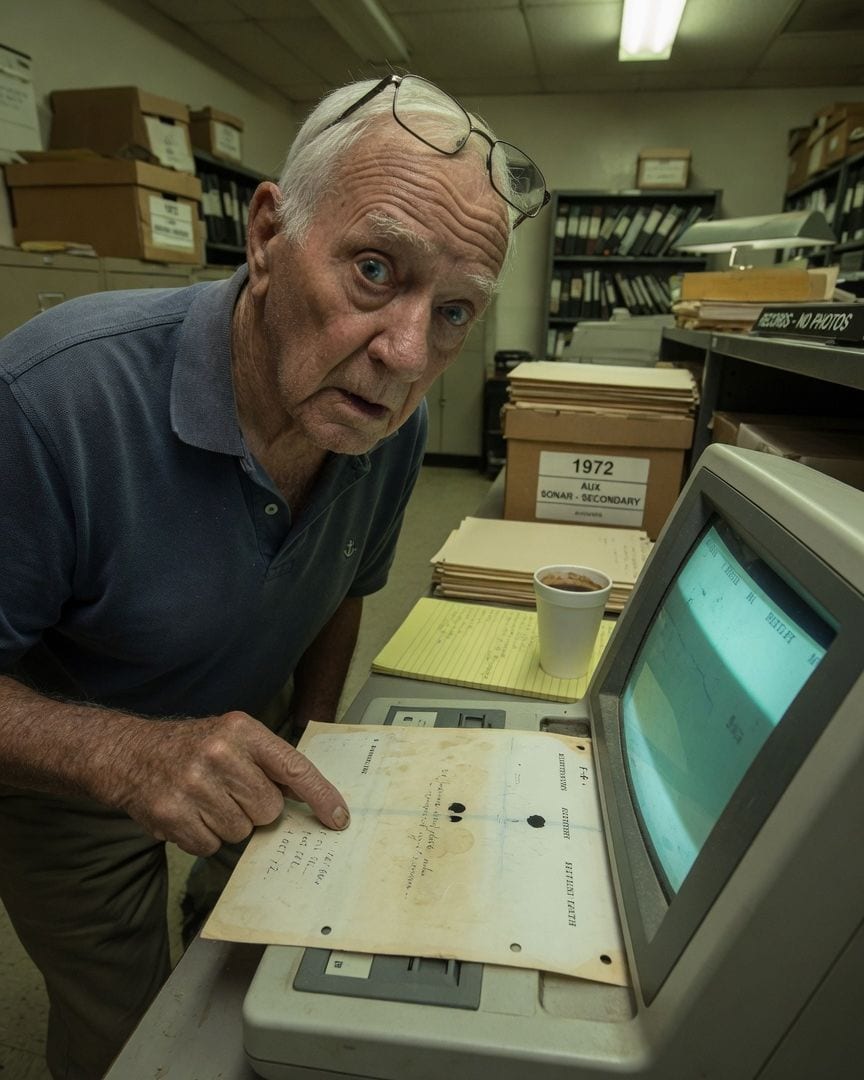
Chief Petty Officer Walter Mabey, then 45, expected a routine salvage operation for a lost F-4 fighter jet off the Carolina coast in 1972. His long career was built on such lifts, but as the crane gauge climbed past twenty, then thirty, then an impossible sixty tons, a profound unease settled in. The object surfaced, not a mangled wreck, but a dark, seamless shape, perfectly intact. Mabey's salvage career abruptly ended soon after, replaced by a desk job, but the memory festered for forty years. Now 78, he dedicates his remaining time to finding the truth, uncovering a faint, rhythmic pulse on an old sonar log—a ghost beneath the official lie.
A Cold War pilot's pay stub arrived four years after his helicopter was officially lost.
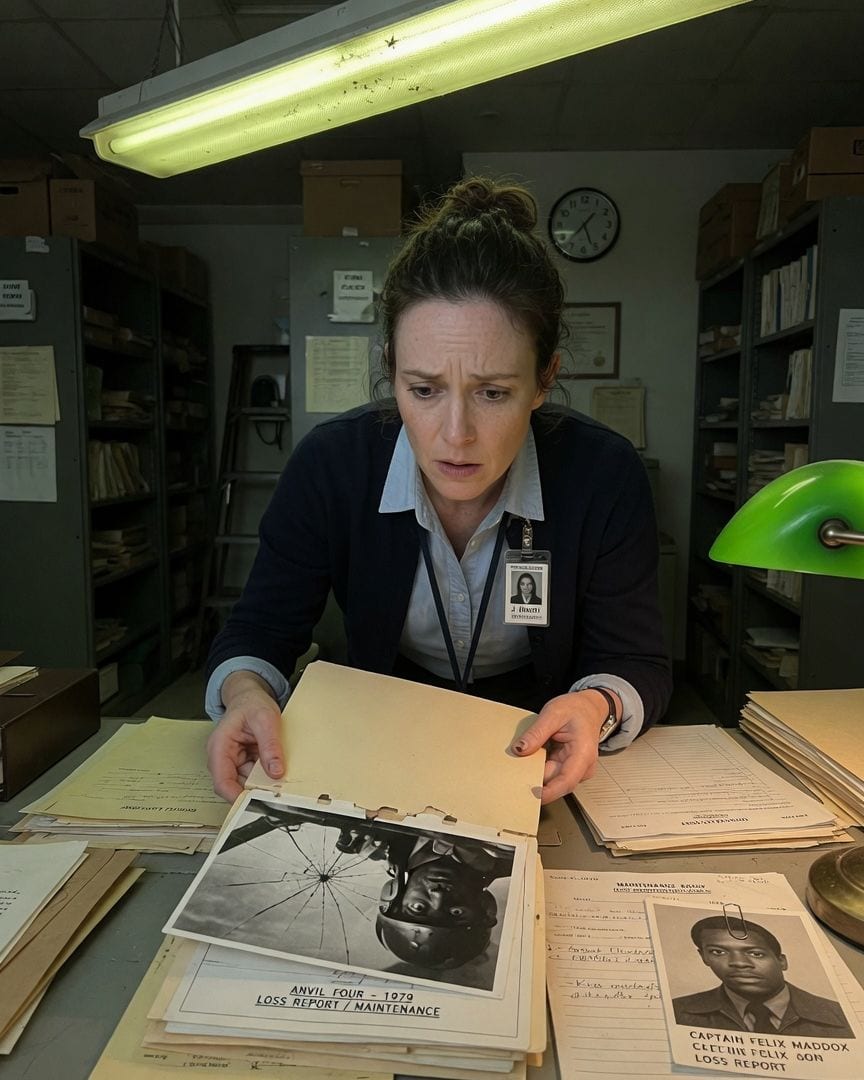
National Archives archivist Josie Ilnicki spent years immersed in forgotten histories, the fluorescent hum of the annex a constant companion. Today, processing a declassification request that had waited forty years, she opened the file for 'Anvil Four,' a helicopter lost in the Nevada ranges in 1979. Inside, past the official loss reports, Josie found a maintenance sheet dated eight months after the crash. Stapled to it was a grainy photograph, showing the cracked windscreen – and behind it, Captain Felix Maddox, the pilot officially dead, staring out with wide-open eyes, as if still flying.
A week from shore duty, Chief Danforth cut a hatch where his ship's plans showed solid steel. An hour later, the wall was seamless, but the Cold War logbook from inside appeared under his mattress.
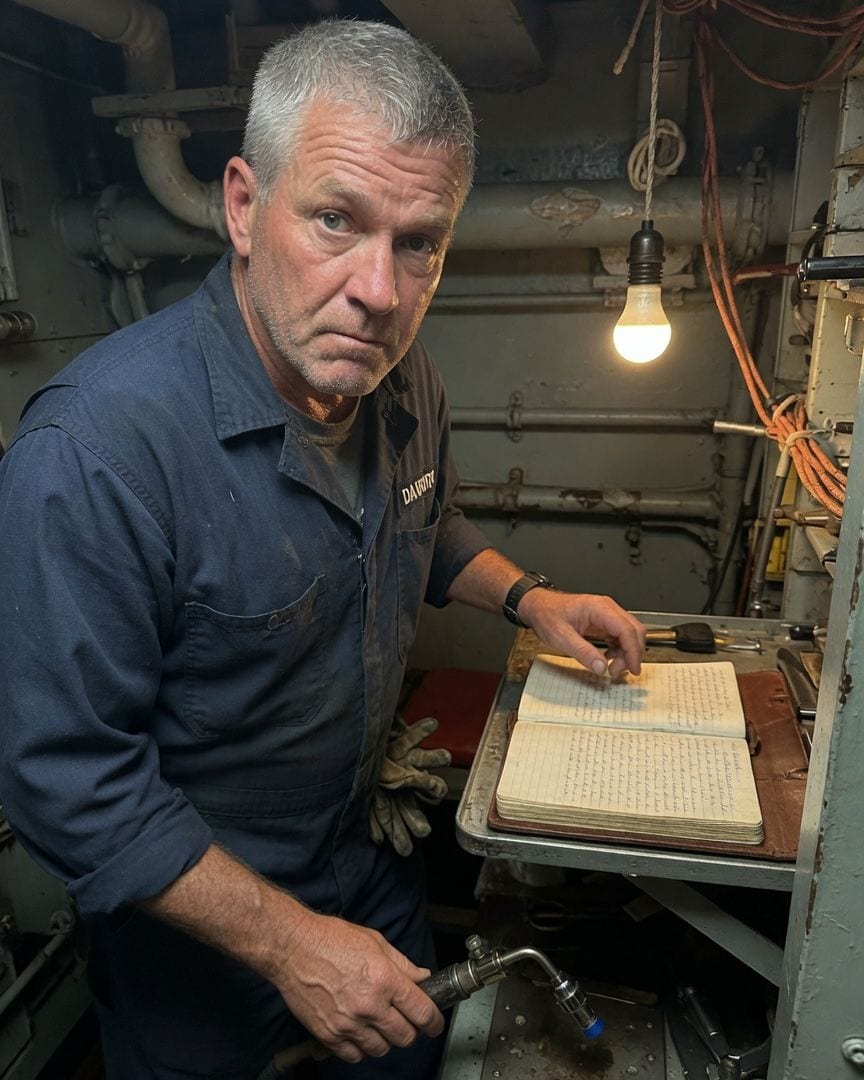
Chief Petty Officer Raymond Danforth, just a week from ending three decades of service, was intimately familiar with every pipe and plate of the guided-missile destroyer Weatherall. During a mid-cruise overhaul, his gloved hand found a sealed hatch where schematics promised only a solid bulkhead. He cut through the impossible seam to reveal a small, dry compartment, softly lit, containing a logbook filled with an unsettlingly familiar hand. When he returned an hour later with a witness, the hatch was gone, the wall seamless. Later that night, the same logbook appeared beneath his mattress, its pages revealing an entry: 'Petty Officer Howard Montgomery, missing, 1972.' How could a compartment vanish, yet leave its secrets behind?
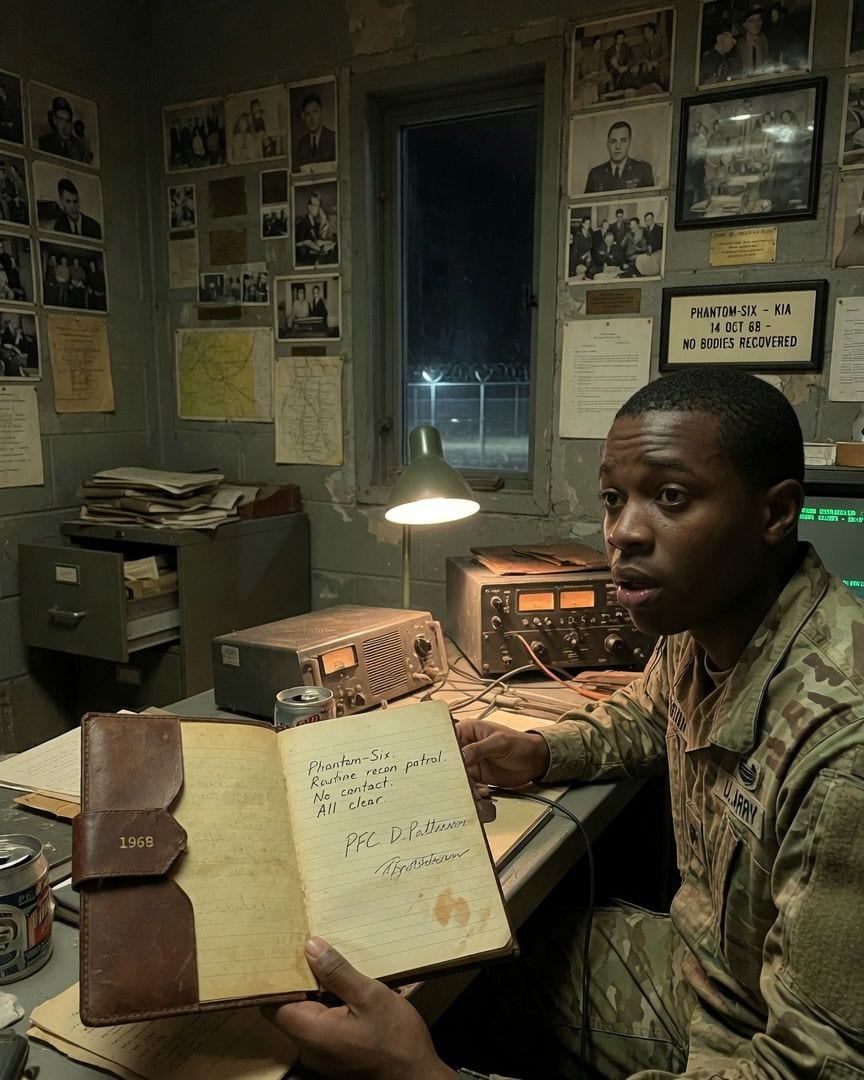
A DMZ specialist finds a 1968 Cold War logbook entry, signed by a lost soldier, its ink shimmering faintly.
Specialist James Farr, on a long night shift at a desolate Korean DMZ outpost, meticulously monitored his console, a squared-away soldier accustomed to the quiet hum of equipment. His focus shattered when a faint, static-laced whisper ghosted from a dead channel, calling out 'Phantom-Six' — a unit lost near this wire in 1968. The urgent voice then specifically mentioned his tower window light, asking him to turn it off before it drew fire. Later, an old logbook from 1968 revealed an entry dated three days *after* Phantom-Six was officially lost, signed by one of the vanished soldiers, its ink subtly shimmering with an unnatural gleam.
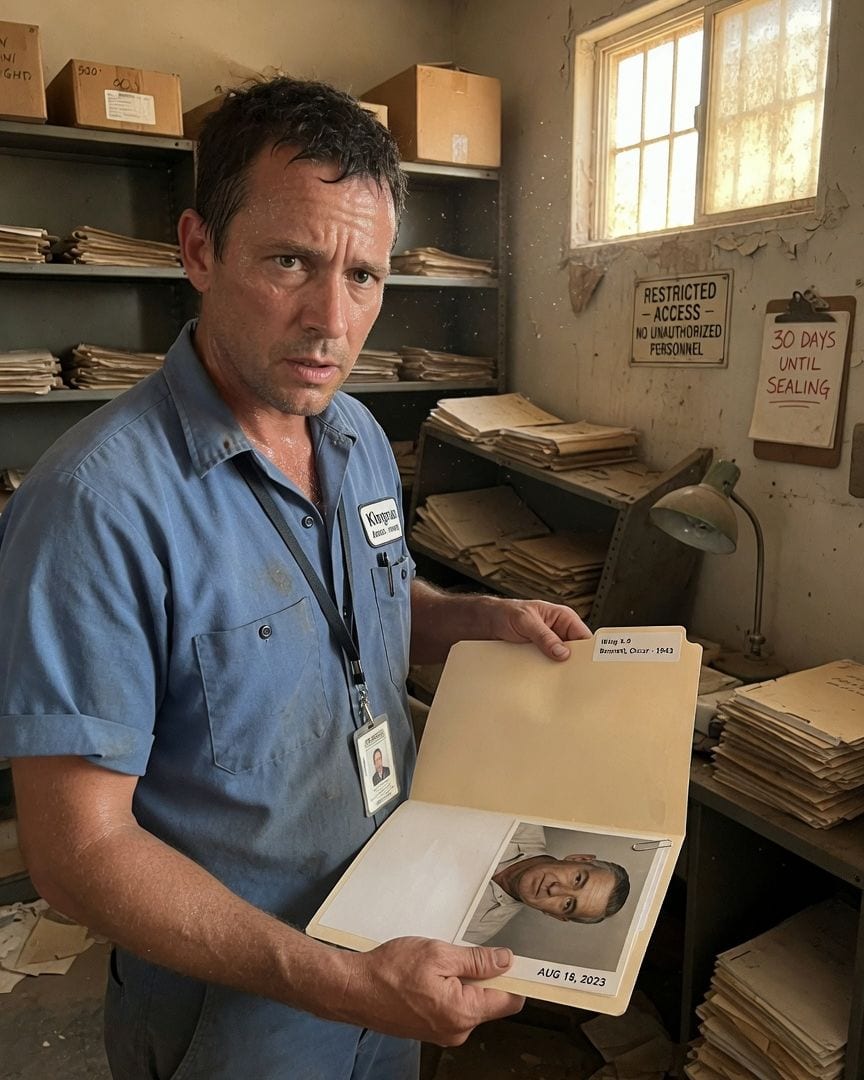
An inventory clerk in a Cold War boneyard finds a pilot declared dead in 1952, alive and photographed just last week.
Inventory clerk Rafe Delahunt toiled under the oppressive Arizona sun, racing against a deadline. He had just one month to catalog the vast Kingman boneyard before its final closure, a task made grueling by the crumbling archives and the suffocating heat. Deep within a forgotten bay, he unearthed eleven folders that defied explanation. Cool and supple to the touch, unlike any other document, they bore a 1943 date but smelled of fresh paper, filed under a designation 'Wing X-9' that shouldn't exist. Inside, the pristine files detailed a P-51 Mustang and its pilot, Oscar Bennett, officially declared 'crashed without trace' in 1952. Yet, tucked into the back, was a photograph of an older Oscar Bennett, clearly alive, with a date stamp from August 18, 2023.
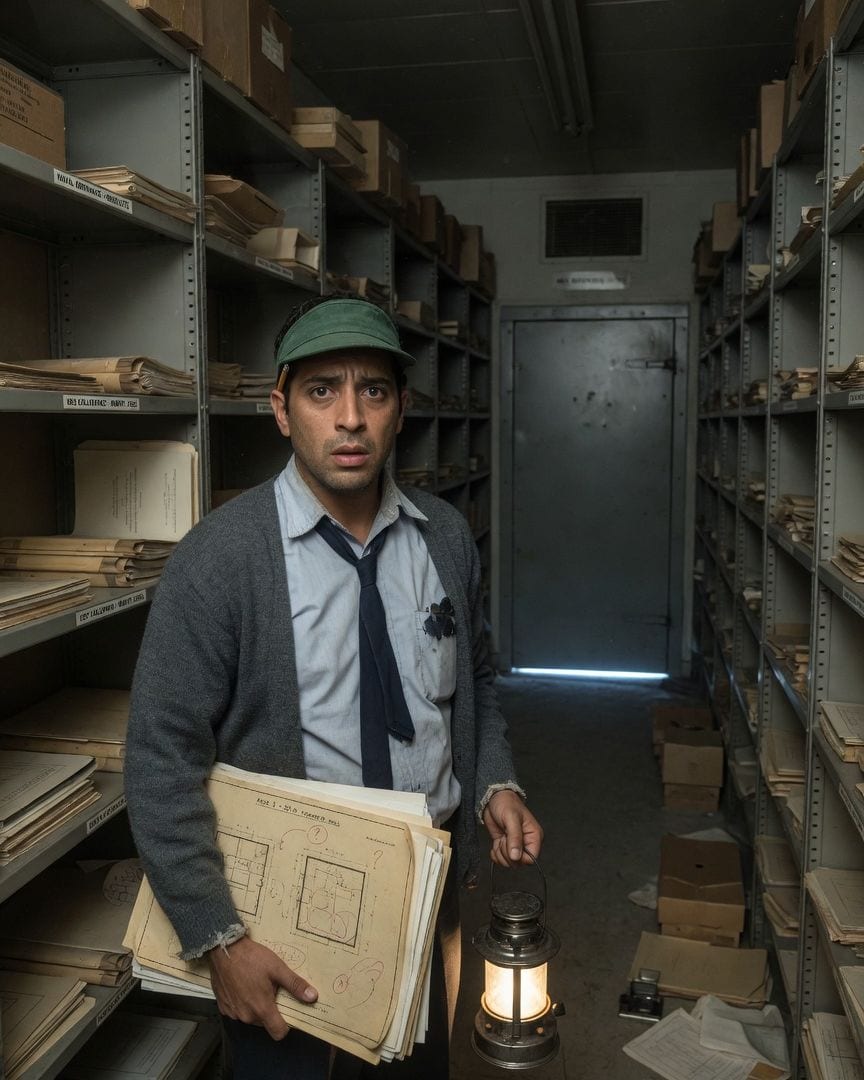
A Cold War records clerk found a lost ship's supply run, signed yesterday by its crew, dead since 1943.
Aurelio Bosch, a methodical night-shift clerk, worked through the Cheyenne records vault in Winter 1957, verifying shelf contents. He discovered an aisle forty feet longer than any blueprint showed, ending in a heavy steel door with no lock. From under it pulsed an unnatural light, and the unmistakable thrum of a printing press ran deep inside. Hours later, buried in old naval records, Aurelio found maintenance logs for a ship lost in 1943, meticulously dated into 1948 and signed by its dead crew. Then he found a new supply requisition for the same ship, dated just yesterday, signed by a crewman officially lost decades ago.