Chief Archivist Corwin Vale found his own signature on a Cold War vault log, dated 1988. He was years from even working there.
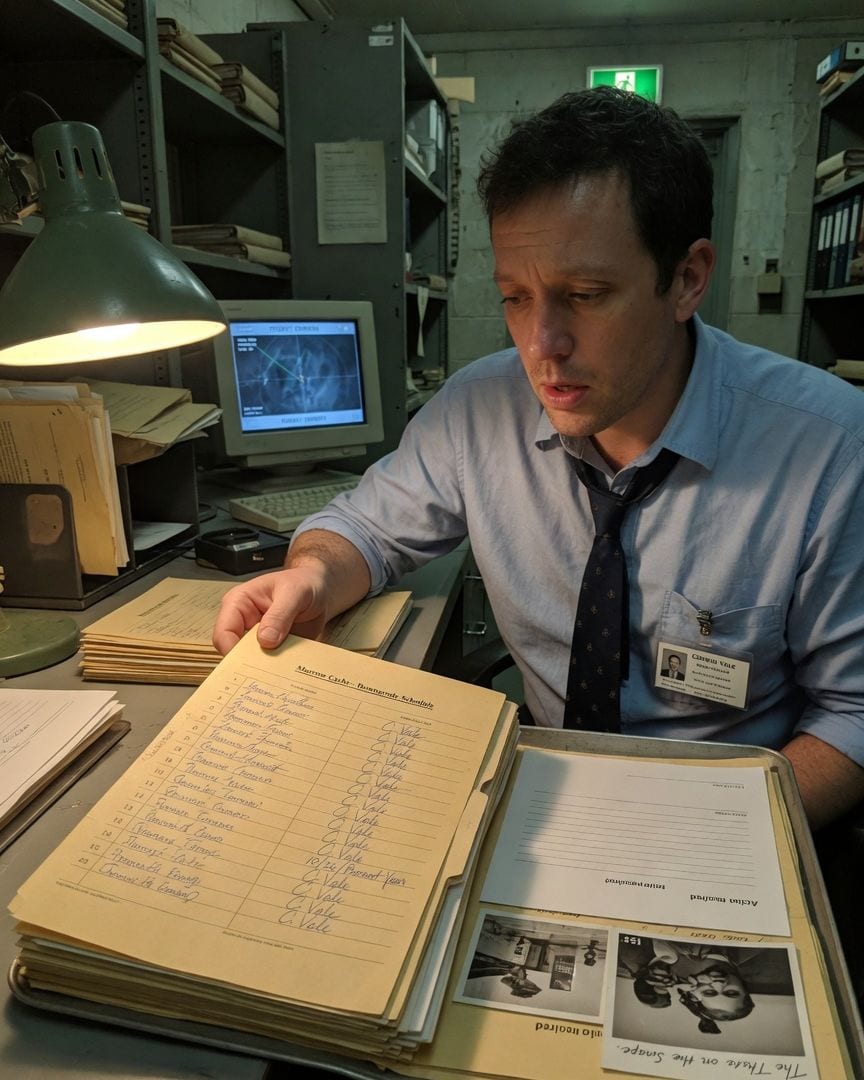
Corwin Vale, Chief Archivist at Fort Ruthven Annex, felt the familiar, perpetual chill of the vault’s deeper levels as he pulled the Marrow Cache file.
It was a dense, heavy thing, bound in brittle, yellowed cardstock, smelling faintly of ozone and old paper.
The Marrow Cache’s downgrade schedule, a bureaucratic enigma that had slid forward by another five years every half-decade since 1972, was something Corwin intended to finally resolve.
He’d seen the notation, had even made a mental note of it on his own calendar. Who was signing off on these endless extensions? And why?
He flipped to the back, to the extension log, a column of identical, cramped signatures, each dated meticulously. They stretched back decades, a testament to someone’s unwavering, if inexplicable, dedication.
Corwin’s breath hitched on the last line. The date, stark and undeniable, read 'October 26th, Present Year'. Beside it, a signature, the looped 'C', the sharp 'V' — it was his own.
His stomach tightened, a cold knot blooming beneath his ribs. He hadn't been to work that morning. He’d called in sick, a nagging sinus infection keeping him home.
Beside the file, in his 'Action Required' tray, lay the next extension request. Pristine, untouched, it waited for a hand that wasn't supposed to be there, its blank signature line a silent, unnerving invitation.
Corwin, rational to a fault, first assumed a clerical error. A misplaced stamp, perhaps, or a forgery, a colleague’s poor attempt at mimicking his sign-off during an emergency.
He cross-referenced his own work schedule, pulling up the digital calendar that tracked his every minute. He checked the security access logs for the vault, searching for his biometric ID entry. Nothing.
He even scrolled through his personal credit card statements from that morning, the digital receipts showing coffee from his neighborhood diner, a grocery run – mundane, ordinary, hours from Fort Ruthven. Every record confirmed he was nowhere near the vault.
He returned to the file, his fingers tracing the phantom ink of his signature. His eyes moved to the other cramped signatures in the log, looking for patterns, anomalies, anything to explain the impossible.
He found another signature, identical to his own, a ghost from the past, dated 1988 – years before he was even employed by the agency, before he’d even finished college.
A shiver, not from the vault’s cold, ran down his spine. This wasn’t a clerical error.
Deeper in the Marrow Cache, past reams of redacted reports and obsolete protocols, he uncovered a single, poorly indexed microfiche. He slid it into the old reader, the machine whirring to life with a familiar, mechanical groan.
On the screen, a grainy radar scope image flickered into view, marked ‘Project Chimera.’ It showed an impossible, fast-moving contact, a blur of energy defying known physics.
The accompanying log entry was terse, printed in an aged, dot-matrix font: 'Contact confirmed. Intercept ordered. Pilot: Marcus Harlow. Outcome: Unknown. Status: Filed.' The word ‘Filed’ hung in the air, a bureaucratic epitaph.
He kept digging, past the radar log, past another two dozen pages of impenetrable jargon and classified redactions, until he found a classified addendum, stapled tightly to the very back. It was a single, folded sheet.
Inside, a faded gun-camera photograph. It showed a clear, impossible object in the sky, a dark, angular shape against a pale, featureless expanse. It hung there, defiant of gravity, of reason, a tear in the fabric of the visible world.
The caption beneath was handwritten, in that same cramped script Corwin now recognized with a prickle of dread: 'The Thing on the Scope. Intercept ordered. Pilot: Marcus Harlow. Outcome: Unknown. Status: Filed.'
But the date on the photograph, clearly visible in the corner, was 1951 — years before the interceptor jet model depicted in the photo, identifiable by its distinctive delta wings and twin engines, was even designed, let alone operational.
The anachronism in the photograph shattered Corwin’s composure. The vault, once a place of ordered quiet, now seemed to hum with a latent, impossible energy. He spent days trying to reconcile the conflicting dates, the impossible technology.
A jet from the 1970s chasing an unknown object, photographed in 1951? It defied time, physics, everything Corwin understood about the world.
He searched for ‘Project Chimera’ and ‘Marcus Harlow’ in every declassified database, every archived personnel file he could access. The results were fragmented, contradictory, or simply nonexistent.
Harlow’s service record, when he found snippets of it, ended abruptly in 1951 with a ‘reassigned’ status, but no destination, no follow-up.
‘Project Chimera’ had multiple, conflicting entries, all vague, all leading to dead ends – as if any records of it had been carefully seeded with disinformation.
It was as if the paper trail had been deliberately designed to frustrate, to obfuscate, to lead any inquirer into a bureaucratic maze with no exit.
He realized he needed help navigating the agency's labyrinthine past, someone who knew where the real skeletons were buried.
He called Cynthia Marsh, a retired Senior Declassification Reviewer, a woman of 66 known for her encyclopedic memory of the old systems and her legendary disdain for bureaucratic stonewalling.
He described the impossible signature, the anachronistic photograph, the chilling ‘Filed’ status. Cynthia, initially amused by his ‘ghost story’ of a misfiled document, grew quiet as he detailed the inconsistencies.
The silence on the other end of the line was heavier than he expected.
She agreed to look, but warned him the agency’s deep archives were a ‘graveyard of inconvenient truths,’ and some things, she said, truly refused to stay buried.
Cynthia Marsh, working from her home office hundreds of miles away, found her usual high-level access to certain classified indices subtly but persistently curtailed. Searches that had worked flawlessly for decades now returned ‘Access Denied’ or ‘File Corrupted’ messages.
She dismissed it as system upgrades at first, the agency's constant, clumsy attempts at modernization.
But then a cryptic, unsigned email landed in her inbox, its subject line blank, its body containing only five chilling words: ‘Some records are best left buried.’
It vanished moments after she read it, leaving no trace in her sent or trash folders, a ghost in the machine.
A week later, her home alarm system, which had been flawless for years, inexplicably malfunctioned, its motion sensors triggering randomly in the dead of night, reporting phantom movements within her own empty house.
The house itself seemed to breathe around her, sighing with nonexistent drafts, creaking with phantom footsteps.
She called Corwin, her voice tight, no longer amused. “Someone knows we’re digging, Corwin. They’re not just watching the files; they’re watching us. This isn’t just about a clerical error anymore. This is… an active process.”
The cold dread that had been a passenger in Corwin’s stomach now tightened into a hard, immobile lump.
They met in a quiet, out-of-the-way coffee shop, a neutral ground in the sprawl of a nearby city. Cynthia looked paler than usual, her usually sharp eyes holding a haunted glint.
She pushed a thick, unmarked manila envelope across the table, its surface smooth and unsettlingly anonymous. "I found it," she whispered, her voice barely audible above the gentle clatter of cups and the murmur of distant conversation.
"A hidden sub-section of the Marrow Cache. Not indexed, not cross-referenced. You wouldn't find it unless you knew exactly what you were looking for, and where." She paused, took a shallow breath. "It's a list."
Corwin pulled out the contents. Inside were dozens of names, dates, and incident summaries, meticulously typed but clearly part of a clandestine record. Each entry ended with the same chilling phrase: 'Status: Filed.'
Not 'KIA,' not 'MIA,' not 'reassigned,' or any other standard military or agency designation. Just 'Filed.' Pilots, radar operators, security personnel, even a civilian research scientist.
Every name on the list had been associated with an encounter with 'The Thing on the Scope' or 'Project Chimera.'
Every date aligned, with unnerving precision, with one of the strange extension signatures in Corwin’s original file, stretching back to 1972, and even before.
"These people weren't lost, Corwin," Cynthia said, her voice dropping to a raw whisper. "They were processed. Removed. Their records scrubbed or altered. The signatures... they're not just approvals for an extension. They're acknowledgments. Confirmations of a successful filing."
Corwin thought of Marcus Harlow, 'Filed' in 1951, a ghost from an impossible past. He thought of the impossible gun-camera photograph, the anachronism that had broken his rational mind.
He thought of his own signature, dated this morning, on a file he hadn't touched. The dread solidified, turning cold and heavy in his stomach, spreading through his chest.
The system wasn't just hiding something vast and impossible; it was actively consuming people, folding them into its records, erasing their presence from the world. It was a silent, bureaucratic predator.
Corwin stared at the list Cynthia had found, the grim roll call of the 'filed' individuals. His eyes scanned down the columns, past names like 'Pennington, Trevor, Pilot, 1968, Filed' and 'Abigail Foster, Radar Op, 1975, Filed.'
He saw the dates, the brief, chilling summaries of encounters with 'The Thing on the Scope' – vague, almost poetic descriptions of impossible sightings or communications.
His mind raced, desperate to find a pattern, an escape, a way to separate himself from this growing horror. This was not merely a record of past impossible events; it was a testament to an ongoing, active process.
His gaze dropped to the very bottom, to the last entry on the list.
It was distinct from the others, deliberately smudged, as if someone had tried to erase it with a thumb, a frantic, futile effort to obscure what was written there.
But under the faint, greasy smear, the letters were still legible, stark and unmistakable against the yellowed paper:
Corwin Vale.
The date beside it was ambiguous, a series of blurred numbers, smudged even worse than the name, but clearly in the near future. The space for 'Status' was left ominously blank, a silent promise.
He was already named in the file. He wasn't just investigating a conspiracy; he was already part of it.
The realization detonated in Corwin’s mind with the force of a physical blow. The Marrow Cache wasn't a passive archive of impossible events; it was an active mechanism, a bureaucratic predator.
‘The Thing on the Scope’ wasn't just an object of study, a mere anomaly to be cataloged; it was an entity, or a phenomenon, that identified, tracked, and then systematically ‘filed away’ individuals who gained too much understanding, who got too close to its truth, or who simply posed a threat to its secrecy.
The endless extensions, the repeated signatures, his own signature on the log – they were not errors. They were acknowledgments, chilling confirmations of a successful process. The file was a living document, constantly being updated, its entries a chilling prophecy.
The unsigned request in his tray, the one that had started all this, wasn't a task for him to perform. It was an invitation.
It was waiting for his hand, for his compliance, to complete his own ‘filing,’ to seal his fate within the system.
The entire pattern snapped into place, monstrous and coherent: the entity was using the agency’s own systems, its labyrinthine paper trails, its ingrained secrecy, to hide itself and systematically absorb its witnesses.
He wasn’t investigating a mystery; he was the next piece of the puzzle. He was the next one on the list.
Corwin knew he couldn’t simply walk away. He couldn't leave Cynthia exposed, couldn't abandon the truth he had stumbled upon. He had to expose it.
He rushed back to the vault, his heart pounding a frantic rhythm against his ribs, determined to copy the entire Marrow Cache, to make its secrets undeniable, to rip it from the system that had birthed it.
He tried to access the network, to upload the evidence, to send it to journalists, to whistleblowers, to anyone who would listen. But every portal, every secure channel, returned a blank screen, then a relentless ‘File Corrupted’ message.
The Fort Ruthven systems, which he had always seen as tools, as extensions of his own will, were now actively working against him, as if the building itself had turned, its walls tightening, its circuits humming with hostile intent.
He tried to physically remove the files, to carry them out, but the vault door, which had always responded to his biometric clearance, now remained stubbornly locked, its heavy steel refusing to yield, impenetrable.
He felt a growing sense of claustrophobia, not from the vault’s physical space, but from the invisible walls closing in, the system closing its maw around him.
He slumped against his desk, defeated, the Marrow Cache file still open before him. His eyes fell on the unsigned extension request, still in the tray, the very form that had begun his descent into this impossible reality.
But now, impossibly, it was signed. His own cramped signature, identical to the one he’d seen in the file, identical to the one on the microfiche, was on the line, the date smudged but clearly in the near future.
He didn't remember signing it. He had already been filed.
The exposure Corwin had desperately sought never materialized. The Marrow Cache remained sealed, its secrets undisturbed, deep within the vault's impossible chill.
Cynthia Marsh tried to contact him for weeks, her calls going unanswered, her emails bouncing back from a defunct address. She eventually filed a missing persons report, then another, but the agency simply closed ranks.
Corwin’s office was quietly cleared out, his name removed from active rosters, his disappearance attributed, in hushed tones, to an ‘early retirement for health reasons.’
A new, eager young archivist, Samuel Carter, was assigned to the Fort Ruthven annex, bright-eyed and ambitious, ready to make his mark.
Samuel Carter sat at Corwin's old desk, organizing his new workspace with meticulous care. He noticed a pristine extension request form in the 'Action Required' tray, for the Marrow Cache.
He picked up the pen, a faint, almost imperceptible smile touching his lips, a smile that didn't quite reach his eyes. He leaned forward and signed the document.
The signature was identical to Corwin Vale's.
If this one got to you
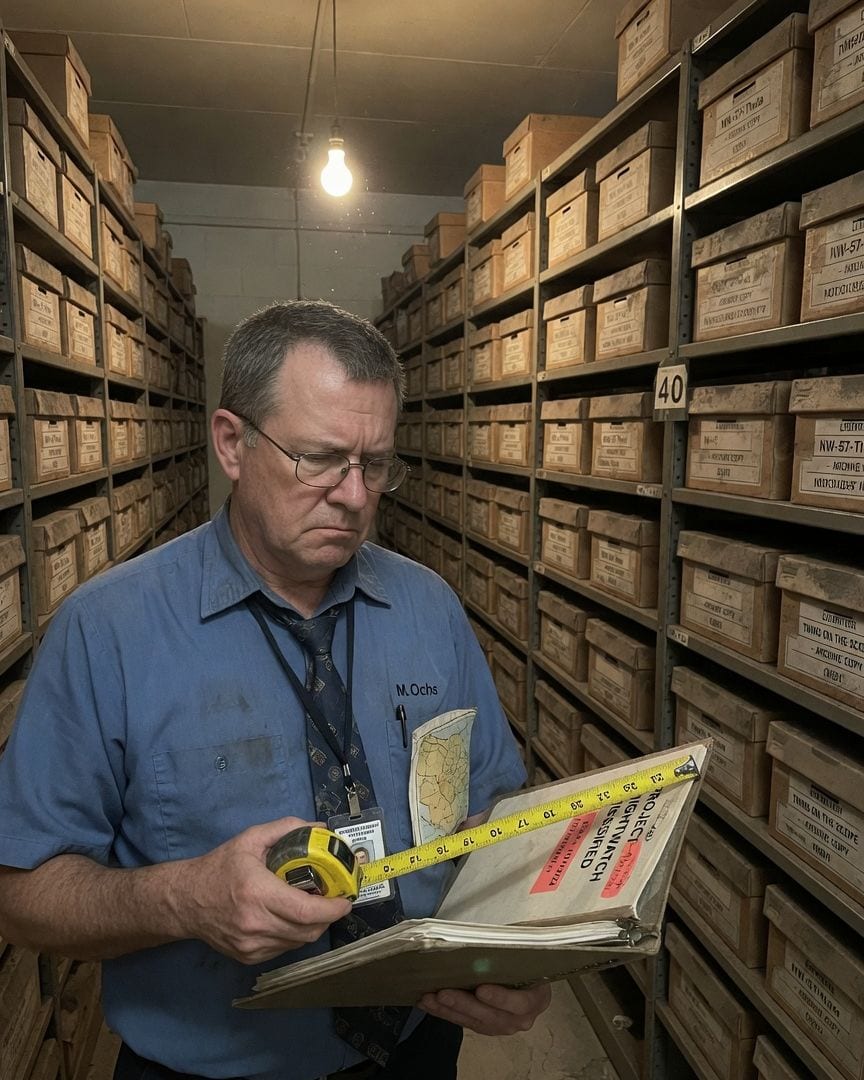
A Cold War records clerk on his final patrol found Aisle 40 stretched 61 feet longer, lined with unknown boxes. Inside one: 'PROJECT NIGHTWATCH - CLASSIFIED' with a fresh timestamp.
Marlin Ochs, a creature of habit after nineteen years at the St. Louis federal records depot, faced his final patrol through Aisle 40 before its scheduled pulping. His routine walk, usually 92 precise strides, suddenly stretched to an impossible 119, making the aisle 61 feet longer than its blueprint. The extra section felt colder, lined with dust-laden boxes bearing alien classification codes and no manifest. Inside one, he found a metal-bound file: 'PROJECT NIGHTWATCH - CLASSIFIED,' dated 1957, but with a timestamp just hours old.
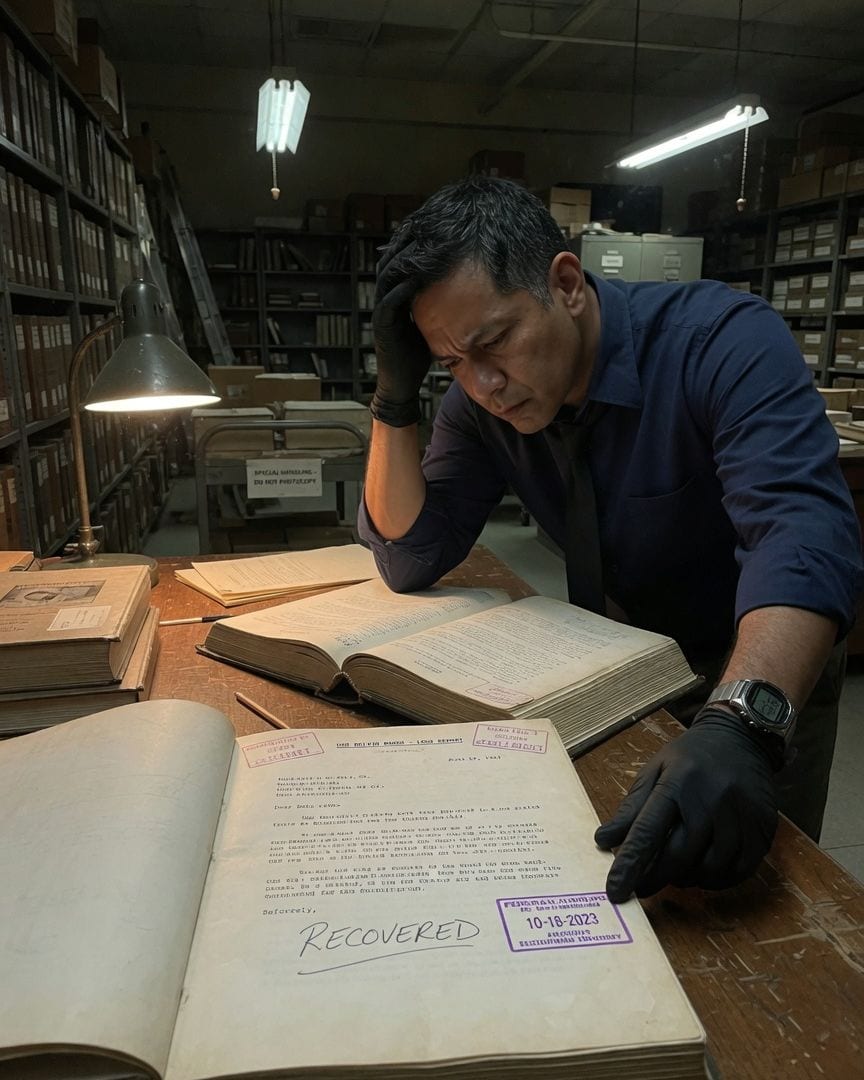
Lieutenant Sam Ferro has until Friday to explain a Cold War loss report marked 'RECOVERED' with tomorrow's date.
Lieutenant Sam Ferro, a federal investigator, has only until Friday to explain an impossible detail in a 1964 Cold War loss report. In the hushed federal archive, he discovered the six-hundred-page document for the USS Delvin Marsh bore a hand-inked line: 'RECOVERED.' Beside it, an official stamp carried tomorrow's date, its ink impossibly fresh. As Ferro investigated the archive's records, he found no trace of the stamp, only a long-forgotten 'Special Handling' protocol, detailing 'Asset Integration' and 'Personnel Reclassification' for 'recovered' units. Why would a decades-old loss report suddenly reference a future recovery?
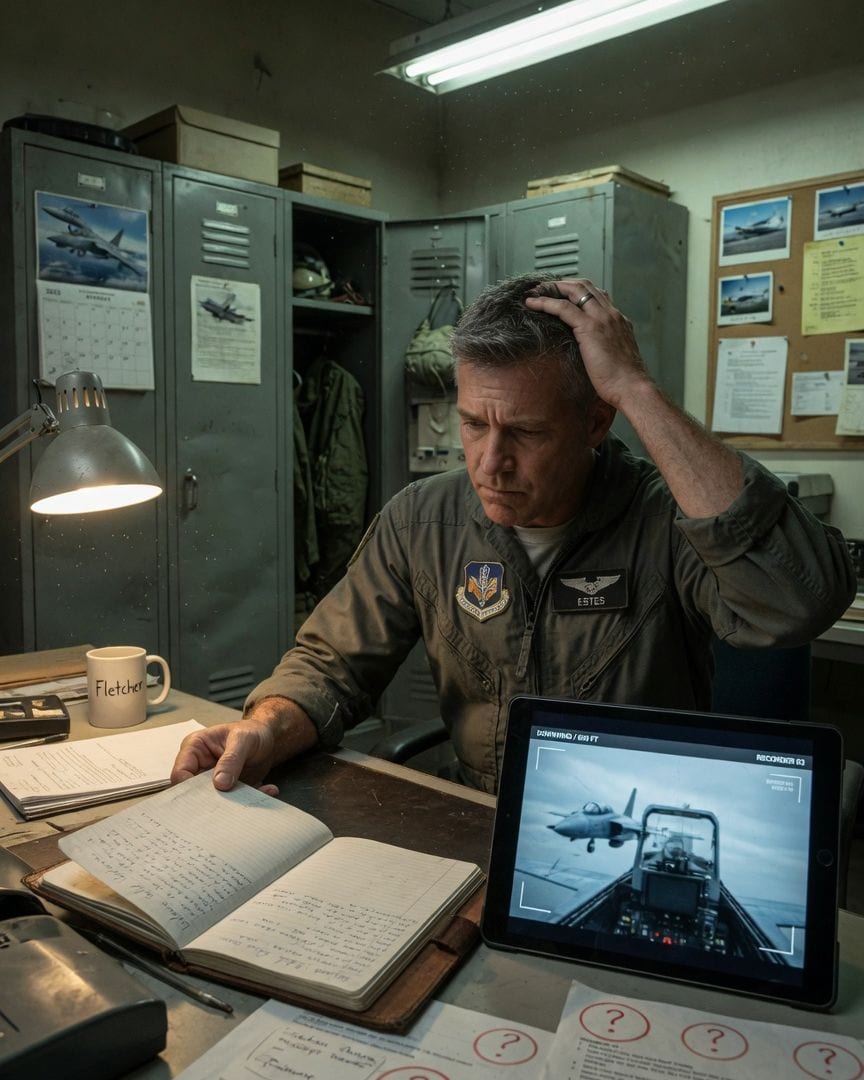
A Chief Warrant Officer's HUD tape shows a phantom jet, impossibly close, off his wing. Forty years ago, another Cold War pilot logged the same impossible sight.
Chief Warrant Officer Nathaniel Estes, a pilot whose career hinged on absolute precision, was under evaluation for a critical promotion. His nightly review of HUD tapes from routine Mojave test flights was a meticulous habit, but for a week, it revealed an impossible detail. At precisely 800 feet, one frame showed a sleek, experimental jet tucked impossibly close off his left wing—a craft ground radar never detected. When his maintenance chief found no equipment fault, Estes unearthed a dusty, decades-old logbook detailing identical phantom sightings from 1978. What unseen presence shadowed the desert skies?
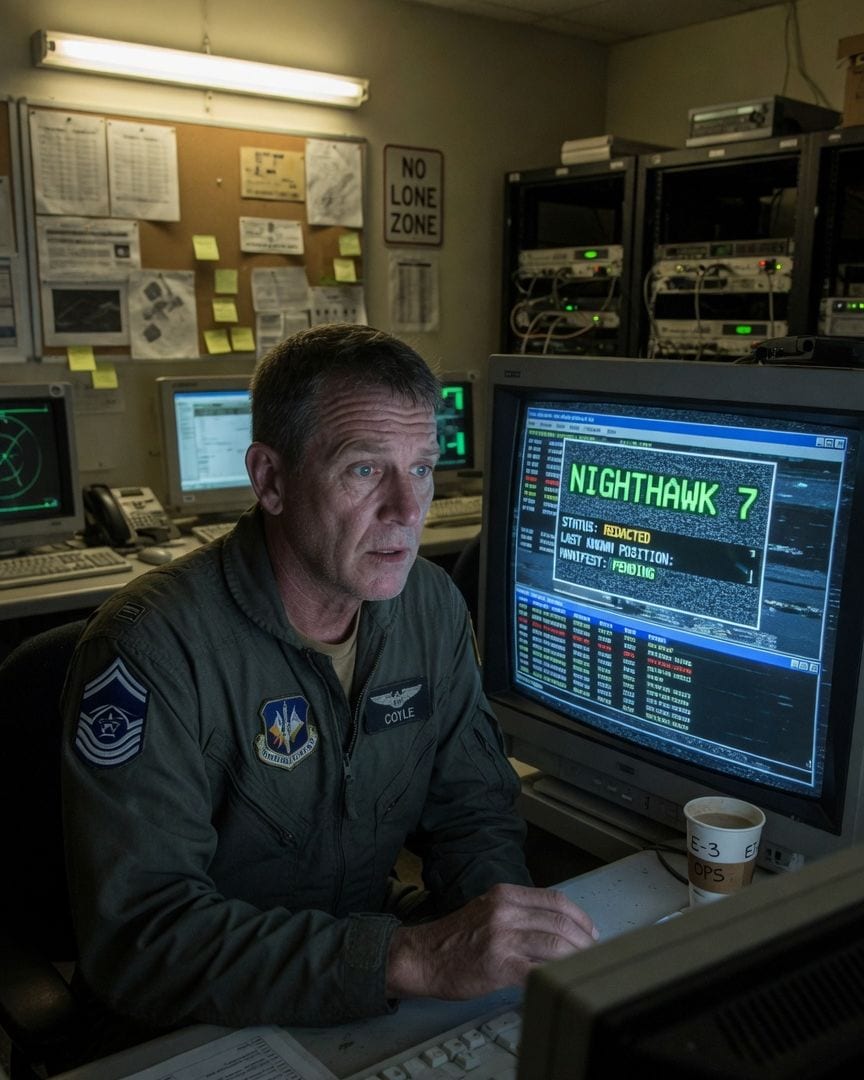
A ghost radar blip returned for Master Sergeant Coyle, three months from retirement. Its call sign: NIGHTHAWK 7, status REDACTED.
Master Sergeant George Coyle, nearly three decades in uniform, counted the last missions before his retirement. High above the black North Atlantic, his E-3 Sentry hummed with the familiar, impossible truth of a ghost radar blip. This single return squawked nothing, eluding every filter and fighter jet sent to investigate, yet the precise systems swore it was there, inbound, week after impossible week. Driven by obsession, Coyle later found a flicker of data: the call sign "NIGHTHAWK 7." Investigating further, an obscure database revealed its status as 'REDACTED,' with its last known position matching the ghost track. What forgotten project was haunting the skies, precisely where it had been scrubbed?
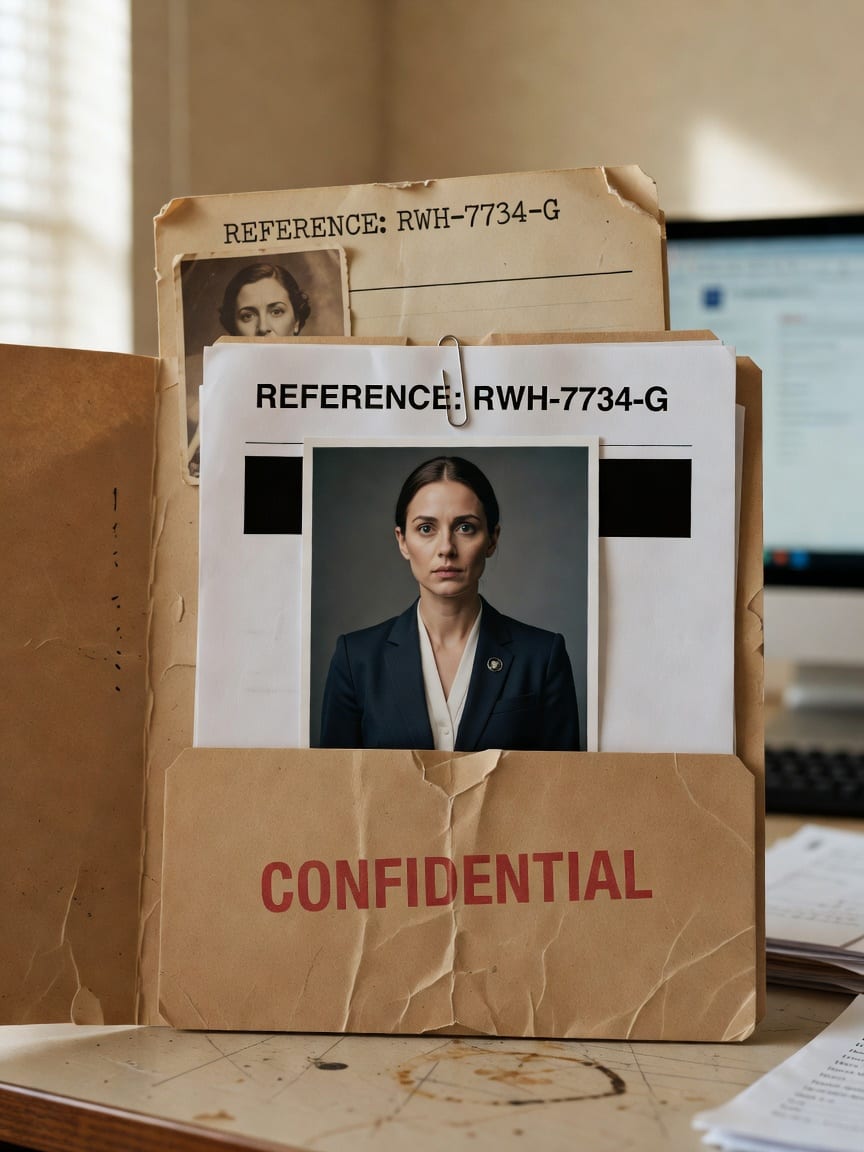
My security file was opened nine years before I was born. Its note said: 'subject not to be briefed'.
Auditing company digital records was routine until I pulled up my own personnel file. It clearly showed a 'Date Opened' nine years before I was born, yet bore my exact name and reference number. Below, an assessor's note from that impossible year mentioned a 'previous holder' and ordered the 'subject not to be briefed,' sparking a cold thrum in my chest.
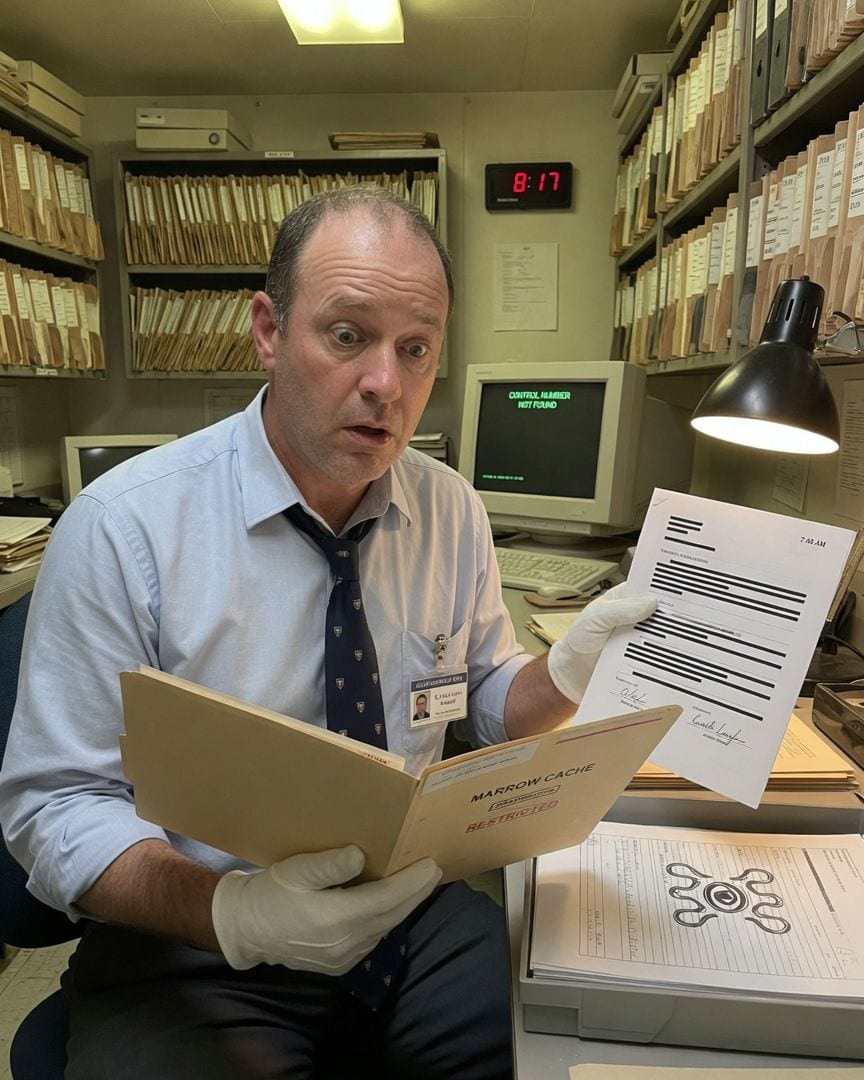
A records manager found a file extension signed at 7:48 AM. He hadn't clocked in yet, and a strange symbol pulsed in its redacted pages.
Corwin Vale, lead records manager for Fort Ruthven, lived by routine, his world precise and ordered. This morning, however, that order shattered when he found the Marrow Cache file's extension signed at 7:48 AM. Corwin had not clocked in until 8:00 AM, and the vault logs showed no other entry. As he reviewed the heavy file, he discovered its control number did not exist in any database. Then, deep within the redacted pages, a strange, geometric symbol pulsed faintly, an alien glyph etched into the classified paper. What impossible secret did the file hold?