A librarian finds her father's signature on two official records: one places a Cold War accountant at a secret desert base, the other in a hospital, on the same night.
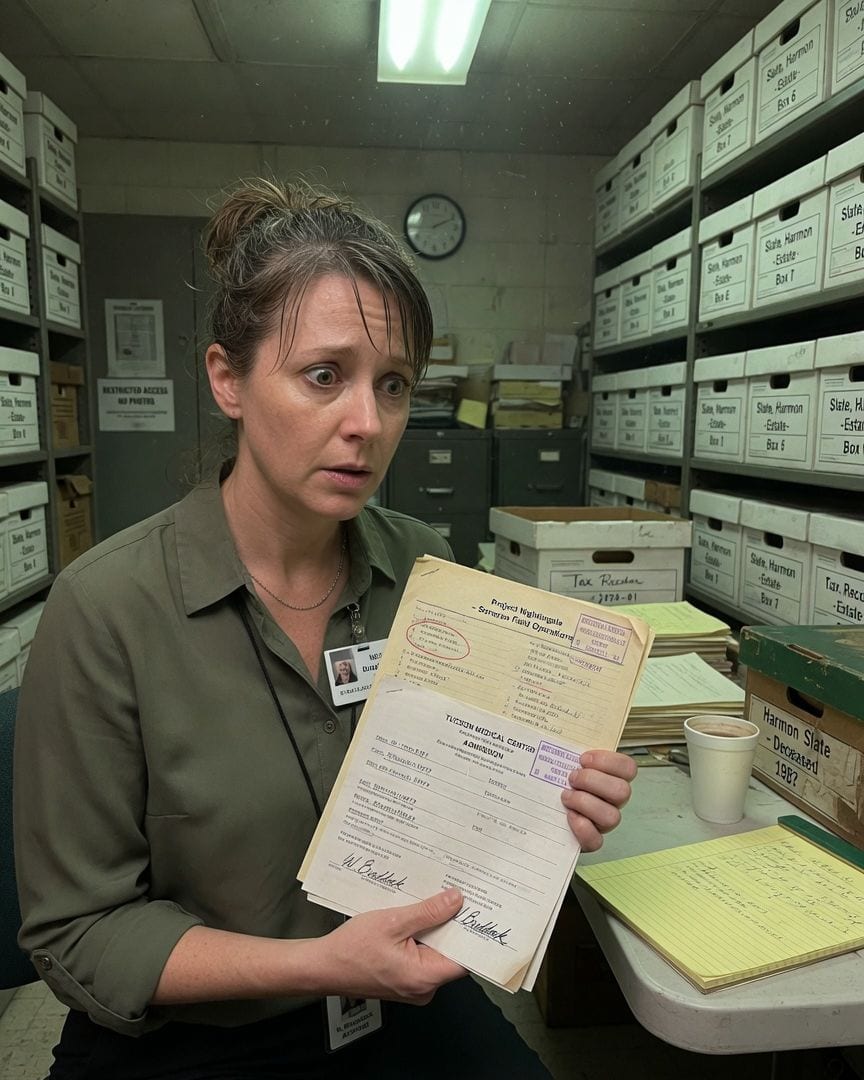
Nell Braddock, 42, moved through the government archive with the practiced grace of a librarian, her gaze tracing the rows of declassified material.
Dust motes danced in the fluorescent light of the vast, silent room as she methodically worked through eleven banker’s boxes from Harmon Slate’s estate, a recent acquisition for her section.
Slate had been a deceased accountant, his life’s mundane paper trail now grist for historical record. She hummed a low, tuneless melody, reaching into box six.
Among mundane tax forms and utility bills, her fingers brushed against something crisp, yellowed, and official. She pulled out an operations roster from 1977. Its header, stark and imposing, read: 'Project Nightingale – Sonoran Field Operations.' Nell's breath caught.
She’d spent her career being told records for Nightingale, a highly classified venture, hadn't survived. Her eyes scanned the list of names, stopping cold on 'Slate, Harmon.'
A man who, by all accounts, had never held a security clearance, listed as present at a highly restricted facility in the Sonoran Desert on a specific night. It made no sense.
She pulled a separate hospital record, found earlier in the same box. This one, too, was from 1977. 'Slate, Harmon. Admitted Tucson Medical Center. Broken back. Night of October 14, 1977.' The date was identical to the operations roster.
Both documents were undeniably authentic, stamped with official seals, complete with precise patient and operations identifiers. Both were impossible. And at the bottom of each, a neat, looping signature stood out, familiar and chilling: 'W. Braddock.' Her father's signature.
The signature felt like a physical weight in Nell’s hand. She spent the next hour at her workstation, cross-referencing, her earlier humming long forgotten.
She pulled her father’s military discharge papers, his old bank statements, even a faded birthday card from when she was a child.
The signature was identical across all of them – the same precise, almost elegant loop, the specific slant of the 'W,' the decisive cross of the 'T.' This wasn't a misfile. It wasn't a forgery.
The official stamps on both the roster and the hospital record were genuine, the paper stock correct for the era, even the faint watermark of the federal seal matched known examples from that year.
She checked the Sonoran Desert facility’s known operational dates, the hospital’s patient intake procedures for 1977. Everything aligned. The mundane explanations crumbled under scrutiny, dissolving into fine, meaningless dust.
Harmon Slate, the deceased accountant, had been in two places at once, officially, and her father had signed off on both. The sheer, bureaucratic impossibility of it was a cold knot in her gut.
She returned to Slate’s boxes, now seeing them not as a collection of a dead man's life, but as a puzzle with too many missing, or rather, too many present pieces.
Deeper in box six, she found a series of requisitions for office supplies – mundane, yes, but one caught her eye.
It was dated 1980, three years after Slate’s impossible night, and listed him as the approving officer for 'Project Nightingale stationery.' He was still active.
The office supply requisition was unsettling enough, suggesting a phantom continuity for a man who should have been long gone, but then Nell found a maintenance log.
Dated 1983, it detailed a routine service check on a 'Class-B Atmospheric Scrubber Unit' at the Sonoran facility. Harmon Slate’s name was printed as the 'Unit Supervisor,' and it bore a stamp from 'Project Nightingale Facilities.'
Nell knew, from years of declassification work, that the Class-B scrubber units had been universally decommissioned across all Project Nightingale sites by late 1978, deemed obsolete and too expensive to maintain.
Yet, here was an official log, five years later, recording a maintenance event for a non-existent unit, overseen by a man who, by all accounts, should have been dead. The document was pristine, official, and utterly, terrifyingly wrong.
The maintenance log kept Nell awake. Harmon Slate's file was not just a collection of impossible records; it was a file that kept writing itself.
The next morning, fueled by strong coffee and a growing dread, Nell began a quiet, methodical search through other declassified boxes from the same era and classification level.
She focused on 'Project Nightingale' and similar coded operations she knew had intersected with it. Slowly, a pattern emerged, subtle at first, then stark and undeniable.
She found a requisition for specialized telemetry equipment from a Nevada test range, dated 1985. It was signed by a 'Daniel Russo,' an aerospace engineer who had officially died in a training accident in 1979, his obituary widely published.
She found a travel voucher from a submarine tender in the North Atlantic, dated 1991, for a 'Vivienne Novak,' a marine biologist whose research vessel had vanished without a trace in 1982, presumed lost with all hands.
In each instance, the original disappearance or death was meticulously documented by multiple agencies, complete with official reports, yet their files continued to accrue mundane, official entries for years, sometimes decades, afterward.
And in a chilling number of these cases, always as a 'witness' or 'verifier' on the contradictory original documents, was the neat, looping signature of W. Braddock.
Her father had not just signed Slate's impossible records; he had signed off on an entire ghost bureaucracy of the 're-filed.'
Nell began to compile a hidden ledger on her personal, encrypted drive, cross-referencing names, dates, and her father's signatures, feeling a cold web tightening around her.
Nell’s quiet investigation didn’t go unnoticed. A week into her focused research, Gordon Muller, the stoic Head of Archives, appeared at her workstation. His voice was calm, almost unnervingly so, cutting through the muted hum of the server racks.
'Nell, a word about the Slate collection.' He leaned against a tall stack of newly cataloged boxes, observing her with an unreadable expression. 'I noticed you’ve been spending a good deal of time on the Project Nightingale files.
Routine audit, of course, but it’s rather niche, even for you.' His eyes, usually distant, held a focused intensity that made her skin prickle.
'Just following some unusual cross-references, Gordon. Standard procedure for anomalous data,' she said, trying to keep her voice even.
He nodded slowly, a small, knowing gesture. 'Indeed. And the 1970s Sonoran Desert operations… quite a rabbit hole, wouldn’t you say? Especially the personnel rosters.'
His questions were too specific, too pointed for a 'routine audit,' laced with an undercurrent of knowing. That evening, as Nell packed up, a cold dread began to settle. She noticed a subtle shift in the archive's ambiance.
A security camera, usually fixed on the main aisle, was now angled directly at her workstation, its red light a tiny, watchful eye.
A stack of empty file folders she’d left on a cart had been neatly squared, almost too perfectly aligned.
She tried to access a restricted database her father had once mentioned, a backdoor he’d shown her decades ago, only to find her login credentials suddenly 'temporarily suspended due to unusual activity.' The digging was noticed.
She was no longer just hunting; she was being watched.
The next day, Nell visited her father, Walter Braddock, at the quiet care facility on the outskirts of the city.
He was frail, his hands trembling slightly as he held a cup of chamomile tea, his gaze often lost in the middle distance.
She laid copies of the contradictory documents on the small table between them: Harmon Slate’s roster, the hospital record, and the 1983 maintenance log, all bearing his signature or an official stamp he had authorized.
'Dad,' she began, her voice low, a tightrope walk between urgency and gentleness. 'What is this?'
He looked at the papers, then at her, his eyes clouded with age. 'Old paperwork, Nell. Unimportant. Just… bureaucratic quirks.' He tried to wave them away, a dismissive flick of his wrist.
'Quirks? Dad, Harmon Slate was in a hospital bed and a secret facility on the same night. And his file kept active for years after he died. You signed off on it. On all of it.'
She pushed the other files she’d found – Daniel Russo, Vivienne Novak – across the table, their impossible timelines stark against the white laminate.
His gaze flickered over the names, a flicker of something she couldn't quite place, a shadow of fear or perhaps resignation in the depths of his faded eyes.
He took a shaky breath, the tea cup rattling faintly against the saucer. 'I was part of a… a special records unit,' he finally admitted, his voice barely a whisper, thin and reedy. 'We… we verified certain files.
Conflicting reports, you understand. To maintain… coherence.' He paused, taking another shaky breath, staring at the blurred pattern on the wallpaper. 'Some individuals, they were… re-filed. Their original records maintained, while a parallel, active record continued for their… operational status.'
He wouldn’t elaborate on what 're-filed' meant, his jaw tight, his eyes once again vague. 'It was necessary, Nell. For the integrity of… the machine.'
He looked up then, his eyes suddenly clear and sharp, cutting through the frailty and the age. 'Stop looking, Nell. Some files are meant to stay closed. Especially the active ones.'
The words hung in the air, a chilling echo of her own growing dread. She understood then: the inconsistencies weren't errors. They were the system.
Back in the archive, the conversation with her father replayed in Nell’s mind. 'Active files.' The phrase was a cold claw tightening around her chest, turning her fear into a growing, solid lump.
She needed to see it again, to confirm the pattern, to assure herself it was just a historical anomaly, a system her father had been forced to participate in, not something that could reach her.
She pulled Harmon Slate’s file from its box, her hands trembling slightly, the sound of crinkling paper loud in the cavernous silence. She flipped through the meticulously organized papers, past the 1977 roster, past the 1983 maintenance log.
And then she saw it. Tucked neatly at the very back, stark white against the yellowed documents, was a fresh requisition slip. It was for archival supplies: 'Acid-free file folders, archival pens, digital record-keeping subscription.'
The date printed on it was yesterday. Her own name was typed clearly under 'Reviewer,' and beneath it, in that familiar, elegant loop, was her father’s signature. She stared, numb with horror, a phantom chill spreading through her fingers.
Then, beneath her name, a single, typed line, precise and official: 'Braddock, Nell. Active File: Review Initiated.' The file wasn't just writing about the dead. It was writing about her.
The words on the slip burned into Nell’s vision. 'Active File: Review Initiated.' Her father’s warning, his desperate plea to stop looking, now resonated with a terrifying clarity.
He hadn't just been a witness to the 're-filing'; he was an integral part of the mechanism.
The 'secrecy machine' wasn't just an institution that buried records; it was a living, breathing system that consumed people and repurposed them into endless paperwork.
The operations rosters weren't historical accounts of events, but active ledgers of those who had been 'processed'—their physical presences accounted for in impossible, contradictory ways, while their 'active' files continued to accrue.
The pattern snapped into place with sickening precision: the isolated facilities, the meticulously maintained but impossible records, the continued entries in files of the 'gone.' Harmon Slate, Daniel Russo, Vivienne Novak – they weren’t lost. They were filed.
And now, so was she. The requisition slip wasn't a clerical error; it was a notification. She raced to the archive’s digital access logs, her fingers flying across the keyboard, desperate for a mundane explanation.
There it was: her login, her IP address, accessing Harmon Slate’s file yesterday. The system had recorded her every move, every query, every click. Her investigation hadn't just uncovered the pattern; it had activated it.
She was no longer an archivist; she was an entry, a subject for the next stage of filing.
Nell tried to call her father at the care facility, her hands shaking so hard she fumbled the phone.
The receptionist, after a brief hold, informed her that Mr. Braddock had been moved to a 'special wing' for 'intensive, long-term care.' Her gut twisted; she knew it was a lie, a euphemism for being 're-filed.'
She tried to access other classified databases, frantic for any information, but her login was now completely restricted, replaced by a generic 'guest' profile with no permissions.
A shadow fell over her workstation. Gordon Muller stood there, holding a pristine, blank file folder. His expression was utterly calm, devoid of anger or surprise, like a man observing a necessary, if unfortunate, process.
'Nell,' he said, his voice flat, resonating with a strange, hollow echo. 'You’ve reached the end of your research. A commendable effort.' He gestured to her desk, where the Slate files lay open, the requisition slip still visible.
'The integrity of the record is paramount. Some truths must be maintained. Your father, Walter, understood this. He was a dedicated Record Keeper.' He slid the blank folder onto her desk, its crisp edges unsettling.
'We’ve opened a new folder for you. It’s a great honor, really. To be so thoroughly documented.'
He turned, gesturing towards a heavy, unmarked steel door at the very back of the archive, a door she’d never noticed before, disguised as part of the shelving, blending seamlessly with the metal.
It hummed faintly, a low, deep vibration that seemed to resonate in the very floor beneath her feet. 'It’s time to complete your file, Nell.'
The air in the archive grew heavy, thick with the scent of old paper and something metallic, a smell she couldn't quite place. Nell looked at the door, then at Gordon, then at the blank folder. There was no escape.
The archive itself was the machine, and she was already inside its ledger.
Days later, the archive returned to its quiet, methodical hum. Gordon Muller was observed at his desk, meticulously updating a digital ledger, his face impassive.
Nell Braddock’s workstation was cleared, her personal effects gone, replaced by a new, generic monitor and keyboard. A temporary nameplate, 'Assistant Archivist,' was being prepared for a new hire.
The eleven banker's boxes from Harmon Slate's estate remained, undisturbed on a low cart, their contents now part of the permanent collection.
A month later, Christine Slate, Harmon Slate's daughter, received a formal letter from the archive. It was a concise acknowledgment that her father's estate had been fully processed, thanking her for her patience.
Enclosed was a small, official-looking certificate, confirming Harmon Slate's last known 'activity' as 'archival review, 2023.' The signature at the bottom was neat, precise, and familiar. It was Nell Braddock's.
If this one got to you
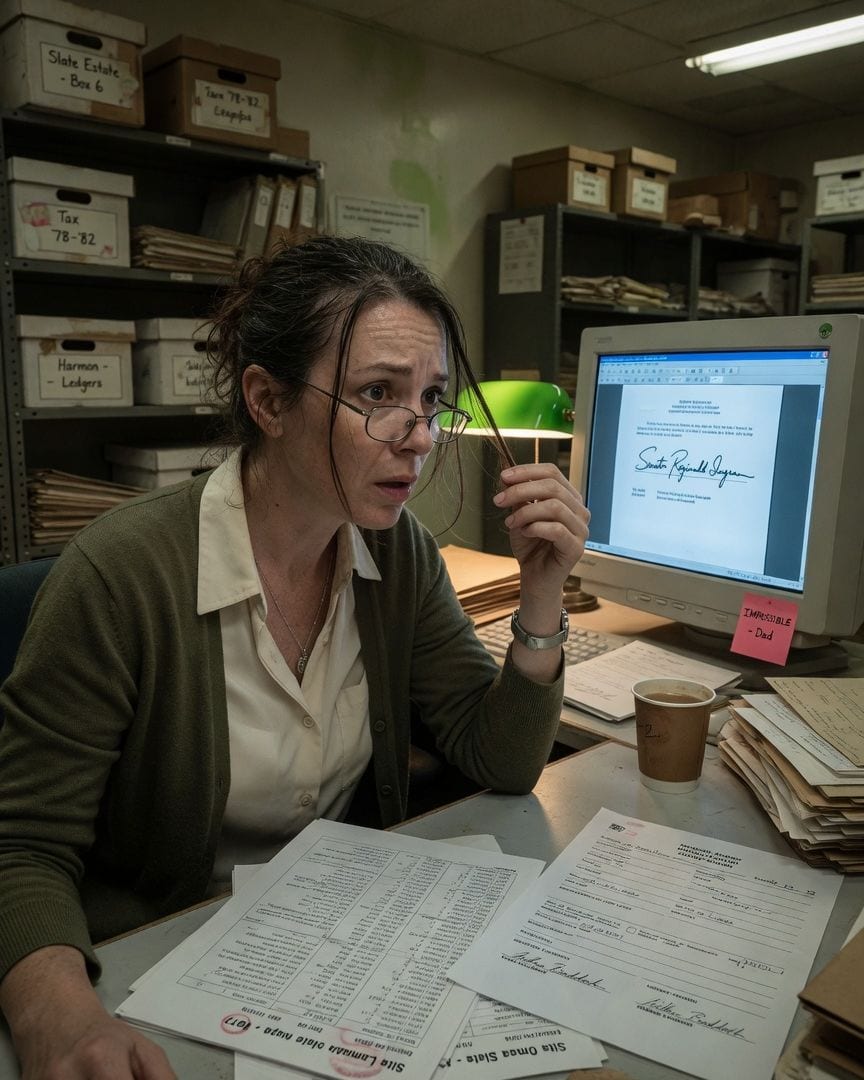
An archivist found her father's signature on a secret 1983 Cold War roster. It listed a senator who died a month before.
Nell Braddock, a meticulous archivist, dedicated her days to the quiet precision of sorting through decades of old papers. Her current task, the estate of Harmon Slate, promised nothing more than mundane accounting until she unearthed a secret operations roster from 1977. The document listed Slate as present at a desert facility, yet hospital records confirmed he was laid up with a broken back at the exact same time. A cold certainty bloomed when she recognized the familiar signature at the bottom of both impossible documents: her own father's. As Nell dug deeper, she found more such anomalies, each bearing her father's unnervingly perfect hand, twisting her reality into something utterly alien.
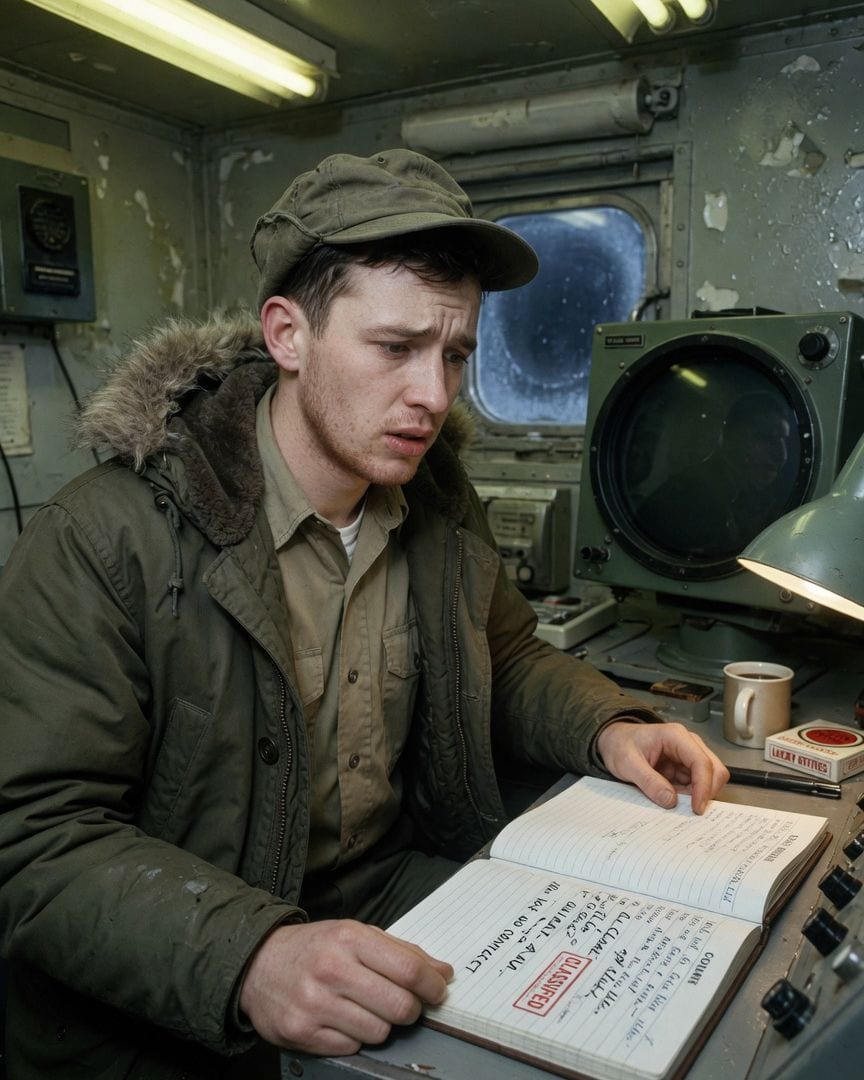
A Cold War airman logs an impossible radar contact on his last sweep. But his official logbook entry is stamped 'CLASSIFIED' and then contradicted by a hastily scrawled 'ALL CLEAR' dated moments before it.
Airman Ordway Vance, 22, manned the radar dome at Site Pellin in the biting North Atlantic dark of January 1962, running the last calibration sweep before its decommissioning. His scope picked up a faint, impossible return, growing closer with each pass, though the ocean remained empty to the eye. When Vance detailed the contact in his official logbook, a 'CLASSIFIED' stamp appeared, followed by a hastily scrawled 'ALL CLEAR' dated moments before his own entry, contradicting his every word. Commander Hartley dismissed it as equipment malfunction, but Vance sensed a chilling, official erasure behind the lie. He soon found a locked cabinet marked 'SITE PELLIN ANOMALIES,' hinting at a deeper truth buried within the base's final days.
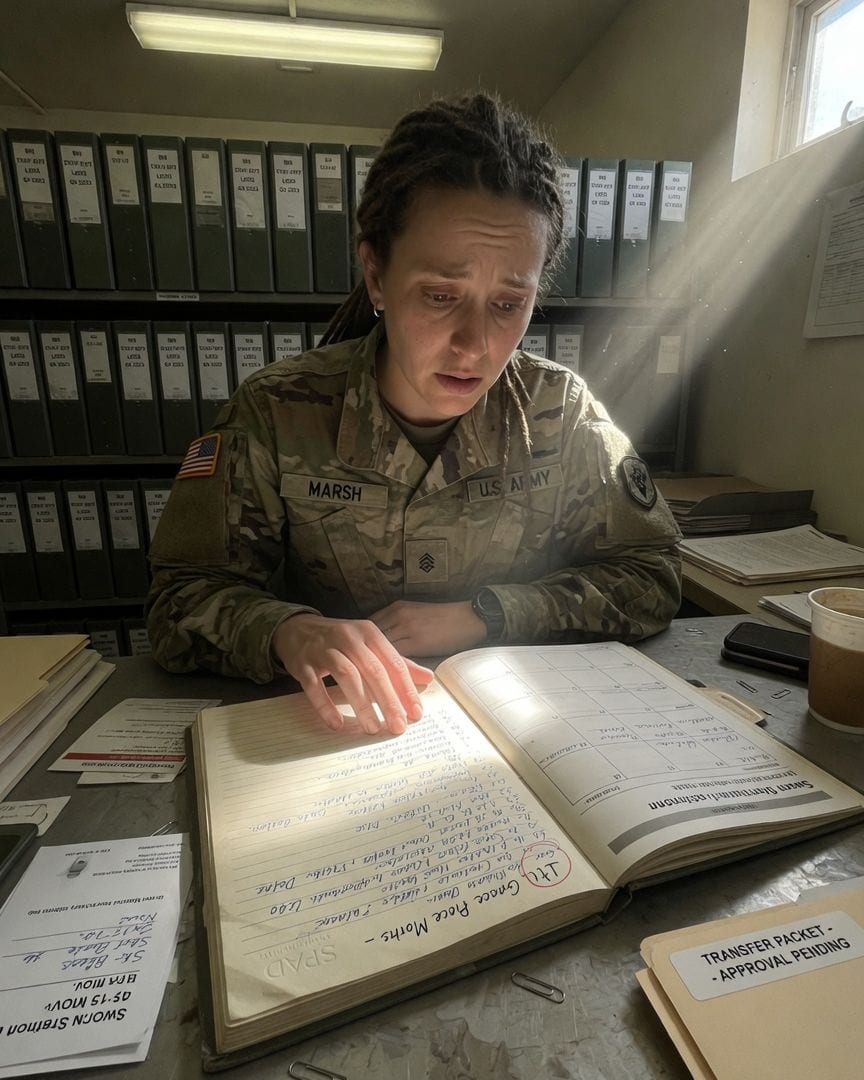
Preparing for a coveted post, a logistics officer found her own perfect signature on a duty log for a shift she swore she never worked. Then her coworker’s entry revealed his unique personal quirk.
Lieutenant Grace Marsh, a meticulous logistics officer, was deep in the archives, preparing her transfer packet for a coveted post. Her career depended on a spotless record, requiring absolute precision as she cross-referenced battalion staff-duty logs. Amidst the dusty binders and humming fluorescent lights, her gaze snagged on an entry for November 14th: her own perfect signature, logging a 24-hour shift she distinctly remembered spending hundreds of miles away in a court-martial. The impossible truth of a phantom doing her job was unsettling enough, but then she found another officer's entry, complete with his unique, personal quirk, for a day he was off-base. What was hidden in these official records?
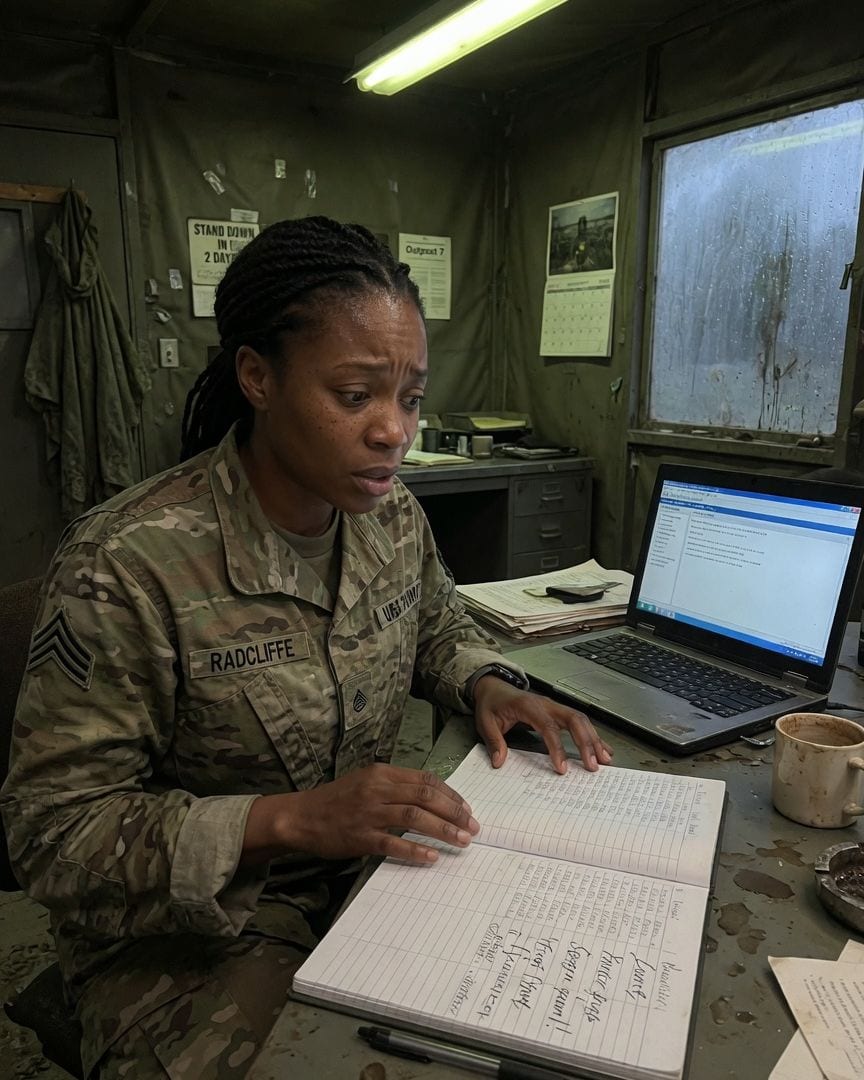
Two days before Outpost 7 closed, Staff Sergeant Radcliffe's roll call counted 42 men, but 43 voices answered.
Two days before Outpost 7 was set to stand down for good, Company First Sergeant Nora Radcliffe conducted her morning roll call. For three years, she had known all forty-two faces and voices by heart, but in the damp dawn air, a forty-third voice answered to a name not on her list. Back in her office, she found that same impossible name, 'Everett Lawson,' added to the official duty log in her own unmistakable handwriting. As the fluorescent lights hummed, her search of the digital personnel system revealed a skeletal record for Lawson, complete with a basic training certificate signed by her training officer—who had retired a decade before the certificate's date. What impossible truth had Nora stumbled upon as her outpost prepared to close?
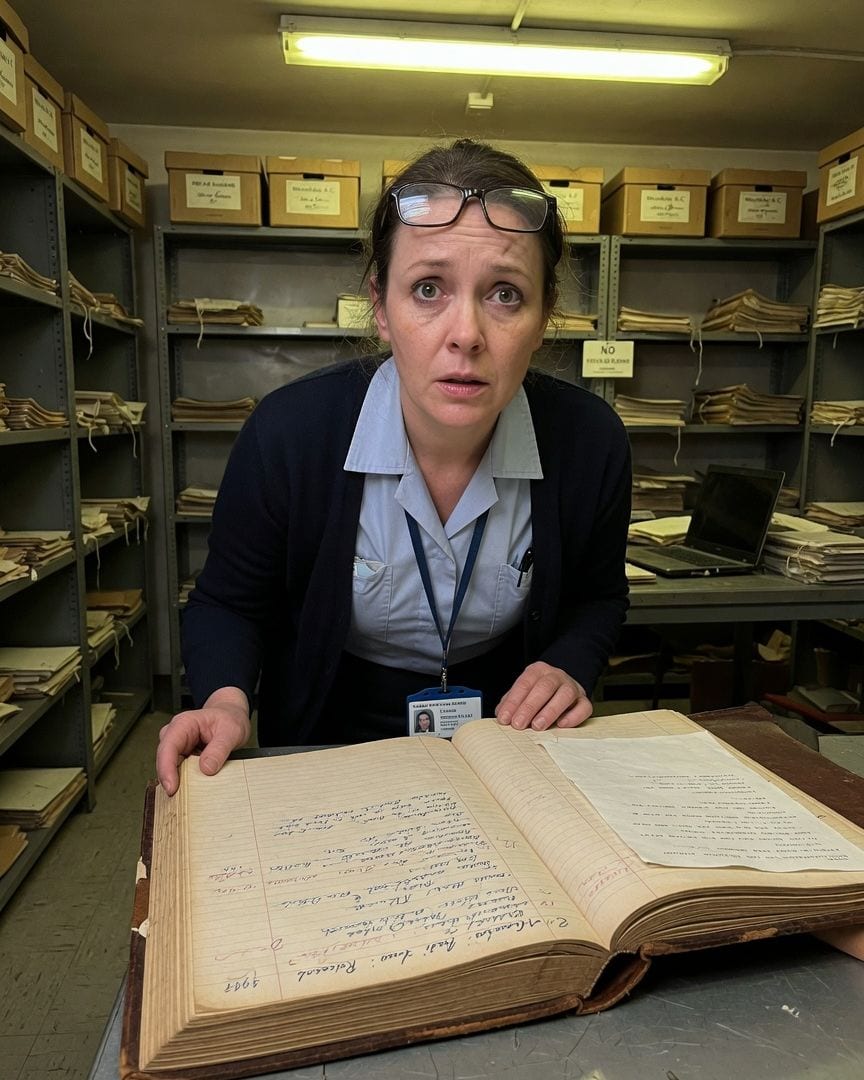
My ambulance trust's incident log shows callout 22-014 to 6 Cathcart Row at 2:40 AM. Every four years, the same call, same address. Always 'patient not found'.
My job involves tedious data entry for ambulance calls, but Incident 22-014 was different. It appeared every four years, always at 2:40 AM, always closed as 'patient not found.' Digging into the dusty physical archives, I found an entry from 1961 for the exact same incident, but its resolution read: 'Subject Secured. Relocated to "Holding".'
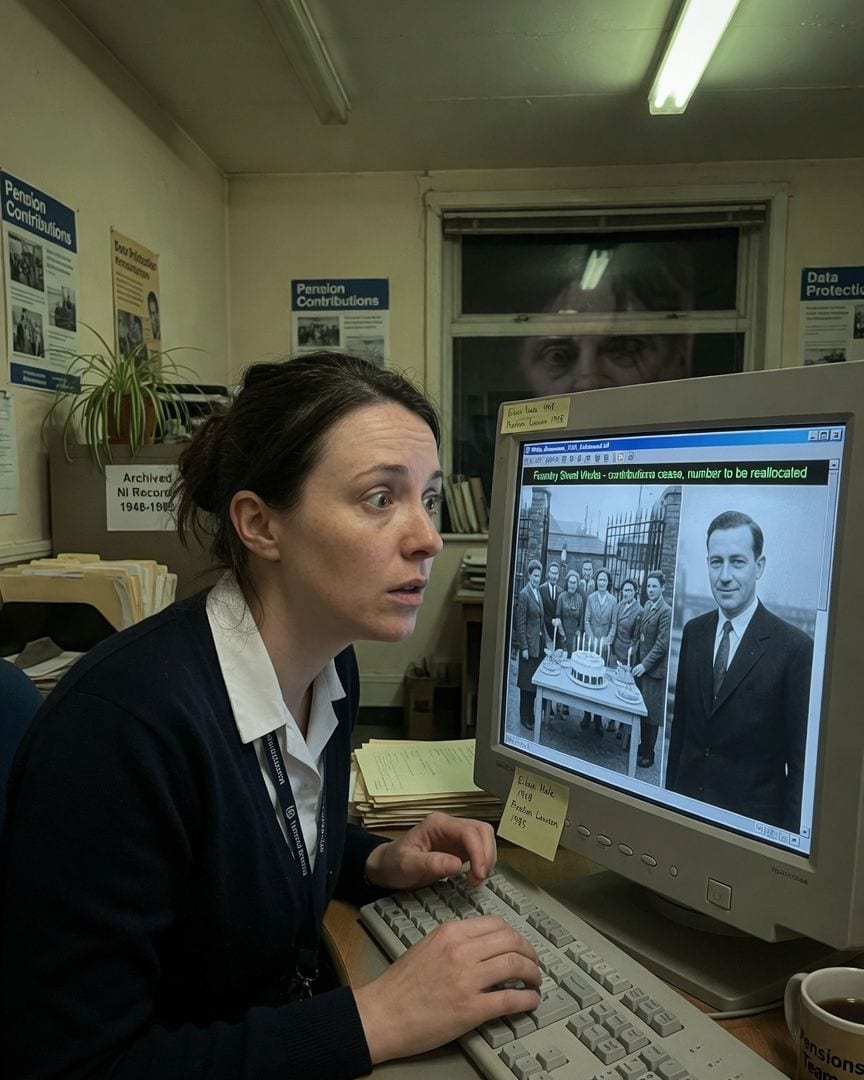
My National Insurance number has been used by four people since 1948. Each one worked at the same Foundry Street works, and none ever drew a pension.
I was just sorting out my new National Insurance number, a routine task I expected to take minutes. But the clerk found it had been used four times since 1948. Even stranger, all four previous holders worked at the defunct Foundry Street Works and never drew a penny of pension.