 US Armed Forces
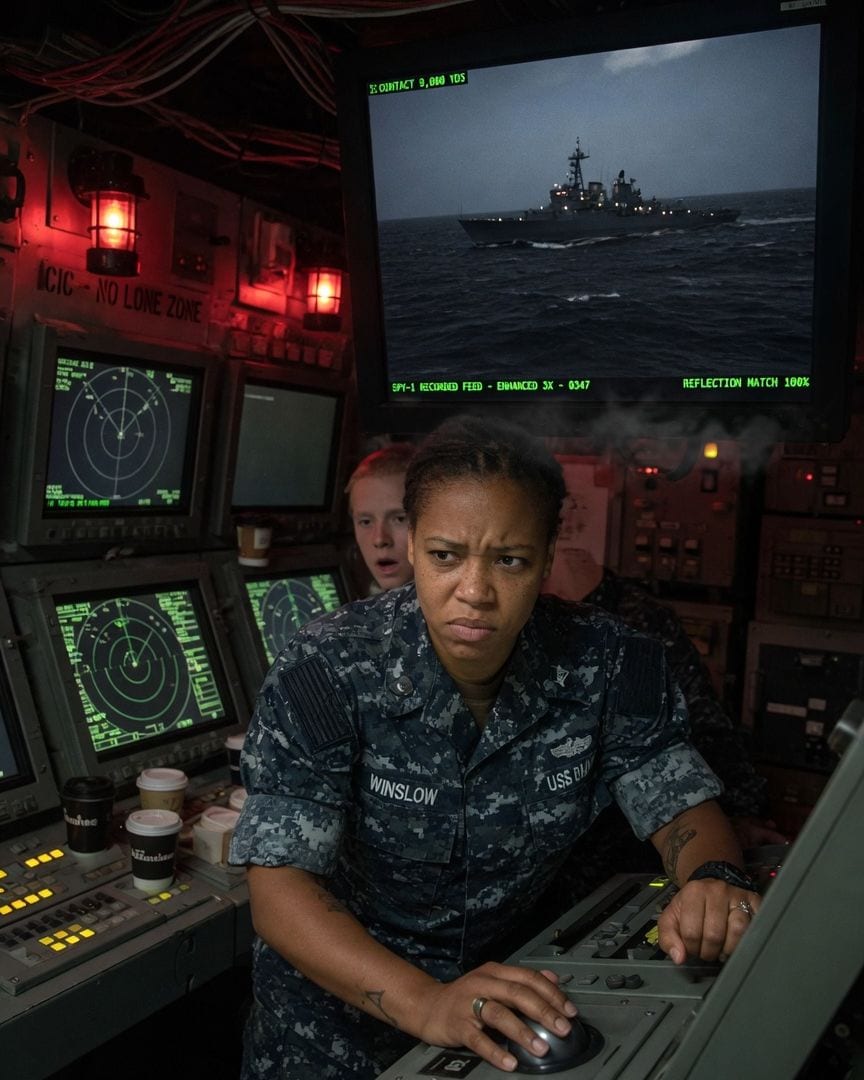
Fire Controlman Sena Winslow spent her third midwatch tracking an impossible radar contact in the USS Banshee's dim CIC. A blip held perfect station off Norfolk, mirroring their destroyer's every turn, creeping a hundred yards closer each hour. Bridge glasses saw only empty ocean and FLIR detected no heat, yet the SPY system screamed 'contact,' a solid digital presence. Sena checked every system, finding no glitch for the profound contradiction. Enhancing the video feed, she finally saw it: a perfect, clear, yet utterly empty reflection of the USS Banshee itself. It was their ship's silhouette, moving in lockstep through the black water, reflected by nothing visible. Cold dread seeped into her bones as the screen showed their spectral twin, mirroring them from an impossible void.
11 min read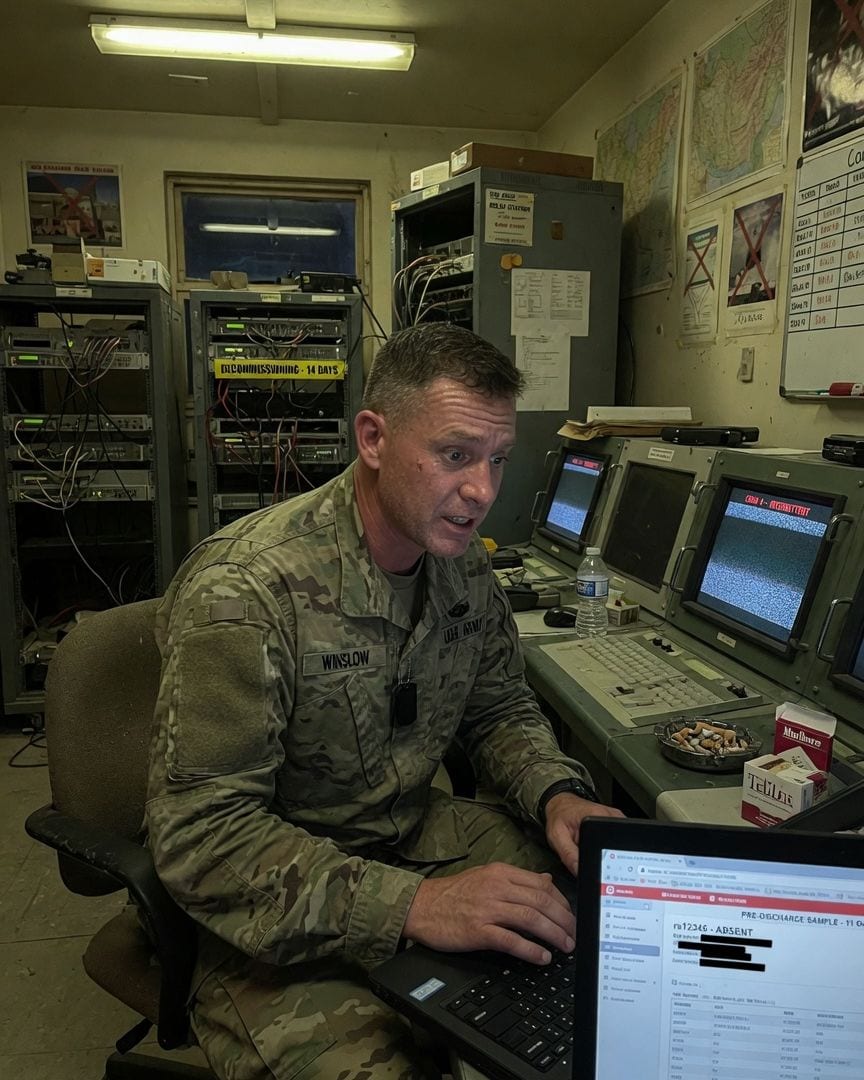 US Armed Forces
Corporal Frank Winslow felt the stale air of FOB Aries' operations room, a mountain relay station scheduled for decommissioning in two weeks. His battle buddy, Specialist Philip Teller, had just returned from an IED blast, but the two-pack-a-day smoker's chronic cough was simply gone. Winslow noticed Teller's unnaturally smooth movements, the absence of his familiar hand patting his shirt for a cigarette, and a new, erratic static on the comms array. Seeking proof, Winslow accessed Teller's medical file, only to find the genetic marker for that very cough was now inexplicably absent from his most recent profile.
12 min read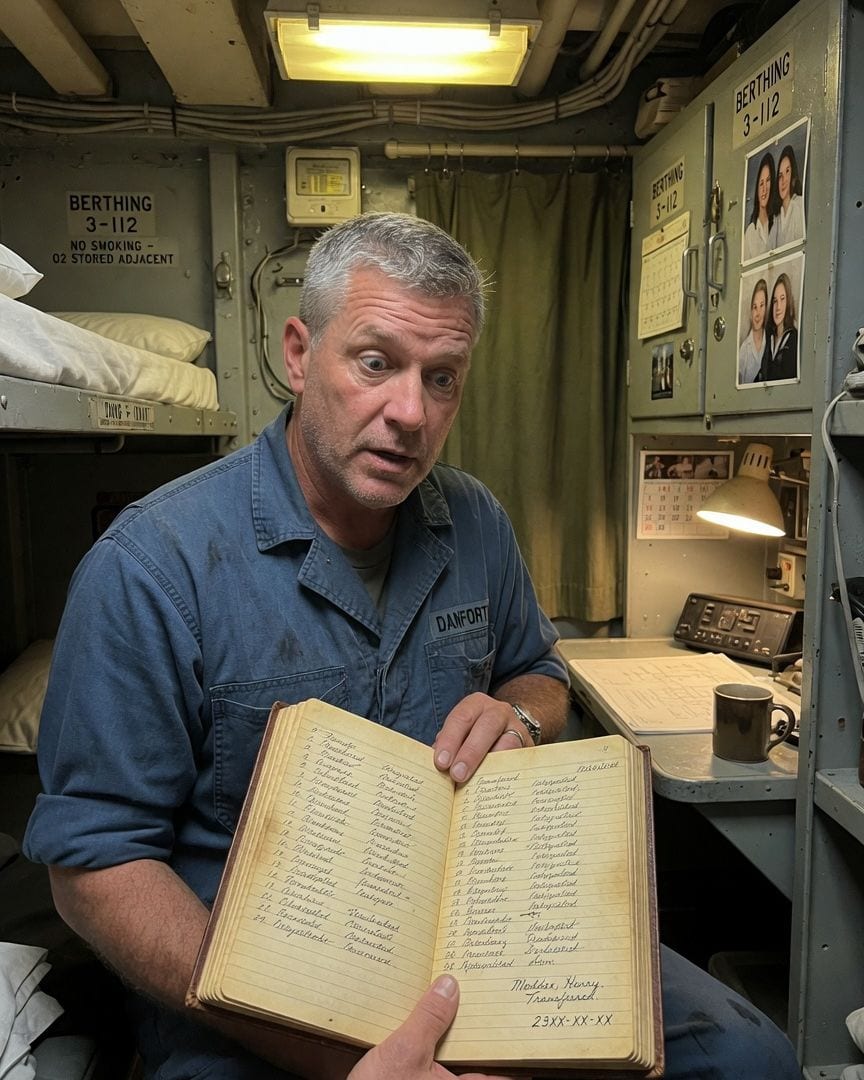 US Armed Forces
Chief Petty Officer Russell Danforth was weeks from retirement, his three decades of service nearing an end aboard the USS Weatherall. Deep in the destroyer's familiar steel passages, he stumbled upon a sealed hatch where official plans insisted only solid bulkhead should be. Forcing it open, he discovered a cramped, unsettlingly 'lived-in' compartment holding a bare bulb and a mysterious logbook. Its final entry, stark and fresh, named a living junior petty officer from his own division, dated a week from today. What chilling fate awaited Henry Maddox, according to the Weatherall's secret history?
11 min read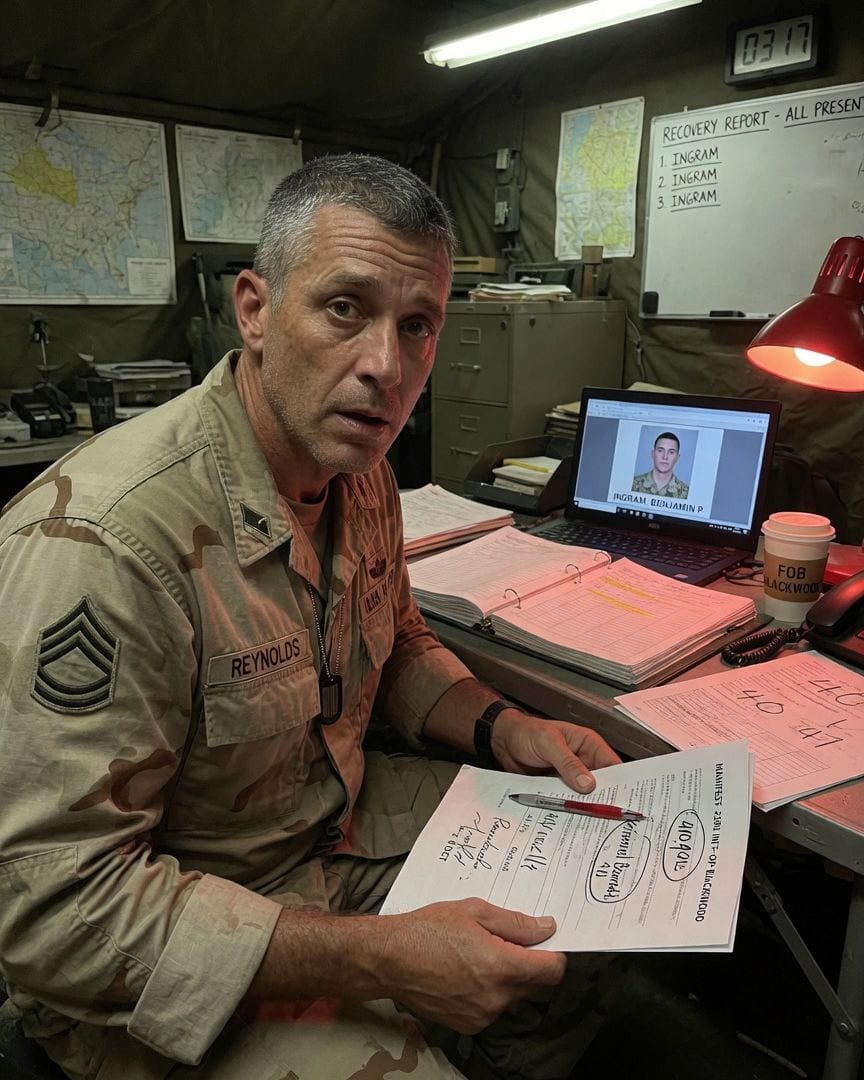 US Armed Forces
First Sergeant Dean Reynolds stood sentinel on the red-lit tarmac of FOB Blackwood, the desert wind tugging at his uniform as he personally counted every man boarding the C-130. His responsibility was ironclad: forty jumpers, all present, all accounted for. He watched the last man board before the massive aircraft lifted into the vast night. Hours later, in the tactical operations center, the radio crackled with an impossible report: forty-one personnel had been recovered. Reynolds, who had counted only forty men onto that plane, felt a cold knot tighten. All paperwork, including a manifest signed by his own hand, now confirmed the impossible tally of forty-one.
12 min read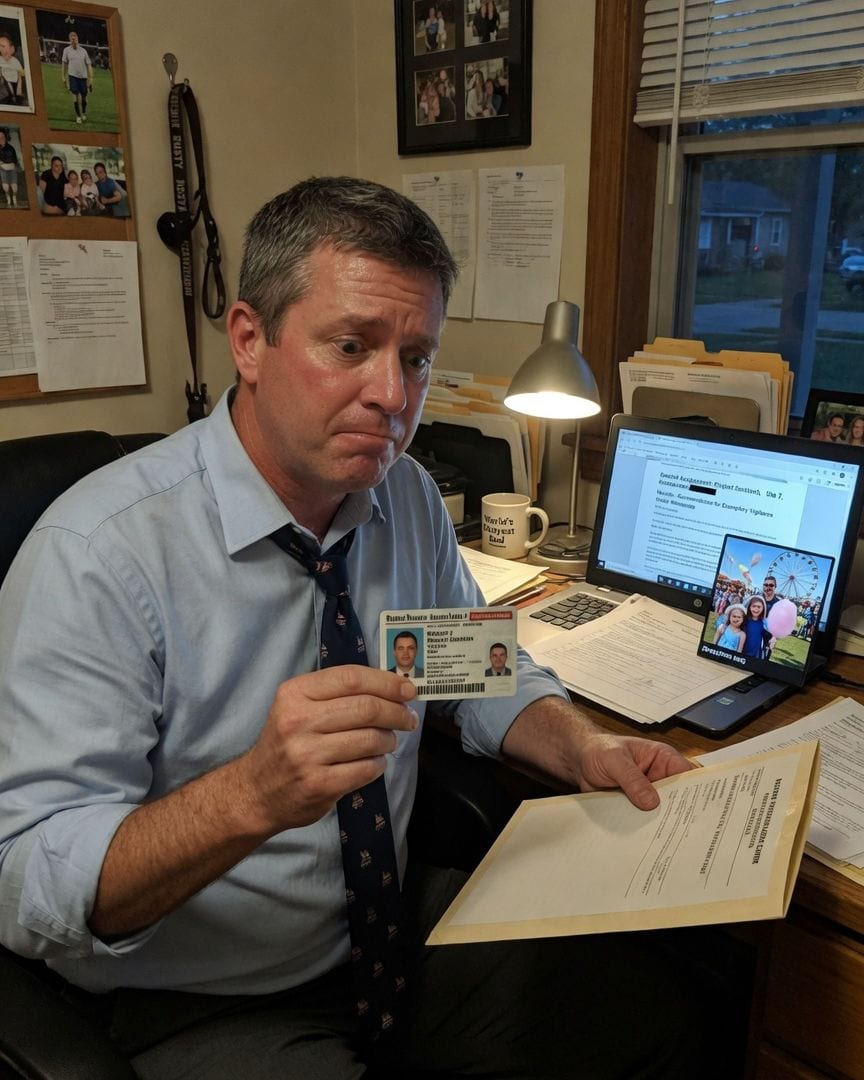 US Armed Forces
Robert Halloran, an Ohio insurance agent, thought his military days were long behind him, replaced by a quiet civilian life with a mortgage and two children. But a letter arrived from a records center, congratulating him on twenty years of continuous service and detailing a career he never lived. His official ID card even bore a recent photo of him, looking back with an uneasy smile he didn't remember giving. As he found his own discharge papers, crisp and yellowed, they directly contradicted every line of the new document, confirming his service had ended eight years ago. Now, two realities fought for space: his family life and a secret military history he couldn't explain.
10 min read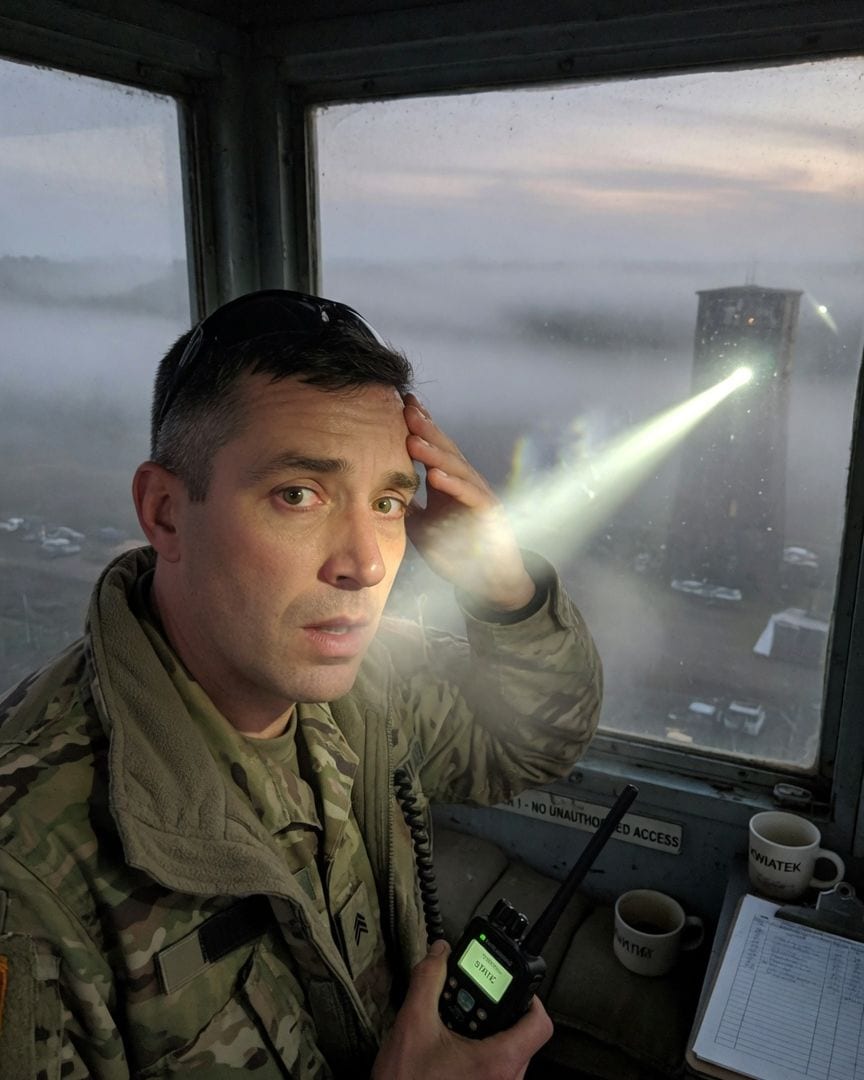 US Armed Forces
Sergeant Milo Kwiatek faced his final week at a German army garrison, pulling a lonely night watch as the base wound down around him. A damp fog thickened, swallowing the compound until only the nearest perimeter lights glowed, leaving the long-abandoned rear tower a silent, dark silhouette. Then, the rear tower's searchlight awoke, its stark beam cutting through the gray to lock with impossible precision onto Kwiatek's face. He later discovered the tower's power box was corroded and dead, yet the official duty logs for that night named a Private David Larsen—a soldier who appeared on no active roster. Who or what had recorded an impossible watch?
13 min read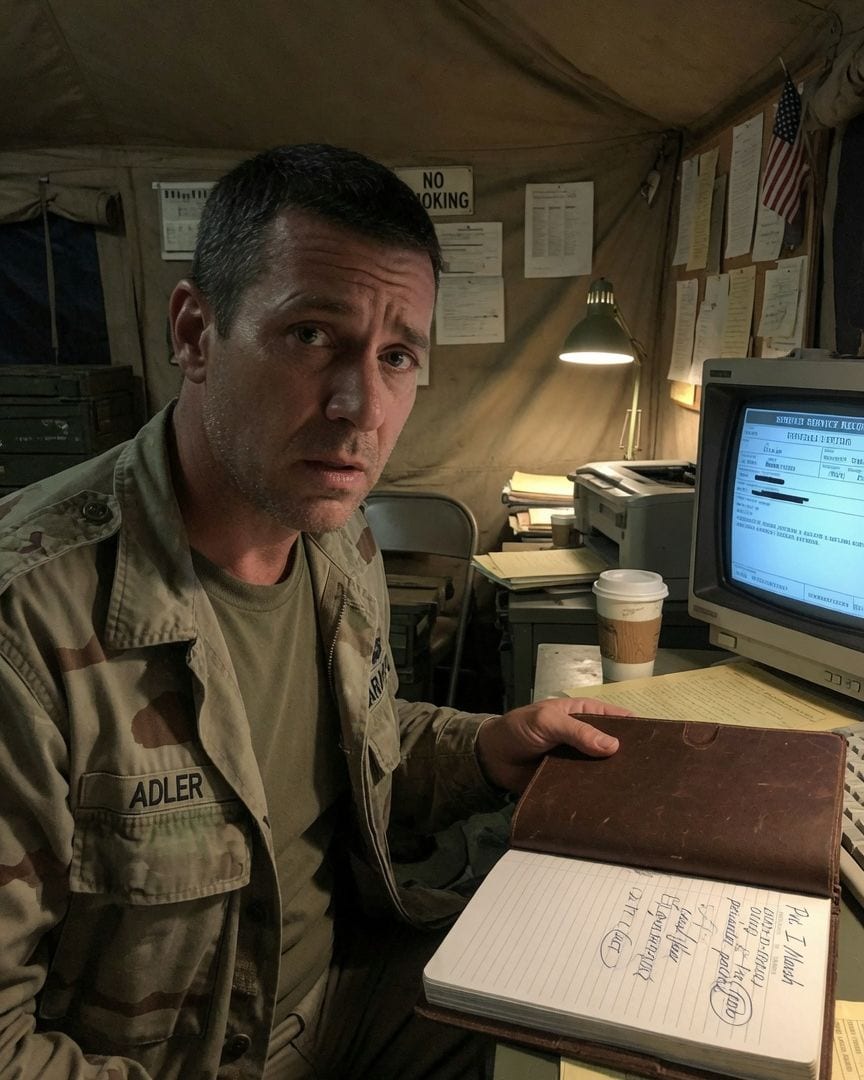 US Armed Forces
Sergeant Gordon Adler felt a cold unease watching his closest friend, Isaac 'Priest' Marsh, back from medevac. Marsh, always right-handed, now ate with a smooth, unthinking ease from his left, his eyes vacant. Later, checking unit records, Adler found Marsh’s precise signature logging a full patrol shift from three weeks prior. But that date was squarely in the middle of Marsh's medevac leave, an impossible entry. When confronted, Marsh offered a slow, unblinking smile that never reached his eyes, his gaze drifting to something unseen behind Adler.
12 min read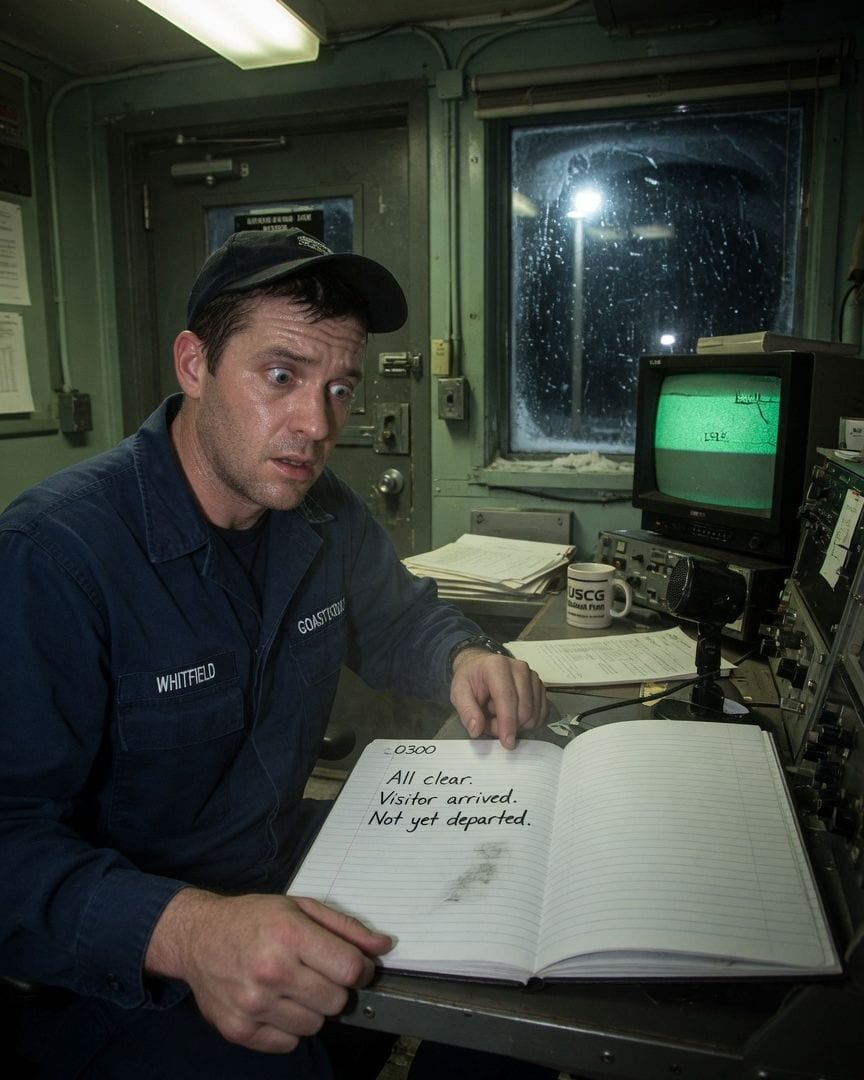 US Armed Forces
Coast Guardsman Nathan Whitfield was isolated for days by a banshee-howling nor'easter at Blackrock Point Light Station, the constant storm drone wearing his nerves thin. After an hour of illicit sleep, he returned to his logbook to find a chilling entry at 0300, in his own precise hand, that read: 'Visitor arrived. Not yet departed.' The ink was still glossy and damp to his touch, a fresh entry he knew he hadn't made. Every door was locked from the inside, every window latched, yet a single, strange boot print waited upstairs in the lantern room. Nathan Whitfield, utterly alone on the point, faced the profound certainty that someone else was, impossibly, still there.
10 min read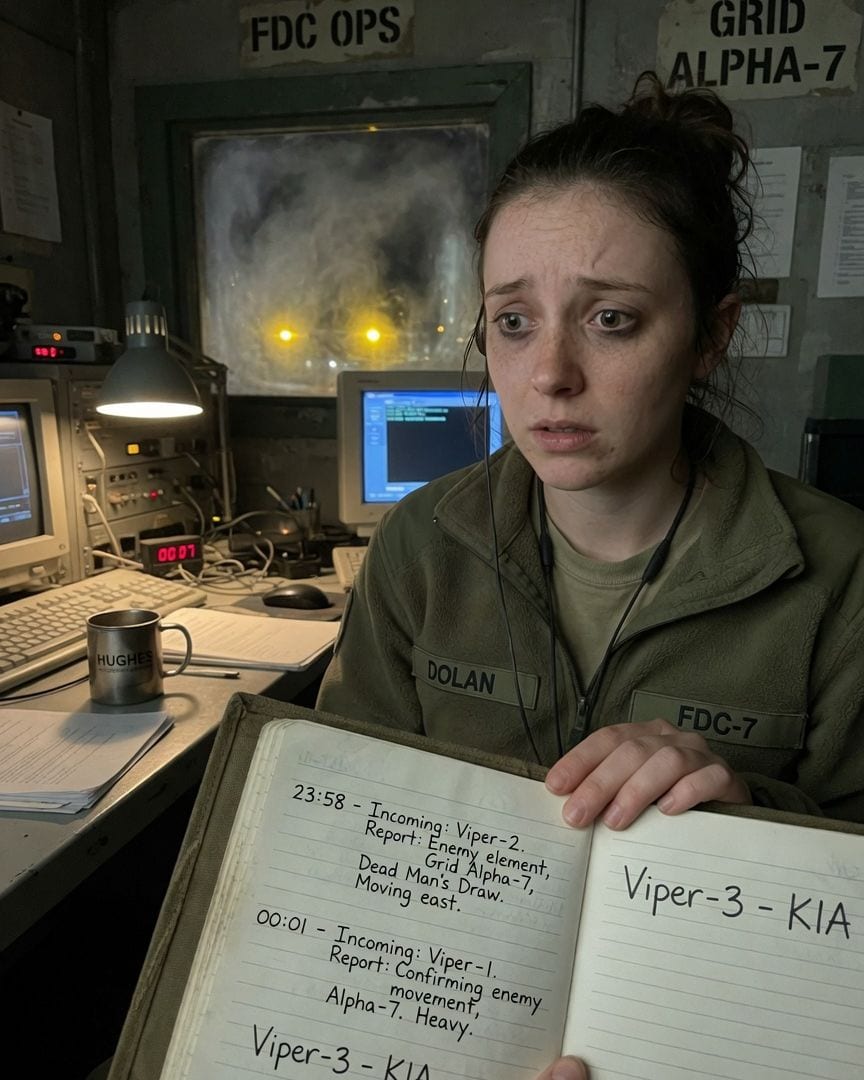 US Armed Forces
Specialist Emily Dolan adjusted her headset in the FDC, the fog pressing against Firebase 7's windows on her final watch before its decommissioning. Near midnight, frantic calls began coming in from observer posts, reporting enemy contact in treacherous territory where a patrol was wiped out just last week. But Control reported losing comms with those posts hours ago, leaving Dolan to realize her system had logged a full conversation with voices no one else heard. Then, the physical FDC logbook confirmed her entries, complete with an unfamiliar annotation: 'Viper-3 - KIA,' the call sign of the very patrol wiped out days before. What impossible truth had the firebase itself recorded?
13 min read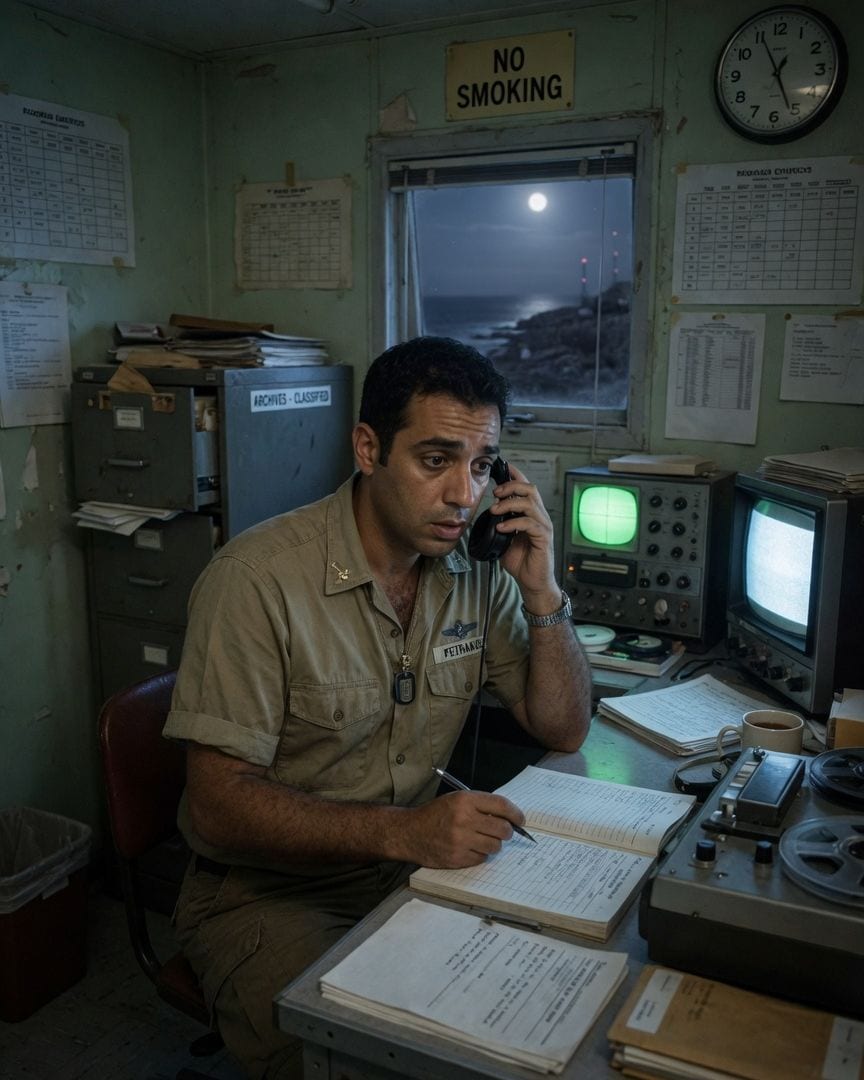 US Armed Forces
Radioman Samuel Petrakis counted down his final three weeks on a remote island station in 1967, his thoughts already drifting to the home he would soon return to. But the steady hum of his encrypted fleet broadcast suddenly faltered, replaced by a calm voice listing ships, dates, and the chilling phrase: "no longer answering." It named the USS Vance, October 27th, 1967—exactly three weeks from that night—a destroyer currently on routine patrol. Petrakis later discovered his own name on the Vance’s future deployment roster for that precise, impossible date, assigned to a ship already marked for silence.
12 min read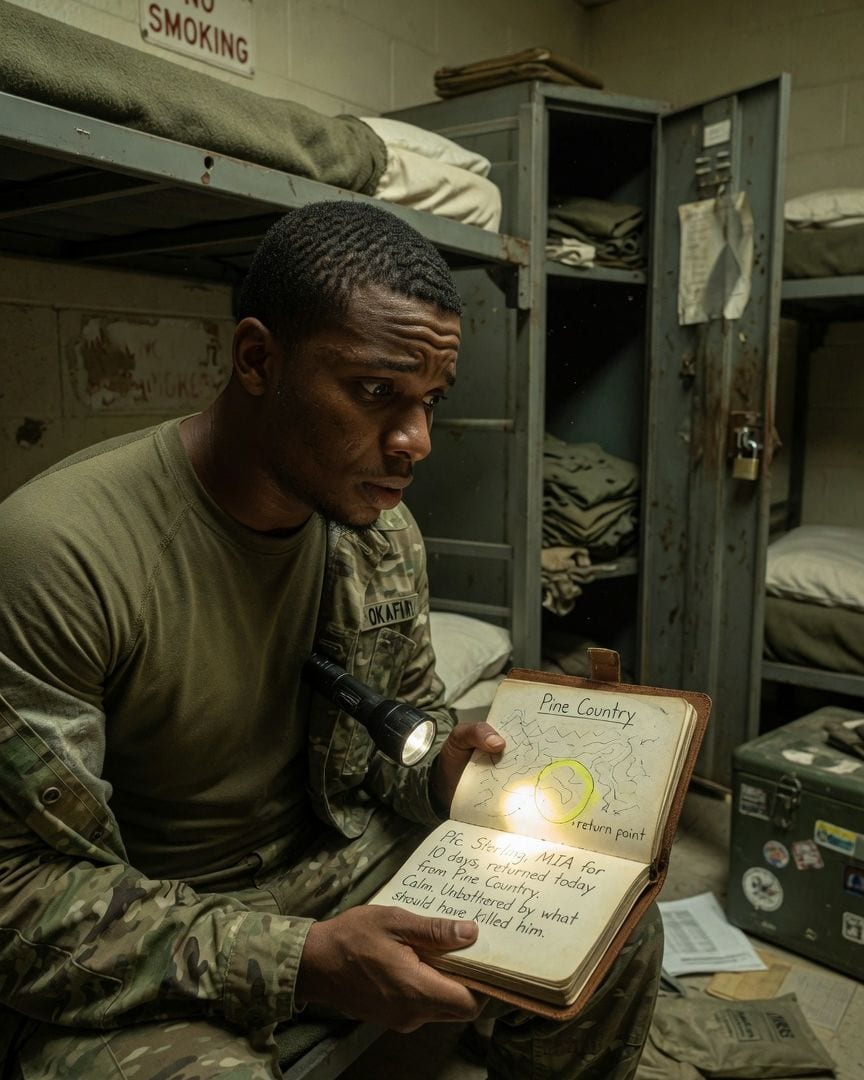 US Armed Forces
Julian Okafor had carried his battle buddy's EpiPen for a year, knowing a single sting could be a death sentence for Marco Talbot. After Talbot vanished for eleven days in the restricted Pine Country, everyone thought him dead. Now, back in the mess tent, Julian watched Marco flick a wasp away with unnerving calm, showing no hint of the severe allergy that had once nearly killed him. Julian's dread deepened when Marco's official service record, once detailing life-threatening anaphylaxis, now simply read 'Resolved.' What happened to Marco out in the Pine Country?
13 min read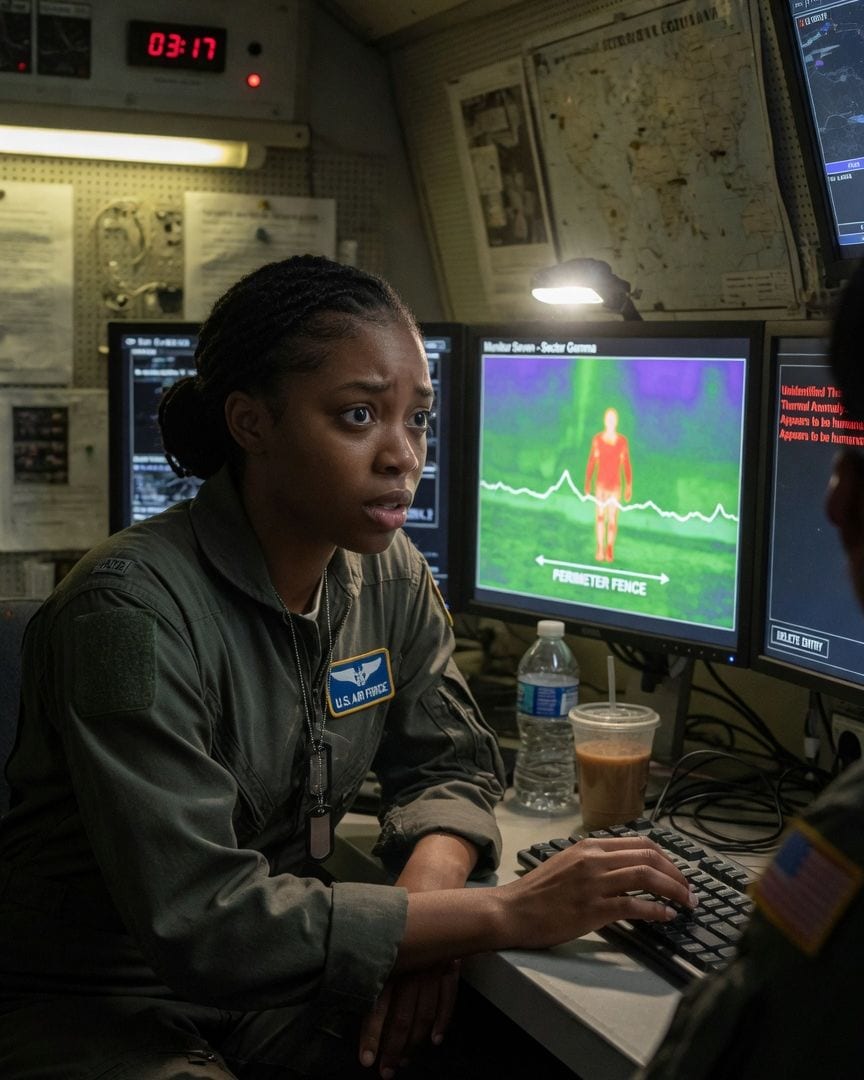 US Armed Forces
Airman First Class Olivia Kade was new to her remote high-altitude outpost, fresh from advanced training, and the isolation pressed in, amplifying every hum. Her duty was to monitor the desert perimeter, but one shift, a faint thermal signature appeared on Monitor Seven: a solitary, upright figure moving with impossible precision beyond the barbed wire. No personnel were authorized in that sector. Her mission commander quickly ordered the anomaly scrubbed, but as it dissolved, the featureless outline seemed to tilt its head, looking directly into the camera. Now, the signature returns night after night, forcing the airman to wonder what impossible thing patrols the dark beyond the wire.
11 min read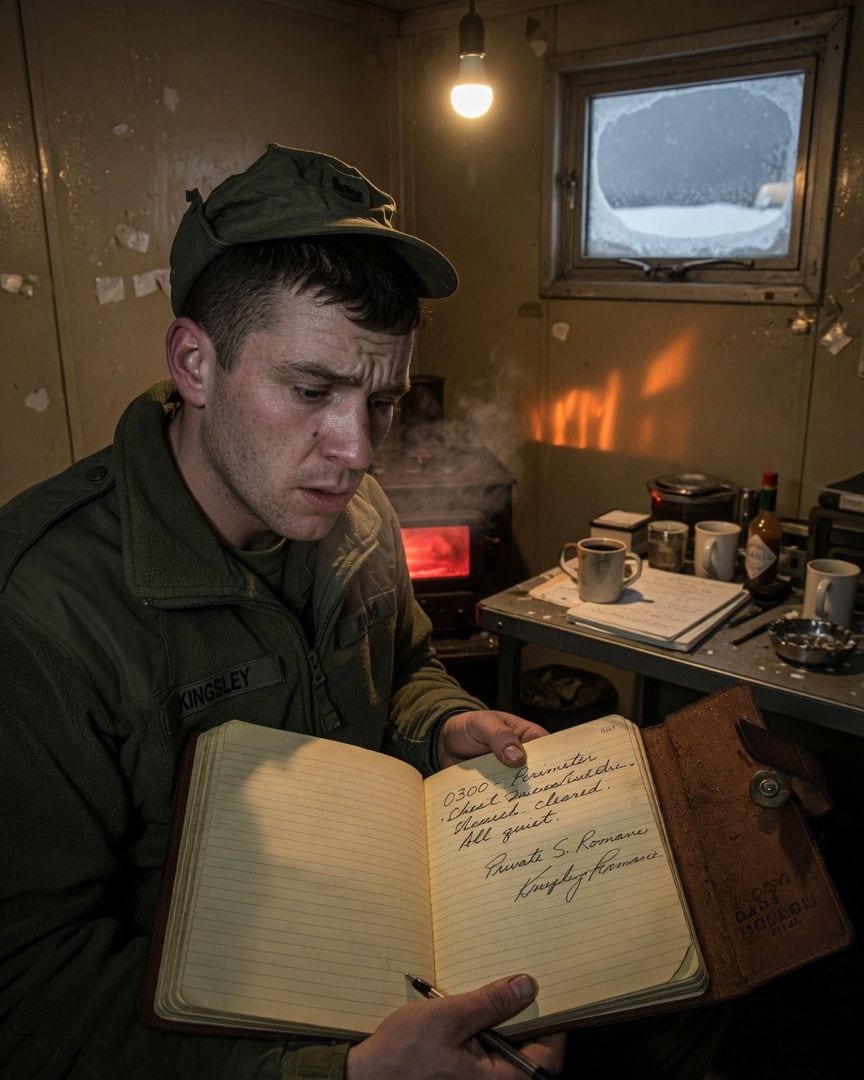 US Armed Forces
Corporal Jan Vesely Kingsley was just two days from going home, enduring his final watch in an Alaskan outpost hut, a lonely prefab box against endless white. During the long, dark hours, a methodical crunch of snow circled the hut, too deliberate for an animal, vanishing as he strained to hear. Dawn revealed a single, waist-deep track worn into the pristine drift – a perfect, unbroken circle with no entry or exit. The true chill settled when Kingsley checked the duty logbook: an entry for his watch was already there, detailing a perimeter check by 'Private S. Romano,' signed in his own precise military script. Who had signed his name?
10 min read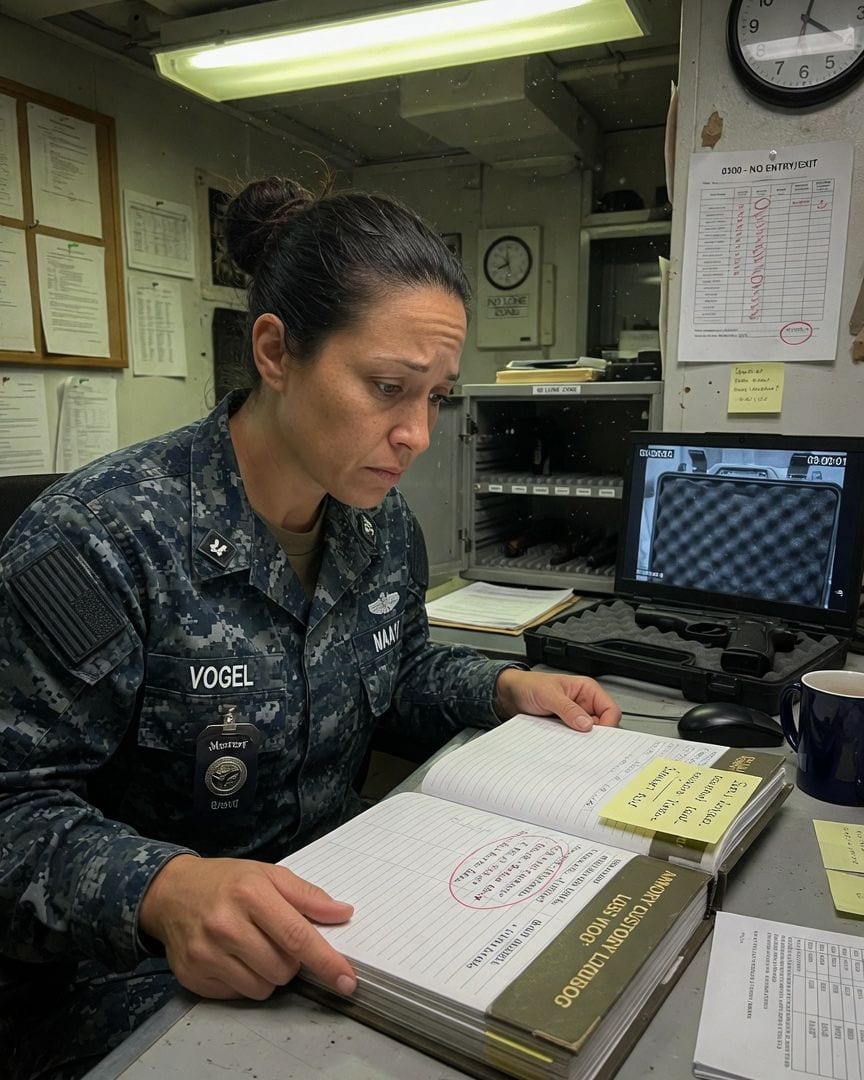 US Armed Forces
Master-at-Arms First Class Dana Vogel stared at the USS Vance armory log, a testament to her years of perfect service. An entry for 0300 during a recent strait transit listed her name, signing out a standard M9 pistol. Yet, Vogel knew she was thousands of miles away on emergency leave, her sister in the ICU. The armory camera’s timestamp for 0300 showed the weapon case secured in its rack, distinctly opening and closing, with no person visible. How could her signature be in a log for an event she couldn't have performed, witnessed only by an empty room?
12 min read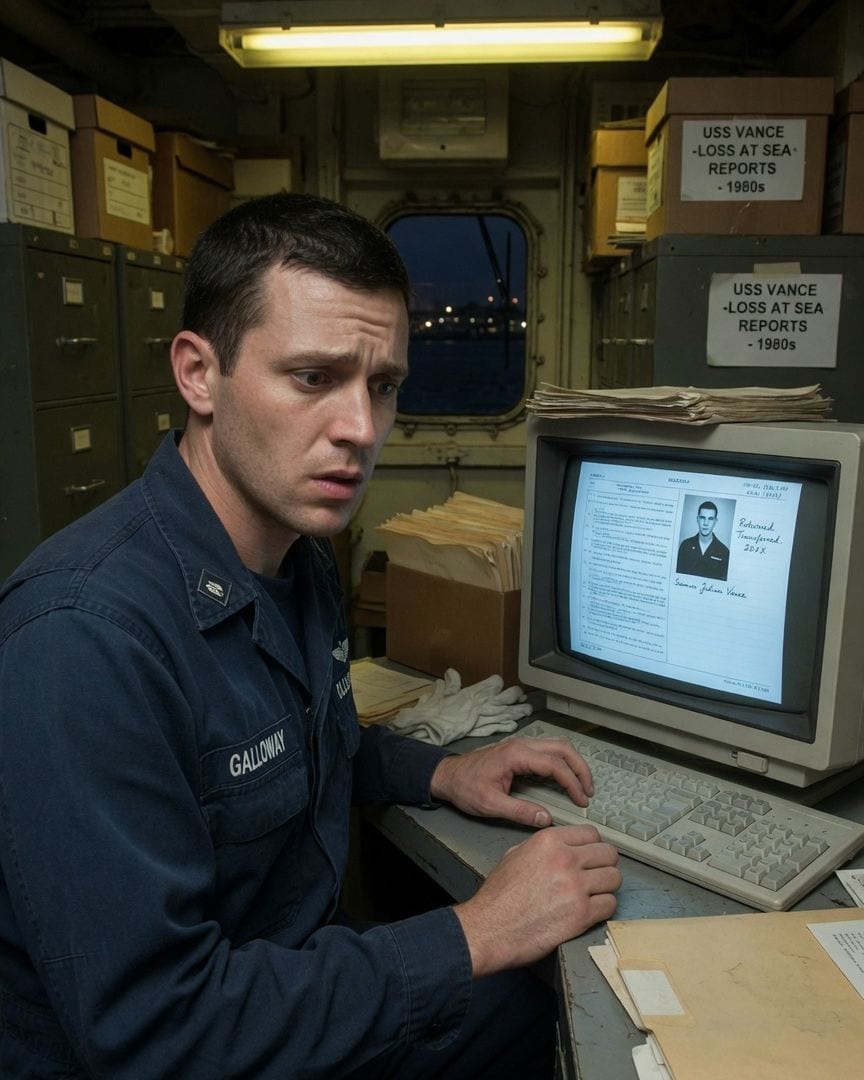 US Armed Forces
Petty Officer Joel Galloway scanned a sailor's ID on the USS Vance quarterdeck. The man's name, 'Seaman Julian Vance,' and his out-of-date uniform pricked at Galloway's memory. Later, the ship's berthing count came back one over, with an extra entry in the system but no physical body.
14 min read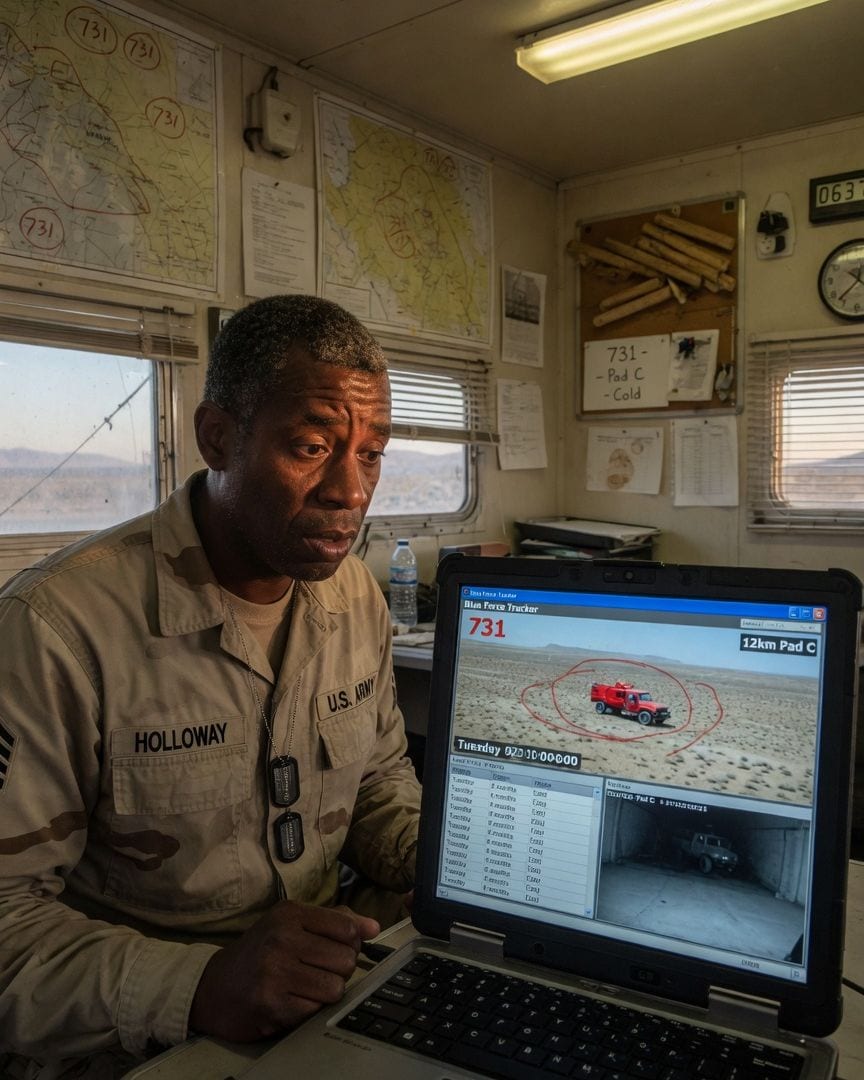 US Armed Forces
Staff Sergeant Marcus Holloway reviewed night shift reports, but the Blue Force Tracker showed Truck 731 driving a four-hour loop outside the wire. Its engine icon burned hot, yet Marcus found the actual armored transport cold, dark, and still on its designated pad.
9 min read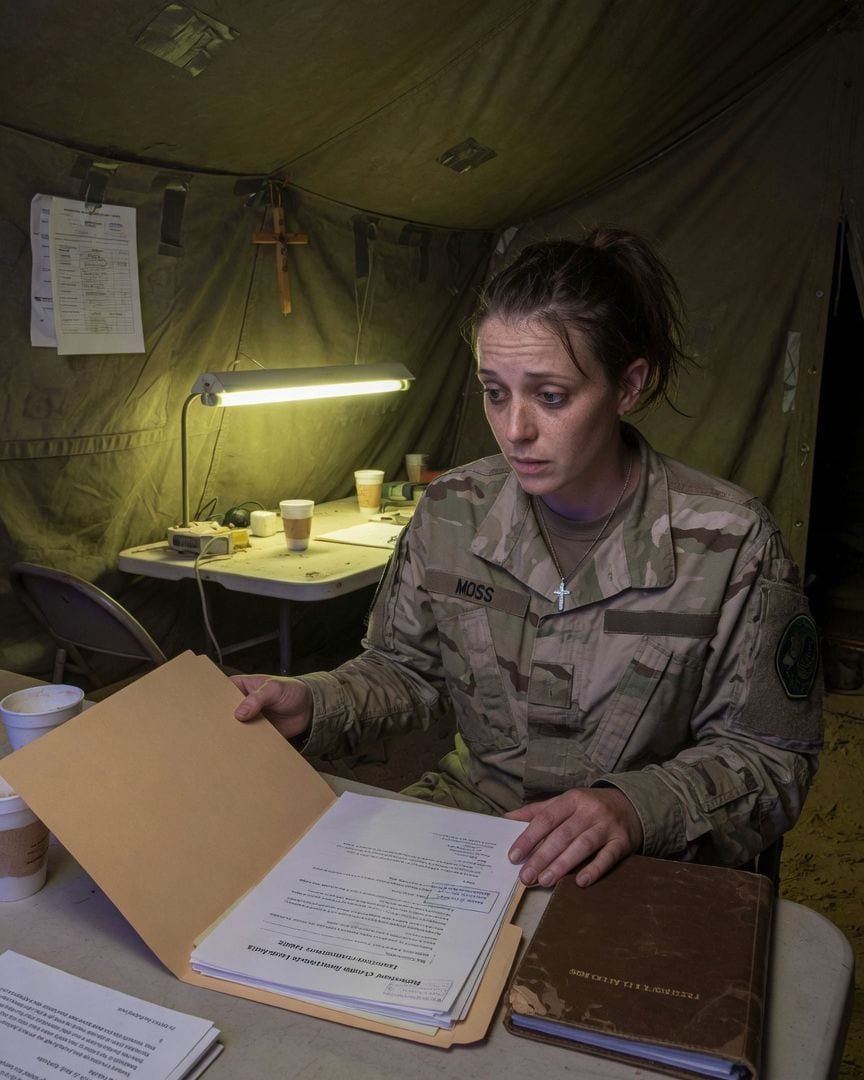 US Armed Forces
Chaplain's Assistant Rosemary Moss found comfort in Private Kevin Kirby's small, wrong-way ritual of crossing himself at the field chapel. But after Kirby reappeared from three weeks lost in the desert, his return brought an unnerving change: he crossed himself correctly, the old joke gone, replaced by serene, perfect conformity. Moss's unease deepened when she found a new, clinical form in his service record, listing 'resolution of idiosyncratic habits' as a positive outcome. The true shock came with a commendation for a tactical mission, dated three days *before* he was officially found, leaving Moss to wonder: was Private Kirby ever truly lost?
11 min read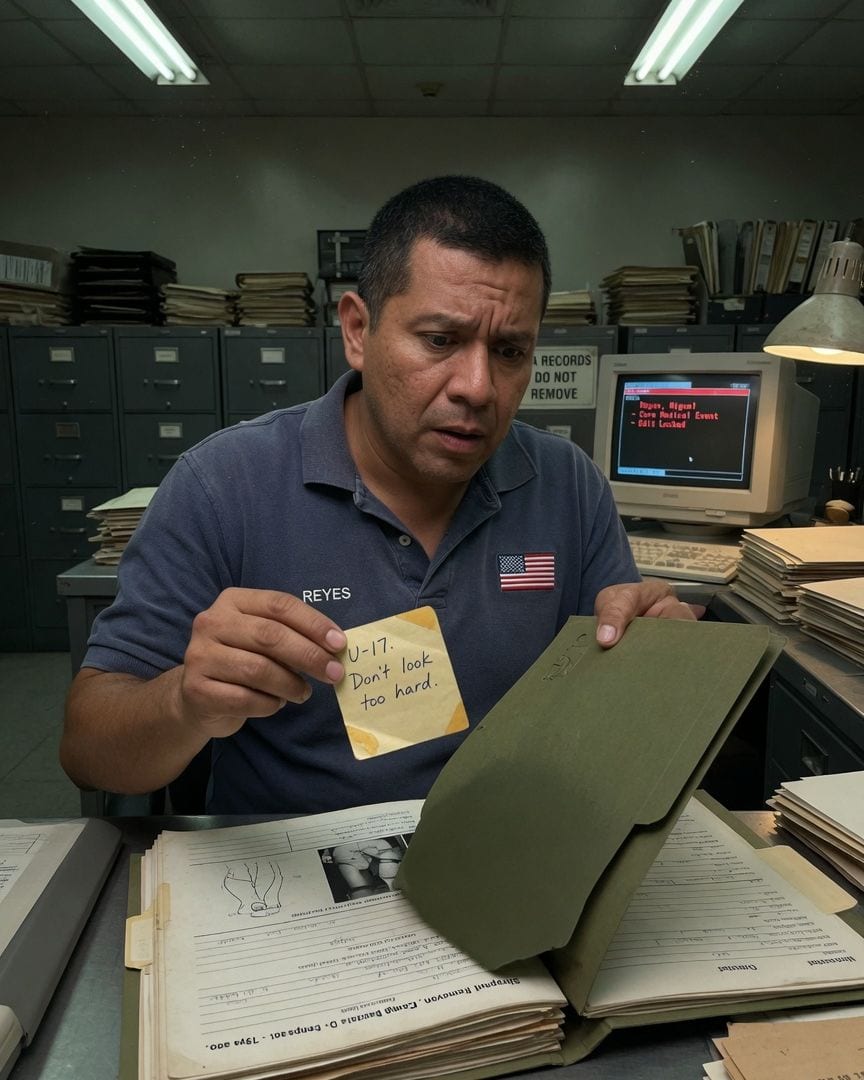 US Armed Forces
Miguel Reyes, a veteran seeking relief for an old running injury, found his routine VA visit take a chilling turn. His medical file claimed a shrapnel wound and surgery from thirteen years prior, but his leg bore no scar, no mark of the supposed incident. Despite the detailed digital and paper records, his body swore the event never happened. As he pressed for answers, a hidden, yellowed note taped inside the official report surfaced, scrawled with two words: "U-17. Don't look too hard." The sterile clinic air suddenly felt cold and thick, suggesting a truth far darker than a simple clerical error.
14 min read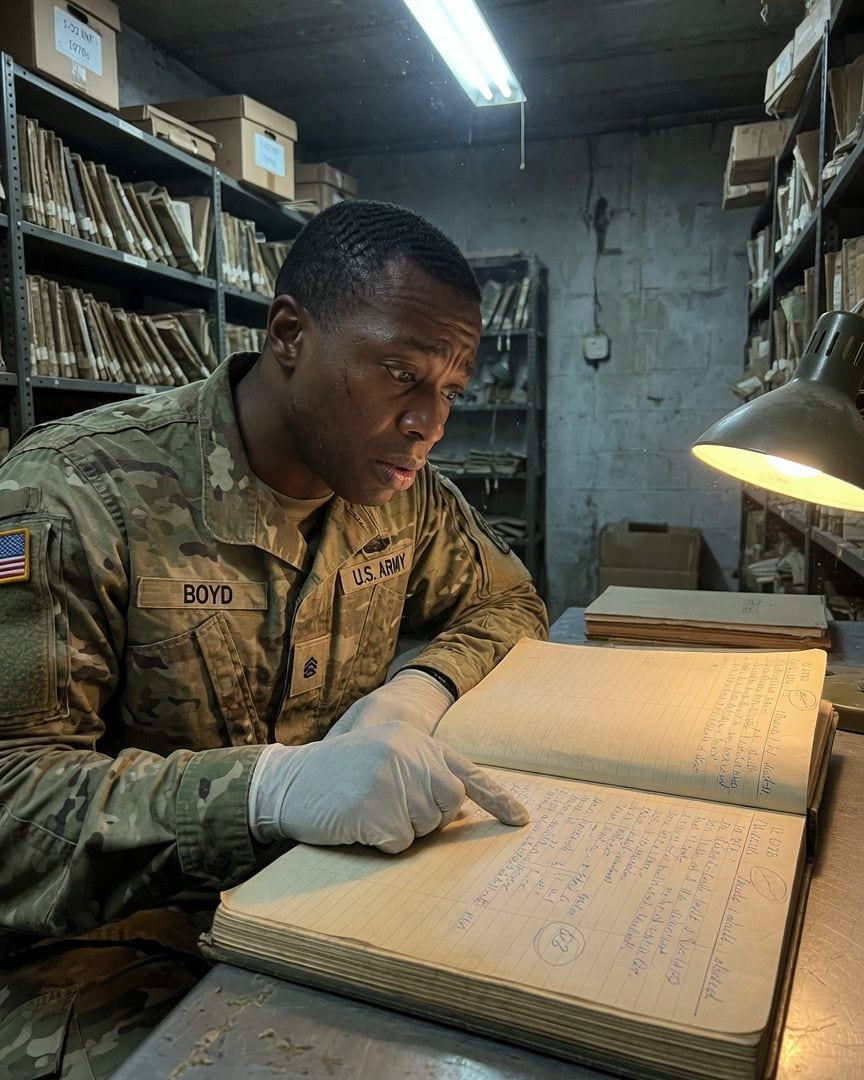 US Armed Forces
Staff Sergeant Marcus Boyd, a soldier who valued accountability, faced an impossible Purple Heart citation. It detailed a mortar wound to his left shoulder in 1978, decades before he was even born, yet a phantom ache pulsed where the shrapnel should have been. Dismissed as a glitch, Boyd meticulously traced the paperwork through dusty archives, each document impeccably filed and sworn to the impossible. The deeper he dug, the more coherent the lie became, until he found his own handwriting in a 1978 logbook, documenting a wound he never received.
13 min read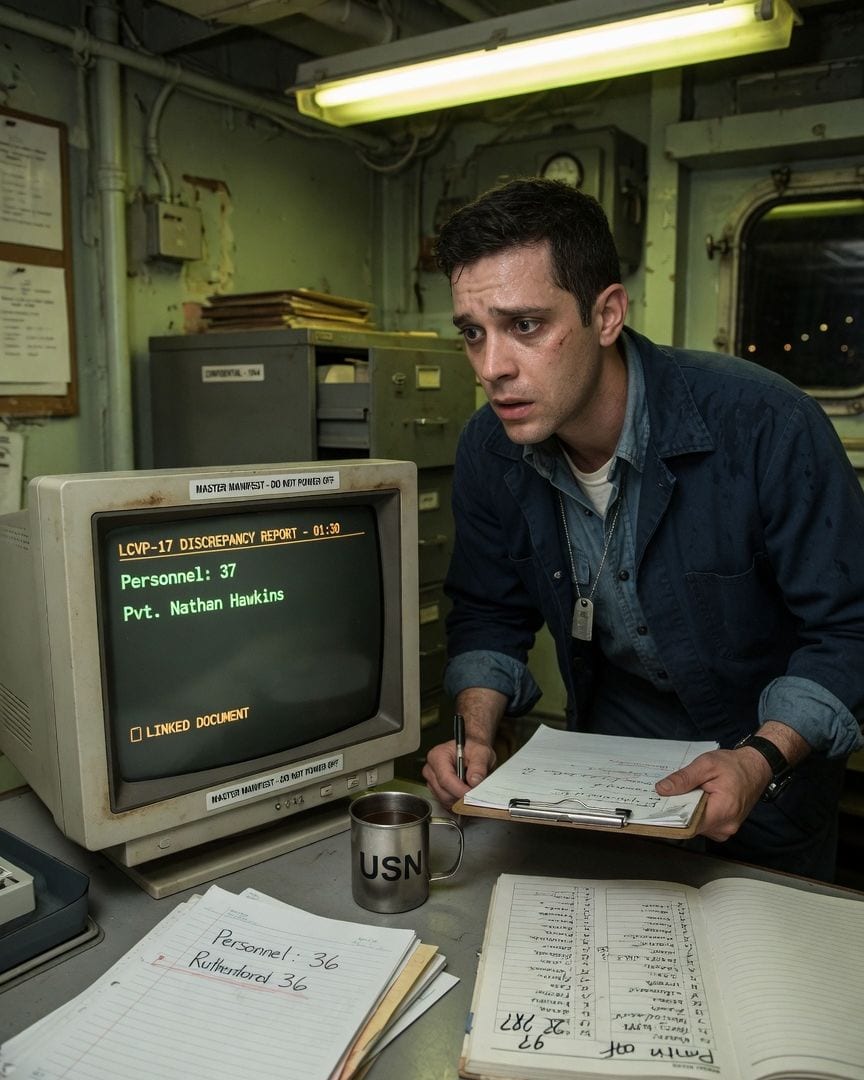 US Armed Forces
Coxswain's Mate Donald Rutherford, 28, began his final count for a standard load of thirty-six men in LCVP-17, the salty spray stinging his eyes. Halfway to the beach, a violent wave slammed the craft, throwing the men against each other. When the vessel settled, Rutherford instinctively recounted, his heart knocking against his ribs. This time, his count came back thirty-seven bodies crowded into the small boat. Official logs confirmed only thirty-six men, yet a hidden report, dated hours before his deployment, listed an extra man by name: Private Nathan Hawkins.
13 min read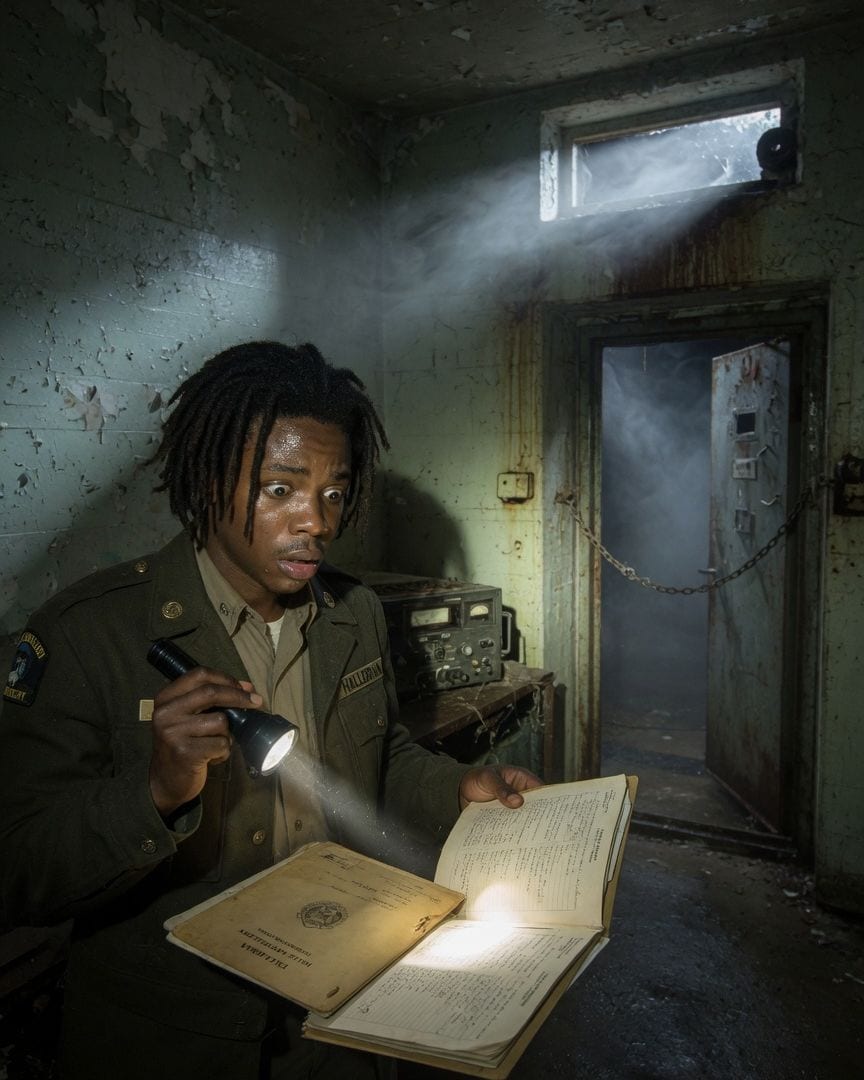 US Armed Forces
Private Roy Halloran counted the final hours of his last watch behind the searchlight of an old, rust-tinged artillery bunker on the northern California coast. His monotonous graveyard shift was nearly done, and his transfer close, but at 0100, the swirling coastal fog revealed a silent landing party of men on the beach, their gear anachronistic and alien. When dawn burned off the mist, the beach was empty, yet faint drag marks led directly to the bunker’s long-sealed rear hatch, now mysteriously ajar. Inside, amidst the cold, acrid air, he discovered a pristine 1943 army service record bearing his own name. A freshly signed entry dated exactly one year ago to the day left him wondering: had the past somehow reached out to claim him?
15 min read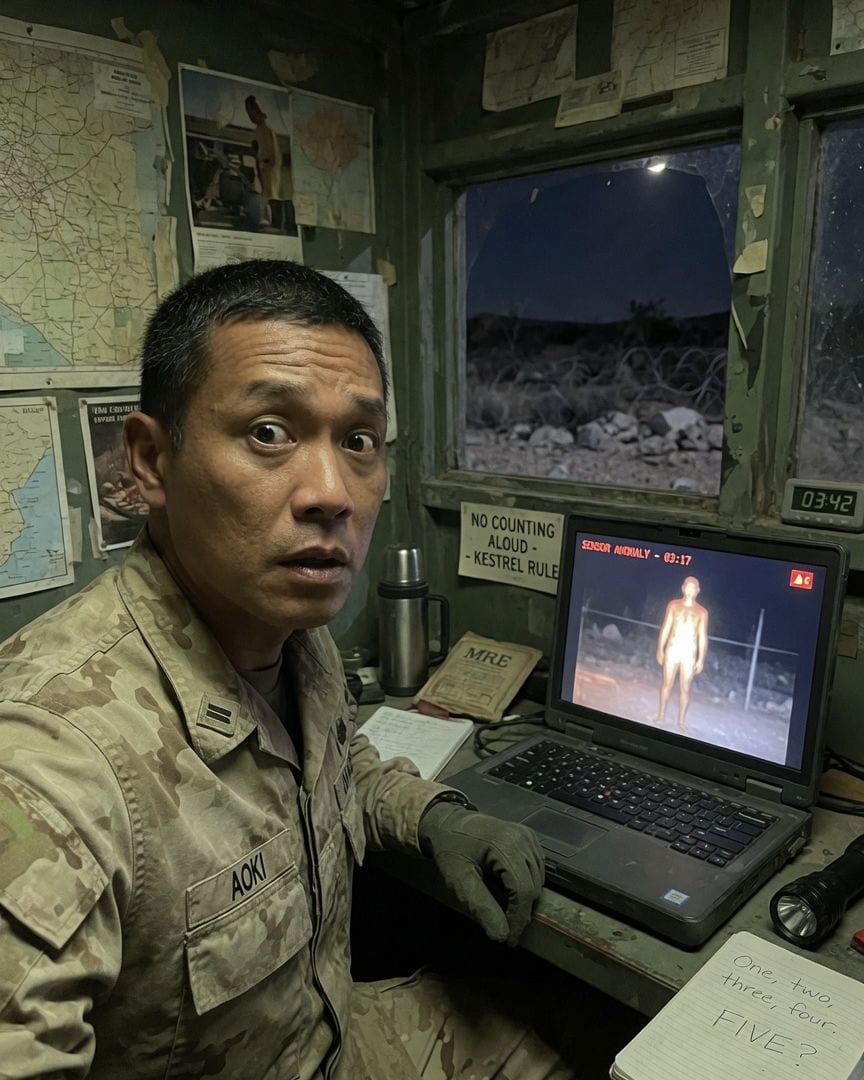 US Armed Forces
Sergeant Harold Aoki was just hours from relief, walking the perimeter of Firebase Kestrel under a sliver of moon. A man who valued accountability, he counted his four-man patrol at the halfway mark: 'One, two, three, four.' A beat of silence, then a faint, dry voice, not one of his men, rasped, 'Five.' Later, back in the watchtower, the thermal camera feed flickered with a distinct, too-tall heat signature outside the wire, then vanished. When Aoki went to check, he found impossible boot prints just beyond the perimeter, appearing from nowhere and leaving no trail.
9 min read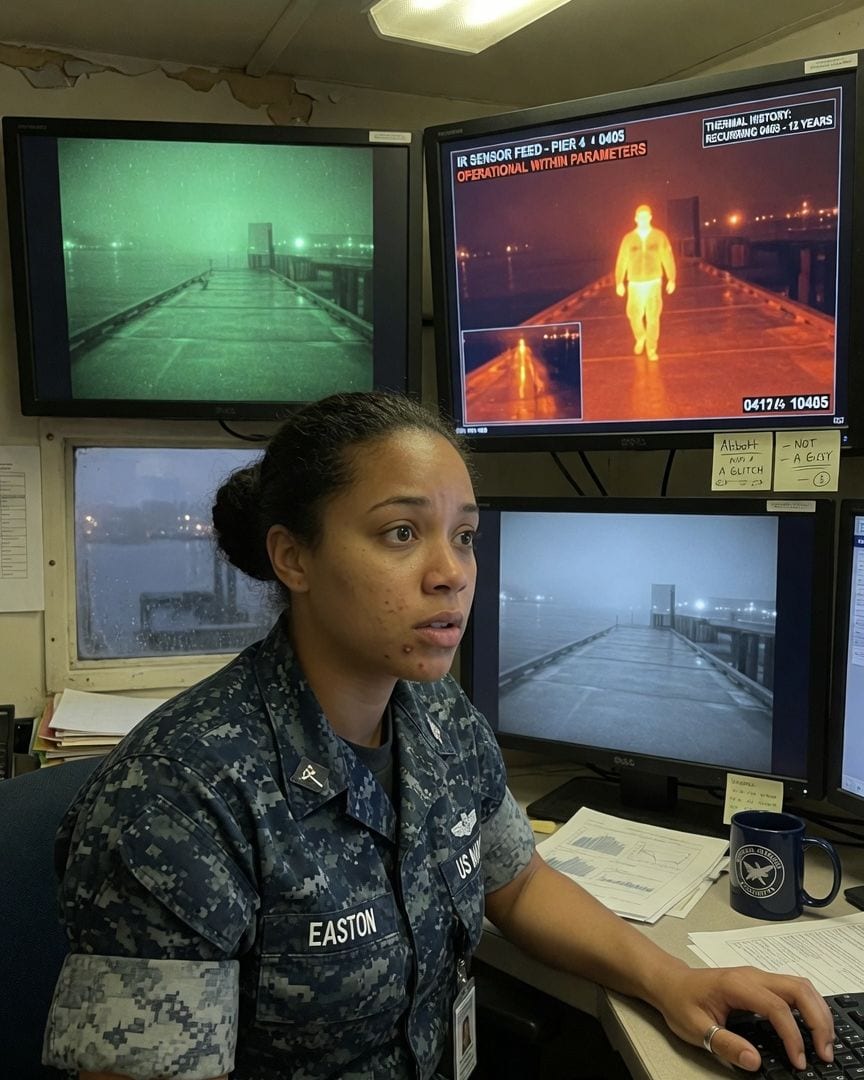 US Armed Forces
Petty Officer Judith Easton, 24, was counting down her last month at Naval Base Kitsap-Bangor’s Pier 4 before a coveted transfer to Pearl Harbor, the security station air thick with the hum of electronics and the briny scent of the Puget Sound. At 0405, her primary IR sensor feed registered a distinct, man-sized heat bloom moving along the pier's caisson, but her optical camera showed only empty, mist-shrouded concrete where the sensor insisted a body moved. What began as a baffling glitch soon turned chilling: the thermal history revealed this impossible heat signature had walked the identical path at 0405 every night for twelve years, dismissed by others but secretly documented by a former officer. His subsequent 'stress-related medical leave' and a sealed 'Project NIGHTWATCH' file now hinted at a hidden truth far beyond a simple sensor error. What exactly had Petty Officer Abbott known?
13 min read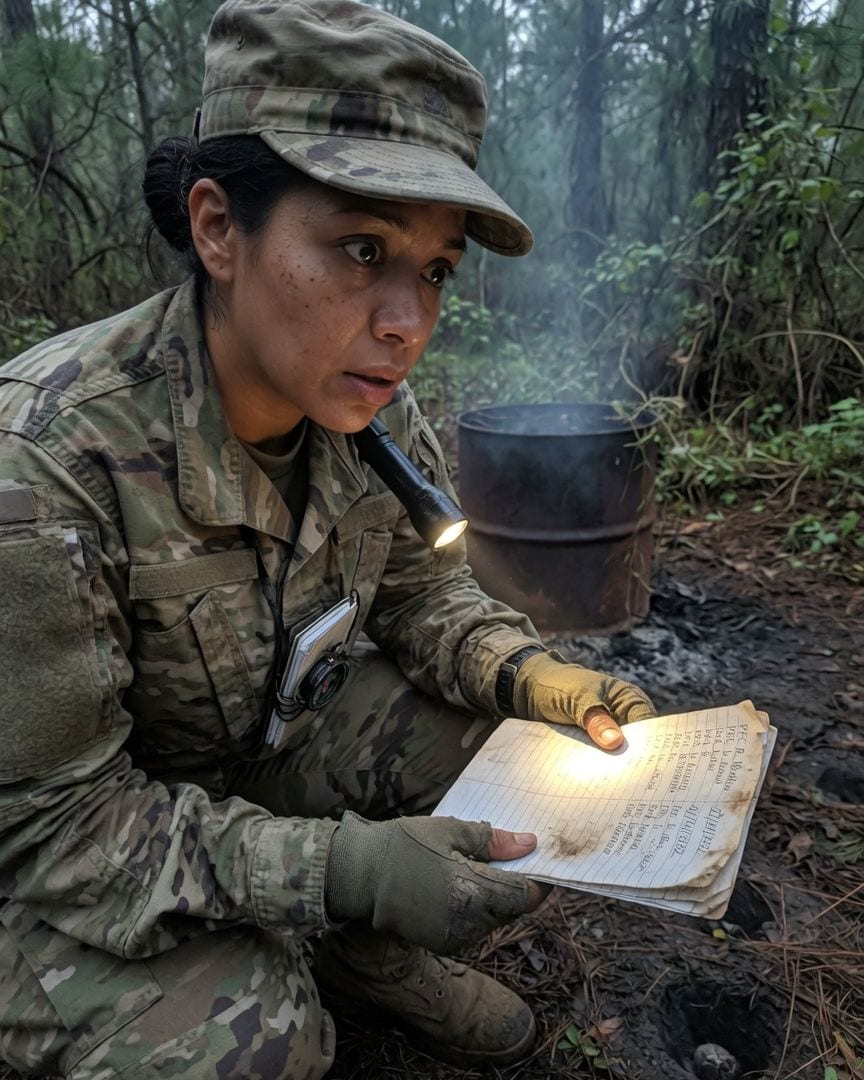 US Armed Forces
Second Lieutenant Nina Trejo's Ranger School qualification was in jeopardy. She'd reported an active tactical outpost deep in the Uwharrie backcountry, but her cadre insisted she'd invented it. Returning with a patrol partner, the site was gone, replaced by dense woods. Yet, Nina found a fire pit still faintly warm to the touch, and a rusted burn barrel. Then, half-buried in the leaves, a fragment of a duty log revealed names, including her partner's great-aunt, and a date: 07/14/2052.
16 min read