 Declassified
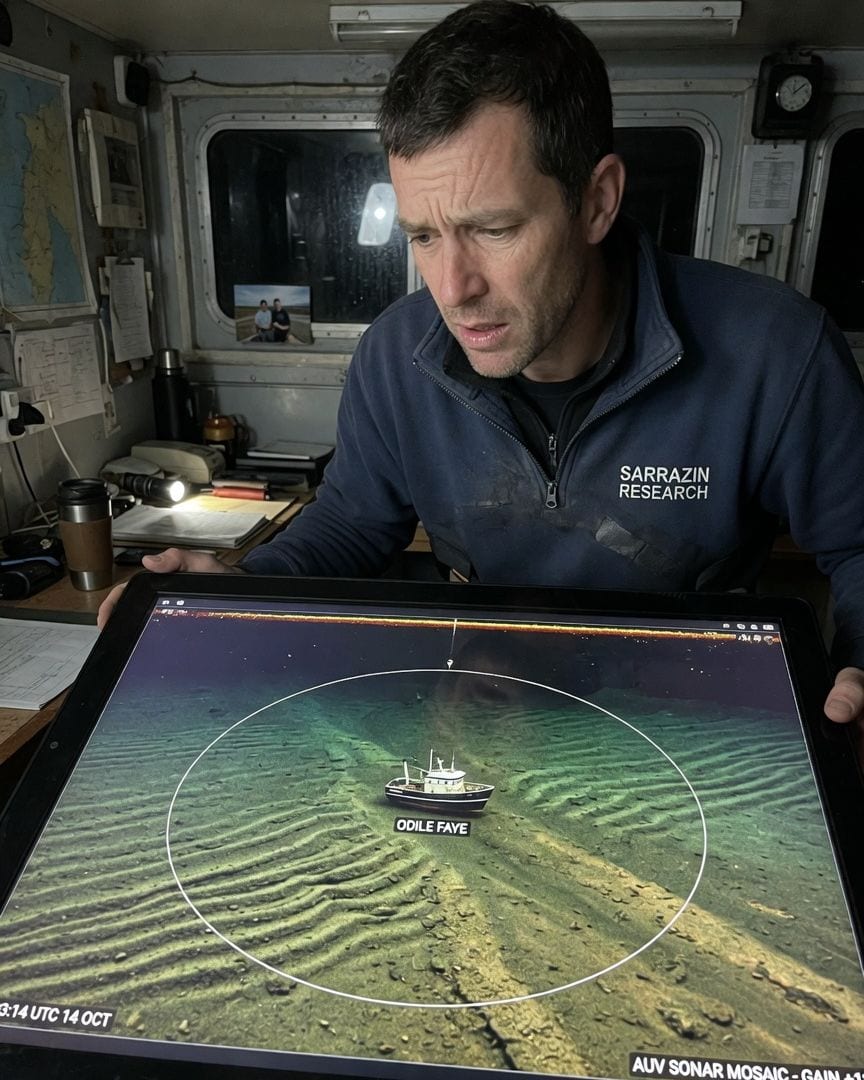
Driven by a deep need for answers, Kip Sarrazin spent his own money searching the cold Atlantic for the lost crabber Odile Faye, where his brother Wayne had gone missing. His sonar finally pinpointed the vessel on the barren seabed, resting in the center of a perfect, impossible circle of raked silt. Descending in his submersible, Kip found the Odile Faye intact and upright, with no sign of collision or damage, yet a chilling dread took hold as he saw every single access point – from main deck hatches to the emergency escape – dogged shut, firmly from the inside. On the deck itself, a single, recent boot print marred the undisturbed silt, clear as if made only yesterday. Who secured the ship from within, and who left a fresh mark on its deep-sea deck?
10 min read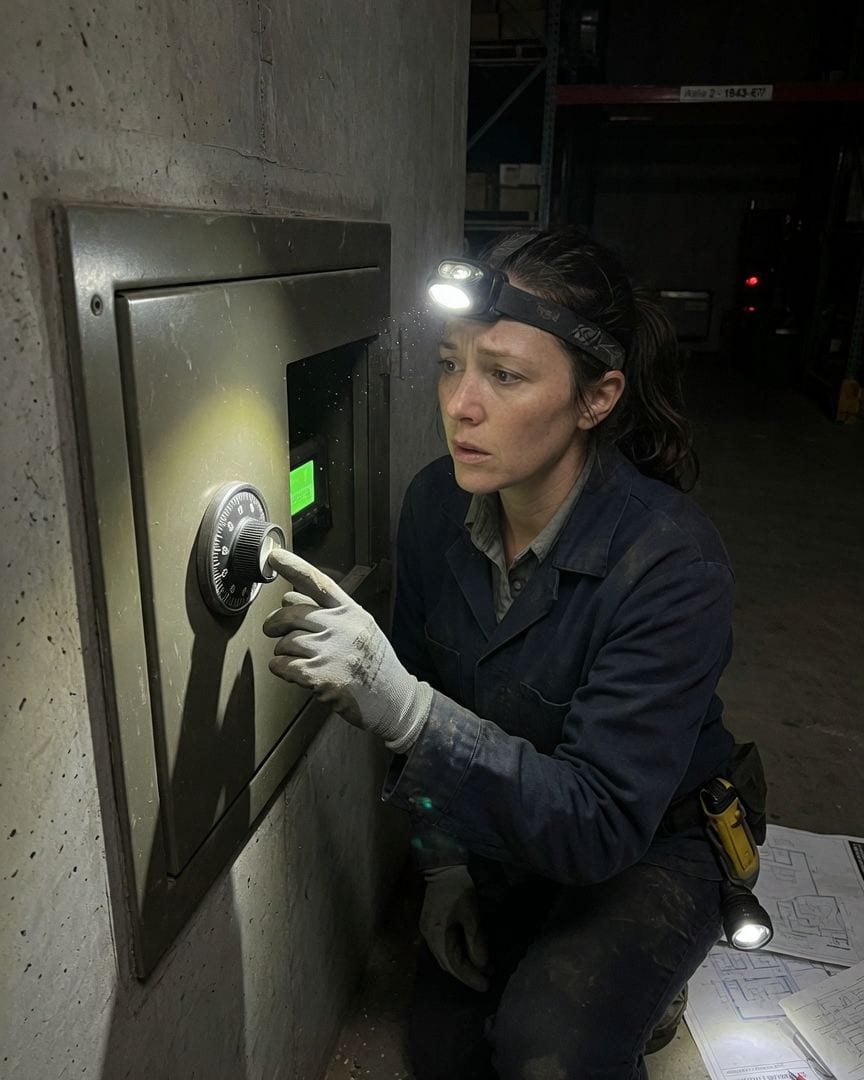 Declassified
Merit Lachance moved through the echoing darkness of Building 9, her headlamp cutting a lonely circle through dust motes. The depot’s oldest section was losing power, leaving her to finish her mandated shelf-read for the impending decommissioning. Every blueprint showed Building 9 as a single, vast room, so when her light fell on a waist-high, solid steel door set flush into the wall, her mind reeled. Its combination dial was worn smooth from decades of constant use, an impossible contradiction to the building’s known history. After meticulously working the dial, the heavy door shifted inward, revealing a dust-free, actively maintained office space with a terminal log updated just hours ago.
11 min read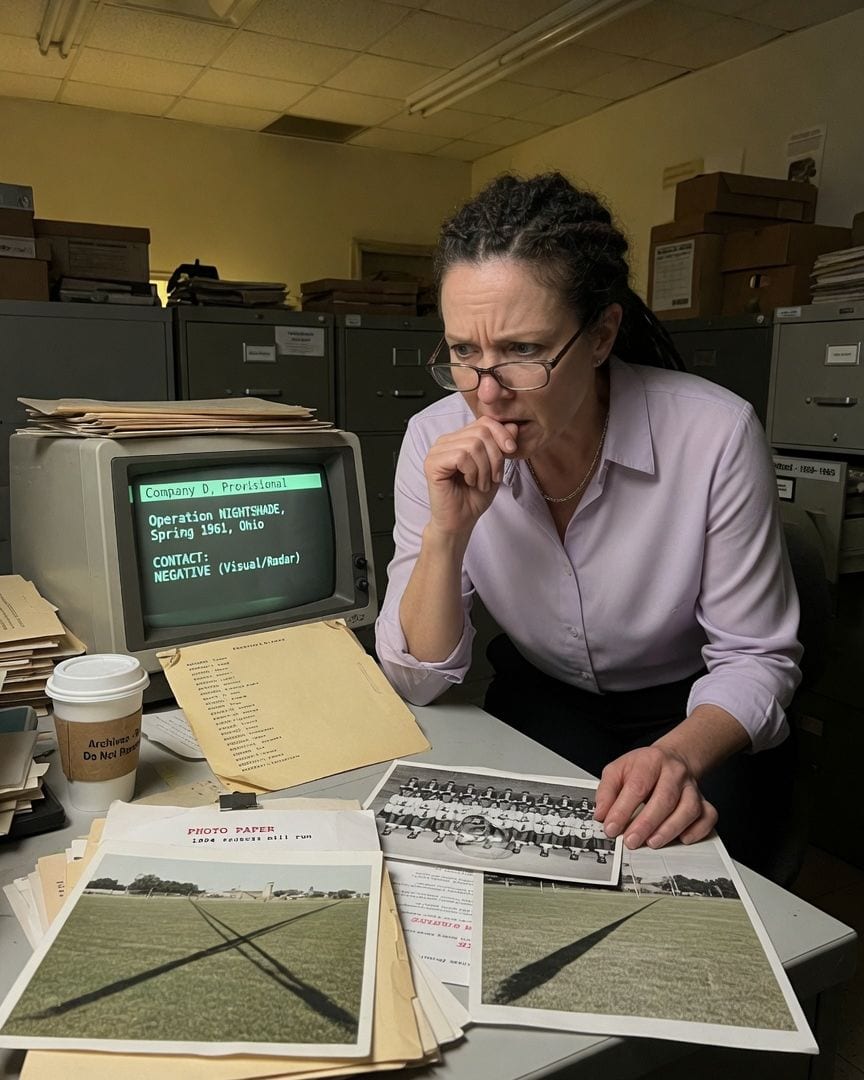 Declassified
Declassification reviewer Cynthia Walsh had until Friday to verify the existence of Company D, a military unit slated for official erasure. Her initial evidence, a 1961 photo of sixty-two uniformed men, quickly dissolved under scrutiny: lab reports dated the paper to 1994. Worse, an aerial survey from that same 1961 afternoon showed only empty Ohio grass – save for one impossibly long, slender shadow stretching across the field. Hours spent sifting microfiche then uncovered a roster for 'Company D, Provisional,' detailing their 'Operation NIGHTSHADE' and listing a man officially still alive.
11 min read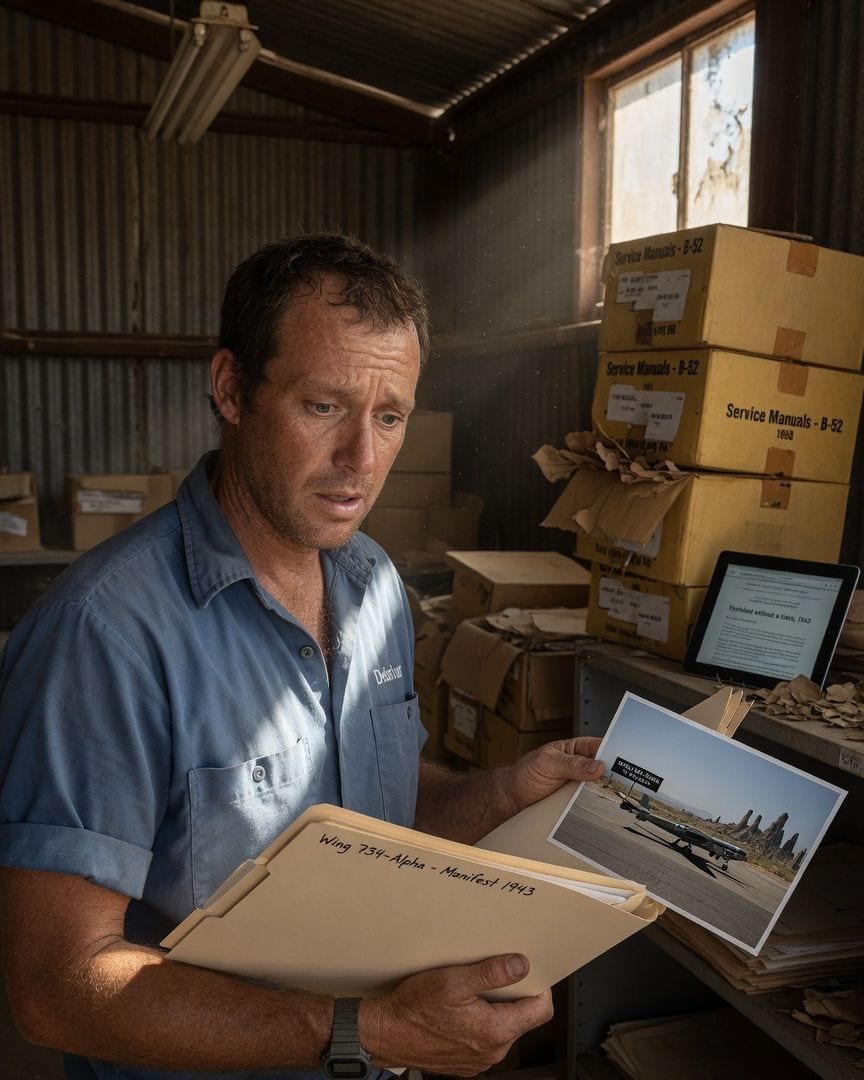 Declassified
Inventory clerk Rafe Delahunt worked through the Kingman boneyard, his month-long task almost done, the Arizona sun baking through the roof. Amidst crumbling, forgotten records, his hand brushed eleven folders for a 'Wing 734-Alpha'—a designation that never officially existed. Unlike the brittle paper surrounding them, these felt supple and cool, smelling faintly new despite their 1943 dates. Then he found a pristine, modern-resolution photograph of a prototype aircraft officially vanished in 1943, now bearing impossible modifications on an unmapped runway. It was like seeing a ghost in high definition, hinting that these 'recoveries' might be happening closer than he imagined.
11 min read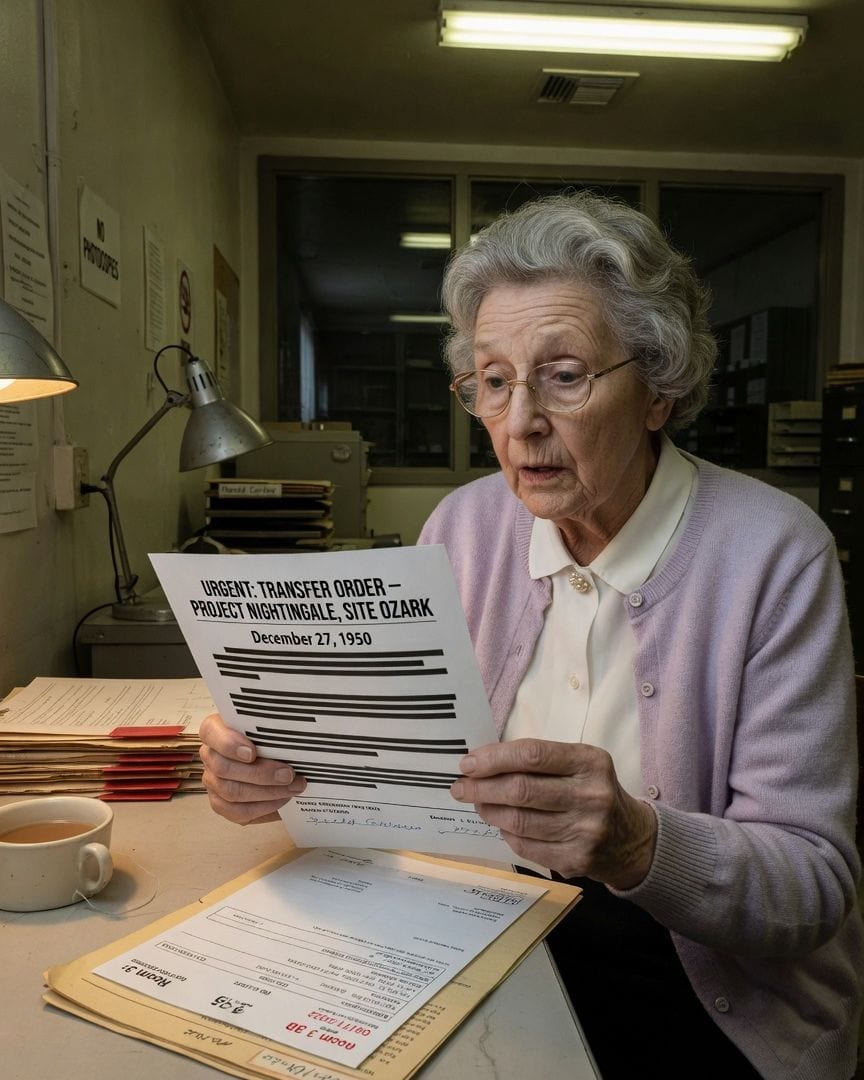 Declassified
Odette Cardew, a woman in her seventies, spent her days sifting through her father's old Army papers, a quiet ritual honoring a man she knew only as a ghost. Harold Cardew had been declared dead in the brutal Chosin cold of 1950, when she was just two years old. But among the yellowed documents, a crisp, modern medical bill for his current care arrived, detailing his room number and dietary needs at an Ozarks facility, dated her own birthday in 2022. When Army records confirmed his death decades ago, Odette then found an impossible transfer order, dated two weeks after he was officially gone, linking him to a mysterious 'Project Nightingale.' How could a man officially dead still be receiving care and be subject to a secret transfer?
12 min read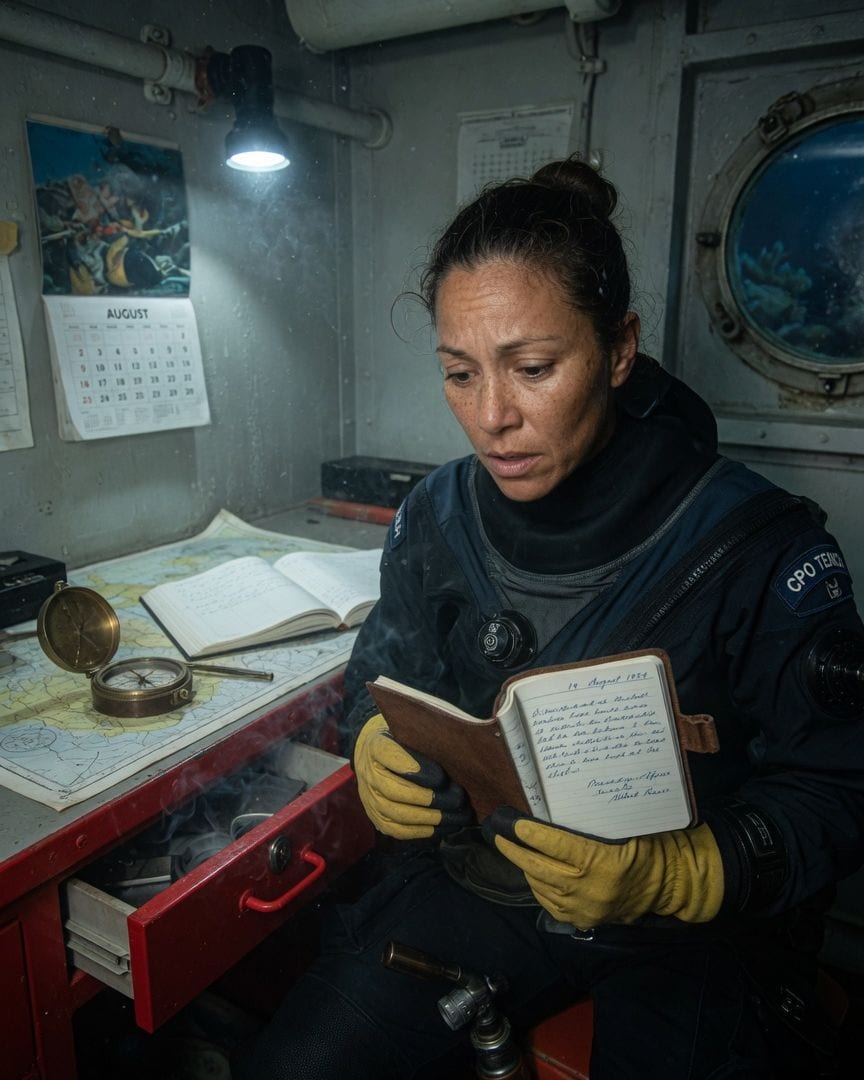 Declassified
Chief Petty Officer Marlo Tench, a methodical deep-sea diver, stared in disbelief at the ROV feed. Her team watched with her as the USS Triton, a target ship from the 1954 Castle Bravo nuclear test, appeared pristine and upright ninety feet below. It was supposed to have been vaporized, yet its hull number was unmistakable, its paint unburned, and its internal systems inexplicably active. Descending into the eerie silence, Marlo found a logbook dated five months after the ship’s destruction, and a journal entry naming a crewman officially listed as 'unmanned target.' What impossible force kept the Triton a living ghost decades after its fiery end?
15 min read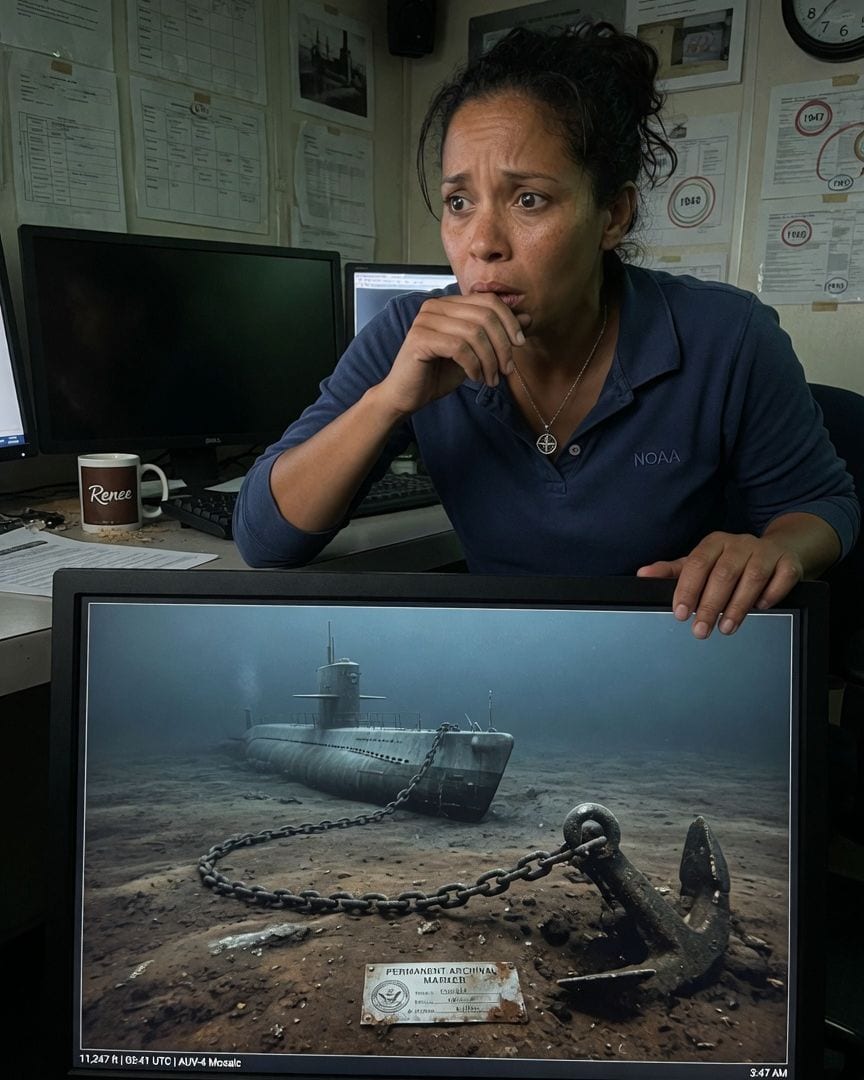 Declassified
Oceanographer Marisol Beckwith's career-defining discovery began with the ghostly outline of a 1943 submarine, the USS Kettle Iron, resolving from the abyssal murk at eleven thousand feet. Her initial elation curdled into dread when she realized the long-lost vessel was not a wreck, but sat upright, its massive anchor deliberately set. Even more unsettling, the sub's official service record, supposedly lost with its eighty-seven men in 1943, contained meticulous maintenance logs and commendations dated well into the Cold War era. Someone, or something, had been keeping watch over a ship filed as 'permanently retired,' long after its crew vanished.
8 min read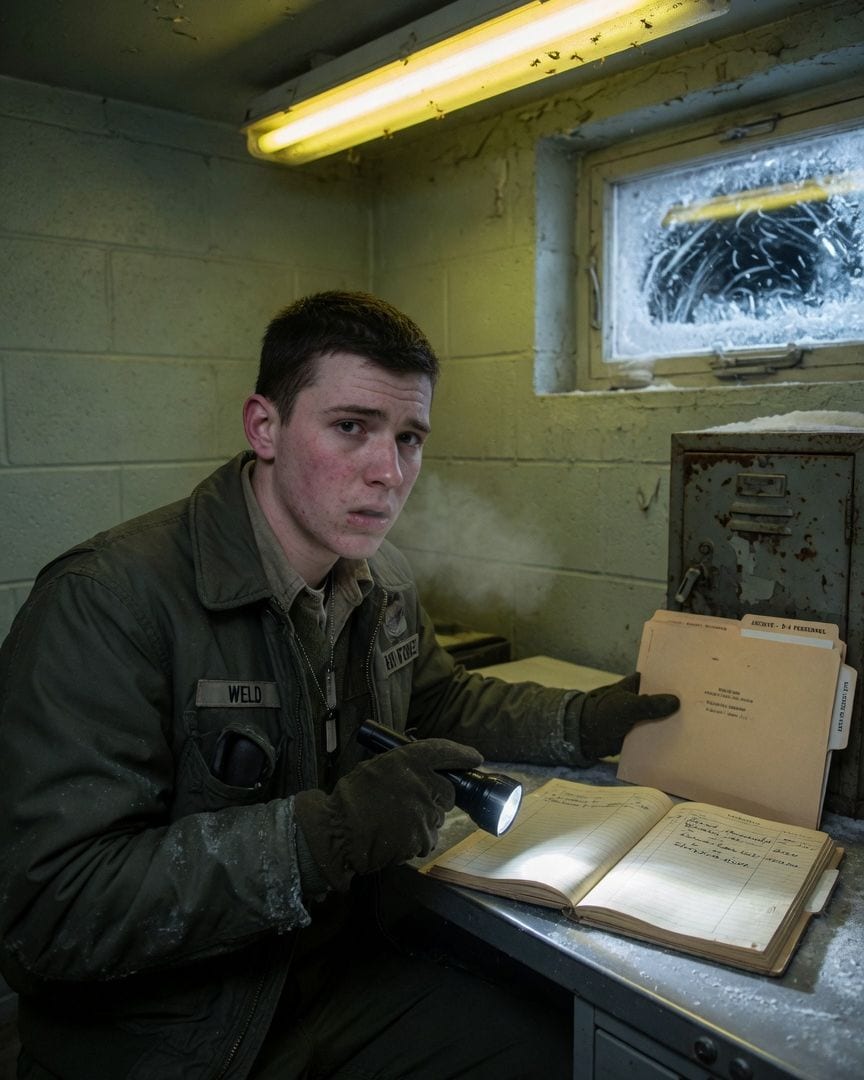 Declassified
Airman Tobias Weld, just twenty, braved a Dakota blizzard to descend into the frigid, supposedly empty Silo D-4. Forty feet down, his torch beam caught a rectangular section of steel wall glowing with unnatural warmth, completely bare of the thick frost coating everything else. The silo had been empty for six years, its power disconnected, yet the warmth was undeniable, slowly melting the surrounding ice. Inside a rusted locker, he found an unofficial logbook dated 1958, with an entry from Airman Caldwell, who official records showed was transferred a year before. How could an airman record an event in a silo he’d already left, in a place that should have been cold and dark?
8 min read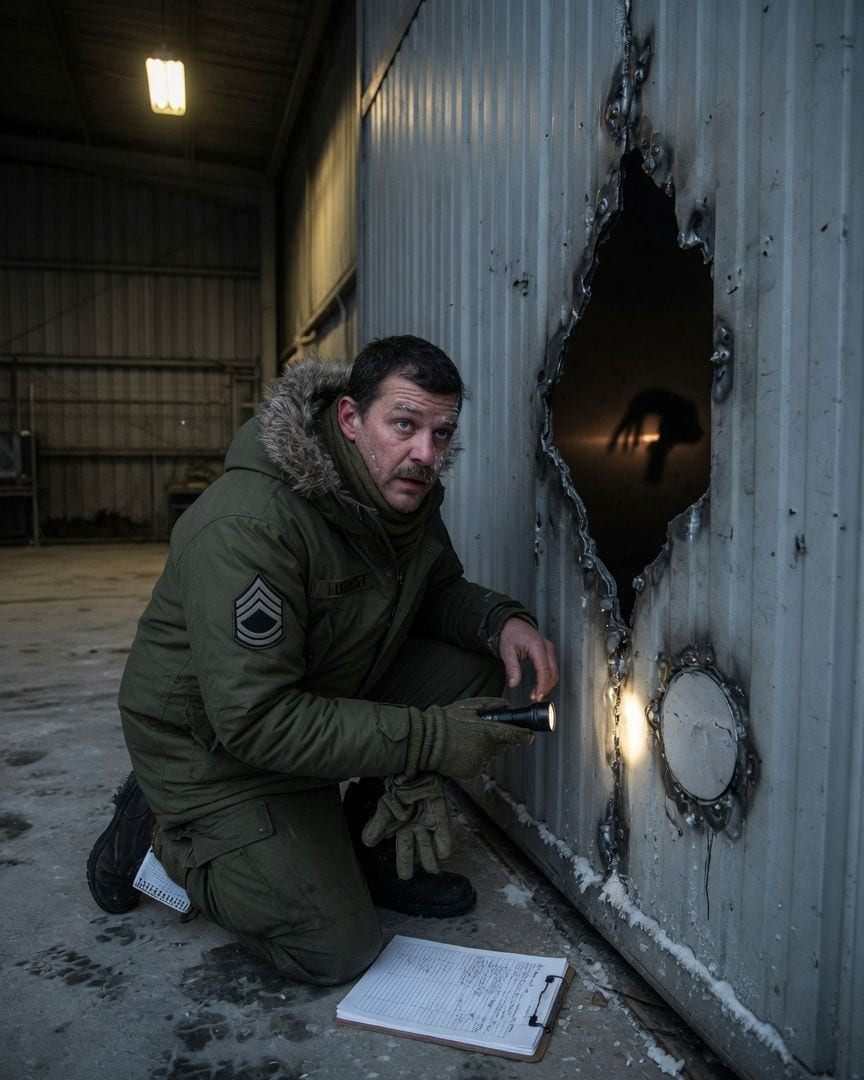 Declassified
In the Alaskan winter of 1978, Technical Sergeant Wes Lindquist's rigid routine involved hourly temperature checks for the officially empty Hangar Bay Two. Despite being welded shut for months, the bay consistently registered nine degrees warmer than ambient. As official dismissals failed to explain the anomaly and the internal temperature climbed, Lindquist kept a secret log. His curiosity led him to a hidden vent in the crude weld, where he felt a deep, resonant hum vibrating from within. Shining his flashlight into the void, a faint, rhythmic pulse of dull orange light bloomed and receded, casting a writhing shadow too large for anything known.
13 min read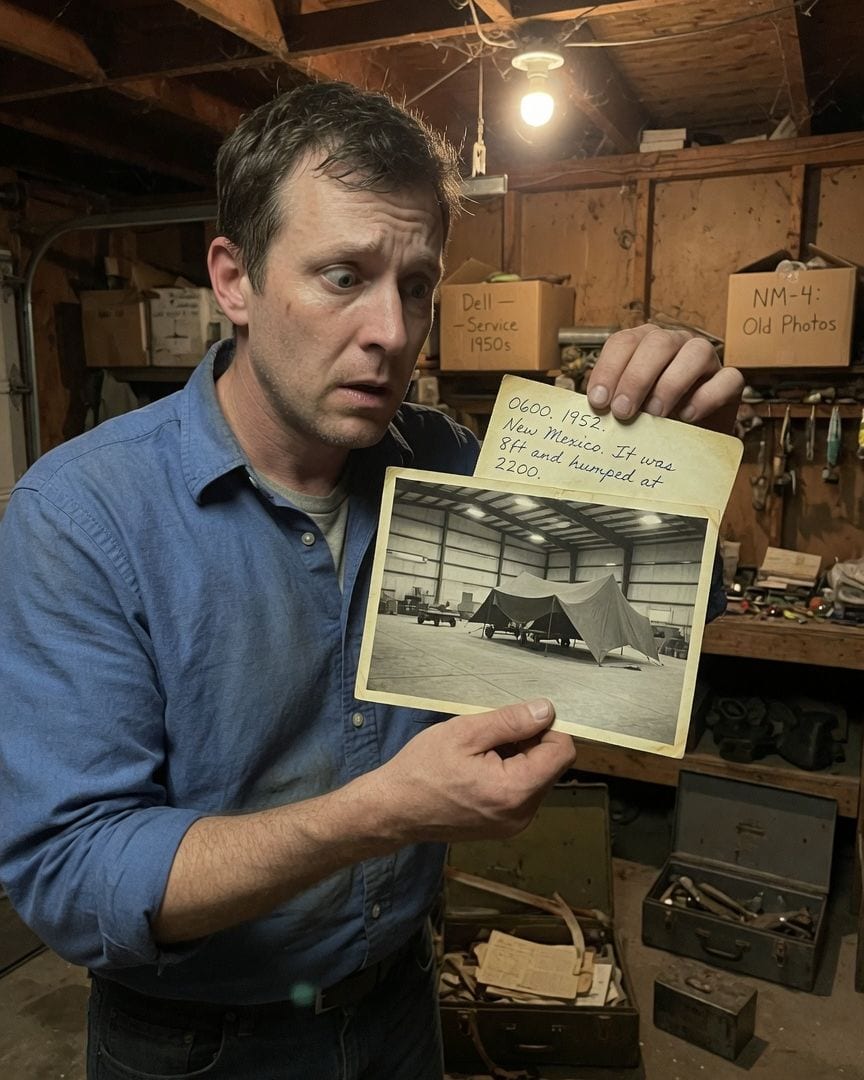 Declassified
Franklin Fontaine, an archivist, slowly tackled the mountain of his recently deceased father's life in the dusty garage. Among old photos, he found a grainy image from 1952: a military hangar, and an object under a tarp. The tarp was pulled taut, its lines defining stark, impossible corners that rose far too tall for the cart beneath. His father's own note on the back described the object as '8ft and humped,' a description that stubbornly defied the photograph's impossible height and angles. The image was a physical impossibility, frozen in time, leaving Franklin profoundly disturbed.
11 min read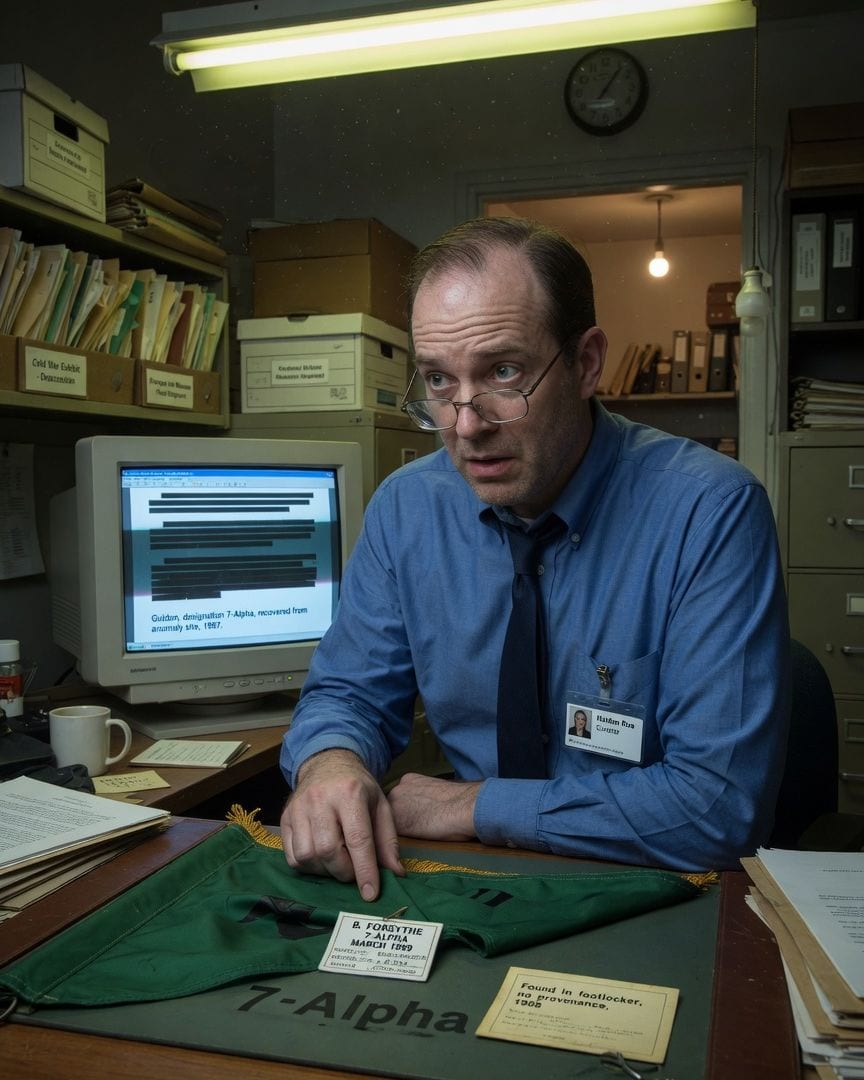 Declassified
Halden Roe, a meticulous curator, worked against a pressing deadline as the Presque Isle Museum's Cold War exhibit closed for good. In the dusty storage unit, under a single bare bulb, he discovered a small laundry tag sewn into an antique green silk guidon. Its crisp black stitching clearly read 'MARCH 1989' — a date a full year *after* the museum’s intake record for the artifact. As Halden's unease grew, he found the service number on the tag belonged to Benjamin Forsythe, an airman who vanished off Greenland in 1954. How could a museum piece found in 1988 bear a future date and belong to a ghost from decades past?
11 min read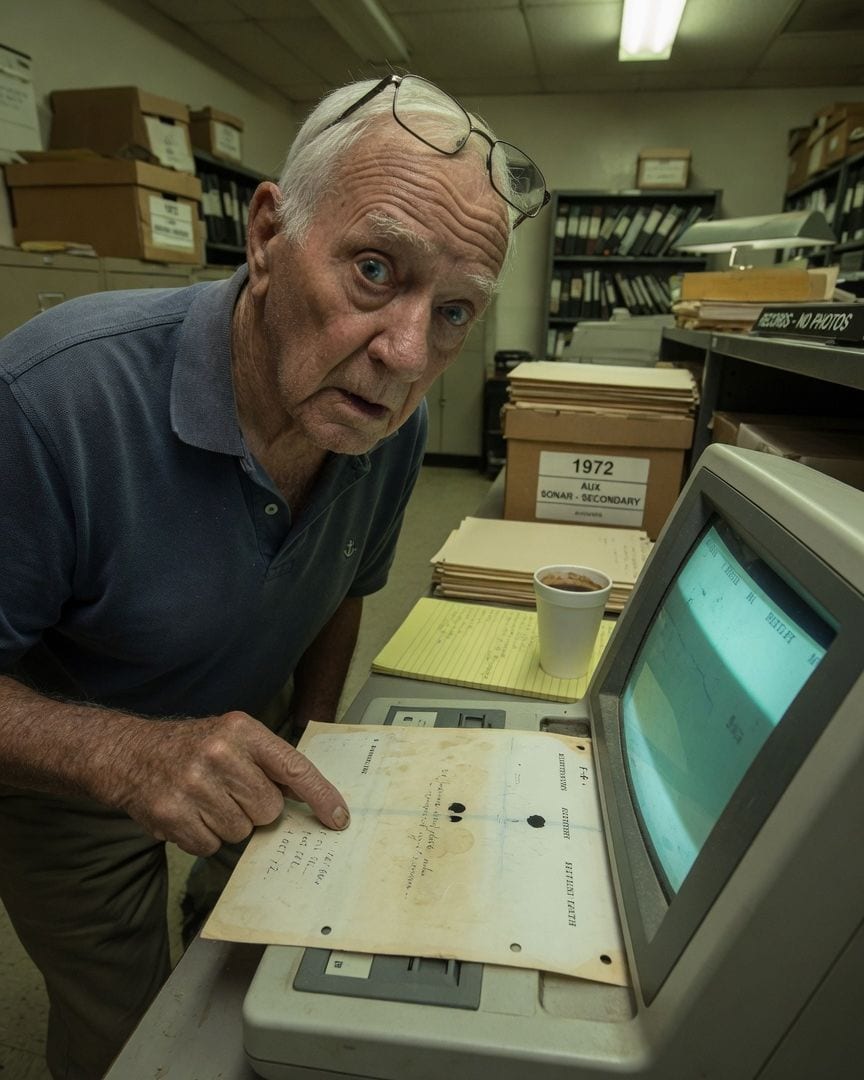 Declassified
Chief Petty Officer Walter Mabey, then 45, expected a routine salvage operation for a lost F-4 fighter jet off the Carolina coast in 1972. His long career was built on such lifts, but as the crane gauge climbed past twenty, then thirty, then an impossible sixty tons, a profound unease settled in. The object surfaced, not a mangled wreck, but a dark, seamless shape, perfectly intact. Mabey's salvage career abruptly ended soon after, replaced by a desk job, but the memory festered for forty years. Now 78, he dedicates his remaining time to finding the truth, uncovering a faint, rhythmic pulse on an old sonar log—a ghost beneath the official lie.
13 min read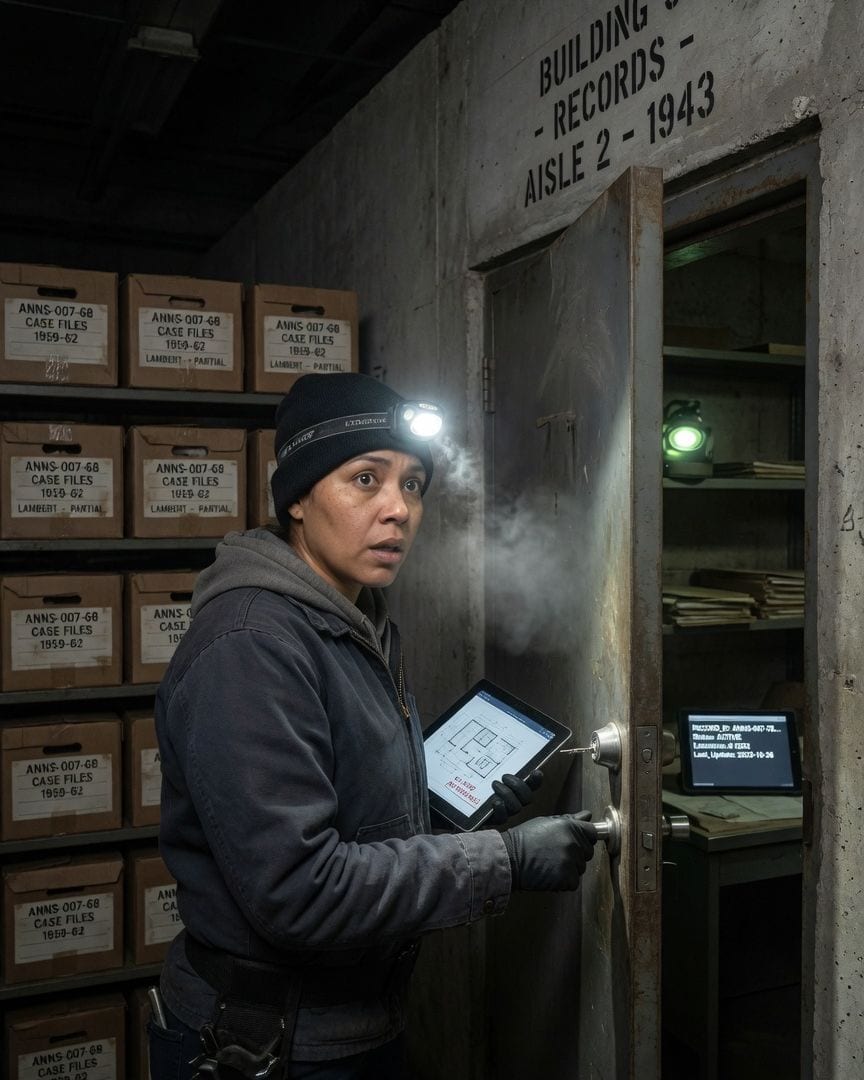 Declassified
Merit Lachance, a meticulous 34-year-old archivist, prided herself on the perfect order of the Anniston depot's Building 9. Working by headlamp in the cold, power-out gloom, she was determined to complete her shelf-read before the generator returned. But her beam found something impossible: a waist-high steel door set flush into a solid concrete wall that blueprints showed as unbroken. Its dial lock, worn smooth over fifty years, felt warm to her touch, defying logic. Inside, a low-power monitor displayed a recent log entry for Lily Lambert, officially missing from the depot since 1975.
12 min read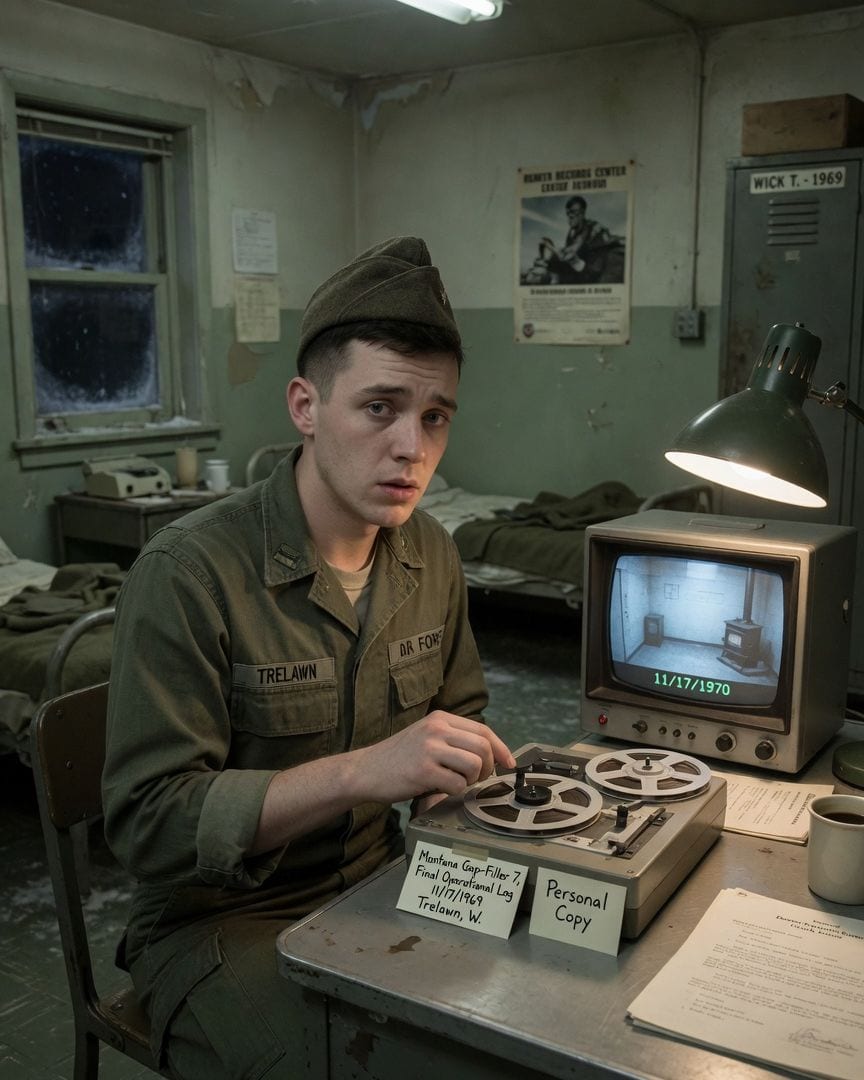 Declassified
Airman Wick Trelawn shivered through his final hour at the remote Montana Gap-Filler 7, a Cold War radar station set to go cold forever. He meticulously logged its last operational moments, pulling the master tape as a final record. Later, reviewing a personal copy, Trelawn watched his empty control room play out as expected, but the tape kept running into a second hour. An indistinct man then appeared, methodically powering up equipment in the supposedly dead station. The site had been locked cold for a year by then, yet his official request for the original tape revealed a blinking timestamp of November 17, 1970. What impossible operations did the final log truly capture?
14 min read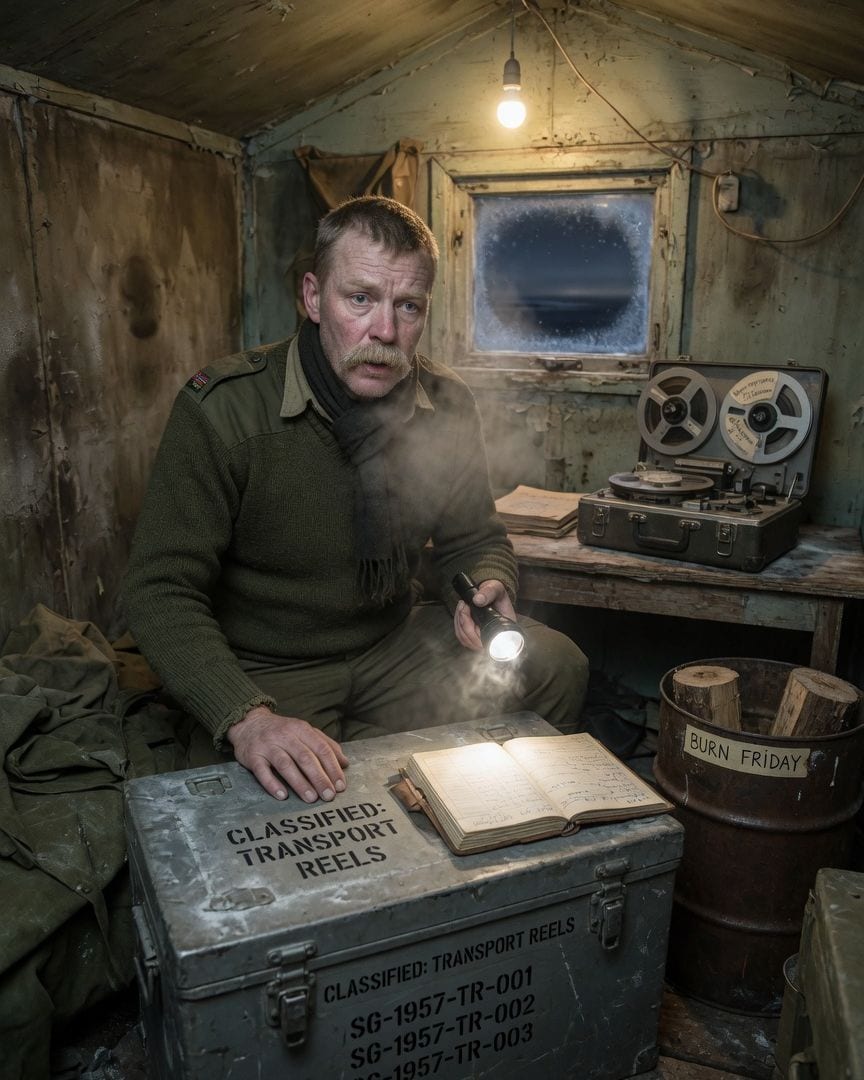 Declassified
Sergeant Pell Ostrander shivered alone in a remote Norwegian fell hut in 1986, the Barents Sea his only company. With a stack of old reels to burn by Friday, he threaded one labeled "Barents ionospherics from 1957." A dry baritone voice crackled through the speaker, reading mundane log entries from decades past, until it detailed "three sealed transport reels" for disposal on Friday at 1600. Ostrander, a man of routine, checked his watch: it was only Wednesday, and no such reels existed in his hut. Then, in a dusty closet, he found a heavy metal box, sealed and marked 'CLASSIFIED', with the exact serial numbers of the reels the voice had described, waiting for its appointed burn.
11 min read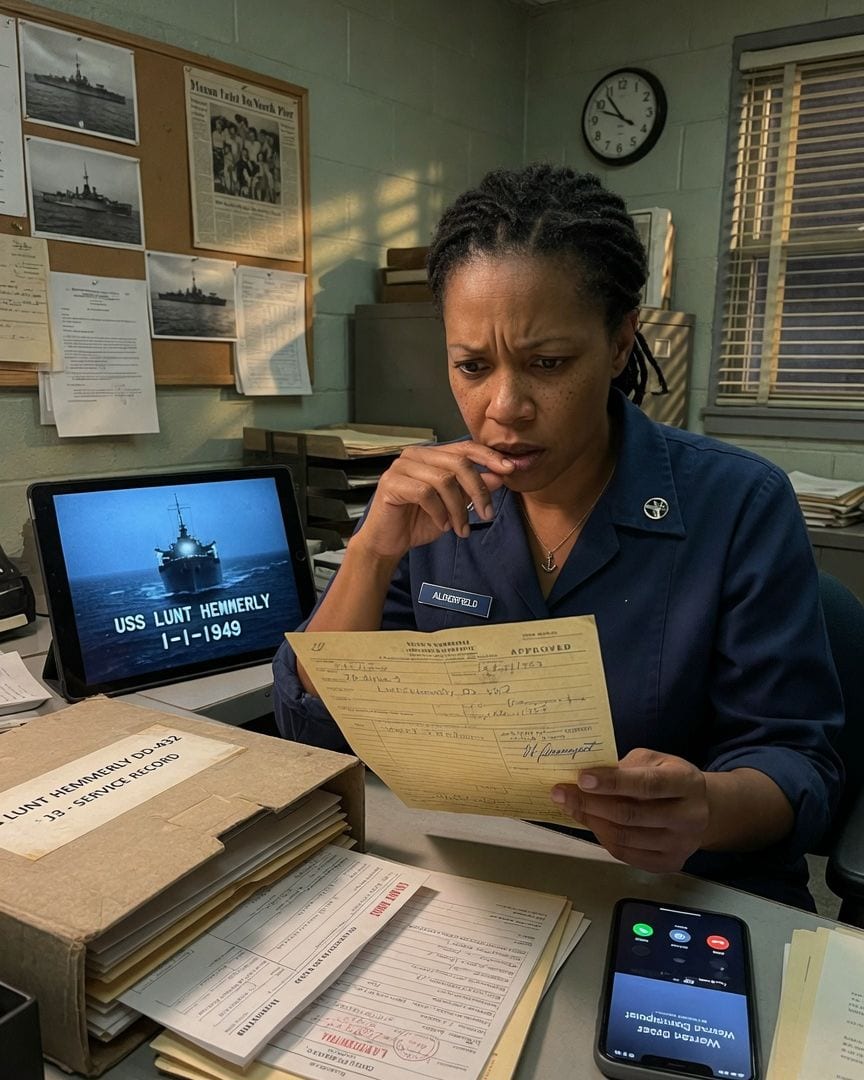 Declassified
Public Affairs Officer Reece Alderfield was professionally satisfied, watching a livestream of the USS Lunt Hemmerly wreck. The destroyer escort, officially lost in 1949, had its name legible on the stern plate. But then the camera dipped, revealing the ship's loss date, '1-1-1949', welded starkly beneath its name. Back at Naval Station Norfolk, Reece's cold dread deepened when she found a requisition form for the same ship, ordering a specific part, dated April 14, 1953 — four years after its official loss. Could a lost ship still be ordering parts?
11 min read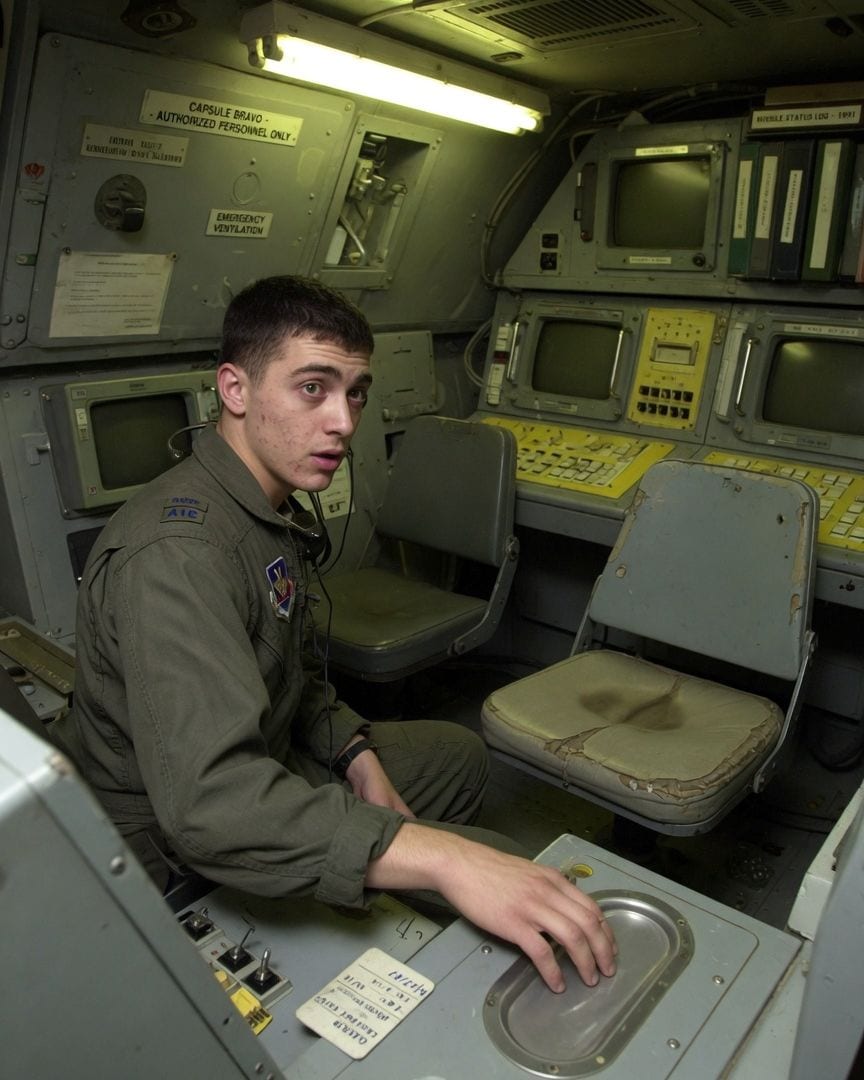 Declassified
Airman First Class Dov Kestrel was on the last watch of the last alert at Halloway Site Bravo, just seventy-two hours before the entire missile wing stood down for good in late 1991. Isolated in the underground capsule, built for two operators, he found a third, worn chair bolted to the deck. At 0300, a soft sigh echoed in the silence, the distinct sound of a man settling into that empty cushion. Moments later, the auxiliary system logged a chilling entry for 'Operator 3: Status Green, Ready for Transfer,' timestamped just one minute after the sound. With no authorized personnel logged in, a cold dread began to coil in the young Airman's gut, leaving him to wonder who or what was truly ready for transfer.
11 min read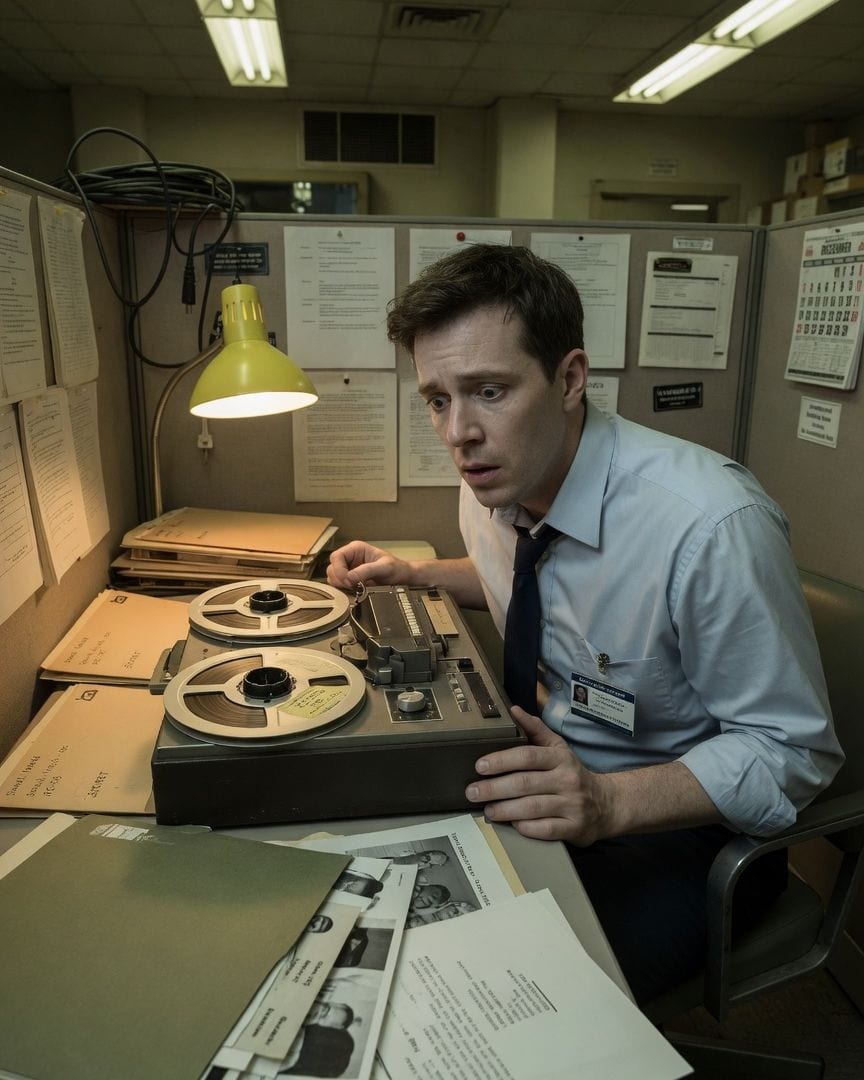 Declassified
A declassification reviewer, Elliot Rutherford, spent his days sifting through Cold War-era files, preparing forgotten secrets for public release. One file, detailing the 1962 loss of the KC-135 'Viper 7' in the Labrador Sea, held a transcript of Captain Harold Sowell's final transmission. Nine minutes past the estimated impact time, Captain Sowell's voice calmly read a landing checklist. But a second, perfectly modulated voice answered each challenge with a resonant 'Check,' its subtle hum vibrating through the playback unit, hinting at an impossible presence right beside the doomed pilot. What impossible entity guided a lost Cold War pilot into the crushing deep?
13 min read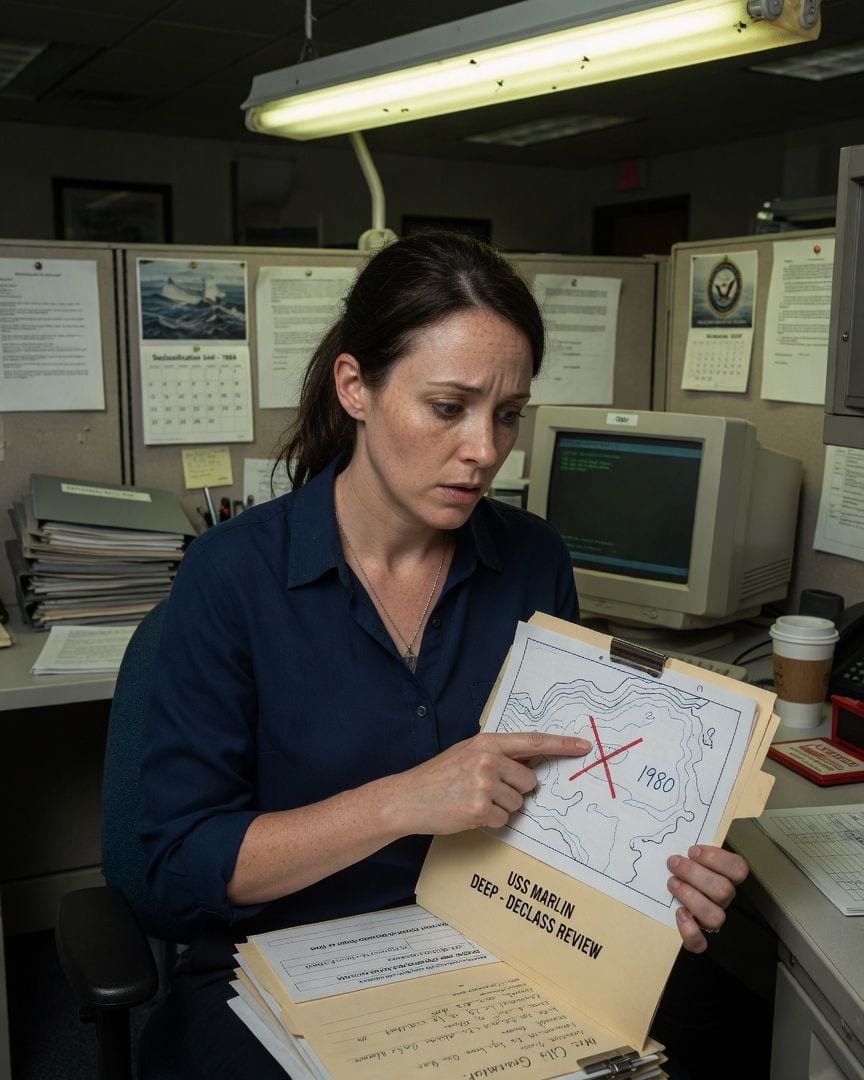 Declassified
Declassification reviewer Cass Berrigan understood the quiet anguish of widows, sifting through files like the USS Marlin Deep's. The submarine was lost in 1978, leaving behind Lily Granger's desperate letters, asking where her husband Arthur Thatcher's body was. But deep within the file, Cass found a chart of the wreck site, dated 1980—two years after the loss—in Thatcher's unmistakable hand. The dread solidified when she later uncovered an official report, also in his hand, dated 1981, stating 'Station Maintained. Status: Green.' How could a man officially dead for three years still be filing reports?
10 min read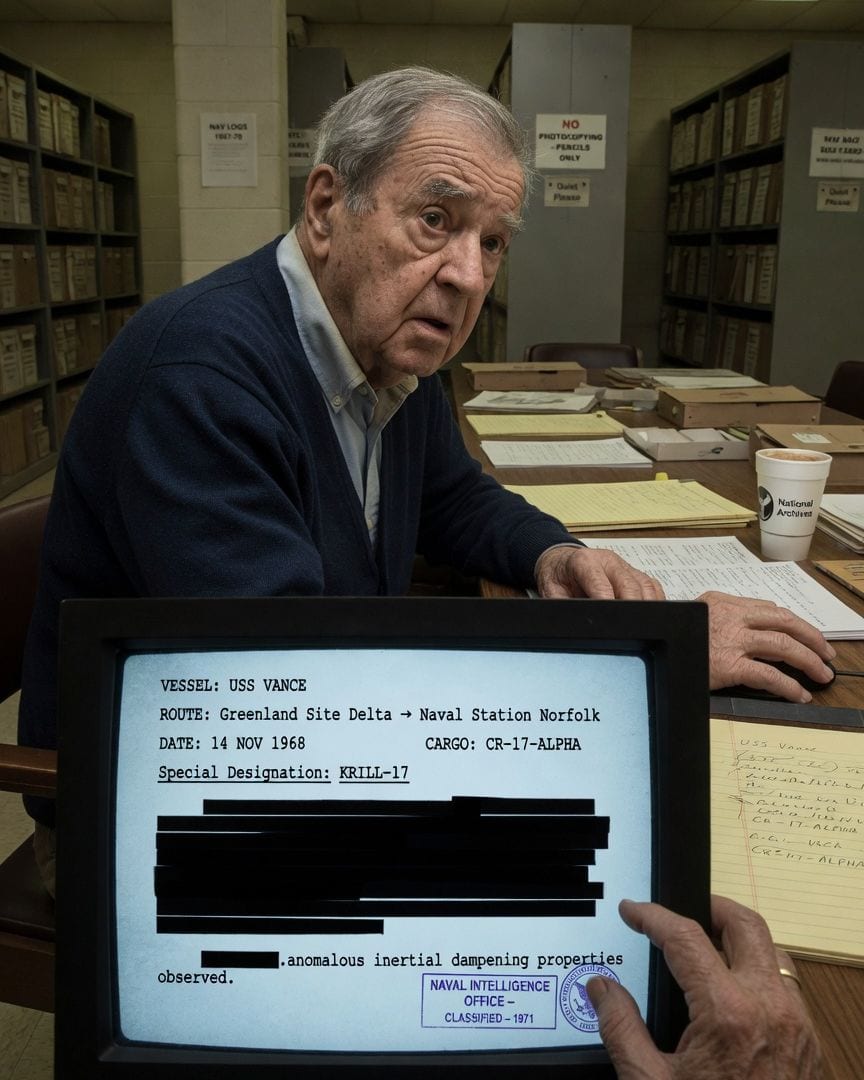 Declassified
Staff Sergeant Ivo Krall, 22, gripped the rail of the USS Vance, facing his last assignment before separation. The North Atlantic raged in 1968, tossing their 10,000-ton Cold War transport vessel like a toy. His mission was simple: watch a dark, unlabeled container that must not be turned. As the storm bucked the ship violently, Krall watched, soaked to the bone, as the massive crate remained perfectly level, defying the ship's every lurch. Fifty-six years later, still haunted by the impossible sight, Krall, now 78, found a declassified log confirming the container's "anomalous inertial dampening properties." What impossible truth had Naval Intelligence hidden for decades?
15 min read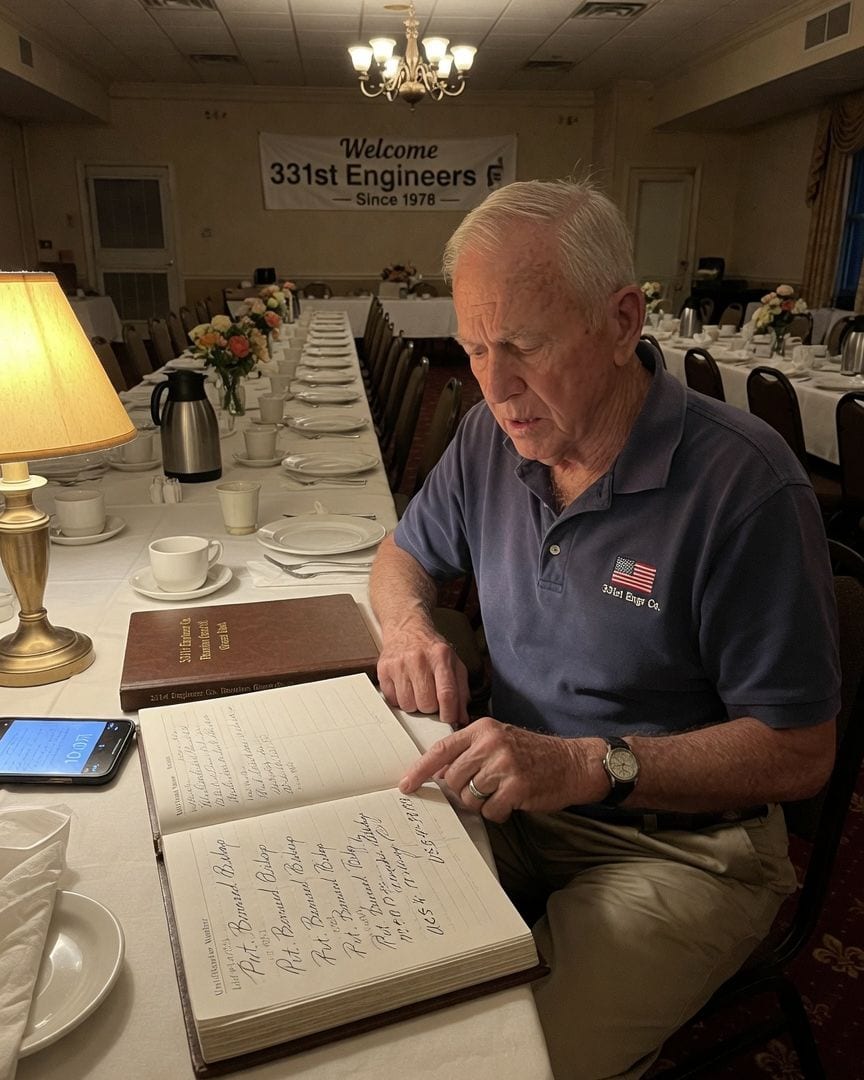 Declassified
Retired Sergeant Odis Trumbull arrived at his annual company reunion, a tradition held in a Biloxi hotel ballroom since 1978. He sat alone for three hours, watching thirty empty chairs, each a ghost of a comrade he had personally buried over four decades. When the guest book arrived, Odis found thirty-one signatures, one for every man on the rolls. The ink on the last entry, for Private Bernard Bishop, was still wet. Yet, Odis had carried Bishop's coffin in 1976, two years before the reunion even began, and his service number matched a classified Cold War command. As Odis ran his thumb over the impossibly fresh ink, a cold dread began to settle.
10 min read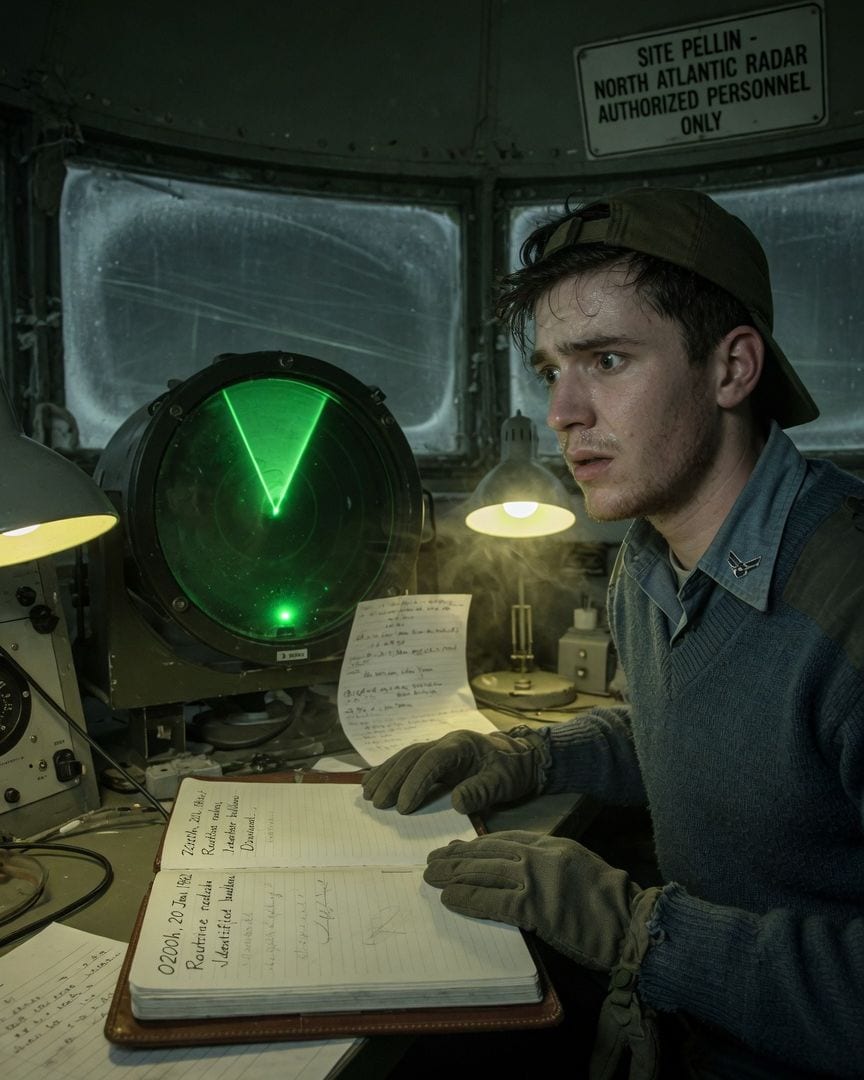 Declassified
In the dimly lit dome of Site Pellin, Airman Ordway Vance, just days from discharge, ran his final radar sweeps before the base closed for good. Outside, the North Atlantic wind howled, but inside, only the hum of his console broke the silence. His last calibration had been clean, yet a single, unwavering green blip appeared on the scope, forty miles out, in open water where no vessel should be. The impossible return moved closer with each sweep, defying all logic and other sensors, until it sat static just beyond the coast fence line. What unseen presence did the radar truly hold in its unwavering green grip, contradicting the official record?
15 min read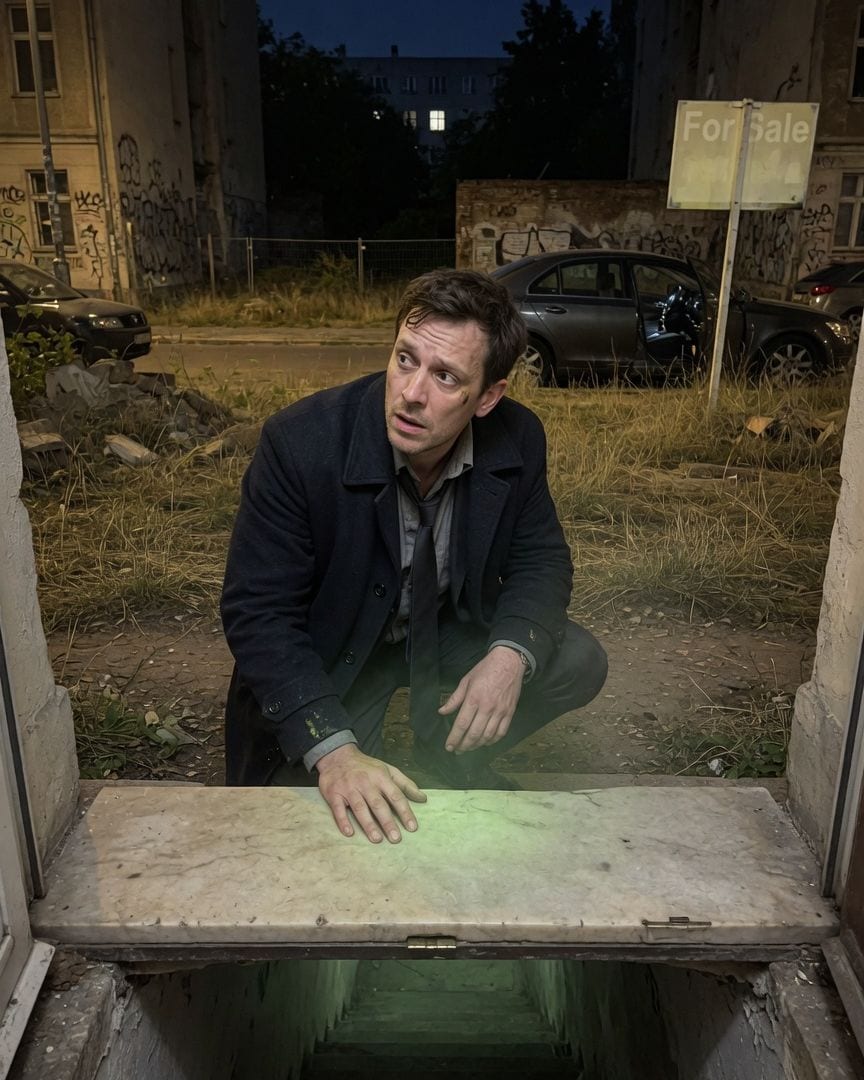 Declassified
Ansel Vidmar, a methodical researcher, worked late in a Berlin archive, driven by academic curiosity before its municipal transfer. He discovered a steel cabinet containing meticulous administrative records for a 1980s garrison company, listed at an address that had been a vacant lot for decades. The discrepancy gnawed at Ansel, pushing him to visit the site, where he found a single, immaculately swept doorstep. To his astonishment, it silently sank inward, revealing a dark, concrete stairwell. From its depths, an anachronistic hum and faint green light pulsed, hinting at an impossible secret beneath Berlin.
11 min read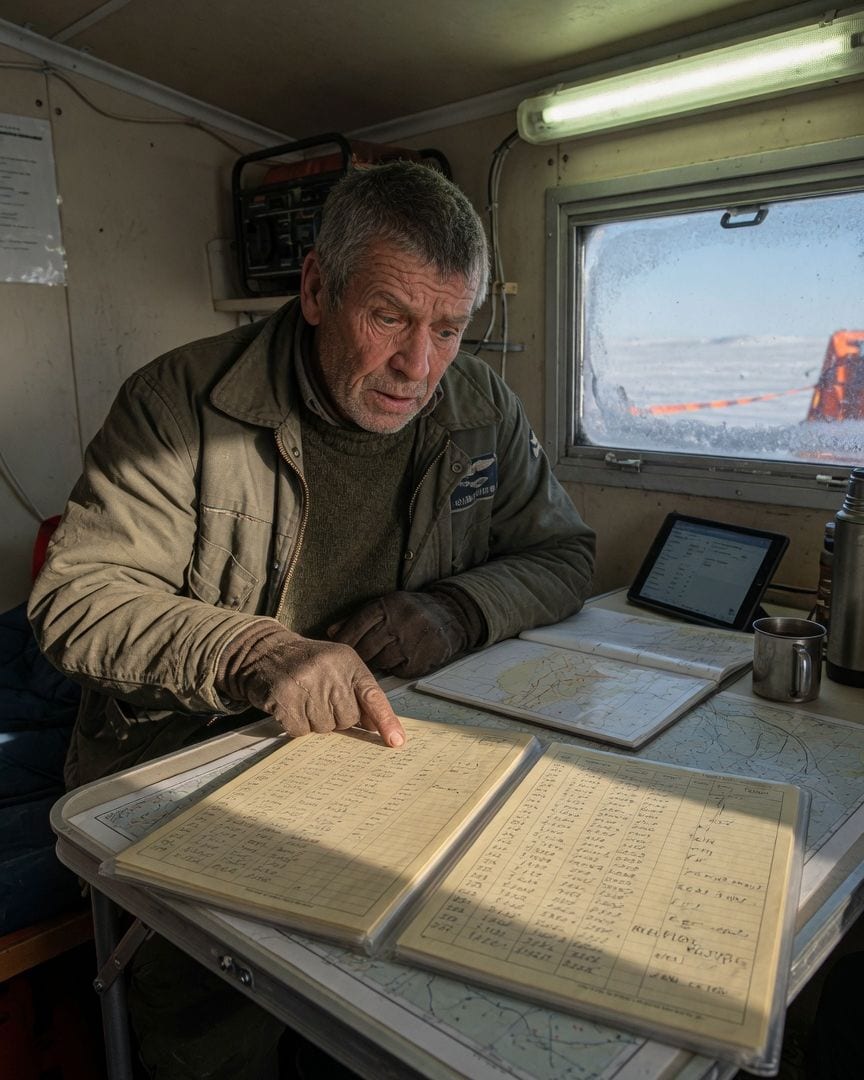 Declassified
Retired Air Force crew chief Ivo Barlas, 62, faced a deep arctic cold in Greenland, but nothing matched the chill radiating from the Osprey Nine. He had personally loaded the transport plane with classified equipment 32 years prior, never expecting to see it again after its disappearance. Now, the plane sat unbroken on a frozen lake, a ghost of his past, its cargo bay eerily empty despite the eleven pallets he'd secured. The retrieved cockpit log only deepened the mystery, detailing impossible hours of fuel consumption and routes veering into the stratosphere. Yet, the most unsettling entry was dated *today*, with impossible coordinates and ink still faintly gleaming, leaving Ivo to wonder: what truly happened to the Osprey Nine?
10 min read