 Declassified
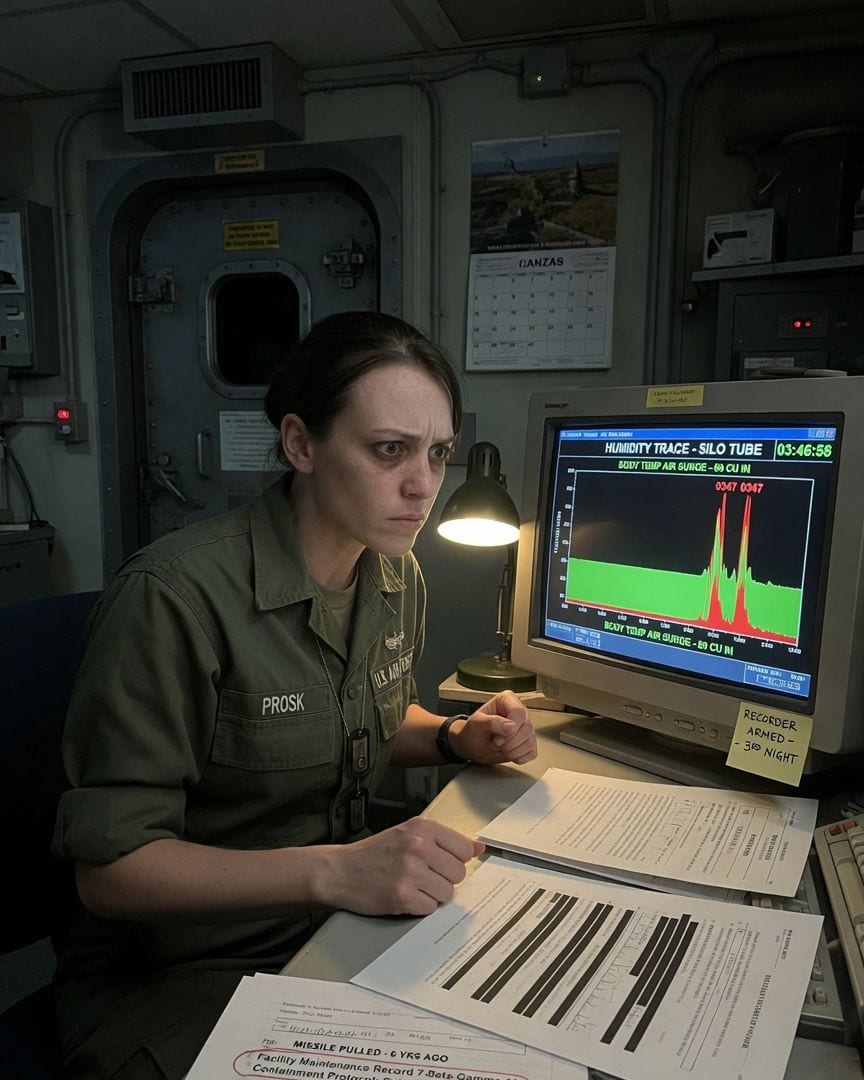
Airman Gale Prosk was counting down her final weeks at the silo, eager for her transfer from the isolated Kansas prairie. In the dim control room, the low hum of the ventilation was a constant companion. For years, the environmental monitor for the empty missile tube below had shown a flatline, until three nights ago. A sudden, jagged spike appeared, a surge of air registering at body temperature. She dismissed it as a glitch, but then it happened again. She descended into the vast, echoing chamber where the missile had once stood, finding only cold, polished steel. Back in the control room, redacted declassification files spoke of "biological integrity checks" for the empty space, and Project THRESHOLD documents were missing eight crucial pages. The silence of the silo now hummed with an unseen weight.
11 min read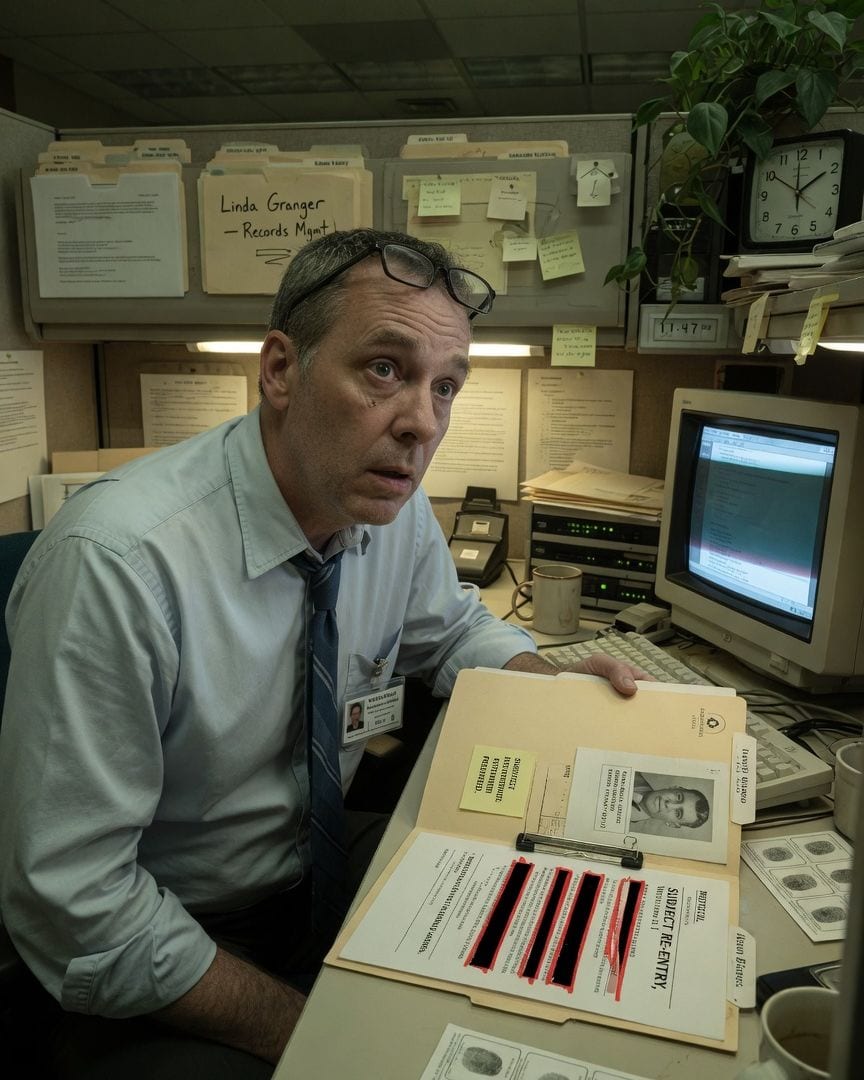 Declassified
Anton Skeel, a declassification agent nearing two decades of service, meticulously processed the endless backlog of Cold War secrets. His cubicle hummed with the ghosts of forgotten files, but one 'Hollow Bell' folder held a particularly glaring anomaly. It contained a 1958 fingerprint card for Henry Bishop, a man officially reported dead in 1951. When Anton fed the print into the active database, it matched Carl Romano, an employee badged into the building that very morning. A cold certainty settled over him: this wasn't an error, but a system designed for such impossible discrepancies.
12 min read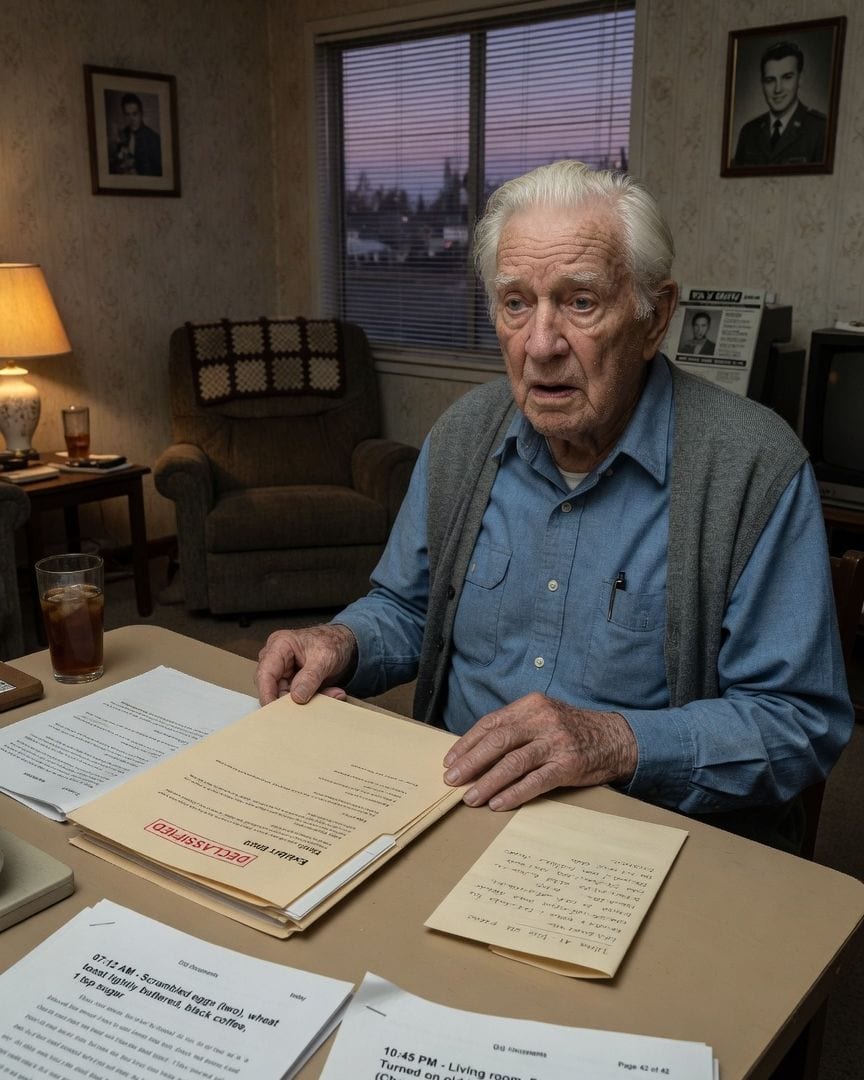 Declassified
Wallace Ferrier, 88, sat in a hushed government hearing room, his gnarled hands trembling as he reached for declassified reports he’d been forbidden to speak of for decades. He recognized his own meticulous handwriting and signature, but the dates spanned far beyond his discharge, detailing mundane moments of his civilian life. A cold knot tightened in his stomach when the declassification official confirmed the authenticity and suggested a long-term observation program. Then, Ferrier discovered a 43rd, unlisted document, tucked into the binding – a report in his own hand, describing his actions hours into that very night.
12 min read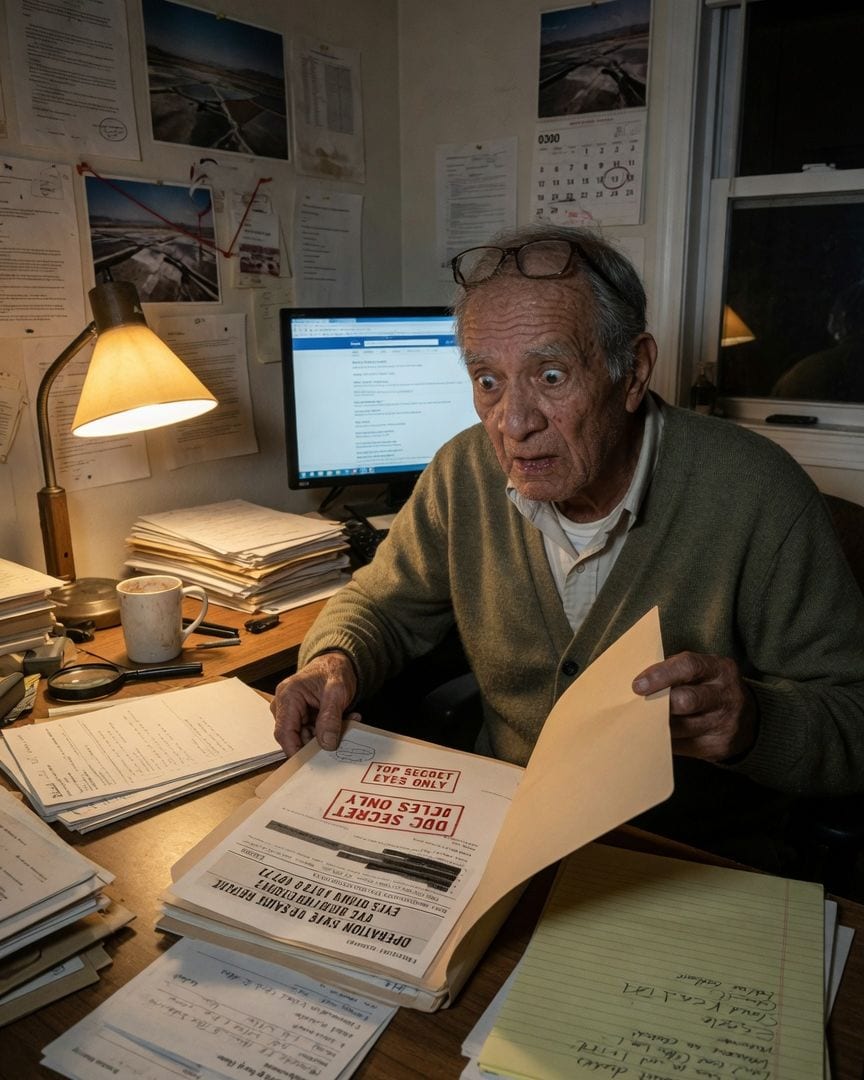 Declassified
On a desolate Utah salt flat in 1973, Private Tomas Reyes, just 21, found himself guarding a mysterious crate on a deserted air base apron. No one had posted him; his name was absent from every roster, leaving him alone with the strange cargo. The crate's stencil declared a 200-pound gross weight, but the heavy-lift crane had strained visibly under a far greater burden, and its latch was sealed tight from the inside. Decades later, the memory of that impossible crate still haunts Reyes, driving his lifelong search for any truth behind 'Operation Saltstone'.
12 min read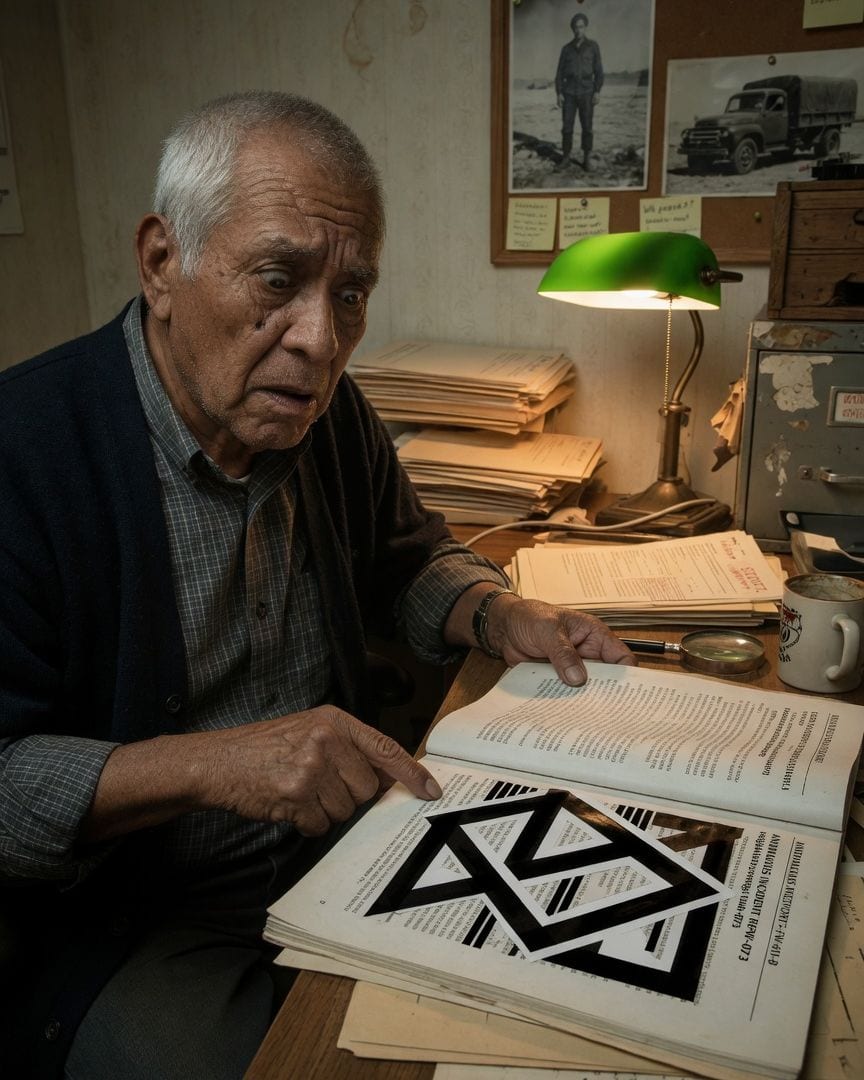 Declassified
Private Tomas Reyes, a young man of 21, stood alone on the desolate Utah salt flats, rifle heavy, guarding a single wooden crate. The base was long closed, and he had no record of actually being posted, only a vague order to "Don't ask questions." Fifty-one years later, as a retired man, he meticulously cross-referenced declassified documents, searching for answers about that night. He found a ghost control number and an incident report with redactions that formed a distinct, unsettling geometric symbol. It was a shape he suddenly remembered seeing, not on the crate, but impossibly, *through* its wood.
12 min read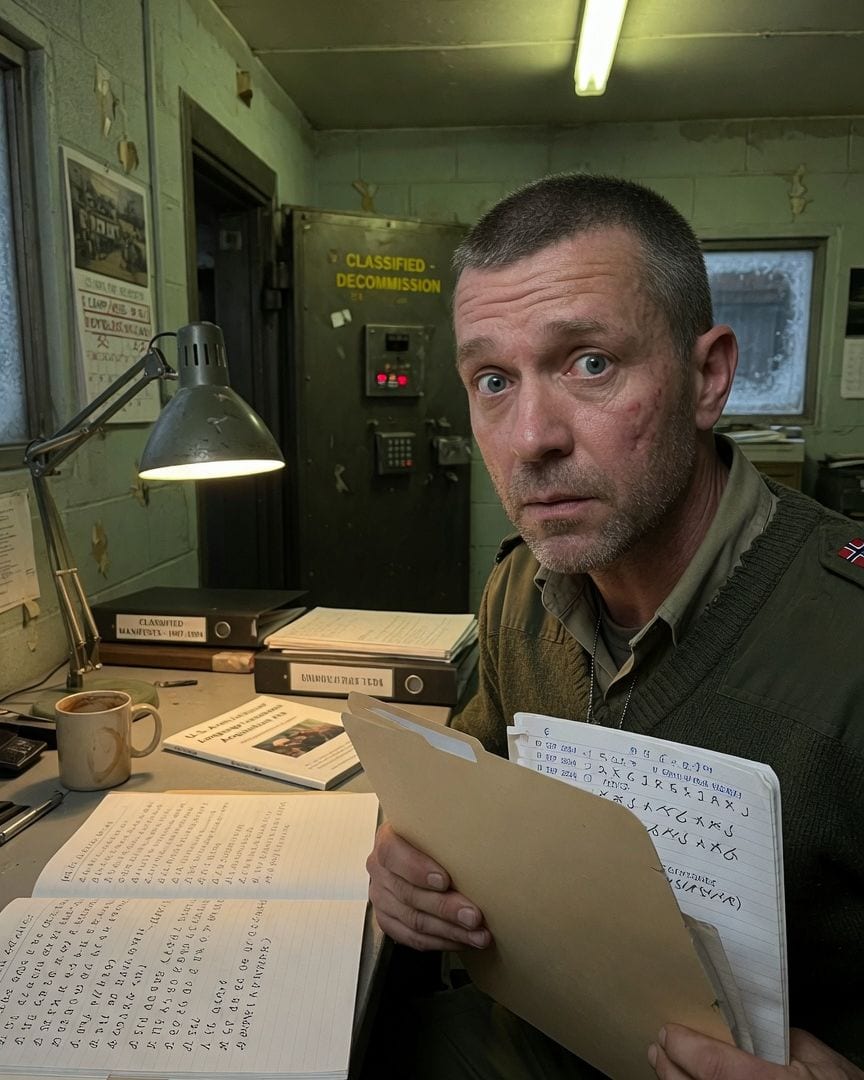 Declassified
Sergeant Aksel Dolvig had just nine days left at Camp Vess, a Cold War relic buried deep in the Greenland ice, before its permanent sealing and his transfer. His final meticulous task was to secure all classified materials within its sterile, echoing vaults. But inside one vault, a thick, unmarked manila folder defied all records, its heavy pages filled with an angular, alien script. When Dolvig saw the dates on the pages extended four days into the future, detailing the exact words the sealing party would say, a chilling question arose: who wrote his future, and why?
11 min read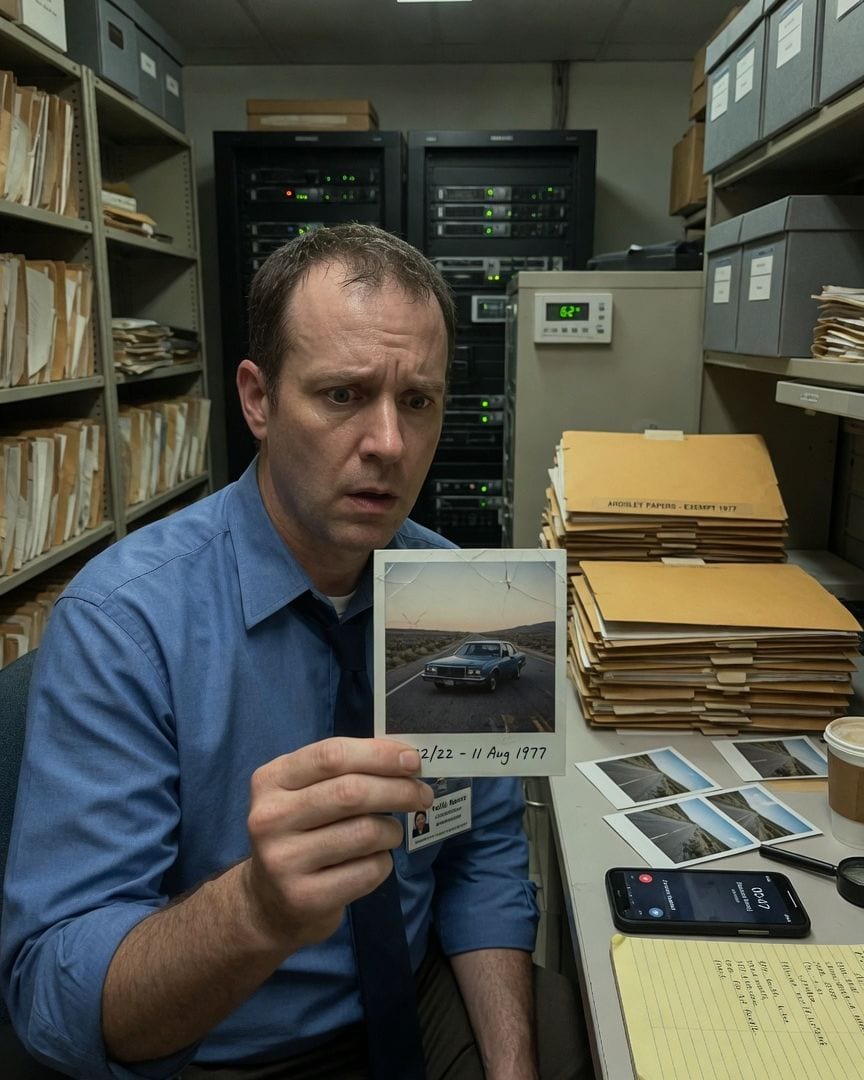 Declassified
Hollis Nance, a declassification reviewer, worked through stacks of sealed government papers in the hushed College Park archives, surrounded by the faint hum of servers. Among the tedious files, he found twenty-two Polaroids of a desolate Nevada road—a highway his own father had driven for decades. Twenty-one photos showed the road empty, but the final image, dated 1977, showed a blue 1991 sedan parked on the shoulder, its driver's door open. His father confirmed he hadn't owned that specific model until 1991. Then, a 1968 file revealed another blurred photo of the same road, with the unmistakable outline of his father's future car. How could it be there?
11 min read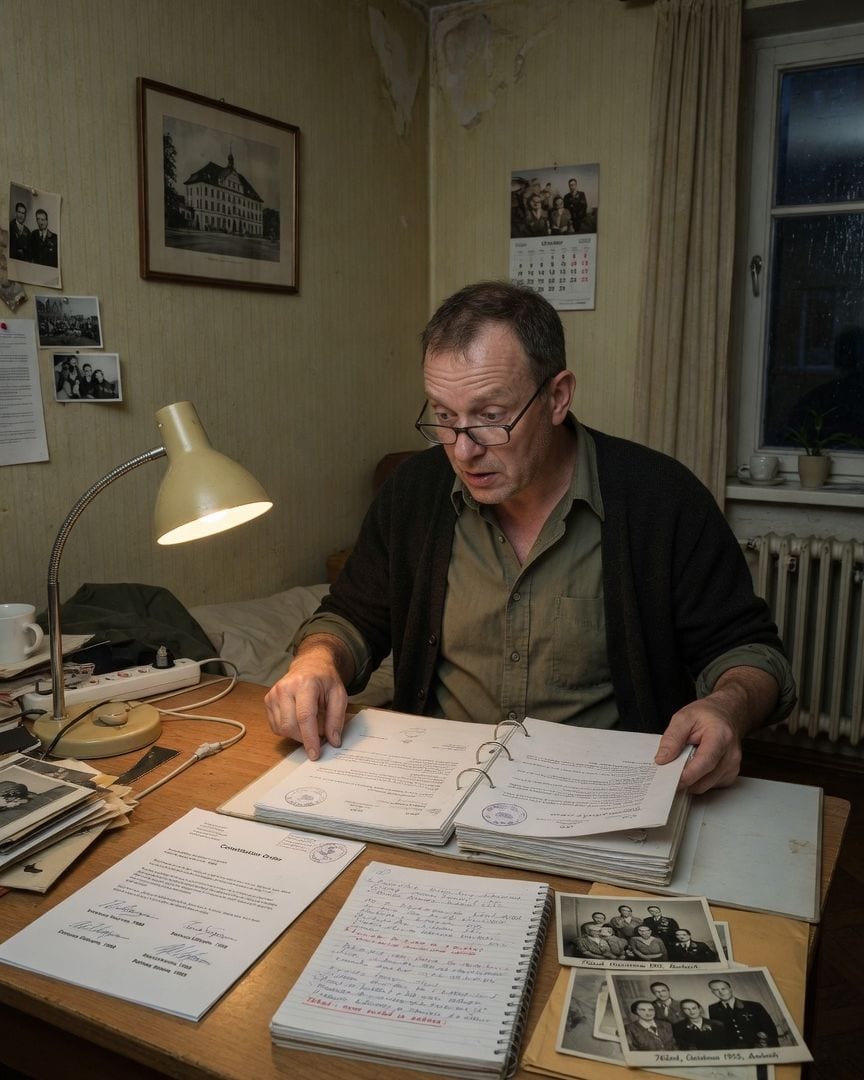 Declassified
Historian Willem Achterberg arrived in Ansbach's crisp fall air, aiming to unearth the forgotten history of a US Army kaserne. He expected forgotten tales, but the town vividly recalled the 762nd unit, detailing their lives as if they'd left yesterday—a unit the Army swore never existed. Willem meticulously collected sixty affidavits, marriage certificates, and faded photos proving the 762nd's tangible presence, directly contradicting every official record. Then, he found the unit's dissolution order, dated 1954, yet bearing impossible signatures from 1988 and 1995. How could ghosts from the future sign a document decades before their birth?
13 min read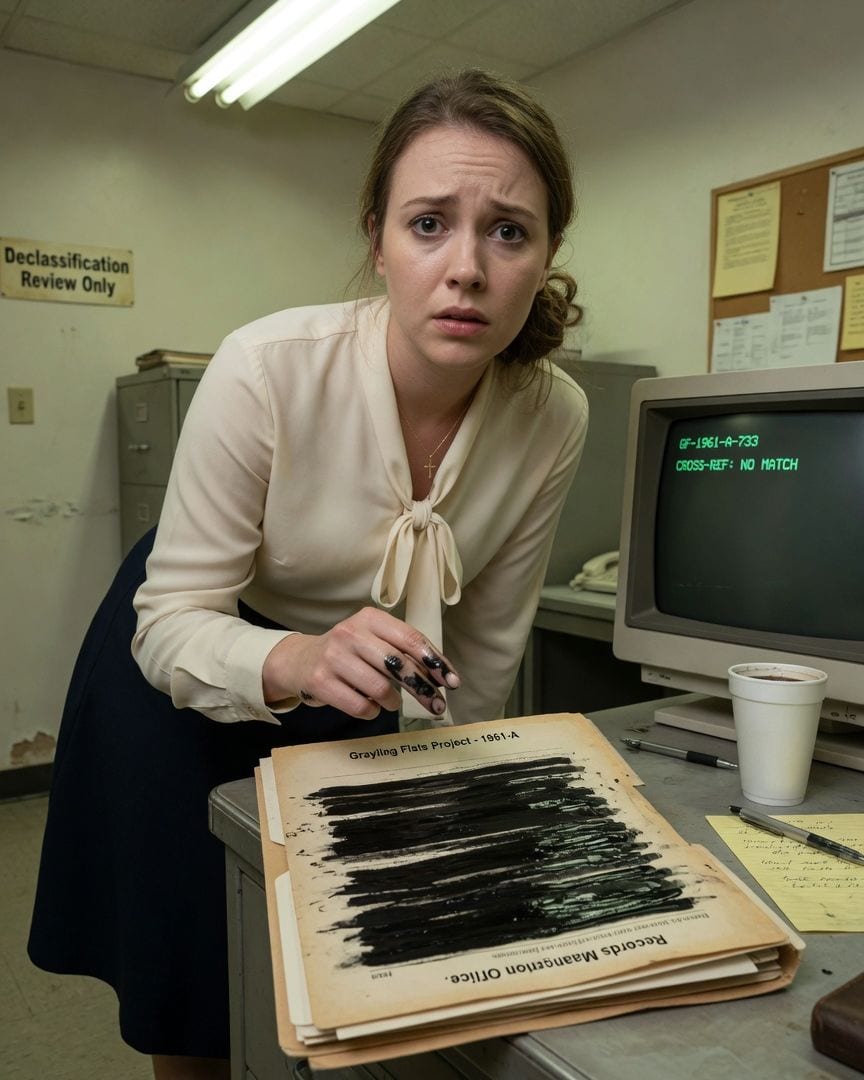 Declassified
Ruth Odalen, a new records clerk, began her first assignment in a sterile 1986 declassification office. Tasked with reviewing 'water-damaged' Cold War files, she found the manila folders perfectly dry, but a deeper anomaly waited inside. On one decades-old page, redaction ink gleamed impossibly wet-black and glossy, leaving a cold smear on her fingertip. It looked freshly applied, an impossible detail that seemed to know her, naming the very office she'd left that morning.
13 min read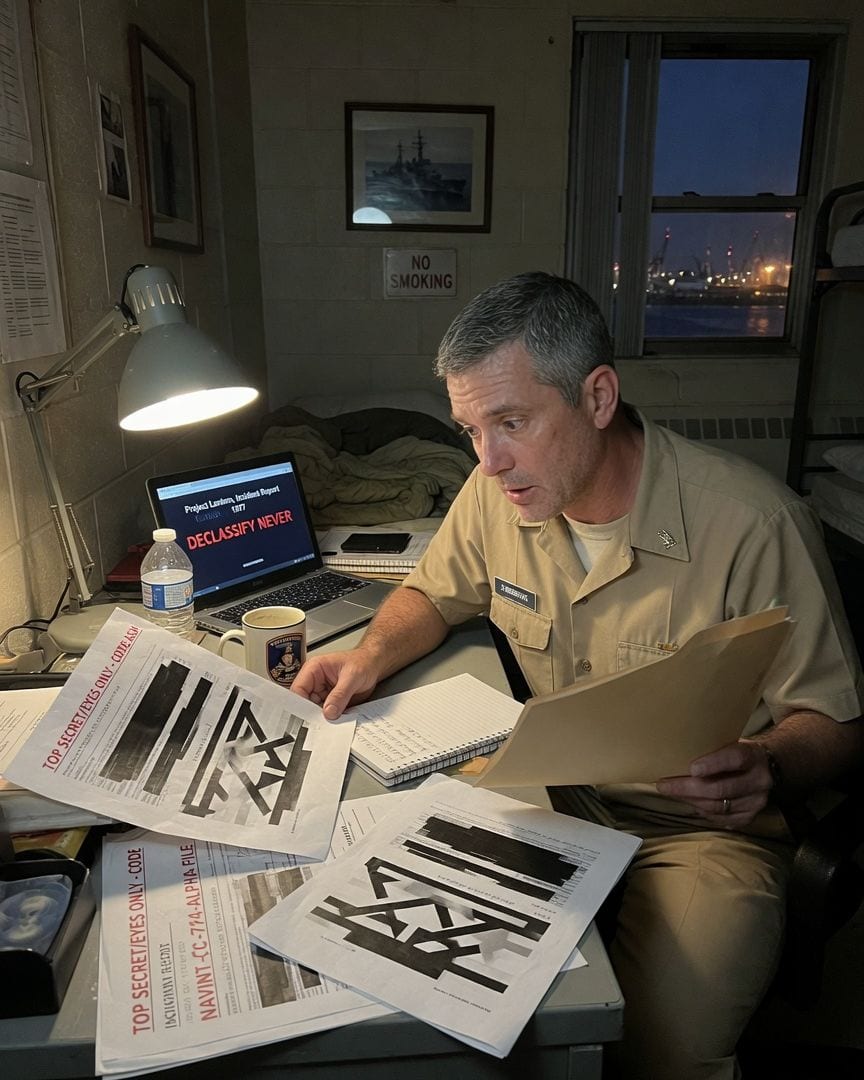 Declassified
Four days from ending his Gulf deployment, Lieutenant Commander Roy Ashgrove longed for home leave. On the bridge of the USS Farragut, his surface search radar painted a contact a mile off the port beam, but its altitude readout was impossibly zero. He ordered the searchlight on it, watching as the dark mass moved toward the beam, then stopped dead still on the moving water. Roy's incident report was swiftly stamped 'TOP SECRET,' and a follow-up directive carried a chilling downgrade schedule: 'DECLASSIFY NEVER.' His investigation soon unearthed an old Cold War file containing an identical, geometric redaction, hinting at a secret far deeper than a sensor glitch.
11 min read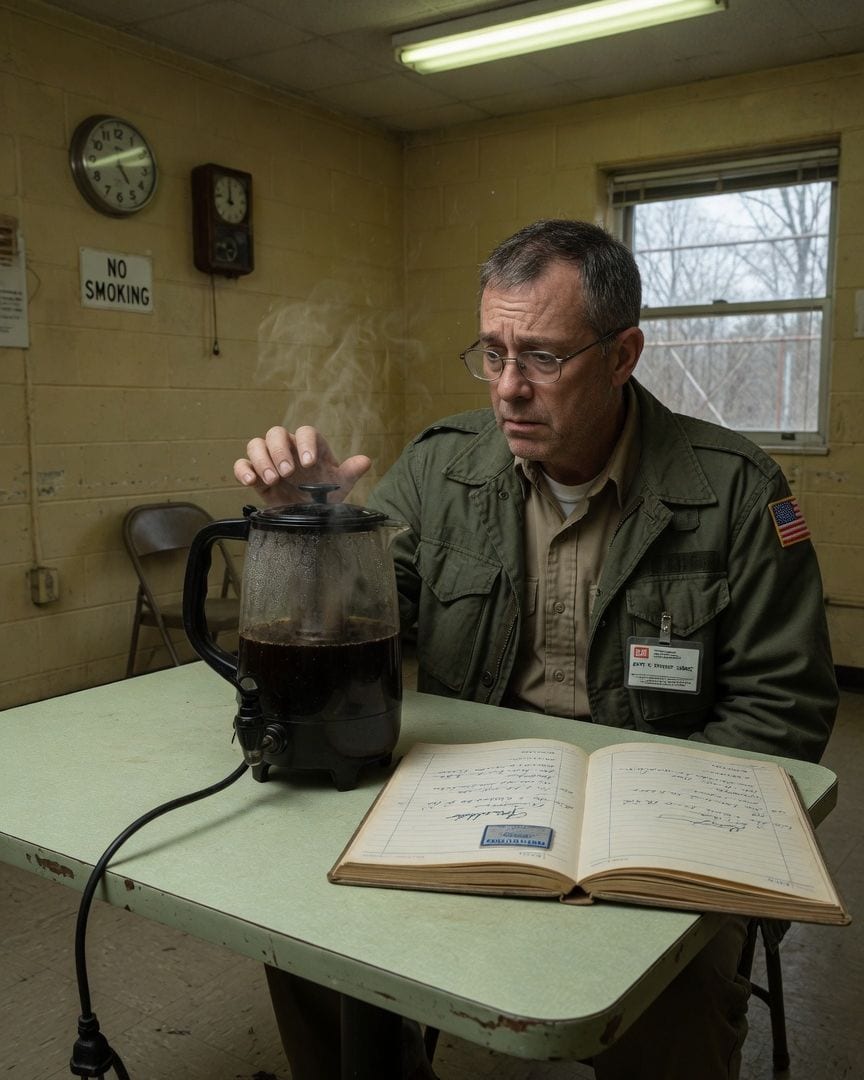 Declassified
Captain Nolan Threep, a methodical US Army engineer, expected another routine decommissioning at Alert Facility Twelve in rural Montana. The chains on the doors had rusted solid since 1970, promising a long-dead site. Yet, inside, a faint warmth hung in the air, and a glass coffee urn sat half-full, a wisp of steam rising lazily from its dark surface. The urn, warm to the touch, was clearly unplugged, and the duty log beside it, signed for a shift ending nineteen years prior, looked as though it had been signed yesterday. What secret could a supposedly abandoned Cold War facility hold?
14 min read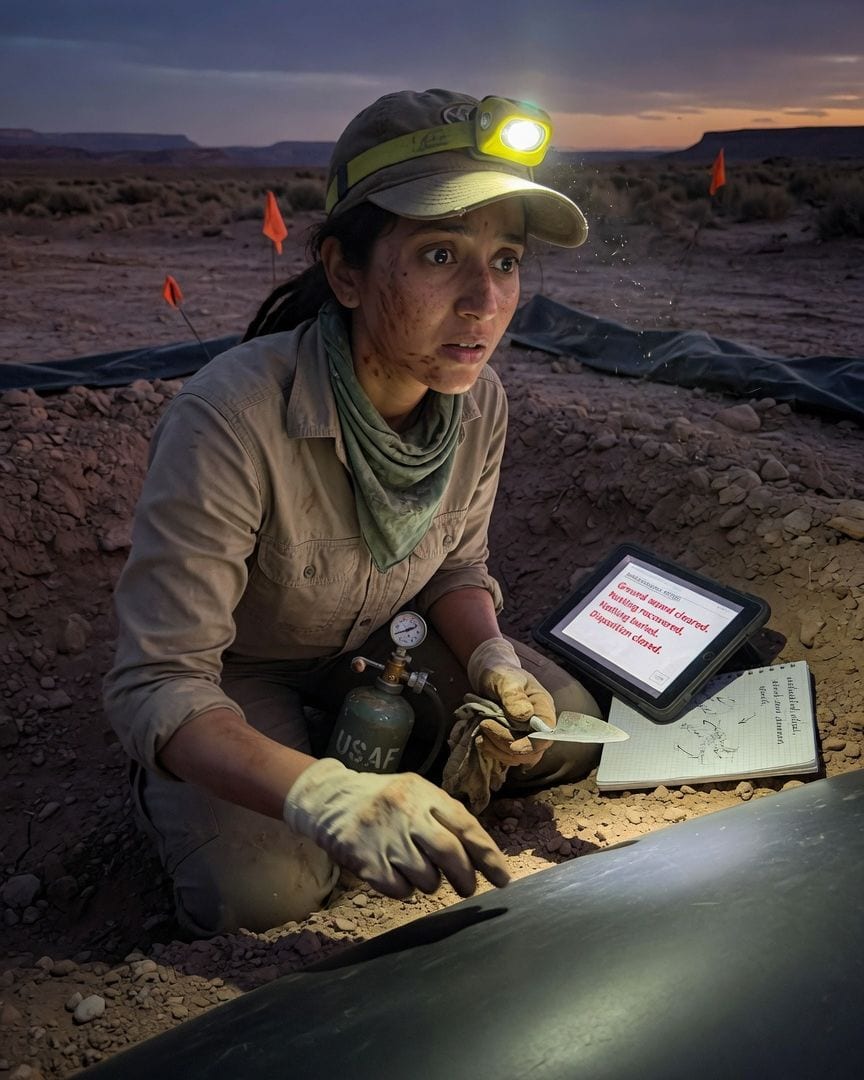 Declassified
Contract archaeologist Priya Raval raced against a ticking clock in the Utah desert, her permit set to expire in just nine days. The scorching sun beat down as she surveyed an Air Force site, officially 'cleared' decades ago, where nothing was supposed to be buried. Her first find was an 80-year-old oxygen bottle, still pressurized, unearthed from a cavity deliberately backfilled, a quiet mockery of official records. But the true anomaly emerged when her trowel struck something vast, dark, and perfectly smooth, unlike any known terrestrial construction. This seamless, featureless hull absorbed light, stretching into the earth below. Embedded on its surface was a metallic box etched with an intricate symbol identical to a pattern she'd dismissed as natural. What impossible history lay hidden beneath the Utah sands?
9 min read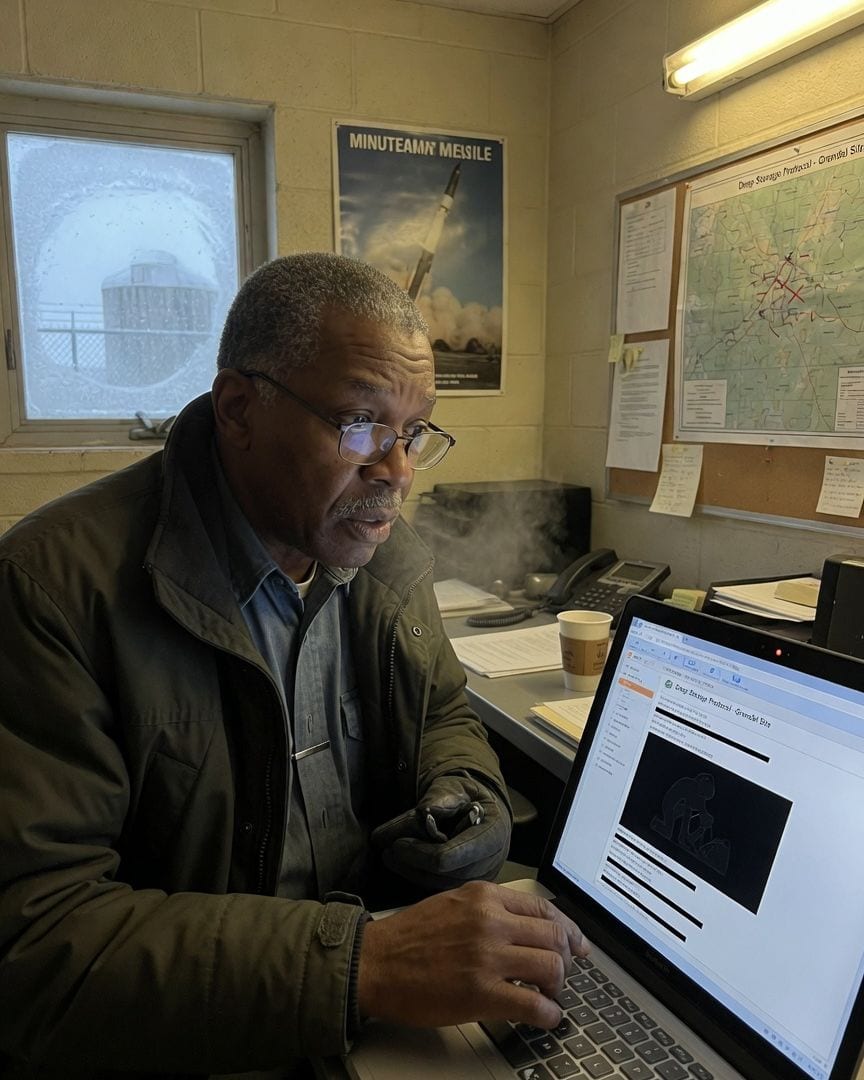 Declassified
Colonel Ren Marsalis, a career Air Force officer, faced his final administrative cleanup before retirement at the decommissioned Grendel Site in the biting North Dakota winter. He expected a sealed missile capsule, but Capsule 7's eight-ton door stood cracked open eleven impossible inches, its hydraulics removed in 1985. Inside, consoles glowed with static alerts from an unknown power source, while an old printer endlessly spooled paper repeating one chilling message: "CREW STILL ON STATION. ACKNOWLEDGE." This impossible communication, from a long-dead system, was no glitch; it hinted at a deliberate, hidden presence, a truth reinforced by a redacted document showing a hunched, humanoid shape.
12 min read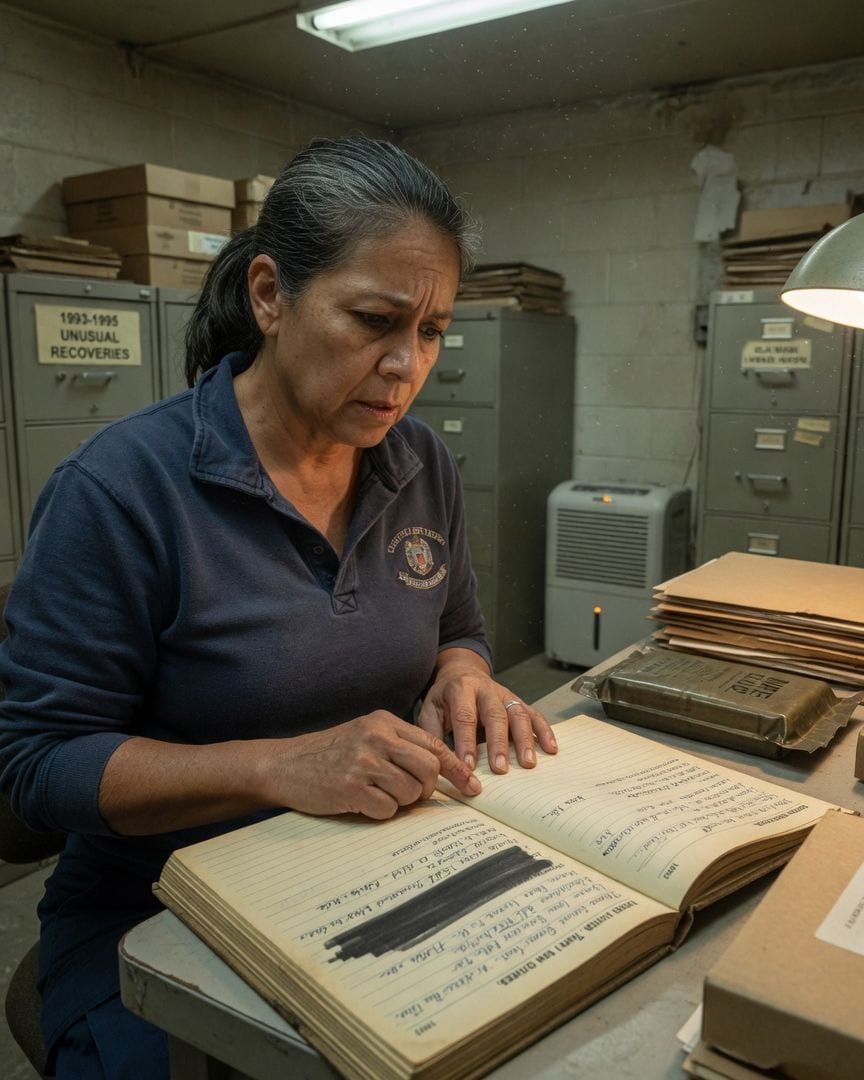 Declassified
Ada Mireles, a retired Coast Guard pilot, faced a chilling discovery in the sterile evidence room. For decades, she had searched for Dune Two, the helicopter that vanished in '93, and now its mangled seat pan had been recovered from the Gulf. Among the debris, a sealed survival kit yielded MREs, their plastic casings cool and slick, but a pre-flight habit revealed an impossible expiration date: 'EXP 203X.' This future date defied all logic, sending her to dusty archives where a duplicate logbook entry for Dune Two recorded a kit issued in 1995, expiring in the 2030s, alongside a cryptic 'Project CHRONOS' note.
10 min read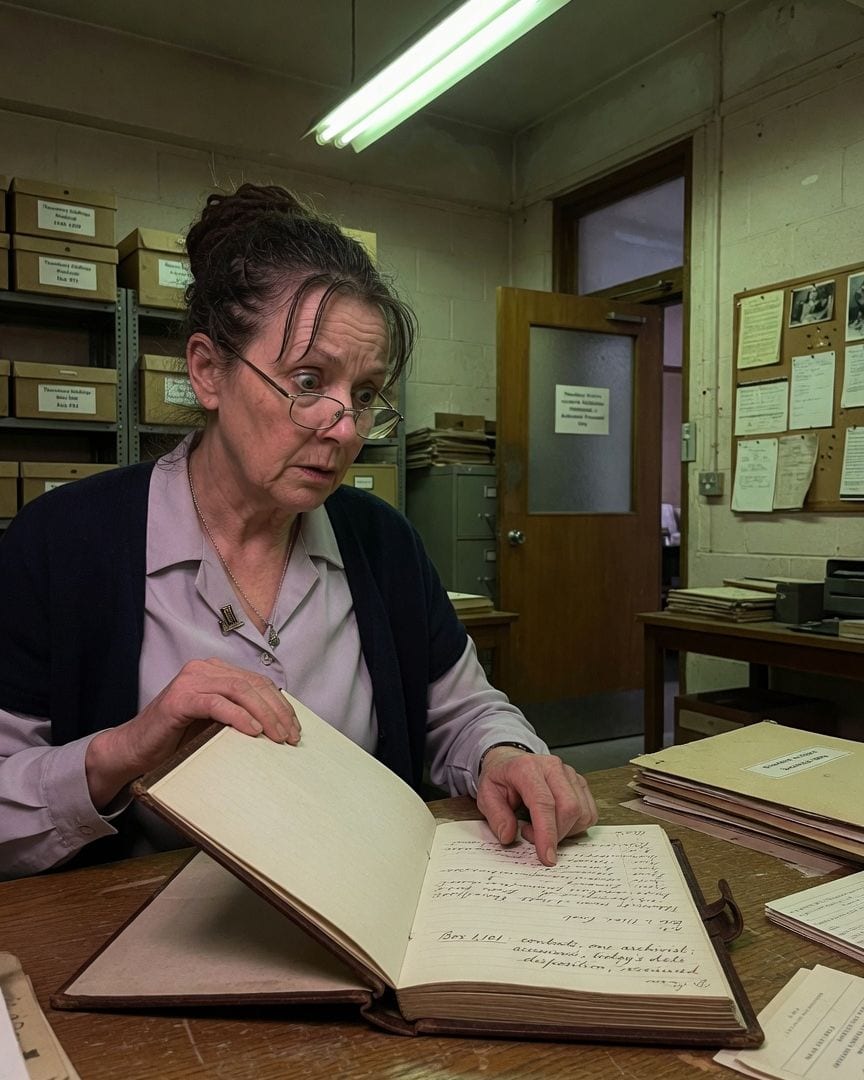 Declassified
Methodical archivist Beatrice Kell had just four precious hours left before renovation began, a final chance to complete two decades of her life's work within the Thornbury Collection. The heavy oak door creaked shut, sealing her in with the comforting scent of old paper. But as she opened the original 1952 accession register, a familiar document she knew intimately, she found an impossible entry: 'Box 1,101: contents, one archivist; accessioned, today's date; disposition, retained.' Her own title, linked to a box that didn't exist, settled a profound chill deep in her bones. Was this a macabre joke, or something far more sinister?
11 min read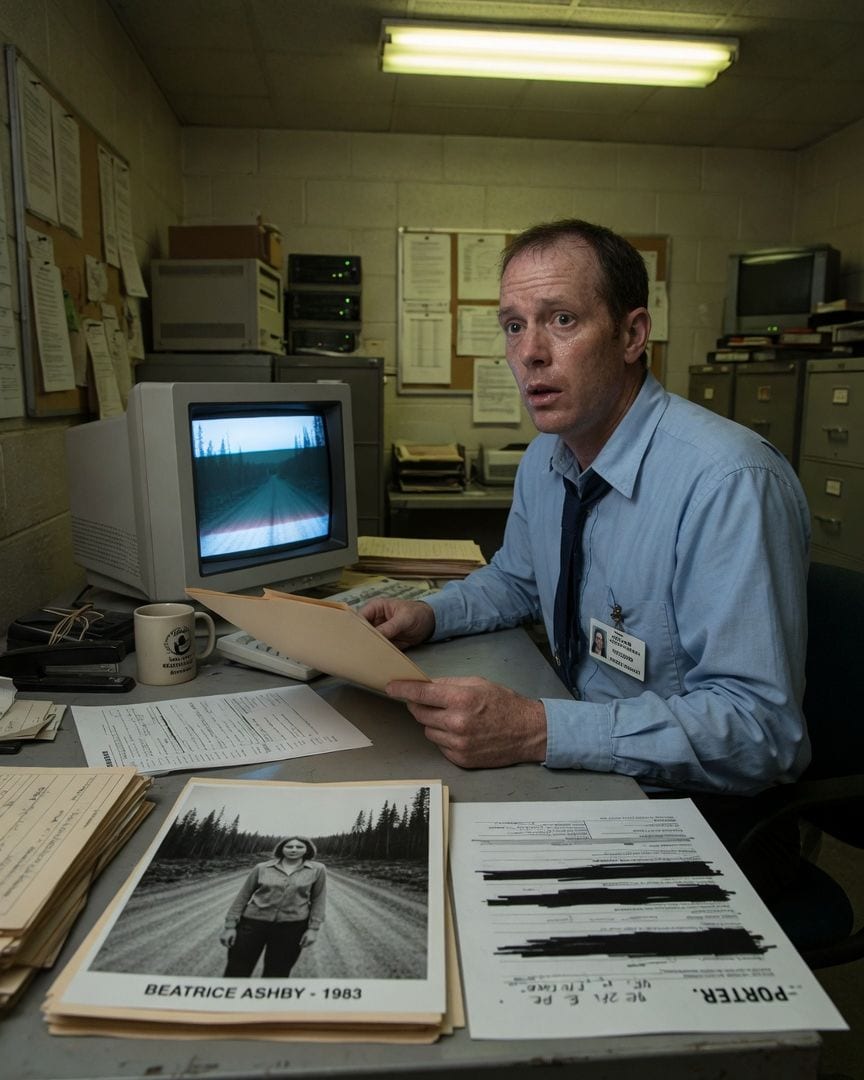 Declassified
Devon Ashby, a federal records clerk in Missoula, Montana, spent years dismissing a repeated request for a 1983 file. He finally pulled the thin folder, expecting a clerical anomaly, but found a stark black-and-white photograph. It showed his mother, Beatrice Ashby, looking directly into the lens, calm and familiar, yet stamped with the year 1983. Devon remembered her funeral in 1981 and the quiet scrape of earth against her coffin, making her appearance in the official file two years later a chilling impossibility. Further investigation revealed conflicting records and a handwritten addendum with geographic coordinates, hinting at a truth far darker than a simple misfile.
11 min read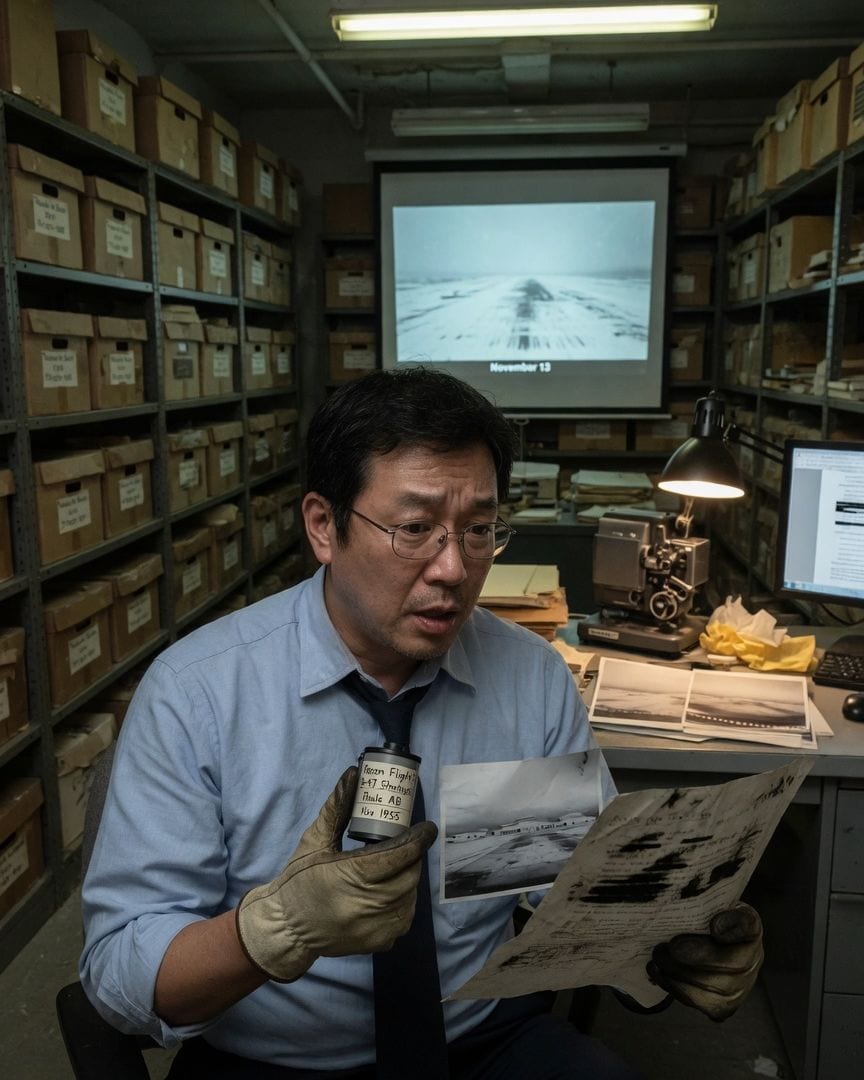 Declassified
Ken Sudo, an archivist nearing a long-awaited transfer, meticulously sorted Cold War documents in the sprawling National Archives Annex basement. His final Thule project unearthed an unlabeled carton containing an old 16mm film canister, marked 'Recon Flight 734, Nov 1955.' On screen, an impossible airfield appeared carved into the featureless ice cap, dated November 13. A cold dread settled as Ken realized official records declared Recon Flight 734 lost the day before, on November 12, 1955. How could a lost crew record an airfield a full day after their official disappearance?
14 min read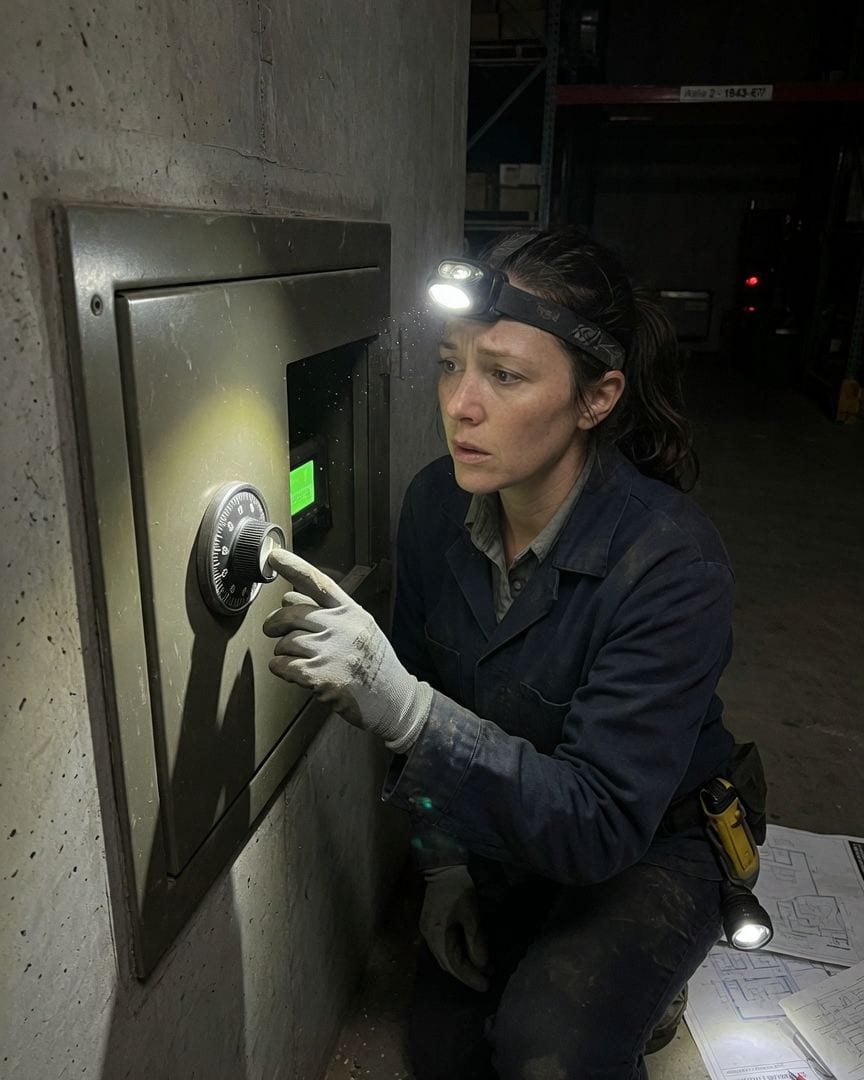 Declassified
Merit Lachance moved through the echoing darkness of Building 9, her headlamp cutting a lonely circle through dust motes. The depot’s oldest section was losing power, leaving her to finish her mandated shelf-read for the impending decommissioning. Every blueprint showed Building 9 as a single, vast room, so when her light fell on a waist-high, solid steel door set flush into the wall, her mind reeled. Its combination dial was worn smooth from decades of constant use, an impossible contradiction to the building’s known history. After meticulously working the dial, the heavy door shifted inward, revealing a dust-free, actively maintained office space with a terminal log updated just hours ago.
11 min read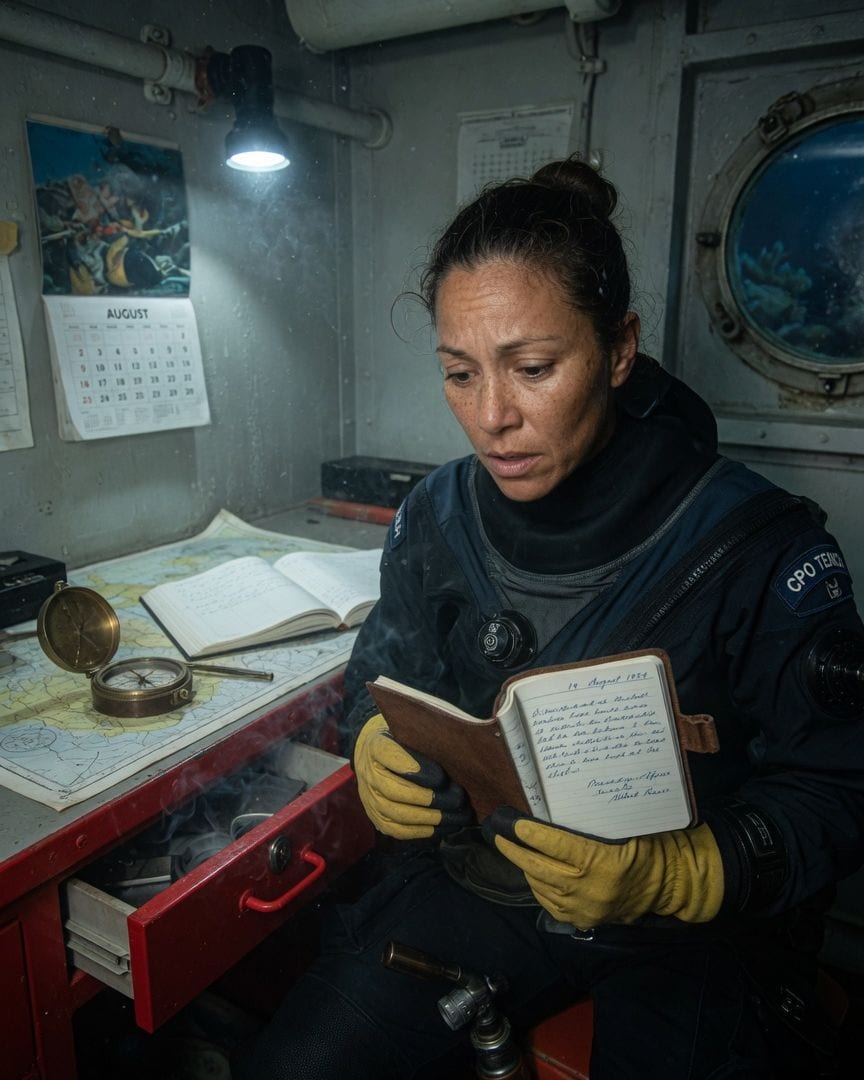 Declassified
Chief Petty Officer Marlo Tench, a methodical deep-sea diver, stared in disbelief at the ROV feed. Her team watched with her as the USS Triton, a target ship from the 1954 Castle Bravo nuclear test, appeared pristine and upright ninety feet below. It was supposed to have been vaporized, yet its hull number was unmistakable, its paint unburned, and its internal systems inexplicably active. Descending into the eerie silence, Marlo found a logbook dated five months after the ship’s destruction, and a journal entry naming a crewman officially listed as 'unmanned target.' What impossible force kept the Triton a living ghost decades after its fiery end?
15 min read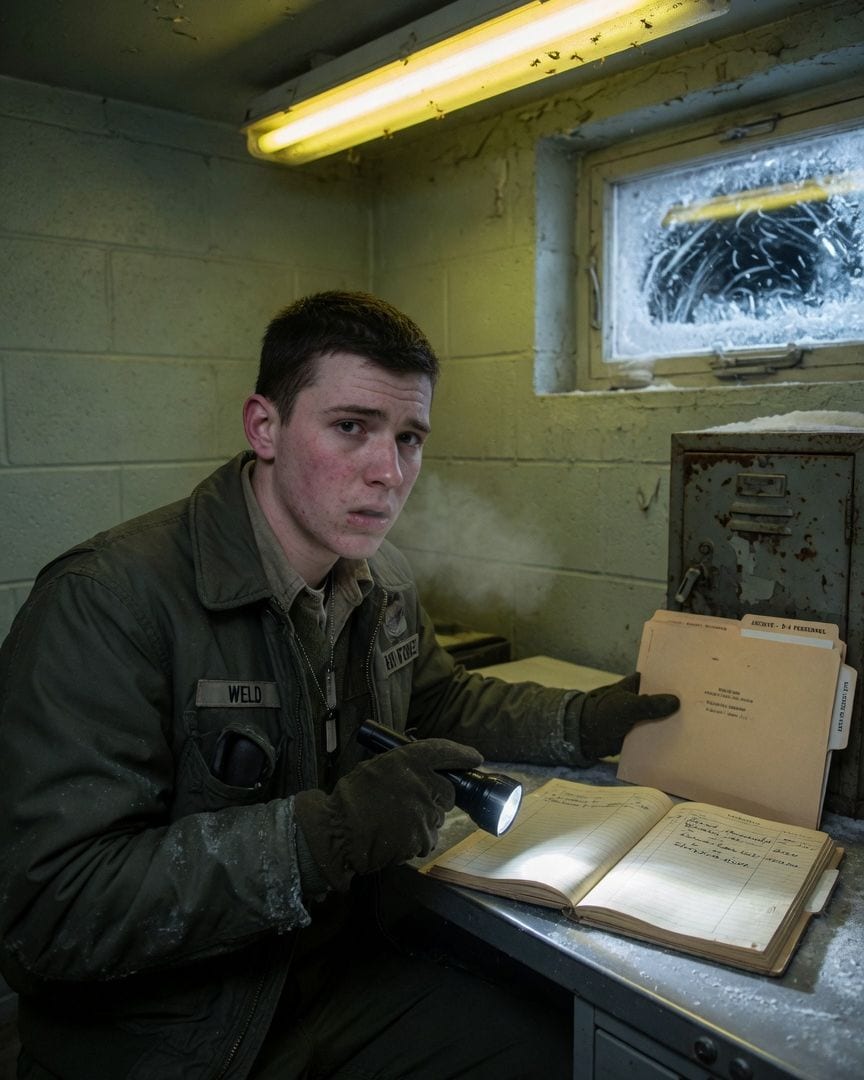 Declassified
Airman Tobias Weld, just twenty, braved a Dakota blizzard to descend into the frigid, supposedly empty Silo D-4. Forty feet down, his torch beam caught a rectangular section of steel wall glowing with unnatural warmth, completely bare of the thick frost coating everything else. The silo had been empty for six years, its power disconnected, yet the warmth was undeniable, slowly melting the surrounding ice. Inside a rusted locker, he found an unofficial logbook dated 1958, with an entry from Airman Caldwell, who official records showed was transferred a year before. How could an airman record an event in a silo he’d already left, in a place that should have been cold and dark?
8 min read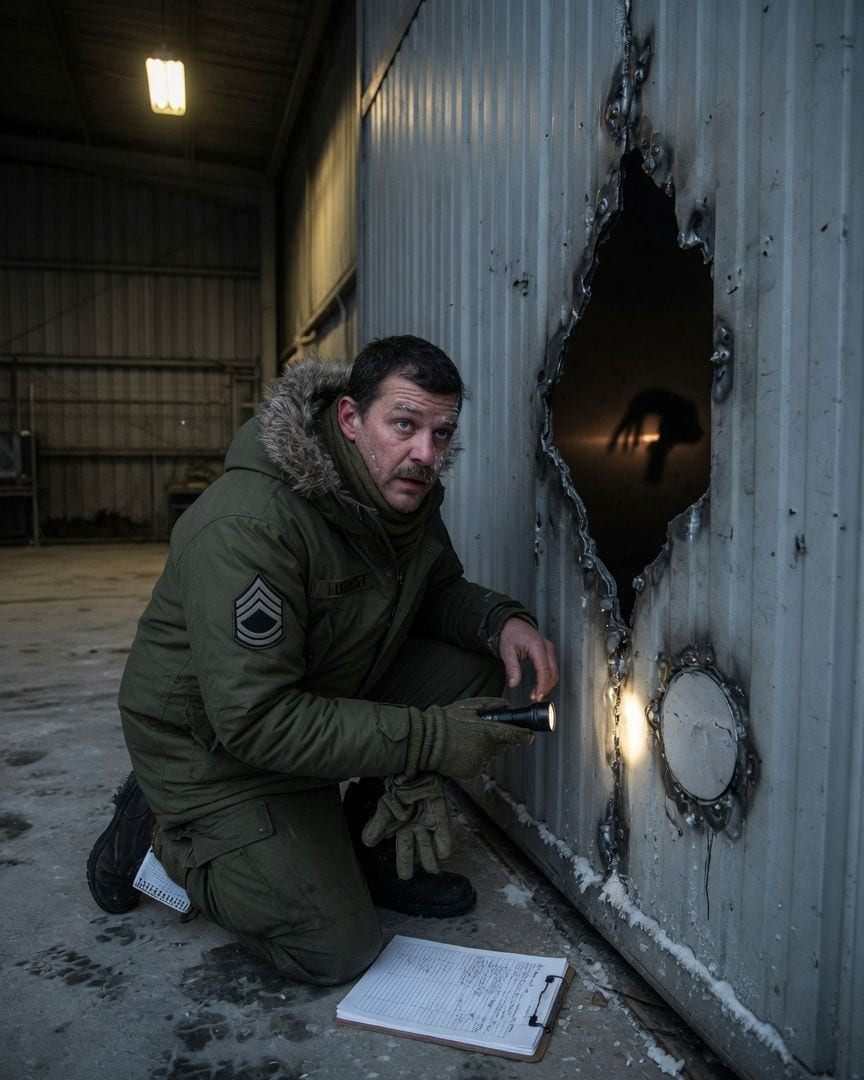 Declassified
In the Alaskan winter of 1978, Technical Sergeant Wes Lindquist's rigid routine involved hourly temperature checks for the officially empty Hangar Bay Two. Despite being welded shut for months, the bay consistently registered nine degrees warmer than ambient. As official dismissals failed to explain the anomaly and the internal temperature climbed, Lindquist kept a secret log. His curiosity led him to a hidden vent in the crude weld, where he felt a deep, resonant hum vibrating from within. Shining his flashlight into the void, a faint, rhythmic pulse of dull orange light bloomed and receded, casting a writhing shadow too large for anything known.
13 min read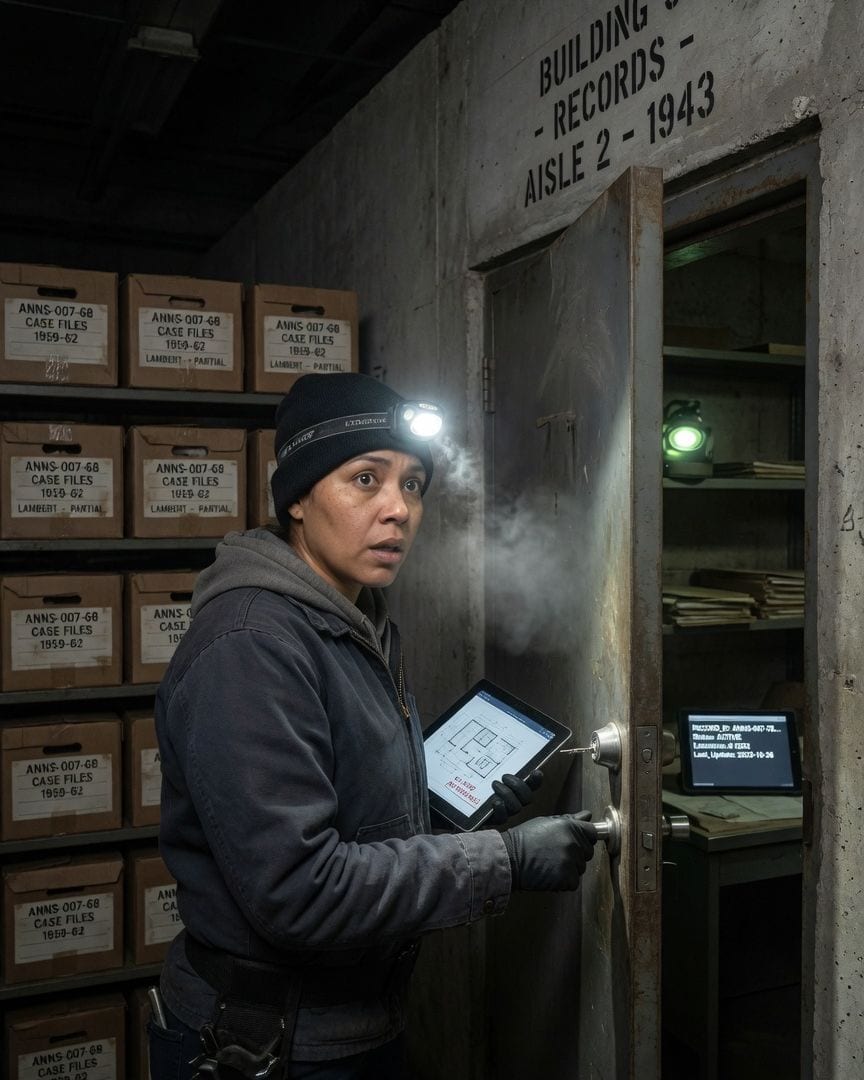 Declassified
Merit Lachance, a meticulous 34-year-old archivist, prided herself on the perfect order of the Anniston depot's Building 9. Working by headlamp in the cold, power-out gloom, she was determined to complete her shelf-read before the generator returned. But her beam found something impossible: a waist-high steel door set flush into a solid concrete wall that blueprints showed as unbroken. Its dial lock, worn smooth over fifty years, felt warm to her touch, defying logic. Inside, a low-power monitor displayed a recent log entry for Lily Lambert, officially missing from the depot since 1975.
12 min read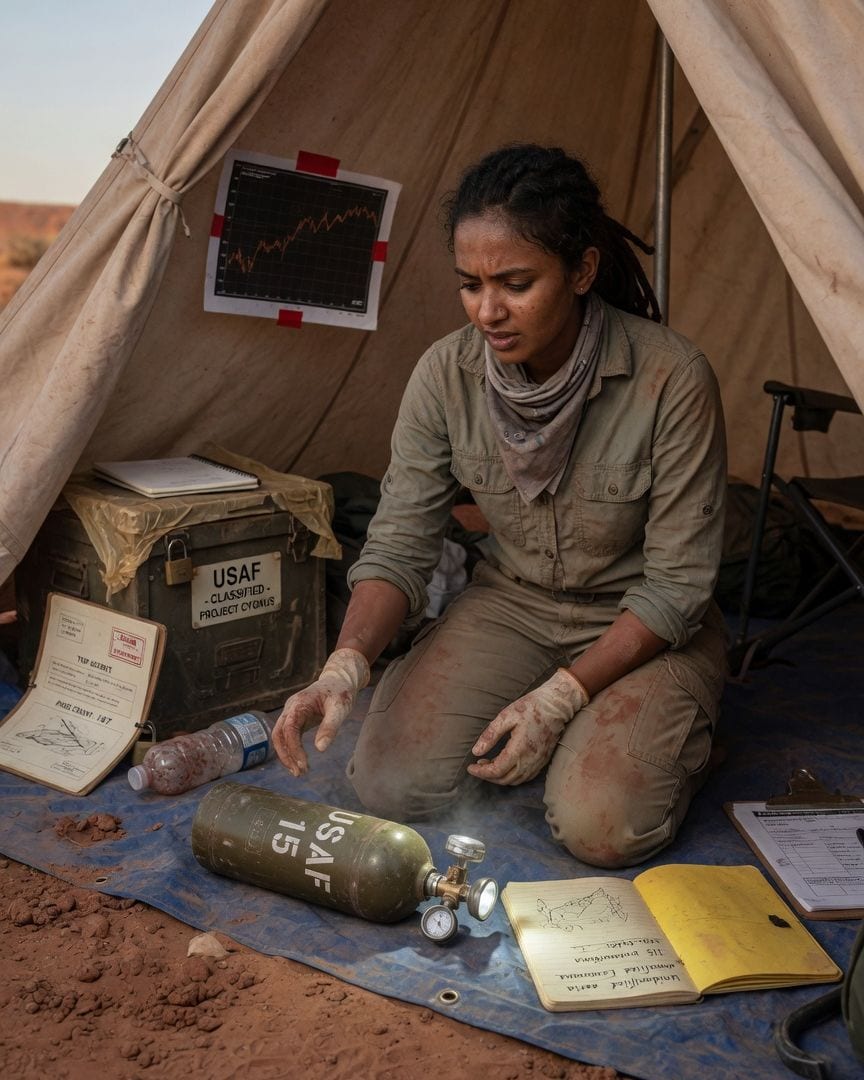 Declassified
Archaeologist Priya Raval knelt in the reddish Utah mud, her permit for the site ticking down with only nine days left. The desert silence was broken only by the hiss of an 80-year-old oxygen bottle, defying records by holding full pressure in a backfilled cavity. As Priya raced against the clock, she unearthed deeply buried concrete conduits and a classified Cold War archive box. Its cover listed 187 pages, but inside, a terrifyingly precise cut had excised 173 of them, leaving only blank space. What secret did the military bury here, then try to erase?
13 min read